
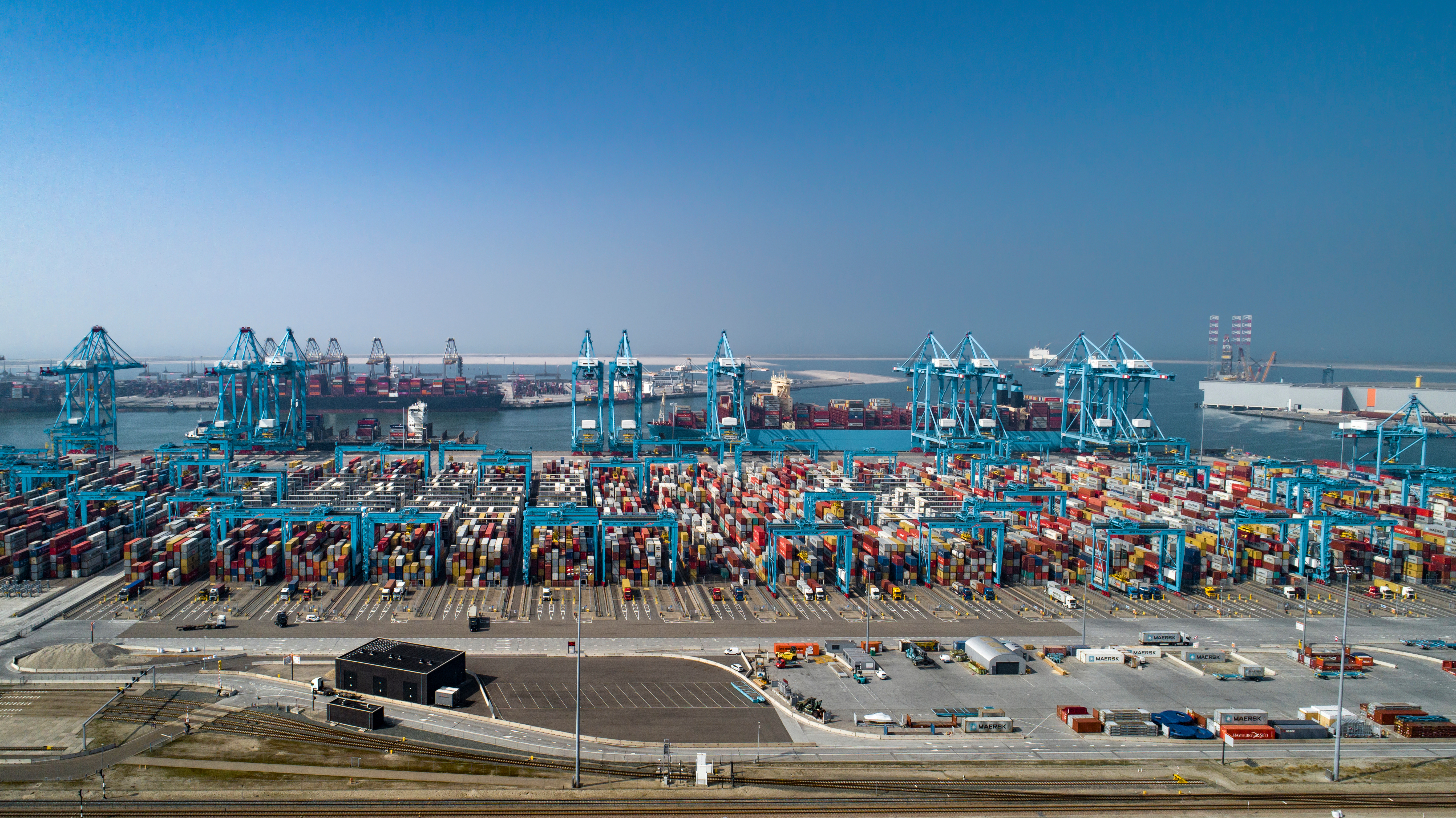
Europe’s logistics backbone is seizing up. Maersk has announced that its TA5 transatlantic service will omit Rotterdam entirely starting June 25 due to “operational limitations” at the terminals. This rare move signals just how serious the situation has become across Northern Europe’s logistics corridors.
The Port of Antwerp-Bruges is also facing what officials describe as the worst congestion since the COVID-19 pandemic. But unlike during COVID, today’s congestion has no single cause—making it even more difficult to predict or resolve.
🚨 Incident Overview
Major European ports, including Rotterdam, Antwerp, and Hamburg, are experiencing critical congestion and delays, with ripple effects being felt throughout the global supply chain. Inland waterways, rail freight networks, and container yard operations are all under severe pressure.
- Vessel delays exceeding 50 hours at inland terminals
- Carriers omitting key ports to avoid congestion-related losses
- Rhine River levels critically low, limiting barge movements
- Rail construction projects and strikes further restricting inland capacity
The congestion is not isolated—it is systemic, impacting all layers of European logistics infrastructure during a critical phase of the 2025 peak season.
📌 Key Impacts Across the Logistics Chain
Rotterdam: Port Operations in Crisis
Rotterdam is operating under crisis conditions. Maersk’s port omission is only the tip of the iceberg. An indefinite strike at APM Terminals Maasvlakte II (begun June 4) has caused vessel traffic to stall entirely. Inland vessels now wait an average of 56 hours, while priority is given to deep-sea vessels.
As of early June, satellite tracking showed 11 ships anchored offshore awaiting terminal access. Shippers are reporting rising demurrage costs and vessel slide delays as carriers struggle to maintain service schedules.
Antwerp: Terminal Capacity at Breaking Point
Hapag-Lloyd has warned that Antwerp terminals are reaching critical fill levels. Container dwell times are rising sharply due to limited yard space and reduced crane availability—two cranes are out of service due to refurbishment until the end of the year.
Container gate-in windows have been shortened from 7 to 5 days, forcing shippers to find offsite storage. More than 100 vessels faced delays during recent strike waves, adding to port congestion and schedule instability.
“Back then, the cause was clear. Now, it’s a combination of factors—and no one knows how long it will last.”
— Jacques Vandermeiren, CEO, Port of Antwerp-Bruges
🔄 Systemic Disruptions Beyond the Ports
Rhine River Crisis: Inland Cargo Severely Restricted
The Rhine River, Europe’s main inland waterway, is facing dangerously low water levels. On April 9, the critical chokepoint at Kaub recorded just 85 cm, nearing the level (81 cm) at which large cargo vessels can no longer operate normally.
This has forced inland cargo to shift to already congested road and rail networks. The cost of tanker freight from Rotterdam to Karlsruhe has jumped from €34 to €86 per ton, further increasing logistics costs for shippers.
Rail Bottlenecks: Network Closures and Delays
Simultaneous construction projects are severely disrupting European rail freight. In particular:
- Switzerland–Italy route (Simplon axis) is closed June 8–July 27 and again August 30–September 13.
- Germany’s Hamburg–Cologne and Hamburg–Berlin corridors face service reductions through early 2026.
With rail volumes redirected to road or sea, port congestion is escalating due to limited alternative inland options.
Labor Actions Escalating Pressure
Nationwide port strikes in Sweden, including a full harbor shutdown from May 22–26 and targeted actions through mid-June, have removed key capacity from the network. Belgium and France have also experienced repeated strikes that temporarily paralyzed Antwerp and Le Havre operations.
These labor disruptions compound the infrastructure crisis, further destabilizing carrier schedules and port throughput.
🔍 Deeper Insight: A Perfect Storm of Supply Chain Risks
The European congestion crisis isn’t just about port throughput—it’s a multi-layered logistics breakdown:
- Terminal capacity is maxed out across key ports due to dwell time spikes and labor disruptions.
- Inland transport (barge and rail) is unreliable due to weather and infrastructure issues.
- Carrier alliance restructuring is creating transitional overlap, confusing schedules and overloading terminals.
“Fast forward to mid-June—if ports have not sorted this out by then, it will be carnage.”
— Peter Sand, Chief Analyst, Xeneta
📈 Outlook & Strategic Recommendations
Disruptions are forecasted to persist until at least August 2025, coinciding with the seasonal shipping peak. With no immediate resolution in sight, businesses must implement agile, proactive supply chain strategies.
- Reroute through secondary ports (e.g., Gdańsk, Bilbao) to bypass core congestion zones.
- Build buffer time into European-bound schedules to account for unpredictable port handling delays.
- Evaluate detention/demurrage exposure under current contracts and revise where possible.
- Leverage real-time tracking tools to monitor service disruptions and vessel deviations proactively.
Tradlinx’s Ocean Visibility platform enables importers, exporters, and 3PLs to track delays in real-time, optimize routing, and receive alerts on disruptions—ensuring operational continuity amid global volatility.
As Europe’s ports buckle under mounting pressure, supply chain leaders must act quickly to stay ahead of this deepening crisis.
📌 TL;DR — What You Need to Know
- Maersk omits Rotterdam from TA5 service starting June 25 due to congestion.
- Antwerp terminals nearing capacity, container dwell times surging.
- Rhine River levels critically low, restricting barge traffic inland.
- Rail closures and strikes compounding port bottlenecks across Europe.
- Disruptions expected to last through at least August 2025.
Port Status Summary
| Port | Status | Key Issues | Carrier Impact |
|---|---|---|---|
| Rotterdam | Crisis | APM strike, 56+ hr inland delays | Maersk omitting from TA5 (June 25) |
| Antwerp | Critical | Terminal full, reduced gate windows | 100+ ships delayed during strike |
| Hamburg | Congested | Alliance reshuffling, rail constraints | Slide adjustments, dwell time spikes |
Inland Transport Disruption Summary
| Mode | Status | Impact | Outlook |
|---|---|---|---|
| Rhine River | Restricted | Water levels at 85cm, cargo limited | Dry conditions likely to persist |
| Rail Freight (CH–IT) | Closed (Simplon) | Route shut June 8–July 27, Aug 30–Sep 13 | Rerouting needed, further delays likely |
| Rail (Germany) | Disrupted | Reduced service on Hamburg–Cologne/Berlin | Works extend into April 2026 |
Labor & Operational Risk Timeline
| Country | Disruption | Timeline | Effect on Ports |
|---|---|---|---|
| Sweden | Nationwide strikes | May 21–June 15 | Full shutdown May 22–26 |
| Belgium | Repeated strikes | April–May 2025 | Near standstill at Antwerp |
| France | Planned strikes | Ongoing (intermittent) | Delays at Le Havre and Marseille |
🧭 What This Means for Supply Chain Leaders
Europe’s core logistics infrastructure is facing an unprecedented, multi-layered disruption. With ports overloaded, carriers skipping key terminals, inland alternatives drying up, and labor actions ongoing, shipping reliability across the region has been severely compromised.
Action is needed now. Route diversification, contractual flexibility, and real-time visibility tools are no longer optional—they’re essential for mitigating risk during what may become the most operationally disruptive peak season since COVID-19.

References
- CLECAT: Port congestion disrupts container services
- Lloyd’s List: Northern Europe port congestion forecast
- LEMAN: Swedish port strikes update
- Kuehne+Nagel: Rhine River disruption insights
- Railway PRO: Rail closures impacting Italy–Switzerland
- Container News: Rotterdam congestion impact
- K+N: Calm before the storm — Europe congestion analysis
Prefer email? Contact us directly at min.so@tradlinx.com (Americas), sondre.lyndon@tradlinx.com (Europe) or henry.jo@tradlinx.com (EMEA/Asia)



Leave a Reply