
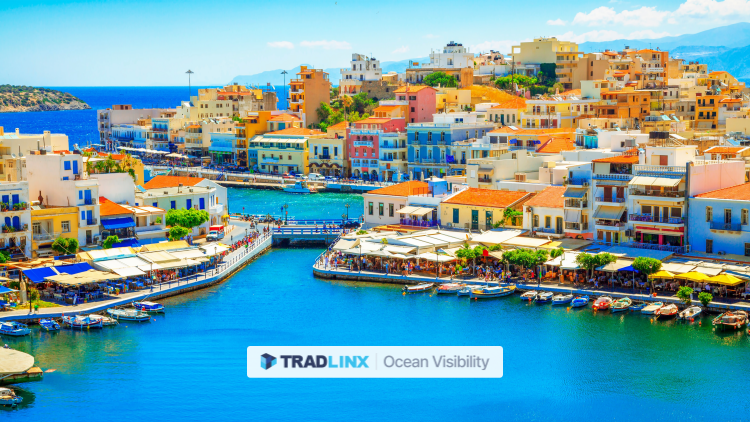
Greece, with its strategic location at the crossroads of Europe, Asia, and Africa, is a maritime nation with a rich history in global trade and shipping. Its ports are vital to the country’s economy, handling 80% of Greece’s international trade volume. From containerized goods to passenger ferries connecting the Greek islands, Greece’s ports play a pivotal role in facilitating commerce and tourism. The Greek port network contributes significantly to the country’s GDP and employment, with the port sector supporting over 330,000 jobs and generating €13.6 billion annually, or 7.4% of Greece’s GDP.
Here’s an in-depth look at Greece’s major ports and their key features:
1. Port of Piraeus: Greece’s Largest and Most Strategic Port

Key Features:
- Location: Athens metropolitan area
- Annual Throughput: 6.2 million TEUs (2024) | Passenger Traffic: Over 8 million annually
- Significance:
- Largest port in Greece and one of the busiest in Europe.
- Serves as a major hub for container shipping, passenger ferries, and cruise ships.
- Key gateway for Chinese exports to Europe under COSCO Shipping’s management since 2010.
- Recent Developments:
- €600 million investment by COSCO has expanded container capacity from 1.5 million TEUs to 6.2 million TEUs.
- New cruise terminal under construction to accommodate larger vessels by 2026.
- Integration of smart port technologies for real-time cargo tracking and automation.
2. Port of Thessaloniki: Northern Greece’s Gateway
Key Features:

- Location: Thessaloniki, Central Macedonia region
- Annual Throughput: Over 17 million tonnes (2024) | Containers: 500,000 TEUs
- Significance:
- Second-largest port in Greece; vital for trade with the Balkans and Southeast Europe.
- Handles diverse cargo including containers, bulk goods (grains, fertilizers), and RoRo traffic.
- Recent Developments:
- €180 million investment to modernize container terminals by 2025.
- Expansion of rail connections to Bulgaria, North Macedonia, and Serbia for seamless logistics.
3. Port of Heraklion: Crete’s Maritime Hub

Key Features:
- Location: Crete Island, Mediterranean Sea
- Annual Throughput: Over 6 million tonnes (2024) | Passenger Traffic: Over 2 million annually
- Significance:
- Largest port on Crete; handles passenger ferries, cruise ships, and general cargo.
- Key hub for agricultural exports such as olive oil and wine from Crete to Europe and beyond.
- Recent Developments:
- Expansion of cruise facilities to accommodate larger vessels by 2025.
- Renewable energy projects including solar-powered port equipment.
4. Port of Patras: Western Gateway to Europe

Key Features:
- Location: Peloponnese region, Ionian Sea coast
- Annual Throughput: Over 4 million tonnes (2024) | Passenger Traffic: Over 1.3 million annually
- Significance:
- Primary connection point between Greece and Western Europe via ferry routes to Italy (Ancona, Bari).
- Handles exports such as citrus fruits, grapes, wine, and raisins; imports include grain and textiles.
- Recent Developments:
- New logistics center under development to streamline freight handling by mid-2025.
5. Port of Volos: Industrial and Agricultural Hub

Key Features:
- Location: Thessaly region, Pagasetic Gulf
- Annual Throughput: Approximately 3 million tonnes (2024)
- Significance:
- Key export hub for agricultural products like cotton and tobacco from Thessaly region.
- Supports industrial activities including steel imports and cement exports.
- Facilitates ferry connections to the Sporades Islands (e.g., Skiathos).
- Recent Developments:
- Upgraded bulk cargo facilities to handle larger volumes efficiently.
- Plans for eco-friendly port operations with reduced emissions by late 2025.
Economic Impact
Greek ports are critical drivers of economic growth:
- Handle over €200 billion worth of goods annually.
- Support over 330,000 jobs, accounting for approximately 8% of total employment in Greece.
- Ports like Piraeus contribute significantly to global trade by connecting Europe with Asia through some of the shortest transit times in the Mediterranean.
- Passenger ports like Patras facilitate tourism growth while boosting regional economies.
Future Outlook
- Green Shipping Initiatives: Piraeus is developing hydrogen-powered shipping corridors as part of EU decarbonization goals by 2030.
- Capacity Expansion Projects: Thessaloniki is expanding its container terminal capacity by €180 million to meet growing demand from Balkan trade routes.
- Tourism Growth: Heraklion is investing heavily in cruise infrastructure to attract more international visitors.
- China-Greece Cooperation: COSCO’s continued investments in Piraeus aim to transform it into Europe’s largest container port by the early 2030s.
- Digitalization & Automation: Ports like Volos are adopting AI-based systems for cargo handling efficiency.
Greece’s ports are more than just gateways—they are vital engines driving innovation, sustainability, and economic resilience across Europe and beyond. From Piraeus’ strategic role in global logistics to Patras’ connections with Western Europe, each port plays a unique role in keeping Greece at the heart of global commerce and tourism growth.




Leave a Reply