
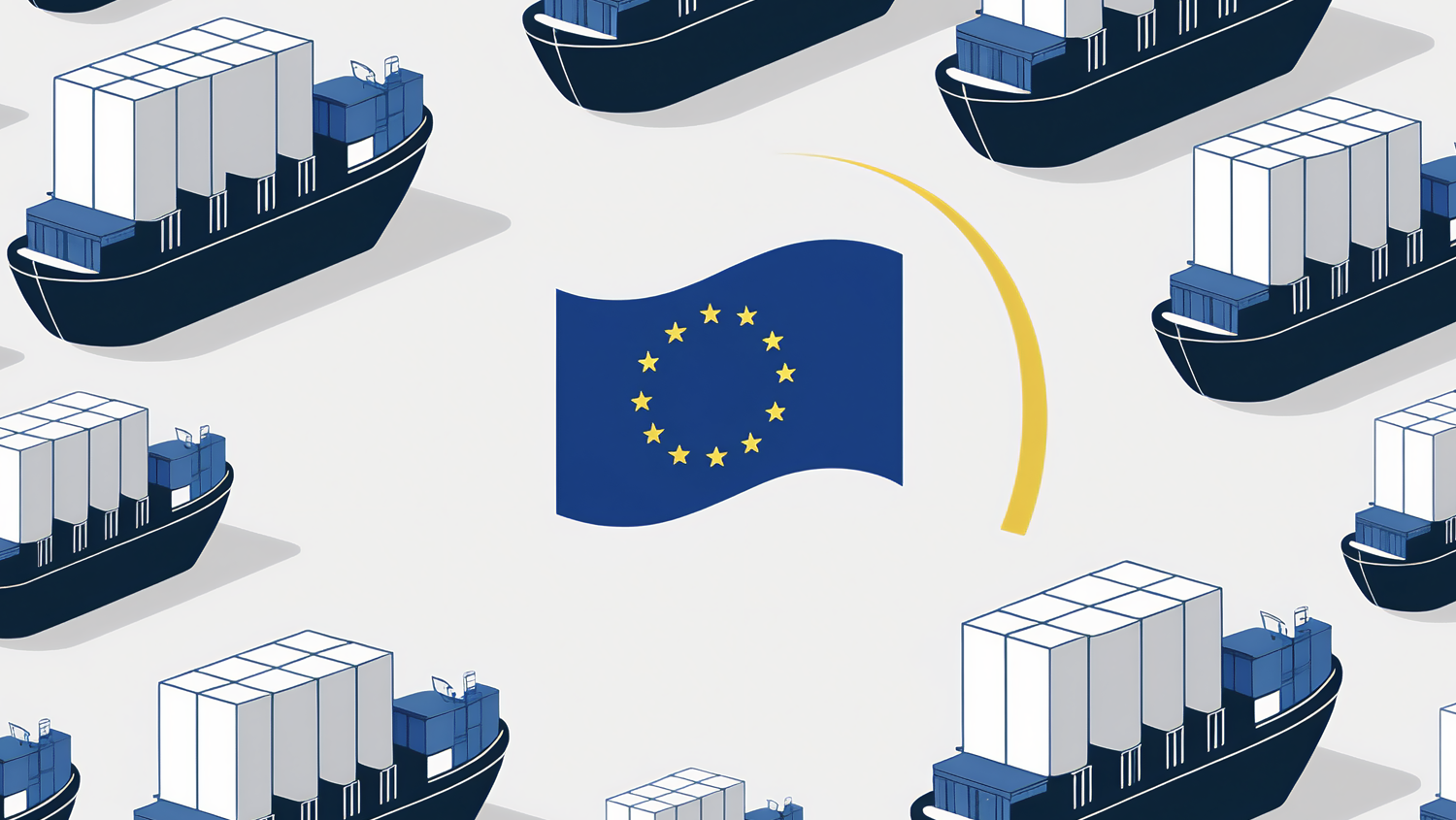
The EU’s Import Control System 2 (ICS2) Release 3 is now fully deployed. Maritime requirements have been live since 2024 and, from 1 September 2025, road and rail are in scope across Member States. For forwarders and NVOCCs acting as house-level filers, the practical changes are clear. You need cleaner HBL data, explicit filing roles with carriers, earlier cut-offs, and a reject-recovery path. This guide gives a paste-ready playbook and quote language you can use this month.
What Changed
- ICS2 Release 3 is fully operational. The Commission confirmed full Release 3 operation and road and rail in scope from 1 September 2025, with only limited temporary derogations in some Member States.
- Ocean house-level ENS is expected before loading. Lines are enforcing “no MRN, no load” for cargo requiring Entry Summary Declarations at house level. Your HBL data feeds the ENS risk assessment.
- Scope includes the EU and associated customs security participants. Requirements apply for goods entering or transiting the EU customs territory and associated countries that apply ICS2.
What It Means For LSP Operations
- Who files. At master level, the vessel-operating carrier files. At house level, the forwarder or NVOCC that issues the HBL is responsible unless there is a written mandate for the carrier to file on your behalf.
- Data depth. ENS requires a meaningful goods description in plain language, shipper and consignee legal names, EORI where applicable, packages, weights, routing, and HS to at least six digits where required by operator policy.
- Cut-offs move earlier. Because ENS must be assessed before loading, data must be complete before carrier cut-off, not at destination. Treat ENS acceptance and MRN receipt as a load-gate condition.
- Rejects cost time. Poor or vague descriptions, wrong parties, or missing HS can trigger ENS rejects and short-notice no-load decisions. You need a response SLA and weekend coverage.
House-Filer Checklist You Can Run This Week
- Assign the role. For every EU-bound or EU-transit shipment, state in writing who files the house ENS. If the carrier files on your behalf, capture the mandate and the data handover format and time.
- Standardize the HBL. Require plain-language descriptions, HS6 minimum where your carrier mandates it, and legal entity names matching EORI where applicable. Ban generic terms like “parts,” “samples,” or “freight of all kinds.”
- Move the cut-off. Set an ENS data cut-off that precedes the carrier’s document cut-off by at least 24 hours on direct load, longer on feeder schedules.
- Monitor MRN status. Track MRN issuance per HBL. Treat missing MRNs at T minus 24 hours to vessel cut-off as an escalation event.
- Reject-recovery path. Staff a two-hour correction window during business hours and a named on-call contact outside hours. Keep templated fixes for descriptions, party names, and HS.
Paste-Ready Quote And SOP Language
Filing responsibility
“For EU or EU-transit moves, the House Bill issuer files the house-level Entry Summary Declaration (ENS) unless a written mandate assigns filing to the carrier. Our default is we file. If you prefer carrier filing, we require your written authorization to share house data.”
ENS data cut-off
“Complete house-level data is due [48 hours] before carrier document cut-off. Missing or vague goods descriptions, HS, or party identifiers can delay ENS acceptance and result in no-load.”
MRN load-gate
“Loading is contingent on ENS acceptance. ‘No MRN, no load’ may apply at the carrier’s discretion. We monitor MRN status and escalate at T minus 24 hours to cut-off.”
Reject recovery
“ENS rejects receive a correction within two business hours after notice. Outside business hours, our on-call desk coordinates fixes and keeps the vessel plan.”
Data Standards That Prevent ENS Rejects
- Goods description. Plain language that allows identification of the goods without commercial codes. Example: “women’s cotton knit T-shirts,” not “garments.”
- HS6 where required. Provide the six-digit HS code and ensure it aligns with the description. Do not mix unrelated items under a single HS line.
- Parties. Legal names for shipper and consignee. Include EORI for EU parties when available. Keep consistency across HBL, invoice, and packing list.
- Packages and weights. Accurate counts and gross weight by HBL line. Round responsibly and avoid placeholder values.
How To Work With Carriers
- Mandate or self-file. If you mandate the carrier to file, agree the field list and the latest time you can submit house data. If you self-file, confirm the carrier’s master ENS and matching keys.
- Policy awareness. Many lines enforce “no MRN, no load.” Build that into customer promises and your operational playbook.
- Feeder realities. For transshipment, ensure MRN acceptance aligns with feeder windows. Missed feeders create multi-day delays even when deep-sea space is fine.

Use TRADLINX Ocean Visibility to tag EU-bound shipments, capture house-level data completeness, and track MRN status as a milestone. Push ENS acceptance and MRN to your TMS via API so operations and customers see the same gate condition.
Assumption Checks
- Not all Member States had identical go-live paths. Limited temporary derogations exist. Verify any local procedural nuance on the lane you quote.
- Associated territories. Some non-EU countries apply ICS2. Do not assume EU-only. Check carrier advisories and Commission pages when routing via Norway or Switzerland.
- HS6 policies vary. While many operators require HS6, treat it as a carrier policy and lane practice, not a universal law. Publish your minimums in customer copy.
References
- European Commission. Import Control System 2 overview and operator guidance
- European Commission. Transition to ICS2 Release 3 complete; road and rail in scope from 1 Sep 2025
- European Commission. ICS2 live for maritime and inland waterway transport
- FIATA. Release 3 guidance for maritime house-filers
- FIATA. ICS2 Release 3 goes live on 1 September 2025 for road and rail
- OOCL advisory. House-level ENS, 24-hour before loading, ‘no MRN, no load’ policy
- UPS bulletin. Release 3 coverage and HS6 expectations for EU, Norway, Switzerland
Why overpay for visibility? TRADLINX saves you 40% with transparent per–Master B/L pricing. Get 99% accuracy, 12 updates daily, and 80% ETA accuracy improvements, trusted by 83,000+ logistics teams and global leaders like Samsung and LG Chem.


Prefer email? Contact us directly at min.so@tradlinx.com (Americas) or henry.jo@tradlinx.com (EMEA/Asia)



Leave a Reply