
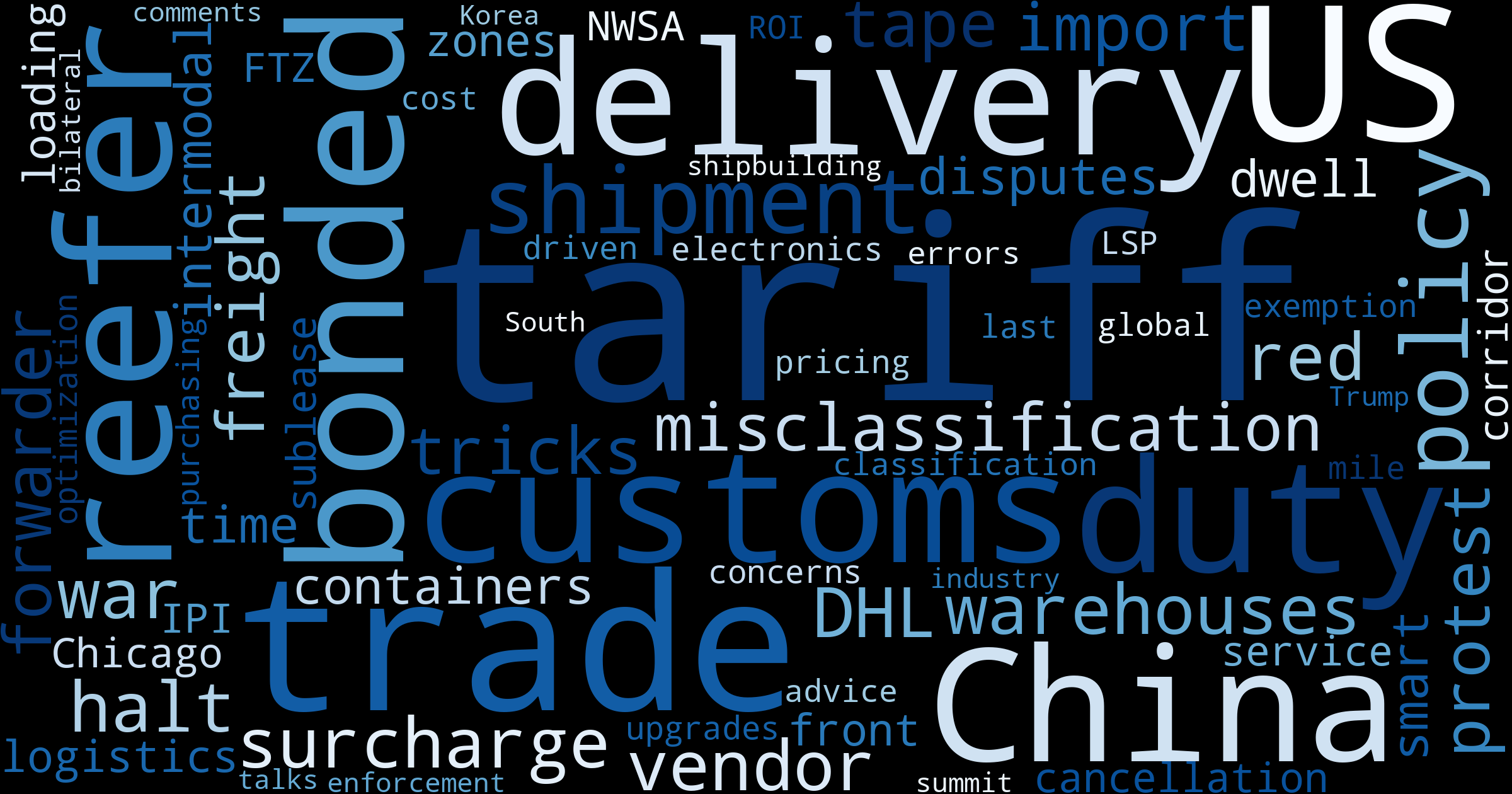
This week in maritime and logistics, sentiment remains finely balanced as the industry faces intensified tariff disruptions while simultaneously embracing operational innovation. Major talking points include shipping restrictions driven by U.S. tariff policy, vendor confusion around customs charges, and the growing interest in bonded and foreign trade zones (FTZs) as buffers against uncertainty. At the same time, rail network upgrades and smart reefer adoption signal resilience and adaptation across the sector. As always, TRADLINX continues to track the real-time mood of the market to keep LSPs ahead of the curve.
Key Themes:
- 🔺 Tariff impact intensifies: Delivery halts, pricing confusion, and international backlash unfold.
- 🚛 Operational strategies adapt: Interest grows in bonded storage, while rail corridors improve inland transit times.
- 📦 Technology investment rises: Smart reefer containers are gaining traction for compliance and efficiency.
Maritime Market Mood Tracking
- 🔵 Neutral Sentiment: 38.1%
- 🔴 Negative Sentiment: 34.9%
- 🟢 Positive Sentiment: 27.0%
Overall Mood (Compound Score): -0.02
Mood Snapshot: “Tension Beneath the Surface” — Sector-wide uncertainty driven by policy shifts is counterbalanced by localized resilience and innovation.
🔵 Neutral: Logistics Adapting to a Tariff-Centric World
A noticeable uptick in inquiries and activity surrounding bonded warehouses and FTZs points to growing efforts to shield goods from rising tariffs. Vendors are also applying tariff surcharges inconsistently, highlighting procedural gaps in customs understanding. For LSPs, this presents both a challenge and an opportunity—to guide, inform, and offer alternative logistics pathways.
🎯 Actionable Insight: Equip clients with customs support, bonded storage options, and tariff classification expertise to stay competitive and compliant.
📌 Resources for LSPs:
- CBP Bonded Warehouse Manual: Comprehensive guide detailing the establishment and operation of bonded warehouses.
- CBP Foreign Trade Zones Manual: Official manual outlining procedures and regulations governing FTZs.
- CBP Overview of Foreign Trade Zones: Provides an introduction to FTZs and their benefits within the U.S. trade framework.

🔴 Negative: Tariff Tensions Trigger Operational Risk
This week, the practical effects of tariff escalation became more visible. DHL halted shipments over $800 to the U.S. due to processing burdens. Meanwhile, protests from China’s shipbuilding sector and reports of misapplied duties reflect growing regulatory strain. Market chatter also revealed shipment disruptions tied to classification errors and customs mismatches.
📉 Risks: Delays, chargebacks, and increased pressure on LSPs to explain complex tariff applications.
🎯 LSP Advisory: Stay close to customer workflows. Provide proactive education, customs documentation audits, and rapid-response client communication.
🔗 Sources:
- DHL Suspends High-Value U.S. Deliveries
- China’s Shipbuilders Condemn U.S. Port Fees
- J&J hit with $400M tariff charge
🟢 Positive: Resilient Innovation in Operations
Despite external pressures, several bright spots emerged. BNSF and NS, in partnership with the Northwest Seaport Alliance, launched a redesigned intermodal corridor that cuts port-to-Chicago transit times significantly. Meanwhile, smart reefer containers are increasingly adopted—not just for compliance, but for ROI-driven performance improvements. These developments point toward agile adaptation within logistics networks.
🚀 Opportunity: Offering enhanced inland transport speed and reefer transparency can differentiate LSPs in a compliance-sensitive market.
🎯 LSP Advantage: Market reefer visibility and IPI service bundles as part of your digital-first offering.
🔗 Sources:
Top Talking Points
- Tariff surcharge: Inconsistent vendor practices are raising disputes and compliance issues.
- Bonded warehouses: Increasingly seen as a buffer to hold goods during tariff flux.
- Smart reefer containers: Now recognized as both a compliance tool and a cost-reduction upgrade.
From Signal to Strategy: This Week’s Takeaways
This week underscores a maritime logistics sector walking a tightrope—navigating between policy-driven disruption and tech-enabled opportunity.
- 📉 Tariff instability is not just a regulatory event—it’s a logistics disruption. LSPs that help customers preempt and adapt will lead the pack.
- 🚛 Operational workarounds like bonded warehousing and smart IPI lanes are no longer niche—they’re strategic assets.
- 📦 Technology adoption is accelerating, and LSPs offering data-rich services (reefer visibility, predictive dwell times) can command premium value.
To stay ahead, providers must stay informed—not just about headlines, but about how those headlines move cargo, affect margins, and shape decisions. TRADLINX will continue delivering the insights that turn mood into momentum.
Why overpay for visibility? TRADLINX saves you 40% with transparent per–Master B/L pricing. Get 99% accuracy, 12 updates daily, and 80% ETA accuracy improvements, trusted by 83,000+ logistics teams and global leaders like Samsung and LG Chem.


Prefer email? Contact us directly at min.so@tradlinx.com (Americas) or henry.jo@tradlinx.com (EMEA/Asia)

Leave a Reply