
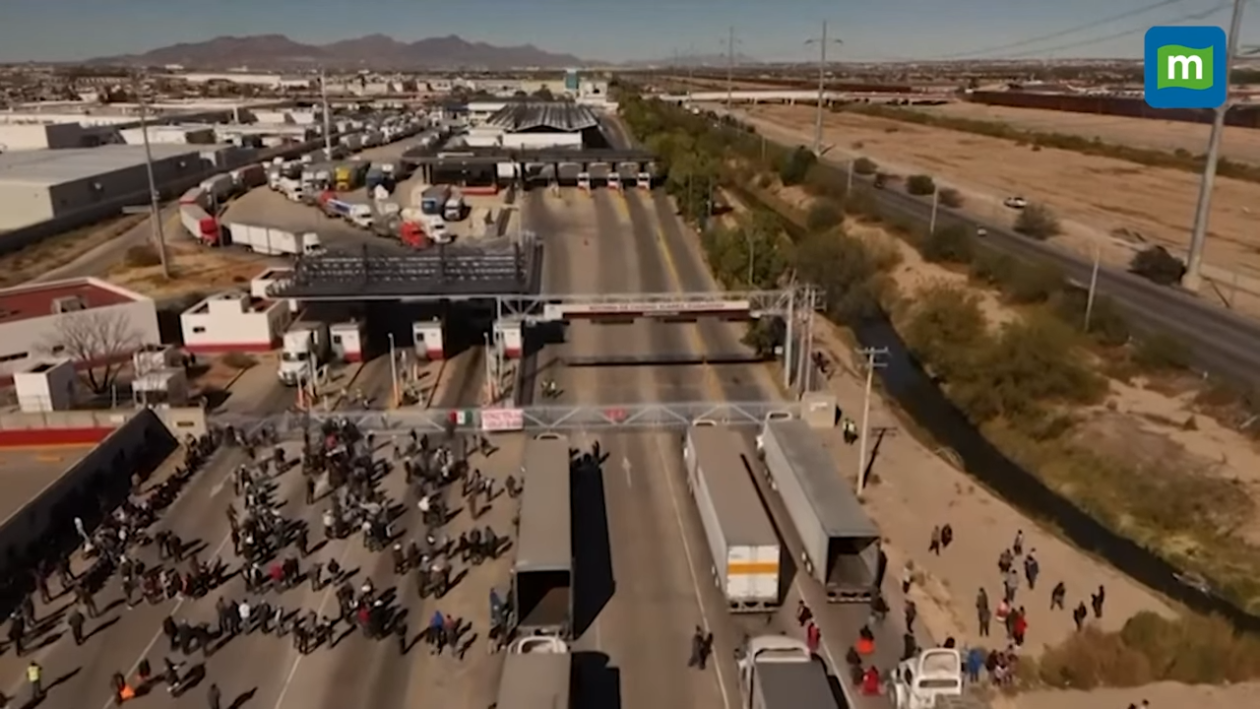
Farmers and truck drivers across Mexico have spent the past two weeks staging rolling protests and road blockades that intermittently shut down key highways and border crossings.
At their peak, these actions:
- Brought some of the busiest U.S.–Mexico gateways to a standstill
- Stranded tens of thousands of truckloads
- Triggered factory stoppages and major export delays
A nationwide agreement with the federal government has led to many blockades being lifted — but renewed closures are already being threatened in key northern states. For cross-border logistics teams, this is not a one-day headline; it’s an ongoing risk factor for planning U.S.–Mexico freight through the end of the year and into 2026.
This alert summarizes what’s happened, which corridors are most exposed, and what LSPs and shippers can do now.
What’s Happening on the Ground?
Rolling blockades, not a single continuous shutdown
Instead of one uninterrupted closure, Mexico has seen waves of blockades:
- National “mega-blockades” that shut down highways and access to multiple ports of entry for three to four days
- Localized border blockades that have restarted in specific hotspots, particularly in the north
- Ongoing protests in Mexico City and other state capitals over the proposed National Water Law
The triggers are a mix of:
- Proposed reforms to Mexico’s National Water Law, which rural producers say will tighten central control and restrict irrigation access
- Highway insecurity, including cargo theft, robberies, and extortion
- Disputes over grain prices and farm support
Even when crossings reopen, traffic does not immediately normalize. Export backlogs and imbalanced flows continue to ripple through networks for days.
Key Border Crossings Affected
While protests have surfaced in many regions, several crossings stand out for their logistics impact.
Ciudad Juárez – El Paso
The heaviest disruption so far has been at Ciudad Juárez–El Paso, one of the most critical corridors for automotive and maquiladora supply chains.
- Farmers blocked access roads and customs facilities across multiple days
- An estimated 38,000 truckloads were stranded, with roughly $1.45 billion in exports delayed or unrealized
- Local business leaders warned Juárez was “very close to running out of supplies,” as fuel and essential goods struggled to get through
- Maquiladora plants experienced technical stoppages, with tens of thousands of workers idled due to missing raw materials
Even after vehicles start moving again, export backlogs at Juárez are expected to take around 10 days to clear under normal operating conditions.
Mexicali – Calexico
At Mexicali–Calexico, farmers have repeatedly blocked the commercial crossing, limiting northbound freight capacity.
- Agricultural groups have used the crossing as leverage in negotiations over water rights and crop prices
- Access has alternated between full shutdowns and partial reopening with heavy congestion
- Rerouted flows add pressure to nearby gateways and inland corridors in Baja California and Sonora
Reynosa – Pharr International Bridge
The Reynosa–Pharr bridge is one of the most important produce and manufacturing gateways into Texas.
Recent actions have included:
- Farmers blocking highways and access roads feeding into the bridge
- Threats to resume full closures in Tamaulipas if federal concessions on water and pricing are not delivered
- Local business chambers in the region reporting mounting losses as perishable cargo and just-in-time shipments miss delivery windows
Nogales – Mariposa
Earlier in the protest cycle, truck drivers near Nogales blocked access to the Mariposa commercial crossing into Arizona for several days.
- Their demands focused primarily on highway security and enforcement
- A late-November agreement with authorities led to the lifting of most blockades, but tensions remain
Who Is Most Exposed?
Not every shipper or lane is affected equally. The highest risk is concentrated among:
- Automotive and electronics manufacturers
- Cross-border just-in-time flows between U.S. plants and maquiladoras
- Components and subassemblies moving daily through Juárez, Pharr, and Nogales
- Agricultural and food exporters/importers
- Fresh produce and refrigerated cargo using Pharr, Nogales, and Calexico
- Time- and temperature-sensitive loads with very little buffer for delays
- Nearshoring-driven flows
- U.S. and Canadian importers who’ve shifted production or staging to northern Mexico
- New cross-border lanes that depend heavily on a small number of gateways
- LTL and cross-dock networks
- Consolidation hubs near the border that rely on predictable, high-frequency shuttles
- Networks where delays cascade quickly across many smaller shipments
Even if you don’t ship through the most heavily affected crossings, rerouted traffic from other corridors can still increase congestion, dwell time, and unpredictability in your own lanes.
What’s Driving the Unrest?
While each region has its own dynamics, three themes keep reappearing.
1. Water rights and the proposed National Water Law
Farmers across multiple states argue that the proposed water reform will:
- Centralize control over wells and irrigation concessions
- Limit access for existing agricultural users
- Threaten the viability of grain, corn, and sorghum production in key growing regions
This is not a short-lived dispute. As legislative debates continue, farmers have warned that road and border blockades will remain on the table as a negotiation tactic.
2. Rising highway violence and cargo theft
Truckers and carrier groups highlight:
- Increased robberies, hijackings, and extortion on federal highways
- Specific corridors where cargo theft targeting consumer goods and food shipments has intensified
- Frustration with what they see as insufficient enforcement and protection
Security-related grievances are likely to persist even if a water law compromise is reached.
3. Pressure for direct political dialogue
Many protest leaders say blockades are:
- “The only mechanism” to secure attention from federal authorities
- A way to force structured dialogues on pricing, security, and water access
- A precursor to more targeted actions if negotiations stall
For logistics teams, the important takeaway is that border crossings are now part of this political toolkit — and could be again.
Operational Implications for LSPs and Shippers
From a logistics standpoint, the blockades are not just a one-off disruption. They reveal structural vulnerabilities in U.S.–Mexico freight networks.
Here are practical actions to consider.
1. Reassess your corridor risk map
- Identify which of your lanes touch Juárez, Pharr, Mexicali, Nogales, and Laredo.
- Distinguish between:
- Flows that must use specific crossings (due to plant location or contractual obligations), and
- Flows that can be more easily rerouted.
For critical lanes, build a simple “Plan B” map: alternative gateways, estimated added transit time, and cost impact.
2. Add buffer to lead times and inventory — selectively
- For just-in-time automotive and electronics flows, work with customers and plants to:
- Add a few days of buffer around critical production runs
- Stage safety stock on the U.S. side for key components
- Re-sequence production where possible to prioritize parts already in-country
Instead of adding blanket buffers everywhere, focus on the top 10–20 SKUs or flows that would cause the most damage if delayed.
3. Tighten coordination with carriers and customs brokers
- Ask carriers and brokers for lane-level visibility on:
- Wait times at each crossing
- Local enforcement or protest activity
- Recent rerouting patterns and capacity constraints
- Incorporate that information into your routing decisions daily — not just weekly.
The goal is to move from static routing to dynamic lane selection, at least for your most sensitive cargo.
4. Strengthen exception management, not just static tracking
In volatile conditions, static route plans are less useful than exception workflows. Consider:
- Defining clear thresholds for concern:
- “If border wait time exceeds X hours…”
- “If container does not clear customs by Day Y…”
- Pre-defining actions when thresholds are crossed:
- Escalate to customer with quantified impact
- Trigger alternative crossing or transport mode where viable
- Reprioritize which loads get capacity first when crossings reopen
You can’t eliminate surprises, but you can decide in advance how you respond when they happen.
5. Communicate proactively with customers and internal stakeholders
- Share a concise update on:
- Which crossings are most affected
- What you’re doing differently in routing and planning
- How ETAs may fluctuate in the coming weeks
- For key accounts:
- Co-create a short “border disruption playbook” that names contacts, fallback options, and communication rules.
The more you set expectations upfront, the less damage each new headline does to trust.
Where TRADLINX Fits in This Picture
Even though this disruption is centered on highways and border bridges, its impact extends across end-to-end ocean and intermodal flows:
- Containers bound for Juárez, Pharr, or Nogales sit longer at inland depots or rail ramps
- Export loads miss vessel cut-offs when northbound traffic stalls
- Door-to-door ETAs for U.S.–Mexico–overseas flows become harder to predict
This is where a platform like TRADLINX Ocean Visibility naturally supports the kind of response outlined above, without turning into another manual task.
With TRADLINX, logistics teams can:
- Track containers door-to-door, from pickup to final return, across 98% of global container flows
- See hourly-refreshed events and ETAs for shipments moving via Mexican and U.S. ports, rail ramps, and inland hubs
- Monitor dwell times and delay patterns at key nodes, so they can spot emerging bottlenecks early
- Share live, branded tracking views with customers instead of manually compiling screenshots and spreadsheets
In a context where highway blockades and political negotiations can change conditions overnight, what matters most is:
- Knowing which shipments are at risk
- Understanding where they’re stuck in the physical chain
- Being able to show customers the same, accurate picture you see internally
Border blockades will come and go. The organizations that navigate them best will be those that treat visibility as an operational capability — not just a status page.

Further Reading
- Farmers occupy Ciudad Juárez customs facility, halting border trade in protest of water law – Mexico News Daily
Detailed English-language reporting on the Juárez–El Paso blockades, the role of the proposed National Water Law, and the scale of the disruption to border trade. - Blockades choke Mexico’s border trade as farmers, truckers escalate unrest – FreightWaves
Logistics-focused overview of how rolling protests are impacting freight flows, with emphasis on key crossings and export volumes. - Farmers block Mexico’s Congress with tractors in protest against new national water law proposal – AP / ABC News
Explains the proposed water law, farmers’ concerns, and how recent blockades fit into a wider cycle of protests. - Farmers’ protests see road blockades in Mexico impact automotive supply chains, including plant closures – Automotive Logistics
Sector-specific view on how the disruptions are hitting automotive logistics and production planning.
Prefer email? Contact us directly at min.so@tradlinx.com (Americas), sondre.lyndon@tradlinx.com (Europe) or henry.jo@tradlinx.com (EMEA/Asia)




Leave a Reply