
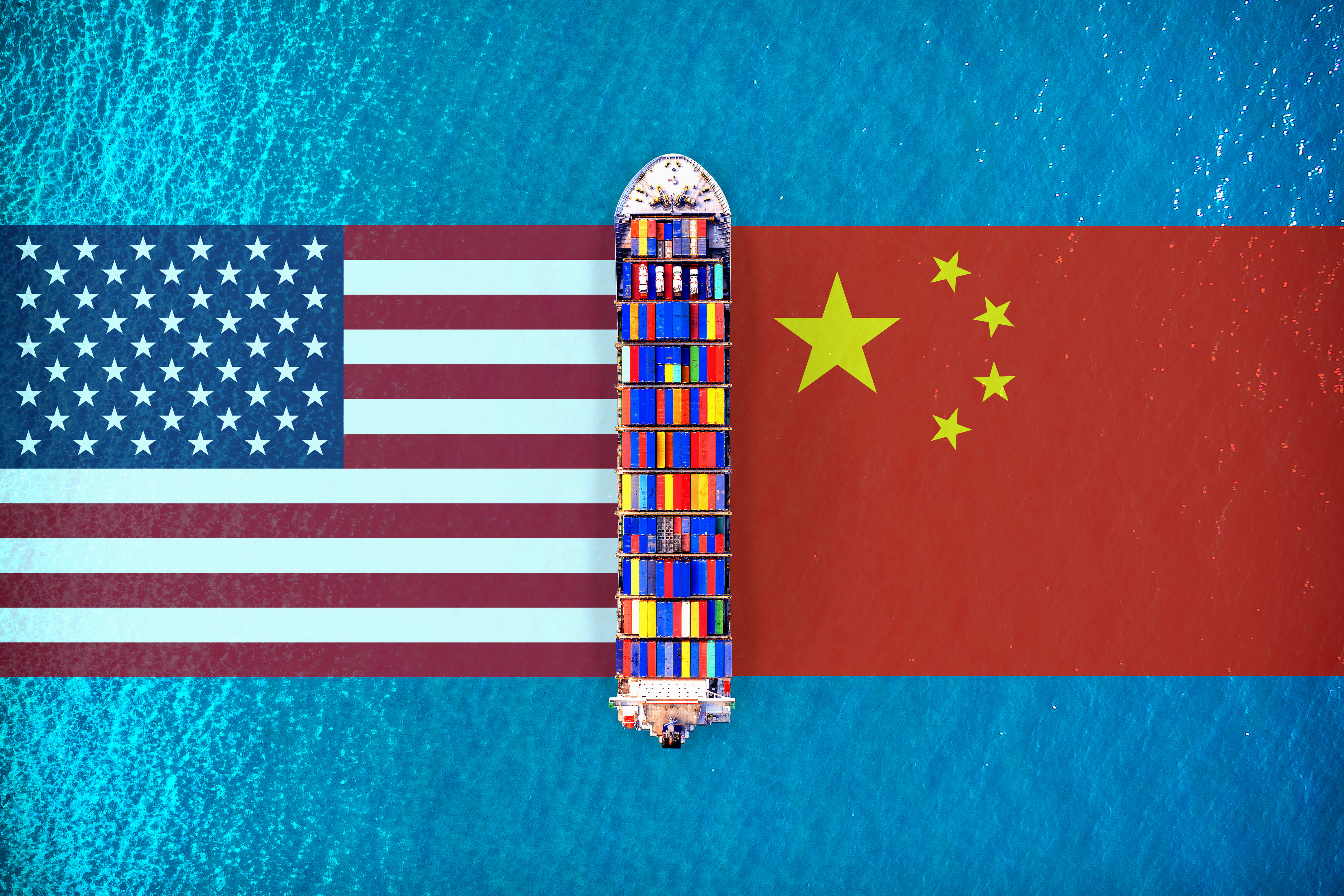
What changes on Oct 14
The United States will begin charging new port-entry service fees to certain vessels at their first U.S. port call per foreign rotation, with a cap of five charges per vessel per year. The framework was finalized on Apr 17, 2025 with a 180-day start-at-$0 period that ends on Oct 14, 2025. Fees then phase up annually according to annex-specific schedules.
- Annex I applies to vessels with a Chinese operator or owned by an entity of China. Basis is per net ton (NT). Initial rate is $50 per NT from Oct 14, 2025, then $80 per NT on Apr 17, 2026, $110 per NT on Apr 17, 2027, and $140 per NT on Apr 17, 2028.
- Annex II applies to Chinese-built vessels operated by non-Chinese operators. Basis is the higher of per-NT or per-container. Initial rates from Oct 14, 2025 are $18 per NT or $120 per container discharged, then $23 NT or $153 box on Apr 17, 2026, $28 NT or $195 box on Apr 17, 2027, and $33 NT or $250 box on Apr 17, 2028.
- Annex III applies to foreign-built vehicle carriers. The Apr 17 notice set a $150 per CEU structure beginning Oct 14, 2025. On Jun 12, 2025 USTR published a Request for Comments proposing to modify Annex III to charge $14 per NT. Treat this as proposed until a final notice issues.
Coverage order matters. LNG carriers are addressed in Annex IV and are not subject to the fees. Next in order are vehicle carriers under Annex III, then Annex I, then Annex II if neither I nor III applies.
Who is in scope
- Chinese operator or owner includes tests based on headquarters, control, and certain 25 percent ownership thresholds, as well as PRC government ownership or control. These definitions are tied to data on CBP Form 1300 or its electronic equivalent.
- Chinese-built follows CBP and USCG rules on place of build and appears on arrival paperwork.
- Assessment point is the first U.S. port. For Annex I and Annex II the fee is charged at the first U.S. port on a foreign rotation and is capped at five charges per vessel per year. Annex III does not include a five-charge cap.
Key carve-outs your ops team should check first
Annex II excludes several cases. Do not assume a fee before checking these:
- Vessels enrolled in certain U.S. Maritime Administration programs such as MSP and TSP.
- Empty or ballast arrivals.
- Smaller vessels below stated size or capacity thresholds.
- Short-sea voyages, generally under 2,000 nautical miles from specified U.S. ports.
- Vessels of certain U.S.-owned companies that meet Annex criteria.
- Certain specialized export vessels.
Separate remission provisions allow a temporary suspension if a qualifying U.S.-built vessel is ordered and delivered within specified timelines. A similar remission path exists in Annex III for foreign-built vehicle carriers.
Fee schedules at a glance
Table A. Which fee applies
| Vessel attribute | Annex | Basis | Assessed where | Annual cap | Effective |
|---|---|---|---|---|---|
| LNG carrier | IV | Requirements, not fee | First U.S. port | n/a | See Annex IV schedule |
| Vehicle carrier that is foreign-built | III | $150 per CEU from Oct 14, 2025, with proposed change to $14 per NT pending | First U.S. port | No annual cap specified in Annex III | Oct 14, 2025 |
| Chinese operator or owner | I | Per NT | First U.S. port | 5 per vessel per year | $50 NT on Oct 14, then 80, 110, 140 NT in 2026, 2027, 2028 |
| Chinese-built, non-Chinese operator | II | Higher of per NT or per container | First U.S. port | 5 per vessel per year | $18 NT or $120 box on Oct 14, then 23 or 153, 28 or 195, 33 or 250 |
Table B. Annex II exemptions to screen before you budget
| Category | What to verify |
|---|---|
| MARAD programs | Enrollment documentation for MSP or TSP as applicable |
| Empty or ballast | Arrival condition on CBP Form 1300 or EDI equivalent |
| Small vessel thresholds | Capacity and tonnage against Annex II size criteria |
| Short-sea | Voyage distance under 2,000 nm from specified U.S. ports |
| U.S.-owned companies | Ownership and control tests as defined in Annex II |
| Specialized export vessels | Qualifying vessel type and service description |
How costs may appear on customer invoices
- Annex I is assessed per NT on China-operator or China-owner vessels. Many operators are expected to convert this into per-box pass-throughs for U.S. inbound strings. Pass-through math is operator policy, not set by USTR.
- Annex II already supplies a per-container schedule. You can apply $120 per box from Oct 14 where Annex II is the applicable fee and where the per-container basis is higher than the per-NT amount for that voyage.
- Annex III is a per-CEU or potentially per-NT regime depending on the pending modification. Expect finished-vehicle freight to show a new line item once finalized.
Action checklist for LSPs this week
- Tag exposure by voyage. For all U.S.-bound arrivals on or after Oct 14, classify the vessel as: Chinese operator or owner, Chinese-built with non-Chinese operator, foreign-built vehicle carrier, or neither. Use CBP Form 1300 fields and carrier advisories.
- Budget the line. Where Annex II applies, include $120 per container from Oct 14 and roll forward the annual steps. Where Annex I could apply, request the operator’s pass-through policy in writing before cargo cutoff.
- Mind the first-U.S.-port rule. Fees trigger at the first customs-territory touch on a foreign rotation. Confirm port order on strings into LA/LB, SEA/TAC, HOU, NY/NJ, SAV and others.
- Screen exemptions. If a Chinese-built vessel is arriving empty or qualifies as short-sea, document the exemption. Do not over-collect.
- Prepare customer copy. Add one paragraph in booking confirmations that states: new USTR service fees begin Oct 14 and may appear as operator pass-throughs or per-container lines depending on vessel and operator. Link to your reference page.
- Track Annex III developments. Vehicle carrier fees start Oct 14, but the method may change if the $14 per NT proposal is finalized. Watch for the final notice and carrier billing guidance.
Sanity checks and common misunderstandings
- Do not assume Annex I is per container. It is per net ton. Any per-box math is an operator conversion.
- Do not double-apply fees. A vessel falls under one Annex fee or Annex IV requirements according to the order of precedence.
- Do not skip the carve-outs. Annex II has multiple exclusions that turn a yes into a no. Check them first.
- Question routing changes. Operators may tweak rotation order to manage exposure. That can change which U.S. port sees the fee and can shift arrival patterns.
Track status, exceptions, and surcharge notes in one place with TRADLINX Container Tracking

Quick glossary
- Net ton (NT): a measurement of a vessel’s internal volume used for regulatory fees.
- Rotation or string: the sequence of port calls before the vessel returns to a foreign destination.
- First U.S. port: the first port or place within the U.S. customs territory touched on that rotation.
References
- Federal Register – Notice of Action and Proposed Action, Apr 23, 2025
- USTR – Final Action with Annex I–IV, Apr 17, 2025 (PDF)
- Federal Register – Proposed Modification to Annex III, Jun 12, 2025
- USTR – Section 301 Shipbuilding Investigation page
- White & Case – Summary of the final notice and schedules
- Norton Rose Fulbright – Annex definitions and fee tables
- Vedder Price – Practitioner explainer and Annex III update
- Reuters – Industry impact context and timelines
Why overpay for visibility? TRADLINX saves you 40% with transparent per–Master B/L pricing. Get 99% accuracy, 12 updates daily, and 80% ETA accuracy improvements, trusted by 83,000+ logistics teams and global leaders like Samsung and LG Chem.


Prefer email? Contact us directly at min.so@tradlinx.com (Americas) or henry.jo@tradlinx.com (EMEA/Asia)


Leave a Reply