
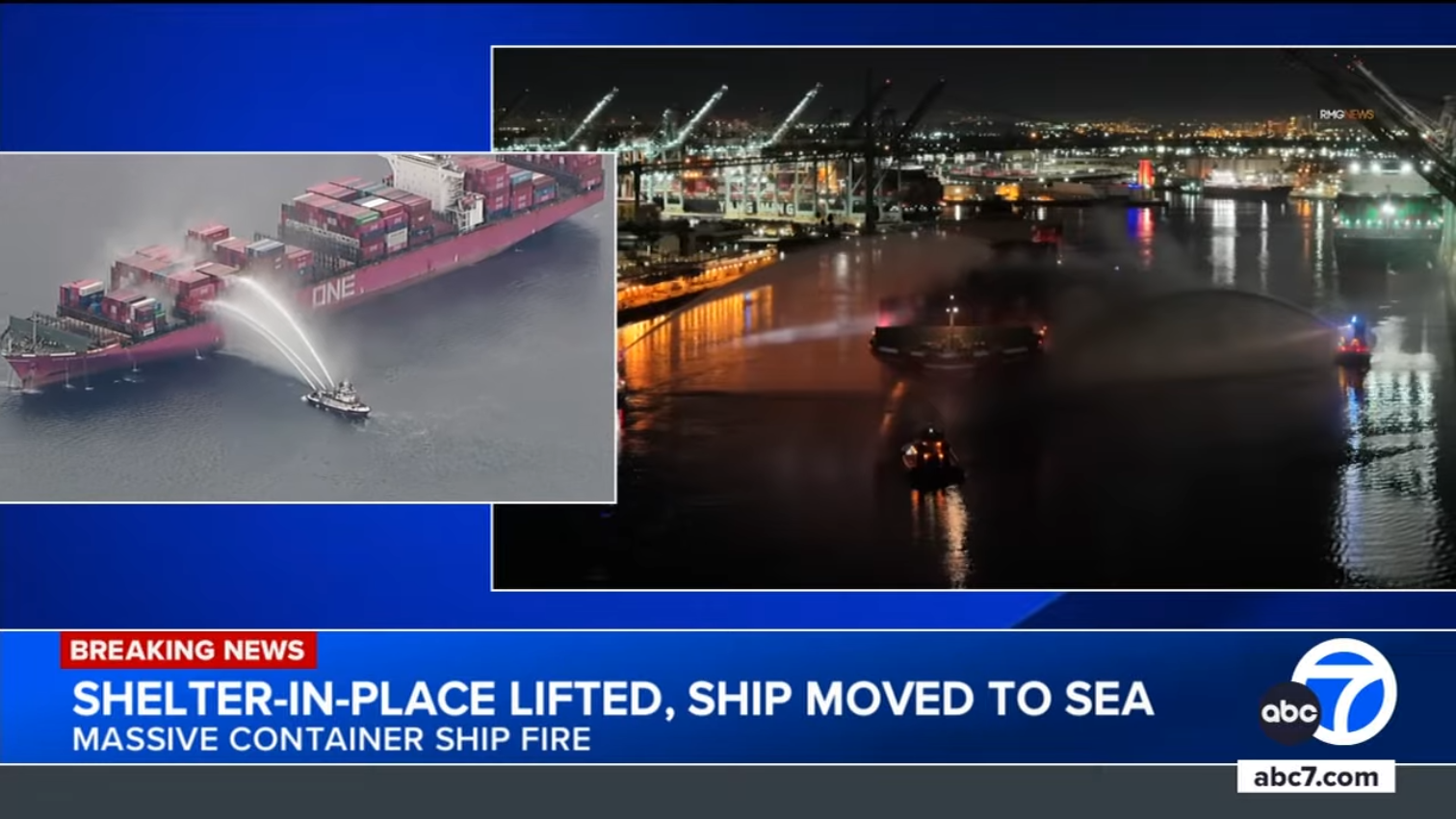
What Happened — At a Glance
- Date of incident: November 21, 2025
- Location: Yusen Container Terminal, Port of Los Angeles
- Vessel: ONE Henry Hudson, a container ship
- Event: Fire broke out below deck while docked
- Response agencies: LA Fire Dept., Long Beach Fire Dept., U.S. Coast Guard
- Complications: Mid-deck explosion, hazardous materials involved
- Immediate impact:
- Four container terminals temporarily suspended
- Shelter-in-place orders issued for nearby areas
- State Route 47 traffic disrupted
- Current status (as of Nov. 22):
- Fire substantially contained
- Ship towed offshore
- All crew accounted for, no injuries
- Port operations resumed
- Terminals reopened, road access restored
Operational Status at the Port of Los Angeles
- Terminals: Four of seven were suspended at peak; all have since resumed operations
- Roads: State Route 47 reopened with normal traffic
- Vessel status: ONE Henry Hudson moved outside the breakwater for ongoing suppression
- Real-time visibility tools: Use the Port’s Cargo Operations Dashboard for live data on terminal dwell times, gate moves, and rail flow
- Primary terminal affected: Yusen Terminal (Berths 212–223)
Risks That Still Need Monitoring
| Risk Area | What to Watch | Why It Matters |
|---|---|---|
| Vessel turnaround delays | Berthing queues or delayed cargo handoff | Delays can cascade to inland transport |
| Container damage / holds | Impacted units from the ONE Henry Hudson voyage | Risk of inspection delays, added D&D fees |
| Terminal productivity lags | Recovery pace post-cleanup, especially at Yusen | Recovered terminals may still have backlog |
| Data visibility gaps | Missing or delayed container events | Can affect scheduling and customer updates |
| Regulatory or insurance impacts | Investigation findings, hazmat cargo handling | Could delay clearance or raise documentation demands |
How Logistics Teams Can Stay Ahead
- Audit affected shipments — identify containers linked to the vessel’s port call and confirm status and routing.
- Monitor downstream effects — track potential delay patterns in vessel arrival and rail/gate handling.
- Use anomaly detection tools — spot abnormalities in dwell time or event sequences, especially for impacted containers.
- Stay close to port and carrier updates — especially regarding the ongoing investigation and salvage timeline.
- Proactively communicate with customers — even if delays are minimal, early context builds trust.
Final Takeaway
While the immediate emergency has been resolved, the effects of the ONE Henry Hudson fire remain active in the operational layer.
Tools that surface hidden disruptions early — such as TRADLINX’s container-level event monitoring — help teams act before exceptions escalate, strengthening control and customer confidence.

Sources
- Port of Los Angeles: Statement on ONE Henry Hudson Incident
- LAFD News: Multi-Agency Response to Container Ship Fire
- Bloomberg: Port of LA Operations Restart Post Fire
- ABC News: Firefighters Battle Blaze on Docked Ship
- Independent: Hazardous Cargo Under Investigation in LA Ship Fire
- Port of LA: Cargo Operations Dashboard
Why overpay for visibility? Tradlinx saves you 40% with transparent per–Master B/L pricing. Get 99% accuracy, 12 updates daily, and 80% ETA accuracy improvements, trusted by 83,000+ logistics teams and global leaders like Samsung and LG Chem.


Prefer email? Contact us directly at min.so@tradlinx.com (Americas), sondre.lyndon@tradlinx.com (Europe) or henry.jo@tradlinx.com (EMEA/Asia)


Leave a Reply