
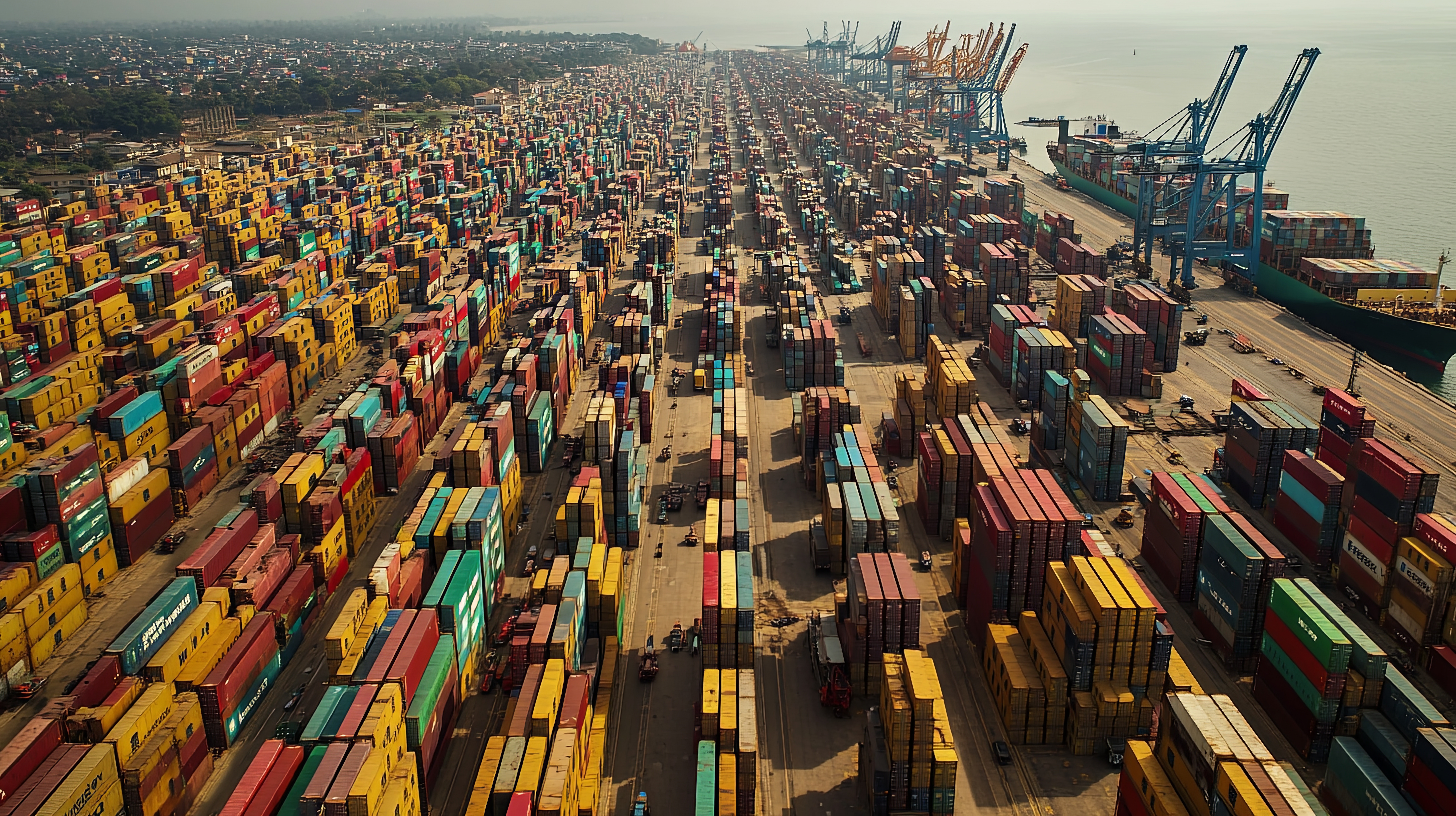
High-Tech Ports Keep Missing the Schedule
In global shipping, size is supposed to mean strength. Mega-ports like Shanghai and Singapore are built to handle the world’s biggest vessels with state-of-the-art automation, extensive quay length, and dense feeder networks. Yet in a striking reversal, these very ports now rank among the least reliable globally for schedule performance.
Meanwhile, smaller Latin American terminals — some operating below capacity — top global reliability rankings. Case in point: Santa Marta, Colombia ranks first in schedule reliability with an astounding 94.5% on-time performance. In contrast, Shanghai ranks 169th out of 202, and Singapore sits at 145th.
High-volume terminals with advanced infrastructure are consistently underperforming on the one metric that matters most to cargo owners: predictability. For shippers and freight forwarders, unreliable schedules mean missed connections, added costs, and broken customer commitments — regardless of how modern the cranes are or how many TEU a port handles.
The Rankings That Broke the Narrative
According to Sea-Intelligence’s comprehensive review of 202 deep-sea ports, the world’s busiest and most “advanced” terminals rank shockingly low on schedule reliability:
- Shanghai: 169th
- Singapore: 145th
- Los Angeles: 124th
- Rotterdam: 106th
By contrast, 12 of the top 20 most reliable ports are in Central and South America. The global average for schedule reliability in 2025 is just 51.5% — a level once deemed “completely unacceptable” before the pandemic. Among the 20 most-called ports worldwide, the average is only 60.3%.
These numbers challenge decades of assumptions about scale, automation, and terminal design. They raise a critical question for the global industry: What exactly are the smaller ports doing right — and what have the mega-terminals missed?
What Smaller Ports Are Doing Right
Operational Simplicity and Focus
Santa Marta operates its container terminal at just 60% capacity, maintaining smooth flows rather than chasing maximum throughput.
Key operational features include:
- Two Post-Panamax gantry cranes for container handling
- Bulk discharge systems that handle 600–800 tons per hour
- Lean coordination — fewer layers, more direct control
Productivity snapshot:
- 632 vehicles discharged in 1 hour 50 minutes
- 332 vehicles/hour discharge rate, double the regional average
This performance comes not from heavy automation, but from deliberate focus on efficient, realistic throughput management.
Specialization Over Scale
Latin American ports don’t try to be everything to everyone. Instead, they emphasize:
- Region-specific trade flows
- Targeted infrastructure matched to known volumes
- Strong crew training and operational discipline
- Vessel call coordination centers for precise berthing windows
Less Complexity, More Control
Compare monthly vessel calls:
- Santa Marta: 20–30 vessels/month
- Major hub ports: 100+ vessels/month
With fewer simultaneous demands, smaller ports achieve better visibility, simpler planning, and fewer cascading disruptions — all essential to reliability.
What Mega-Terminals Are Missing
The Mega-Ship Paradox
Ultra-large vessels are meant to reduce costs per TEU — but they create operational chaos at port level.
Problems introduced by bigger ships:
- Longer port stays and berthing conflicts
- Lower sailing frequency causes throughput spikes
- Congestion ripple effects across transshipment chains
Recent examples of congestion:
- Singapore: 450,000+ TEU waiting offshore, delays up to 7 days
- Shanghai: 72–96 hour average waiting times
- Port Klang: 51 vessels waiting, 2–3 day delays
Automation Without Resilience
Automation promises efficiency but often delivers fragility.
- Cost: $500M+ average investment per terminal
- Breakeven volume: 1M+ TEUs/year needed for ROI
- Productivity loss: Common in early years of rollout
McKinsey and World Bank studies show that terminals implementing full automation frequently report lower-than-expected returns, especially when human coordination is still critical.
Too Many Alliances, Too Much Pressure
Carrier alliances now drive massive traffic into a narrow set of hub terminals, creating fragility.
Structural problems:
- Fewer port calls but larger call sizes
- Terminal consolidation intensifies load peaks
- Delayed berths disrupt downstream ports
One model showing promise: Maersk and Hapag-Lloyd’s Gemini Cooperation achieved 85–90% reliability by:
- Reducing number of port calls
- Relying more on well-orchestrated feeder services
Strategic Misconceptions About Scale
The Scale vs. Efficiency Paradox
It’s widely assumed that bigger ports mean better performance — but global data shows otherwise. Multiple studies across Asia, Europe, and Latin America confirm that efficiency gains do not scale linearly with port size.
Key findings from port system research:
- Larger ports often underperform when handling high-transshipment or hub traffic
- Smaller ports show higher technical efficiency when aligned with regional trade flows
- Capital investment alone does not fix congestion or operational misalignment
Sea-Intelligence CEO Alan Murphy summarizes it clearly: “The most well-connected ports in deep-sea trades are also some of the most unreliable”.
The Congestion Multiplier Effect
When major hub ports experience delays, the impact is rarely local. Global container schedules are tightly interlinked, so disruptions at one mega-port ripple across the network.
Current congestion impact (mid-2025):
- 2 million TEU of global fleet capacity tied up in bottlenecks
- 6.8% of the global fleet currently idle due to congestion
- Over 400,000 TEU removed from circulation in one week
Ports like Singapore or Shanghai act as chokepoints. When one gets clogged, vessels skip port calls, containers miss connections, and downstream carriers scramble to recover schedules.
Emerging Models and Real Fixes
The Hub-and-Spoke Reboot
Carriers and ports are starting to rethink the hub model. The most promising shift is toward network simplification — not bigger terminals, but smarter routing.
What’s working:
- Gemini Cooperation model — fewer direct calls, more reliable feeder networks
- Distributed scheduling — smoother flows across regional terminals
- Vessel call coordination centers — managing berthing times more proactively
Latin American Lessons
Smaller ports across Central and South America are outperforming through focused excellence — and their practices offer a playbook for others.
Top strategies worth emulating:
- Operate below max capacity to allow flexibility and avoid overload
- Invest in process, not just equipment — crew training, dispatch efficiency, call sequencing
- Specialize regionally rather than chase global throughput rankings
- Streamline operational layers to cut decision lag
In ports like Santa Marta, schedule reliability is not a tech upgrade — it’s a byproduct of intentional design, constraint-based planning, and modest but well-utilized infrastructure.
TL;DR: Why Small Ports Are Beating the Giants
- Despite massive investment, ports like Shanghai and Singapore rank poorly in schedule reliability
- Smaller Latin American ports like Santa Marta are leading global rankings through smart, focused operations
- The size and complexity of mega-terminals create bottlenecks automation alone can’t fix
- Reliability gains come from simpler networks, vessel call coordination, and managing capacity
- Shipping alliances and mega-ship deployments have added volatility — not stability
The Future of Schedule Reliability
The container shipping industry has spent decades optimizing for size, throughput, and automation — but schedule reliability now demands a different set of priorities. The world’s most connected terminals are no longer the most dependable. In fact, port complexity is now a liability.
Smaller ports like Santa Marta are proving that strategic simplicity, realistic capacity management, and operational coordination deliver better results than endless infrastructure expansion. Carriers are adapting too, with models like the Gemini Cooperation shifting focus to network design over brute scale.
For terminal operators, shippers, and freight forwarders, the takeaway is clear: reliability isn’t about who’s biggest. It’s about who’s built to flow — predictably, repeatably, and sustainably.
Mega-ports aren’t reliable. Your customers still expect you to be.
TRADLINX gives forwarders real-time visibility tools that work—no bloat, just what helps you deliver.
What Readers Are Asking
Why do larger ports struggle with reliability despite advanced infrastructure?
Large ports handle more vessel calls, complex transshipment, and experience peak congestion from mega-ships and alliance consolidation. These factors make consistent berthing and cargo flow difficult to manage — especially when automation introduces additional layers of fragility.
Is automation hurting or helping port efficiency?
Automation helps with labor cost and consistency but often underperforms during early rollout stages. Many terminals report reduced productivity, expensive implementation issues, and high training requirements that smaller ports avoid through simpler practices.
How can carriers improve schedule reliability?
By reducing direct port calls, increasing the use of feeder networks, coordinating vessel arrivals more precisely, and avoiding reliance on a small number of overloaded mega-hubs. This is exactly what’s shown success in the Gemini Cooperation model.
What lessons can logistics providers take from smaller ports?
Focus on flow, not volume. Build systems around what’s manageable. Prioritize crew training, operational visibility, and predictable performance over chasing scale or automation for its own sake.
Sources
- Sea-Intelligence: Port Power Rankings
- Port Technology: Latin American Ports Dominate Charts
- Asia Cargo News: Global Schedule Reliability in 2025
- WeFreight: Port Congestion Across China
- McKinsey: The Future of Automated Ports
- Maritime Executive: New Alliances and Schedule Reliability
- Seavantage: Port Congestion Explained
- Americas Market Intelligence: Port Opportunities in Latin America
- Hapag-Lloyd: Asia-Latin America Schedule Update
- Innovez-One: Port Call Optimization



Leave a Reply