
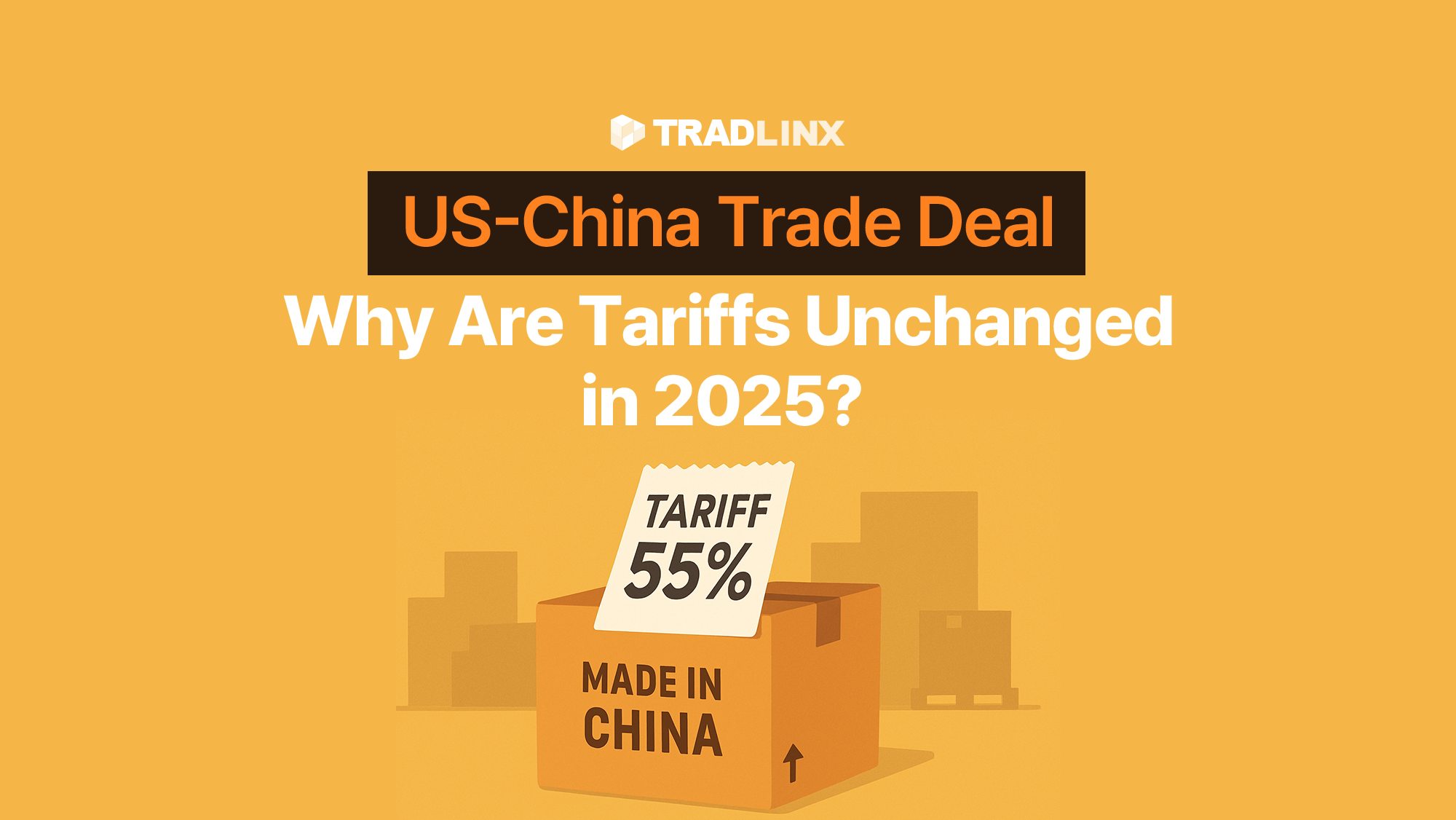
“The deal with China is done.”
This one phrase from U.S. President Donald Trump raised expectations for an end to the long trade dispute.
However, contrary to the weight of the word ‘done,’ U.S. officials quickly stepped back, clarifying that ‘a final coordination with President Xi Jinping still remains.’ It was also revealed that the agreement is not a permanent trade treaty, but closer to a ‘basic framework’ for future negotiations.
So, what is really happening behind the scenes?
This analysis will clarify the complex reality moving in the opposite direction of the ‘deal done’ headlines and explain the intricate reasons why.
🚨 TL;DR — The US-China ‘Deal’: The Real Story for Supply Chains
- The ‘Deal’ Isn’t Done: The US-China agreement is a temporary framework, not a final resolution.
- Tariffs at Historic Highs: U.S. monthly tariff revenue has hit $19.3 billion (a 231% year-over-year surge) , the highest level since the Great Depression.
- Shipping Has Frozen Over: Container bookings from China to the U.S. have plummeted by 33% , while total import bookings are down 18%.
- The Real Goal is a Tech War: The conflict isn’t about the trade balance—it’s a strategic battle to disrupt China’s high-tech sectors like EVs and semiconductors , a war for future industrial dominance.
- The Bottom Line: Persistent uncertainty is the new normal for supply chains. Survival now depends on proactive risk management, not waiting for a resolution.
1. A Fragile Truce, Not a Final Agreement
The current “deal” is best understood as a temporary, unstable truce rather than a complete cessation of hostilities.
While it extends the “pause” in the trade war agreed to in Geneva, the fundamental sources of conflict are still raging beneath the surface.
The ongoing disputes over strategic materials tell the real story.
The U.S. has condemned China’s export controls on rare earth elements and magnets, while the U.S. Department of Commerce has, in turn, restricted ethane exports to China.
A Commerce official stated that progress is contingent on a “balanced manner” of lifting these mutual restrictions, highlighting that the conflict is nowhere near a true resolution.
2. The Tariff Burden: Highest Since the Great Depression
Amid this uncertainty, American companies are shouldering a historic financial burden. It’s crucial to remember that tariffs are taxes paid by U.S. importers, not by China.
The numbers are staggering.
- In April 2025, U.S. monthly tariff revenue hit $19.3 billion, a 231% surge from the prior year.
- This represents the highest level since the Great Depression, a clear indicator of the immense cost pressure on businesses.
- This cost is inevitably passed on to consumers, creating an annual loss of $2,800 per U.S. household, with clothing and footwear prices hit hardest.

3. Warning Signs: Maritime Trade Grinds to a Halt
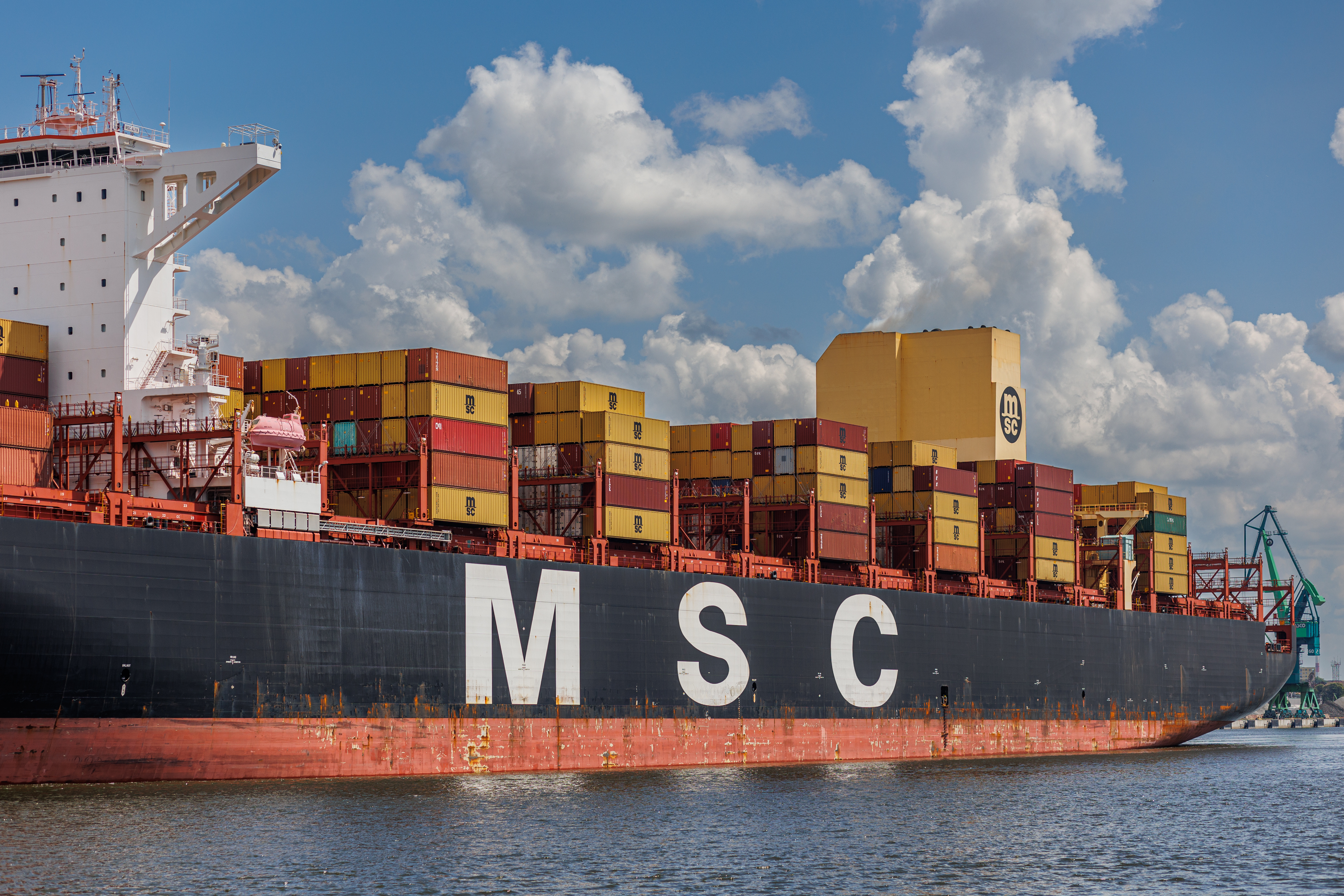
The combination of soaring tariffs and deep uncertainty has frozen maritime trade volumes. The impact is immediate and severe.
- In early June 2025, container bookings from China to the U.S. plummeted by 33% from their recent peak.
- This isn’t just a China issue. Total U.S. import bookings from all countries dropped by 18% during the same period.
- The global shipping industry is sounding the alarm. Drewry warns that high freight rates could fall sharply due to weakening demand, while Maersk notes that policy uncertainty for the rest of the year remains exceptionally high.
4. The Real Goal: A War for Future Industrial Dominance
Why is the U.S. maintaining its aggressive stance, even as it hurts its own industries?
Because this is not just about trade deficits—it’s a strategic war for control over the industries of the future.
The “55% total tariff” concept hinted at by President Donald Trump was not a blanket tax.
It was a strategic weapon designed to precision-target high-tech sectors China is cultivating, such as electric vehicles, semiconductors, and solar panels.
The goal is to neutralize China’s future growth engines before they can mature.
This policy is already reshaping global supply chains, with analysis from the European Central Bank (ECB) confirming that countries like Vietnam, Mexico, and the EU are gaining a competitive advantage as China’s exports to the U.S. fall.

Prepare for a New Era of Uncertainty
The “deal” is not a final resolution; it is a temporary framework in a long-term strategic rivalry.
For supply chain leaders, this marks the beginning of a new normal defined by persistent, managed uncertainty.
Waiting for a clear, final agreement is not a viable strategy.
In this volatile environment, the ability to anticipate and react to risk is the ultimate competitive advantage.
It’s time to gain transparent, end-to-end visibility of your freight operations and turn unpredictable risks into strategic opportunities.




Leave a Reply