
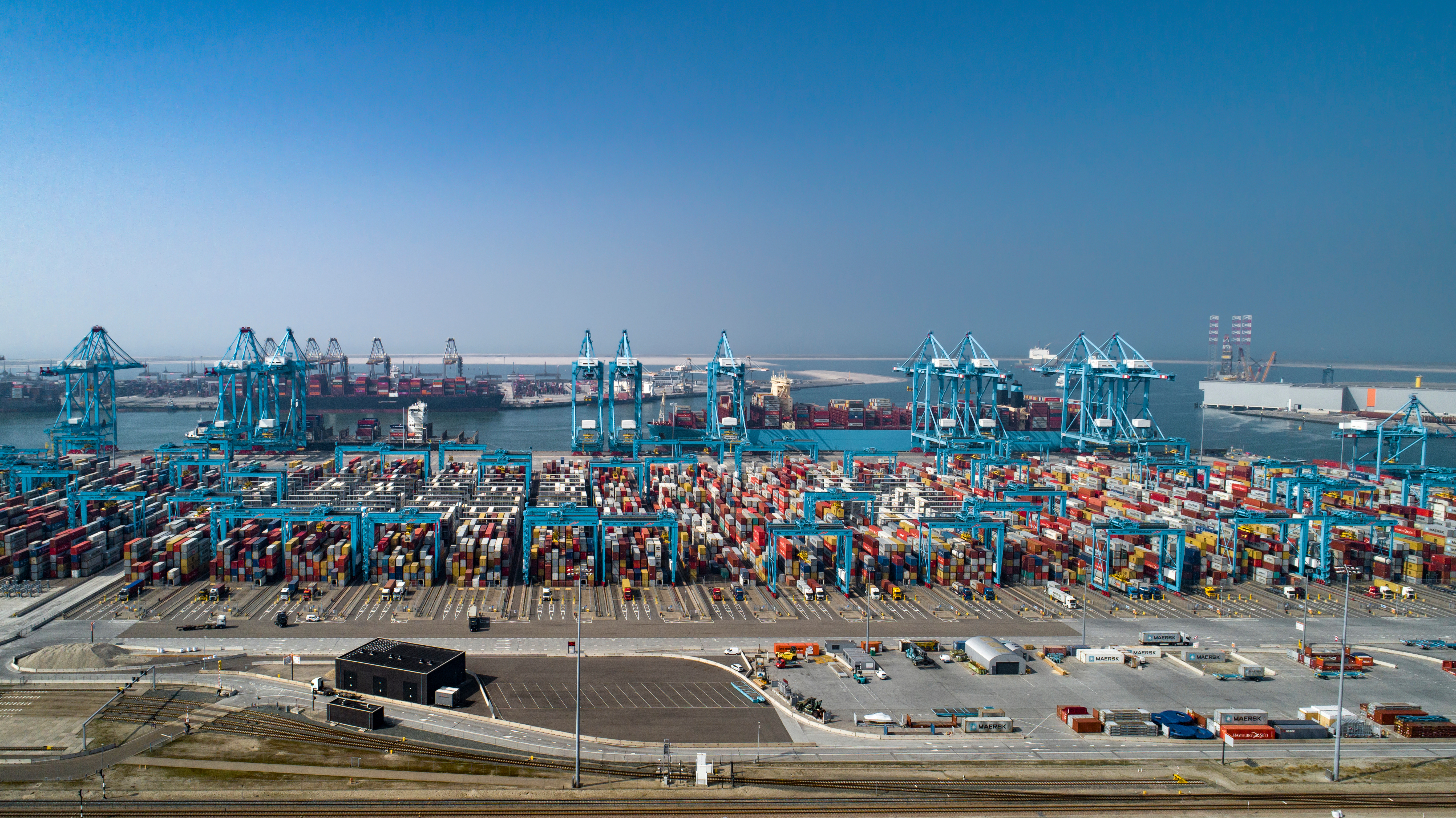
Automation is revolutionizing global trade, with ports like Rotterdam and Shanghai leading the way in innovation and efficiency. However, the story is different in the United States, where progress faces unique challenges. For logistics professionals, the contrast between global leaders and U.S. ports provides critical insights into:
- Streamlining supply chains
- Enhancing visibility
- Meeting client demands
Global Leaders in Automation
Port of Rotterdam, Netherlands
- Annual TEUs: ~14 million.
- Innovation Highlight: Fully automated terminals using digital twins and autonomous vehicles to optimize operations.
- Did You Know? Rotterdam runs some terminals with as few as 10-15 workers per shift, demonstrating the power of automation.

Port of Shanghai, China
- Annual TEUs: 47.28 million (world’s busiest container port).
- Innovation Highlight: Yangshan Deep-Water Terminal integrates unmanned cranes, self-driving trucks, and 5G networks.
- Did You Know? Shanghai processes containers 40% faster than ports reliant on manual operations.

Port of Singapore
- Annual TEUs: 37 million.
- Innovation Highlight: The Tuas Mega Port project, set to handle 65 million TEUs annually by 2040, combines AI planning with autonomous yard vehicles.
- Did You Know? Singapore connects to 600 ports in 123 countries, cementing its role as a global shipping hub.

Port of Antwerp-Bruges, Belgium
- Annual TEUs: Over 12 million.
- Innovation Highlight: Hydrogen-powered tugboats and a circular economy approach to align sustainability with technology.
- Did You Know? Antwerp is developing a hydrogen network to power port operations, setting a green logistics precedent.

Automation Trends: The Big Picture
Global leaders like Rotterdam, Shanghai, and Antwerp are setting benchmarks not just for automation but also for sustainability, visibility, and innovation. Emerging ports in Spain, Germany, and beyond are implementing cutting-edge solutions such as AI-driven forecasts and IoT-based pollution tracking.
U.S. Ports: A Case of Missed Opportunities?
Current Snapshot of U.S. Ports
- Port of Los Angeles: Handles 10.7 million TEUs annually with investments in AI tools to reduce congestion.
- Port of Long Beach: Processes 8.1 million TEUs and features one of the few fully automated terminals in the U.S.
- Comparison: Despite handling fewer TEUs than Rotterdam, automation gaps make U.S. ports comparatively less efficient.
Despite these investments, U.S. ports lag behind in overall efficiency, creating ripple effects in the logistics ecosystem.
Barriers to Automation in U.S. Ports
- Labor Dynamics: Union agreements often prioritize job preservation, slowing automation efforts.
- Cost Factors: High costs of implementation limit the scalability of advanced technologies like digital twins.
- Process-Focused Automation: U.S. ports emphasize optimizing workflows (e.g., gate systems) over full terminal automation.
A New Twist: The ILA vs. Automation
Recent events underscore the tension in the U.S.:
- Contract negotiations between the ILA (International Longshoremen’s Association) and USMX have stalled, with automation as the flashpoint.
- President-elect Donald Trump expressed strong support for the ILA’s stance against automation, arguing it “hurts American workers.”
- While global leaders like Rotterdam embrace automation as a driver of growth, the U.S. remains caught between modernity and tradition.
Takeaways for Logistics Professionals
Why Automation Matters
- Efficiency Gains: Ports like Rotterdam cut dwell times, reducing delays and costs for shippers.
- Enhanced Visibility: Real-time tracking tools at automated ports ensure accuracy and reliability in supply chain data.
- Sustainability Benefits: Initiatives like Antwerp’s hydrogen network show how green technology can align with operational goals.
Pro Tip: Solutions like TRADLINX, recognized as APAC’s best, simplify logistics by providing real-time tracking and operational visibility to navigate automation gaps.
Closing Thoughts: Charting the Path Forward
The contrast between the world’s most automated ports and the U.S. highlights both opportunities and challenges in modern logistics. As ports like Rotterdam and Shanghai push the boundaries of automation, U.S. ports face pivotal decisions about their future.
For logistics professionals, the key lies in adopting best practices from automation leaders while leveraging tools like TRADLINX to enhance efficiency and visibility in the face of systemic hurdles.
Are you ready to revolutionize your logistics operations? Start your free trial with TRADLINX Ocean Visibility today and navigate the future with confidence.




Leave a Reply