
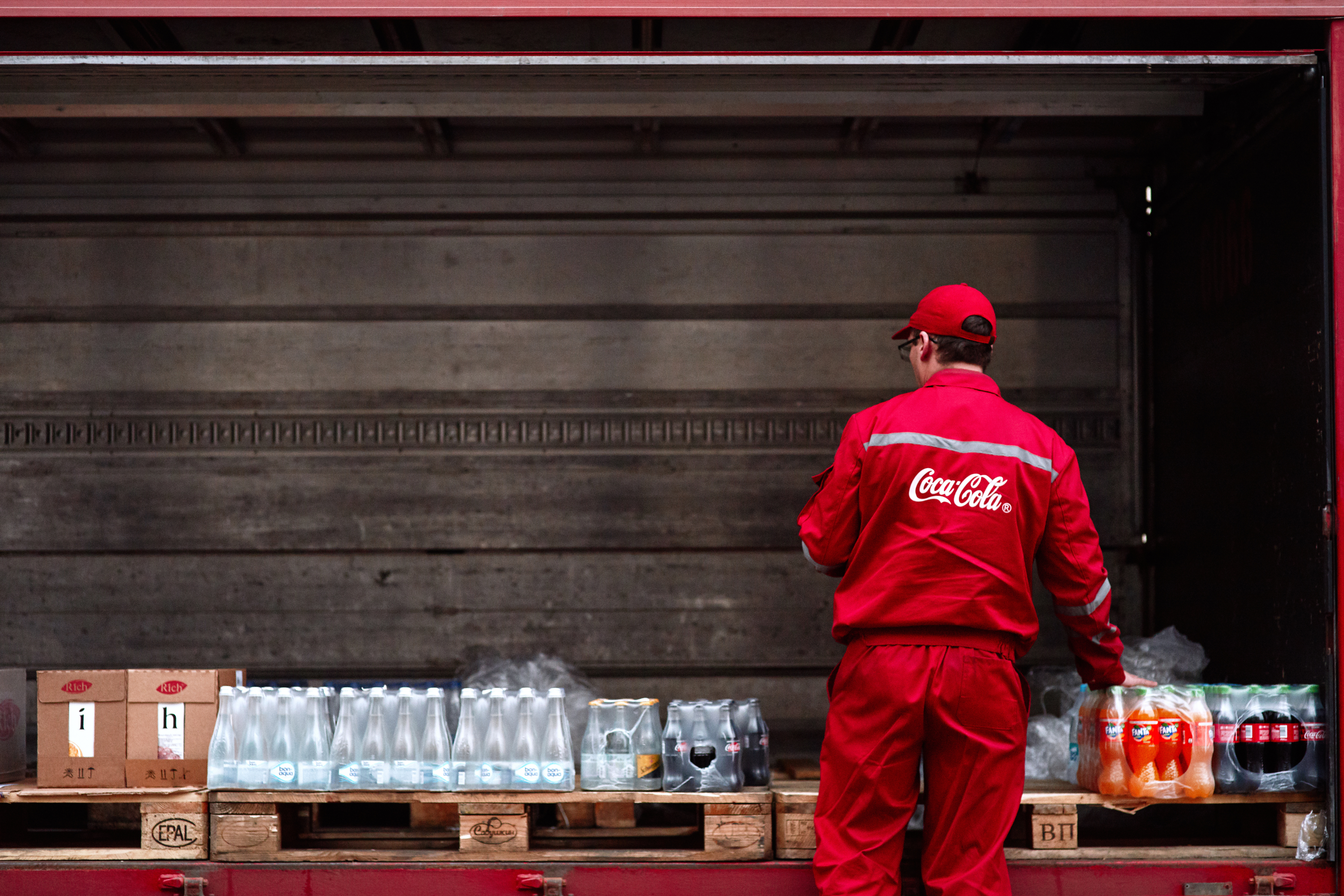
Coca-Cola, a global beverage icon, has crafted a supply chain as recognizable as its signature drink. Operating in over 200 countries with a blend of company-owned and independent bottling partners, Coca-Cola has mastered delivering its products while maintaining quality, sustainability, and efficiency. This post explores Coca-Cola’s sophisticated supply chain management (SCM) strategy, highlighting key elements that drive its global operations.
Diversified Supply Chain Model
Coca-Cola employs a dual supply chain model, combining company-owned bottling operations and independent bottling partners. This approach offers several advantages:
- Risk Diversification: Spreads risk and allows for better adaptation to regional market conditions.
- Local Adaptation: Enables tailoring product offerings to suit local tastes and preferences, enhancing competitiveness.
Quality Control and Procurement Management
Coca-Cola maintains a rigorous focus on quality control throughout its supply chain:
- Approved Suppliers: Coca-Cola chooses suppliers based on stringent standards, including location, size, equipment level, and raw materials. Bottling partners are required to source only from this approved list.
- Regular Reviews: The company regularly reviews its supply chain operations at all levels, including bottlers, distributors, and retailers. Performance is monitored based on field feedback, enabling action plans to address issues.
Technology-Driven Optimization
Coca-Cola leverages advanced technology to optimize its supply chain:
- Data Analytics: Used for demand forecasting, inventory management, and route optimization to minimize costs and maximize efficiency.
- Real-Time Tracking: IoT sensors are implemented on delivery trucks and in warehouses for real-time condition monitoring.
Sustainable Supply Chain Initiatives
Sustainability is a cornerstone of Coca-Cola’s supply chain strategy:
- Mission 2025: A commitment to sourcing 100% of key agricultural ingredients in line with sustainable agricultural principles by 2025.
- Supplier Engagement: Actively integrates sustainability criteria into tenders and contracts, using tools like EcoVadis to assess suppliers.
- Emissions Reduction: Encourages suppliers to adopt energy-saving measures and transition to renewable energy sources.
Supplier Relationship Management (SRM)
Coca-Cola’s SRM program is critical for maintaining quality and fostering long-term partnerships with suppliers:
- Supplier Evaluation and Selection: Ensuring suppliers provide quality products and services through evaluation and selection processes.
- Performance Tracking: Monitoring supplier performance to manage the supply chain effectively and develop new strategies.
After-Sales Logistics
Coca-Cola prioritizes efficient after-sales logistics to meet customer demands:
- Frequent Manufacturing: Products are manufactured more frequently to meet consumer demands with speed.
- Proximity to Customers: Production plans are established close to customers, ensuring daily interaction between all points of contact on the supply chain and the main site.
Navigating Regulatory Changes
Coca-Cola proactively manages regulatory changes to maintain compliance and customer satisfaction:
- Proactive Innovation: The company develops and tests new solutions early, like introducing attached bottle caps in response to the EU’s Single-Use Plastics Directive.
- Local Adaptation: Coca-Cola uses local bottlers to better adapt to country-specific regulations.
- Stakeholder Engagement: The company engages with regulatory bodies and other stakeholders to drive progress on sustainability issues.
Global Quality and Food Safety Standards
Coca-Cola maintains strong global quality and food safety standards:
- Governance Framework: Includes regulatory compliance, standards, requirements, and guidelines covering all aspects of the supply chain.
- Continuous Improvement: Promotes continuous improvement through innovation and collaboration with industry partners.
Challenges and Future Directions
Despite its sophisticated approach, Coca-Cola faces ongoing challenges:
- Supply Chain Complexity: Coca-Cola operates in over 200 countries with unique regulatory requirements and consumer preferences.
- Sustainability Goals: Meeting ambitious sustainability goals related to plastic waste, water conservation, and carbon emissions reduction.
- Global Sourcing: Ensuring a stable and sustainable supply of raw materials while managing commodity price fluctuations and potential trade restrictions.
Coca-Cola’s supply chain management model offers valuable insights for businesses across industries. By diversifying its supply chain, focusing on quality control, leveraging technology, prioritizing sustainability, and adapting to local regulations, Coca-Cola has created a supply chain that is not only efficient but also adaptable to future challenges.
Prefer email? Contact us directly at min.so@tradlinx.com (Americas), sondre.lyndon@tradlinx.com (Europe) or henry.jo@tradlinx.com (EMEA/Asia)
- [1] The Coca-Cola Supply Chain & What Companies Can Learn – RFgen Link
- [2] [PDF] Quality, Food Safety and Regulatory Compliance Link
- [3] An Insight Into Coca Cola’s Supply Chain Strategy: A Perfect Guide Link
- [4] Navigating Regulatory Compliance: Lessons from Coca-Cola Link
- [5] Coca Cola Supply Chain and Case Study Link
- [6] People Safety & Product Quality – The Coca-Cola Company Link
- [7] Guide to the Coca Cola Supply Chain. Link
- [8] Ethics and Compliance – Coca-Cola Bottlers Japan Inc. Link
- [9] Supply Chain Resilience and Risk Management Five-Year Strategy … Link




Leave a Reply