
Hi, this is TRADLINX, the place where logistics is made easy.
In the fast-paced world of logistics, the concepts of tracking and visibility stand as critical components for operational success. However, the nuances between these two terms often lead to confusion. This blog post aims to demystify these concepts, explaining their differences and individual importance to supply chain management. Understanding these distinctions can significantly enhance operational efficiency and customer satisfaction.
Understanding Tracking in Logistics
Tracking in logistics refers to the real-time monitoring of goods as they move from origin to destination. It’s the pinpoint precision of knowing where an item is at any given moment, which is paramount for dynamic delivery updates and managing customer expectations. Tracking enables logistics companies to provide customers with detailed information about their order’s status, estimated delivery times, and immediate notification of any delays or issues. This granular level of detail is essential for maintaining transparency and trust between businesses and their customers.
The Broad Scope of Visibility
Visibility, on the other hand, takes a macro view of the entire supply chain. It’s not just about where a package is at a specific moment but understanding the flow of goods, information, and finances throughout the entire supply chain network. Visibility provides insights into operational processes, inventory levels, and potential bottlenecks, offering a comprehensive picture that aids in strategic decision-making. With high visibility, businesses can predict disruptions, manage risks more effectively, and optimize their supply chain for greater efficiency and resilience.

Key Differences Highlighted
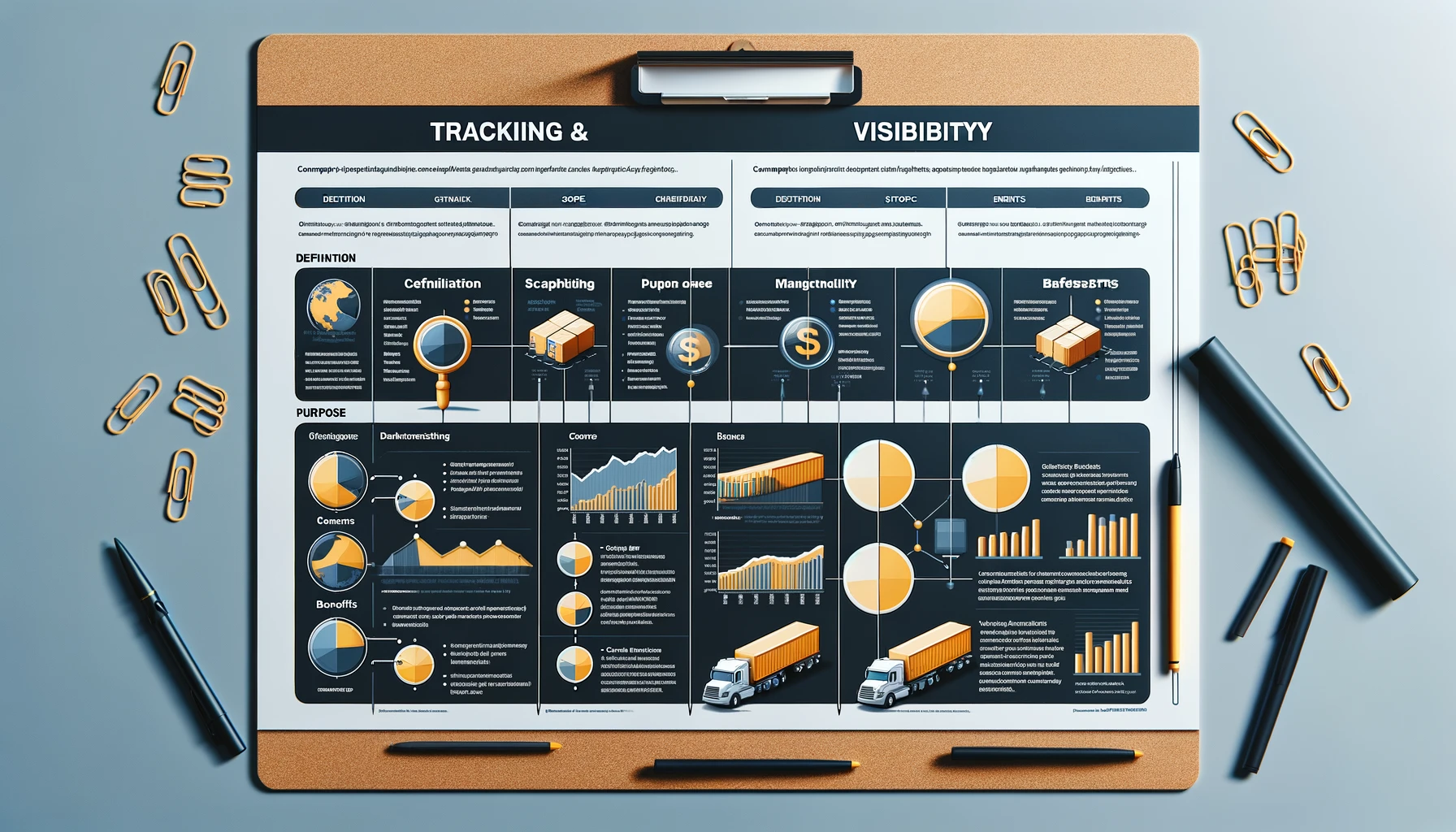
| Aspect | Tracking | Visibility |
|---|---|---|
| Scope | Transactional, focusing on individual shipments. | Encompasses the entire supply chain, from procurement to delivery. |
| Purpose | Aims to inform and reassure the customer. | Serves to enlighten businesses, enabling better strategic planning and operational adjustments. |
| Impact | Directly affects customer experience with real-time data. | Indirectly improves customer service by optimizing the supply chain’s overall performance. |
Why Both Matter
In today’s competitive market, excelling in logistics requires more than just delivering goods on time. It demands a balance between tracking and visibility. Tracking ensures that customers are informed and satisfied with their delivery experience. Visibility, however, allows businesses to streamline operations, reduce costs, and anticipate challenges before they arise. Together, they create a robust framework for supply chain excellence, ensuring that businesses can not only meet but exceed customer expectations.
Conclusion
Understanding the difference between tracking and visibility in logistics is more than an academic exercise; it’s a strategic necessity. By leveraging both, companies can enhance their supply chain efficiency, improve customer satisfaction, and gain a competitive edge in the market. As the logistics sector continues to evolve, the integration of advanced tracking and visibility technologies will undoubtedly become standard practice, driving the future of supply chain management.
For logistics professionals looking to stay ahead of the curve, embracing both tracking and visibility is non-negotiable. Stay tuned for more insights into leveraging these essential tools to turbocharge your supply chain operations.
TRADLINX Ocean Visibility revolutionizes supply chain operations with its Ocean Visibility features, offering real-time shipment tracking, predictive analytics for lead times, and seamless management tools for freight forwarders and shippers worldwide.





Leave a Reply