
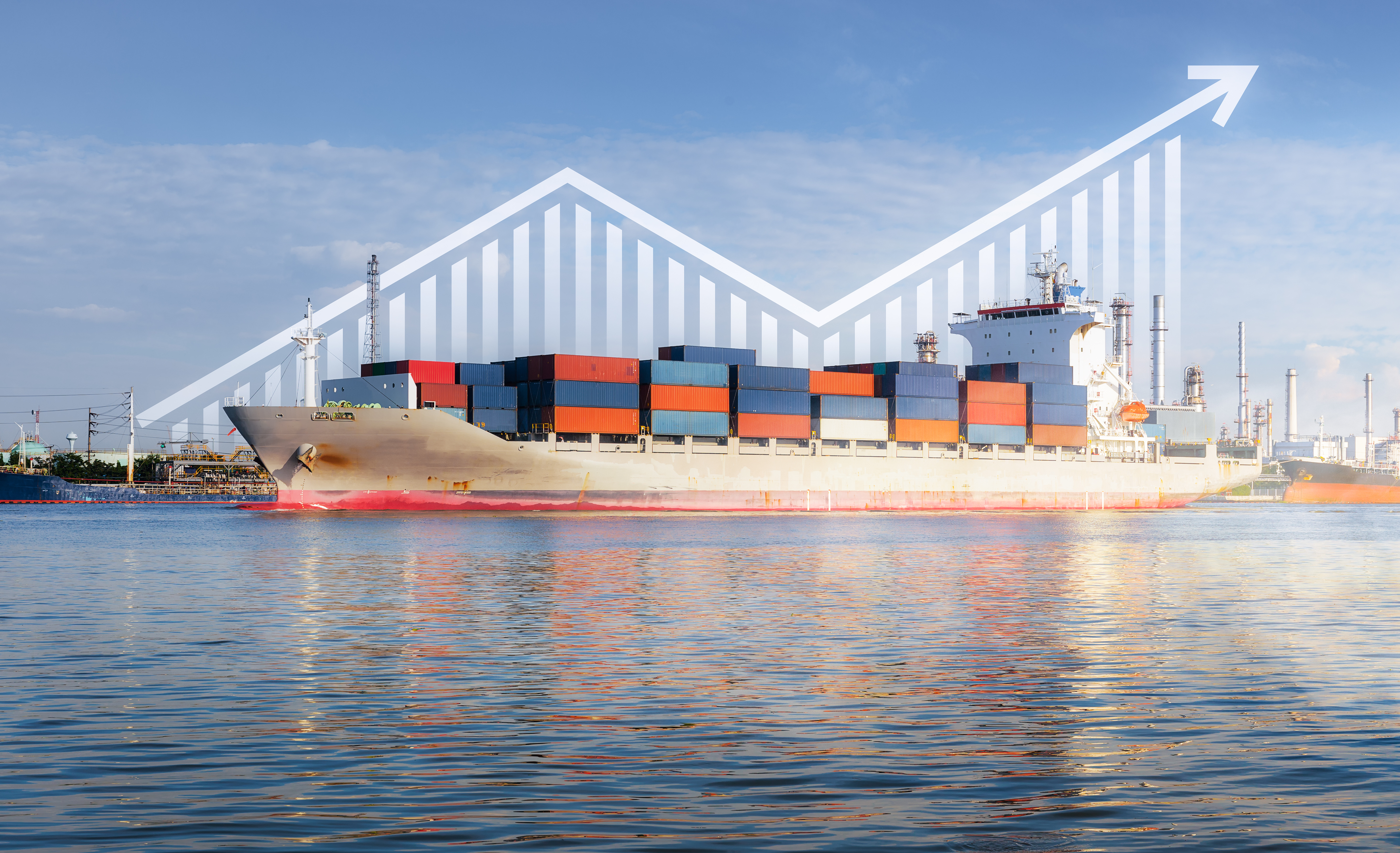
In recent times, events like wars and rapid climate change have caused fuel prices to spike dramatically. This fluctuation impacts both companies and consumers significantly, especially those in the shipping industry. To manage these costs, shipping companies often use the term “Emergency Bunker Surcharge” or EBS. Let’s dive into what EBS is, why it’s important, how it’s calculated, and how it compares to similar terms.

What is the Emergency Bunker Surcharge (EBS)?
The Emergency Bunker Surcharge, abbreviated as EBS, is an additional fee that shipping companies charge when fuel prices rise suddenly due to unforeseen events like wars, conflicts, or oil-producing countries’ decisions. Unlike regular fuel surcharges, EBS is not a fixed cost but is applied only when fuel prices exceed a certain threshold.
Why is the Emergency Bunker Surcharge (EBS) Necessary?
- Financial Stability: Even when fuel prices change rapidly, companies can maintain predictable cost management.
- Consistent Service Quality: EBS helps smooth out the impact of fluctuating fuel costs, allowing companies to maintain a steady service quality.
- Operational Continuity: It prevents the sudden financial burden from disrupting operations.
By using EBS, companies can ensure stable finances and continuous operation, even during volatile times.

Calculating EBS involves several steps and considers different factors:
- Base Fuel Price: This is the average fuel price over a specific period, typically the last quarter or year.
- Current Fuel Price: This is the actual fuel price at a given moment, often referenced from government reports or fuel price indices.
- Threshold Level: This is a pre-determined price level that, when exceeded, triggers the EBS.
- Surcharge Rate: This is the rate or fixed amount added to the basic service cost to cover the difference between the base fuel price and the current fuel price.
Here’s a simplified example to illustrate how EBS is calculated:
- Base Fuel Price: $3 per gallon.
- Current Fuel Price: $4 per gallon.
- Threshold Level: $3.50 per gallon.
- Surcharge Rate: 5% of the base service cost.
- Base Service Cost: $100.
Steps for Calculation:
- Excess Amount = Current Fuel Price – Threshold Level = $4 – $3.50 = $0.50.
- Surcharge = (Excess Amount / Base Fuel Price) * Surcharge Rate * Base Service Cost = ($0.50 / $3) * 0.05 * $100 = $1.67.
- Final Cost = Base Service Cost + Surcharge = $100 + $1.67 = $101.67.
Thus, the total cost with the EBS applied would be $101.67. Keep in mind that this is a basic calculation; actual charges may vary based on factors like cargo type and container specifics.

EBS vs BAF vs CBR
There are other similar surcharges, such as BAF and CBR. Here’s how they differ from EBS:
- EBS (Emergency Bunker Surcharge): This is an additional charge applied when fuel prices spike suddenly due to unpredictable events. It is usually announced after the fact.
- BAF (Bunker Adjustment Factor): This surcharge compensates for fuel price fluctuations but is typically announced in advance.
- CBR (Critical Bunker Recovery): Similar to EBS, it is applied when fuel prices increase sharply. However, CBR is often used in a more long-term context and regularly evaluated and adjusted according to the IMO 2020 regulations.
To summarize:
- EBS vs. BAF: EBS is imposed unexpectedly when fuel prices rise sharply, while BAF is pre-announced.
- EBS vs. CBR: EBS is a short-term response to sudden changes, while CBR is a more regular, long-term adjustment.
Understanding these differences helps in better managing logistics costs and planning more effectively.
TRADLINX Ocean Visibility revolutionizes supply chain operations with its Ocean Visibility features, offering real-time shipment tracking, predictive analytics for lead times, and seamless management tools for freight forwarders and shippers worldwide.




Leave a Reply