
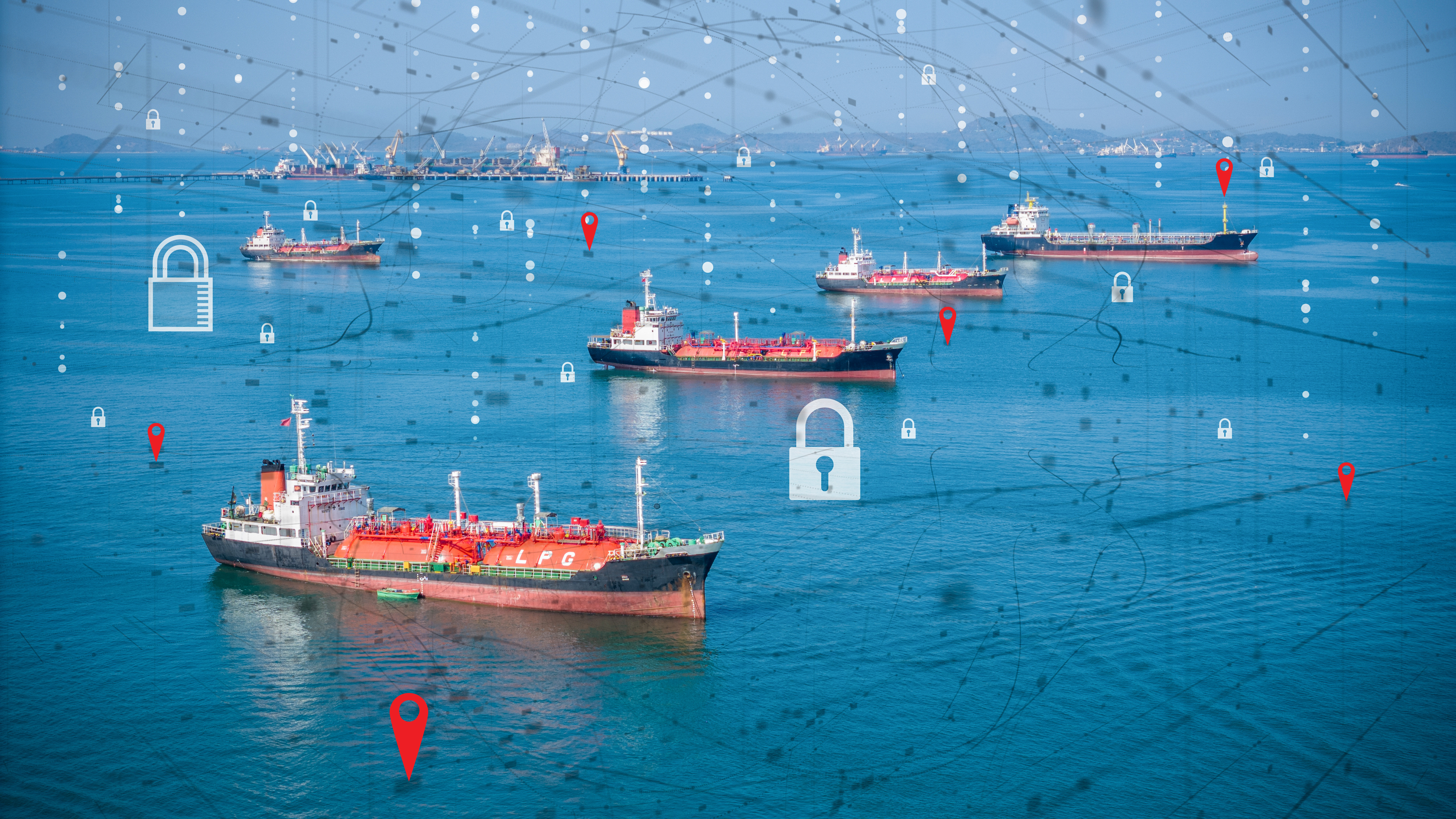
War-risk surcharges are the visible part of a Gulf disruption. The less visible part is the insurance market behind it.
That is why the reported U.S. maritime reinsurance plan matters. It is not a route change or a security measure. It is an attempt to keep insurance capacity from tightening so far that Gulf-linked shipping becomes even harder to place on commercially workable terms.
60-second take
- A new insurance mechanism is now part of the Hormuz story: Reuters reported a U.S. $20 billion Maritime Reinsurance Plan, with Chubb in a lead role, intended to support commercial shipping through the Gulf.
- This came after a sharp jump in war-risk pricing: Reuters reported hull war-risk premiums rising from about 0.25% to as much as 3% of vessel value in some cases.
- The core issue is not just cost: when premiums jump this fast, the deeper question is whether insurance remains available on terms the market will still accept.
- The reported plan does not “fix” Hormuz: it may help support insurance capacity, but it does not remove the underlying security, routing, and reliability risks around Gulf transit.
Why this became a story
Most disruption coverage stops at the part readers can see immediately: surcharges, delays, and questions about whether cargo will move on time.
But when war-risk cover becomes more expensive, more selective, or harder to place, the disruption moves into a different category. The question is no longer only how much more will this voyage cost? It becomes can this voyage still be insured on terms owners, charterers, lenders, and cargo interests will accept?
That is the backdrop for the reported reinsurance plan. It suggests concern that insurance capacity itself could become part of the operational constraint.
What the plan actually is
In plain terms, this is a reported attempt to support the insurance side of Gulf shipping.
Reuters reported that the U.S. International Development Finance Corporation was putting forward a $20 billion Maritime Reinsurance Plan, with Chubb serving in a lead role among participating U.S. insurers. The reported focus was to back losses tied to hull damage and cargo disruption linked to Gulf shipping.
Why does reinsurance matter here? Because it sits behind primary insurance. It is part of how insurers manage extreme loss exposure. When governments start discussing reinsurance support during a shipping crisis, the signal is not that conditions are normal. The signal is that private insurance markets are under enough stress that policymakers want to keep capacity from shrinking further.
Why this is bigger than a surcharge story
War-risk premiums matter because they show up quickly in voyage economics. Reuters reported hull war-risk premiums in the Gulf rising from roughly 0.25% to as much as 3% of vessel value in some cases.
But the more important signal is what those numbers mean. A move of that scale suggests the market is reassessing risk in real time. Coverage may still exist, but pricing, appetite, and assumptions can change fast.
That is why this is not just another fee-line development. It points to a deeper concern: whether risk transfer itself remains commercially workable across Gulf-linked trade.
What the backstop may help with
- Supporting insurance capacity: a backstop may reduce the risk of insurers pulling back too sharply from Gulf-linked exposure.
- Reducing freeze risk: the aim is to prevent insurance stress from becoming the single reason voyages stop making commercial sense.
- Stabilizing confidence at the margin: if the market believes some capacity support exists, that may matter even before any single claim is paid.
What it does not solve
- It does not remove physical security risk: insurance can distribute financial exposure, but it does not make the waterway safe.
- It does not normalize transit reliability: waiting time, rerouting, convoy uncertainty, and operating caution can still affect schedules.
- It does not make Gulf disruption disappear into a finance problem: security conditions, state responses, and commercial decisions still matter separately.
That distinction matters because the Hormuz story is now being discussed through several lenses at once: security, insurance, energy markets, and shipping reliability. They overlap, but they are not the same thing.
What this should change in how disruption is read
For logistics teams, one useful lesson from this development is that the visible cost increase is not always the whole disruption.
When insurance capacity becomes part of the conversation, the market is often signaling something deeper: not just that a route got more expensive, but that the conditions underneath planning, quoting, and transit are becoming harder to rely on. In other words, the surcharge may be the visible symptom. The real instability may be sitting underneath it.
That is why developments like this matter even to readers who are not placing insurance themselves. They help explain when a disruption is moving from a cost problem into a broader reliability problem.

When the market becomes harder to read, teams need more than scattered updates. Tradlinx helps ocean freight teams track vessel movement, port activity, and shipment-level changes in one workflow so disruption signals are easier to interpret early.
Further reading
- Reuters: Japan not yet planning Hormuz escort mission, PM says
- Reuters: Chubb to serve as lead U.S. insurer for Gulf shipping amid Iran war
- Reuters: Maritime insurance premiums surge as Iran conflict widens
Need help interpreting this disruption or your shipment?
For a quick question, chat with Tradlinx on WhatsApp. For a deeper discussion, book a time below.
Prefer email? Contact us directly at min.so@tradlinx.com (Americas), sondre.lyndon@tradlinx.com (Europe), or henry.jo@tradlinx.com (EMEA/Asia).




Leave a Reply