
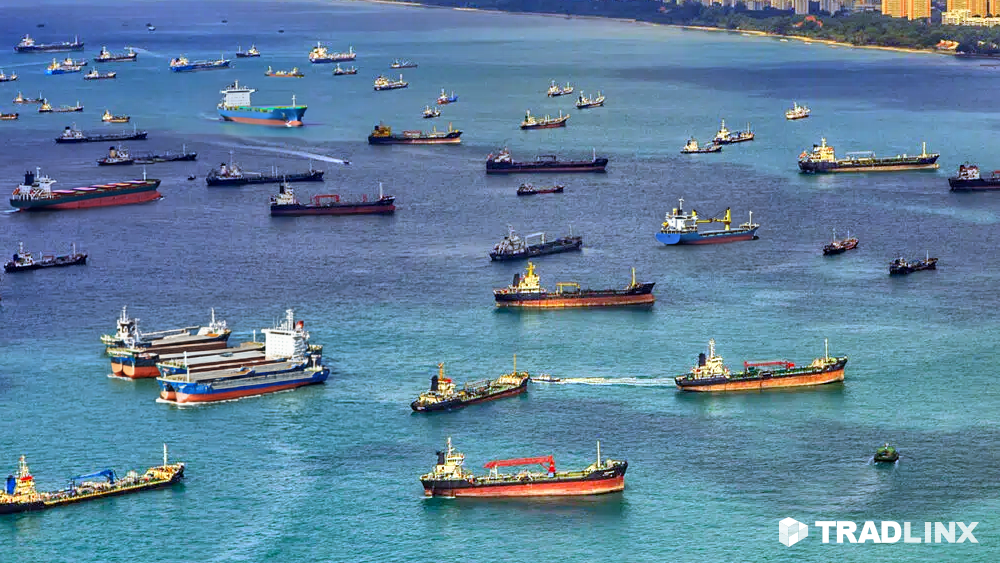
China’s August exports rose 4.4% year over year, but shipments to the U.S. fell about 33% while exports to ASEAN climbed roughly 22.5%. EU and Africa also saw double digit growth. The pivot is real and it increases the odds of transshipment scrutiny and COO disputes. This post gives LSP teams concrete steps for quoting port pairs, building dwell buffers at hub ports, and tightening origin documentation so routings hold up under review.
What Changed
- Export mix shifted. August exports grew 4.4% with a trade surplus near 102 billion USD. Sales to the U.S. fell about 33% while ASEAN demand rose around 22.5%. EU and Africa posted increases near 10% and 26% respectively.
- Transshipment scrutiny rose. U.S. officials flagged illegal rerouting risk with talk of additional duties if origin masking is proven. Regionally, governments are moving to curb improper relabeling.
- Hub throughput is high. Singapore and Shanghai report record or near record volumes, which can stretch feeder connections and transshipment dwell in peak weeks.
Why It Matters For LSPs
- More origin points and feeder moves in Vietnam, Thailand, and Malaysia add handoffs that create roll risk and timing variance.
- COO proof becomes the real constraint. Customers will ask you to “make ASEAN origin work.” If substantial transformation is weak, the routing does not change duty outcome.
- Hub dwell and bunching can widen ETA bands at Singapore or Port Klang when volumes spike.
How To Quote And Schedule This Week
- Quote two port options per origin: for example Laem Chabang and Bangkok; Cat Lai and Cai Mep. Publish cutoff, earliest return, and transshipment hub assumptions in the quote text.
- Add a named dwell buffer at hubs: disclose a transshipment dwell band for Singapore or Port Klang. Keep the buffer separate from ocean time so customers see the driver.
- Pre-advice on equipment: for secondary ASEAN load ports, require container size split and pickup windows at least 72 hours in advance to reduce rolls.
- Set lane specific rollover rules: define when you will switch terminal or feeder and what price impact applies. Put this in writing to avoid disputes.
COO Documentation You Should Demand Up Front
- Bill of materials with transformation step that changes name, character, or use. If the HTS shifts at heading level due to processing, cite it.
- Production records and site addresses for machining, assembly, or finishing. Include photos or traveler sheets if available.
- Supplier COO certificate plus manufacturer declaration for the transformation step. Avoid trader only declarations for sensitive lines.
- Consistent labels and invoices that match the claimed country across SKU, carton, and pallet. Mismatches invite exams.
Playbook For Sales And Ops
- Sales: refuse to market “duty free via ASEAN.” Offer two routed options with the same duty assumption unless the importer provides evidence of substantial transformation.
- Brokerage: map HS to an evidenced COO at SKU level. If evidence is weak, file with true COO regardless of routing and document the decision in the entry notes.
- Operations: hold a weekly hub review for Singapore and Port Klang to right size buffers. Track rolls by service string and publish the roll rate in customer QBRs.

Use TRADLINX Ocean Visibility to compare Singapore versus Port Klang dwell on your live strings, monitor actual transshipment times by service, and set alerts when dwell exceeds your quoted buffer so customer service can re-sequence deliveries.
Assumption Checks
- Data is directional, not destiny. A single enforcement memo can change what passes as substantial transformation. Keep quotes conditional on importer supplied evidence.
- High throughput does not always mean congestion. Validate hub dwell weekly before you bake in large buffers that customers will challenge.
References
- Reuters: China August exports +4.4% y/y; U.S. −33%; ASEAN +22.5%; surplus ~102.3B USD
- Reuters: trade mix and tariff backdrop for August data
- Bloomberg: exports slowed; regional shifts; surplus above 100B USD
- Al Jazeera: U.S. rhetoric on transshipment penalties and ASEAN risk
- Economic Times, citing Reuters: threatened 40% duty on proven illegal rerouting
- SCMP: Vietnam directive to curb illegal transshipment to the U.S.
- PSA Singapore: record annual throughput above 40M TEU
- Maritime Executive: Shanghai monthly throughput topped 5M TEU earlier in 2025
Prefer email? Contact us directly at min.so@tradlinx.com (Americas), sondre.lyndon@tradlinx.com (Europe) or henry.jo@tradlinx.com (EMEA/Asia)



Leave a Reply