
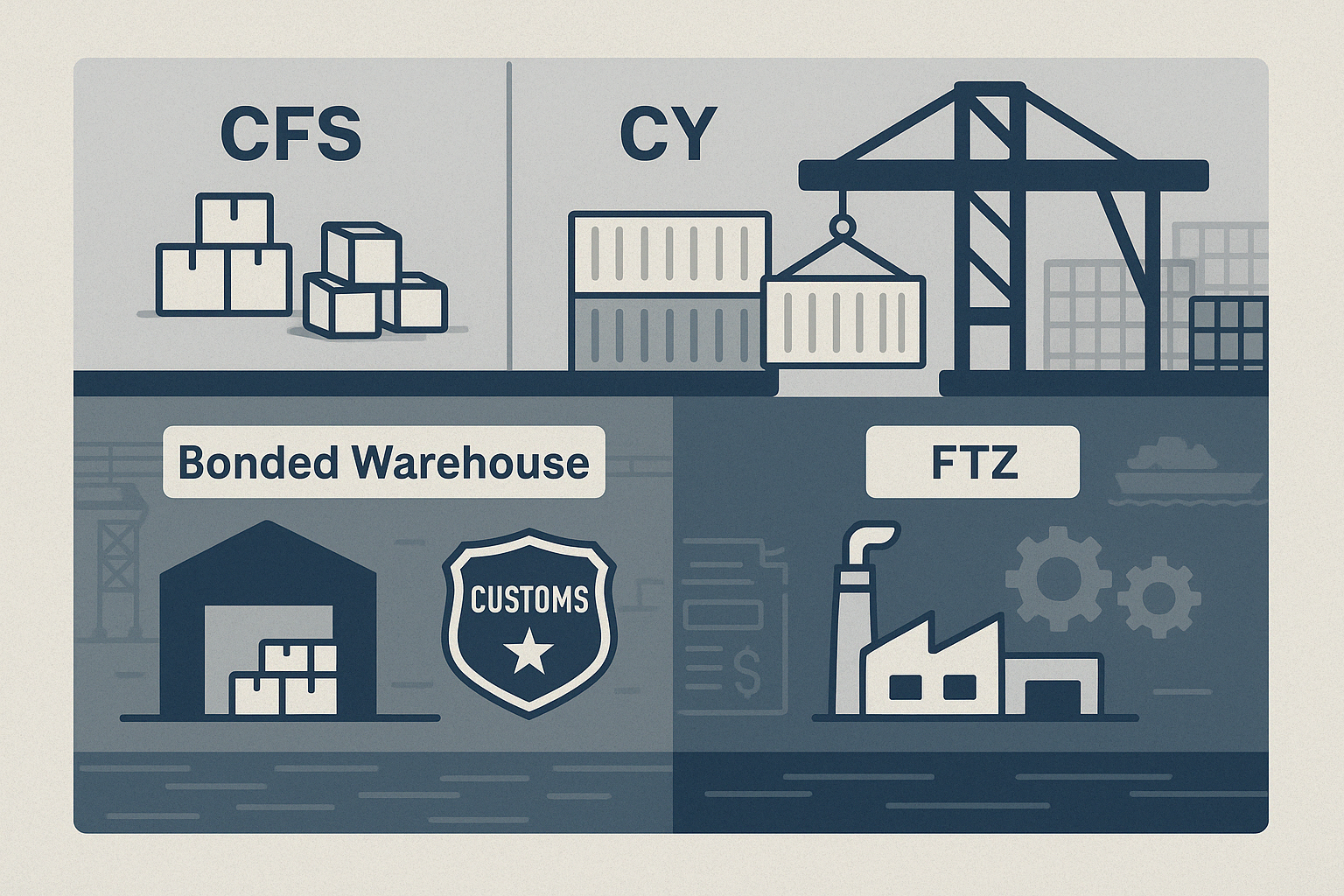
CFS vs CY vs FTZ vs Bonded: Which Port Option Is Right for Your Imports?
If you’re moving goods internationally—especially into the U.S.—you’ve likely come across acronyms like CFS, CY, FTZ, or bonded warehouse. While they may sound interchangeable, they each represent different parts of the port infrastructure and can dramatically impact how your cargo is handled, taxed, and cleared.
In 2025, with tighter customs enforcement, changing tariffs, and rising storage costs, choosing the right type of facility isn’t just a technicality—it’s a strategy. This guide breaks down what each of these terms means, how they differ, when to use them, and what you need to consider before routing your shipments.
Whether you’re a logistics provider, freight forwarder, or direct importer, understanding the nuances between CFS, CY, bonded warehouses, and FTZs can help you avoid delays, manage costs, and stay compliant with customs regulations.
Quick Definitions: What These Port Terms Actually Mean
Before you can decide which facility type is right for your shipment, it’s important to clearly define what each term refers to. Here’s a breakdown:
📦 CFS – Container Freight Station
A CFS is a facility where Less-than-Container Load (LCL) shipments are consolidated or deconsolidated. If your cargo is part of a shared container, it typically moves through a CFS for customs clearance and sorting before or after being loaded/unloaded.
🚢 CY – Container Yard
A CY is the area within a port where full container loads (FCL) are stored before or after being loaded onto or off a vessel. This is typically used for sealed containers that don’t require breaking down at the terminal.
🏗️ Bonded Warehouse
A bonded warehouse is a secured facility licensed by U.S. Customs and Border Protection (CBP) where goods can be stored without paying import duties until they are officially withdrawn for domestic use—or re-exported.
🌐 FTZ – Foreign Trade Zone
An FTZ is a special customs-designated area in or near a U.S. port where importers can defer, reduce, or eliminate customs duties on goods. FTZs also allow for operations like repackaging, assembly, or sorting while under CBP supervision.
Key Differences: Facility Function and Use Cases
These port facilities serve different cargo flows, cost structures, and customs workflows. Here’s how they compare at a glance:
| Feature | CFS | CY | Bonded Warehouse | FTZ |
|---|---|---|---|---|
| Used For | LCL shipments (consolidated) | FCL shipments (sealed) | Duty-deferred storage | Assembly, processing, long-term storage |
| Duty Payment | At clearance | At clearance | Upon withdrawal | Upon withdrawal |
| CBP Control | Yes | Yes | Yes (bonded) | Yes (with operator supervision) |
| Who Uses It | LCL importers/exporters | FCL shippers & consignees | Tariff-sensitive importers | Manufacturers, 3PLs, large importers |
| Common Locations | Near ports, freight hubs | Inside port terminals | Near major ports or inland | Designated U.S. trade zones |
When to Use Each Option: Practical Scenarios
Choosing the right facility often comes down to shipment type, customs strategy, and timing. Here are practical examples that show when each option makes the most sense:
📦 Use CFS When:
- You’re shipping LCL cargo that needs to be consolidated or deconsolidated.
- Your freight is being grouped with other shippers’ cargo into one container.
- You need temporary storage or customs clearance for partial shipments.
🚢 Use CY When:
- You’re importing a full container load (FCL) that stays sealed from origin to destination.
- You don’t need any repackaging or additional inspection at port.
- Your consignee is ready to pick up the full container without delay.
🏗️ Use a Bonded Warehouse When:
- You want to delay tariff payment while storing cargo under CBP control.
- You may re-export the goods and want to avoid paying duties unnecessarily.
- You’re managing a high-duty product or anticipating regulatory shifts.
🌐 Use an FTZ When:
- You’re importing raw materials for manufacturing or assembly in the U.S.
- You want to consolidate imports from multiple origins and control duty costs.
- You want the flexibility to re-export goods or pay duty only on the final assembled item.
Costs, Risks, and Documentation Requirements
Each facility type comes with its own operational costs, documentation obligations, and potential risks. Here’s what importers and LSPs should watch for:
💰 Cost Considerations
- CFS: Charges based on volume (per CBM) and handling. Expect deconsolidation, storage, and pickup fees.
- CY: Generally lower handling fees for FCL, but demurrage and chassis time can add up quickly.
- Bonded: Monthly storage fees; possible bonding fee; duties paid only upon withdrawal.
- FTZ: Setup and administration costs; reduced MPF and tariff deferral benefits may offset expenses.
📑 Documentation Needs
- Accurate commercial invoice, packing list, and bill of lading for all facility types.
- HTS code clarity critical—especially for bonded and FTZ use.
- For bonded or FTZ, work with a licensed customs broker to ensure compliance with CBP entry protocols and filing requirements.
⚠️ Common Pitfalls
- Sending LCL shipments to CY (or vice versa) causes port holds and delays.
- Misclassifying goods can result in duty overpayment or regulatory penalties.
- Failing to file FTZ admission correctly may lead to unnecessary duties or audit exposure.
How to Decide: Choosing the Right Facility Type
To help you choose the right port option, here’s a simple decision guide based on your cargo type, customs goals, and operational needs:
| Question | Recommended Option |
|---|---|
| Is your cargo consolidated with other shippers’ goods? | CFS (Container Freight Station) |
| Are you moving a full container that doesn’t need unpacking at port? | CY (Container Yard) |
| Do you want to delay duty payments or store goods under customs control? | Bonded Warehouse |
| Are you importing goods for manufacturing, repackaging, or long-term storage? | Foreign Trade Zone (FTZ) |
| Are you planning to re-export part of your shipment? | Bonded or FTZ |
Still unsure? Consult your licensed customs broker or 3PL—they can help you select the right facility based on volume, duties, and transit timing.
Conclusion: Choose Smarter, Ship Faster
The right port facility can mean the difference between a smooth clearance and unexpected delays—or between paying duty now and deferring costs strategically. Whether you’re navigating full containers, shared loads, or tariff-sensitive cargo, understanding the differences between CFS, CY, bonded warehouses, and FTZs puts you in control.
Use this guide as your starting point, then build from it with customized planning based on cargo type, port location, and destination. TRADLINX will continue to deliver insight-backed tools to help you optimize every leg of your supply chain.

📚 Useful Resources:
Why overpay for visibility? Tradlinx saves you 40% with transparent per–Master B/L pricing. Get 99% accuracy, 12 updates daily, and 80% ETA accuracy improvements, trusted by 83,000+ logistics teams and global leaders like Samsung and LG Chem.


Prefer email? Contact us directly at min.so@tradlinx.com (Americas), sondre.lyndon@tradlinx.com (Europe) or henry.jo@tradlinx.com (EMEA/Asia)



Leave a Reply