
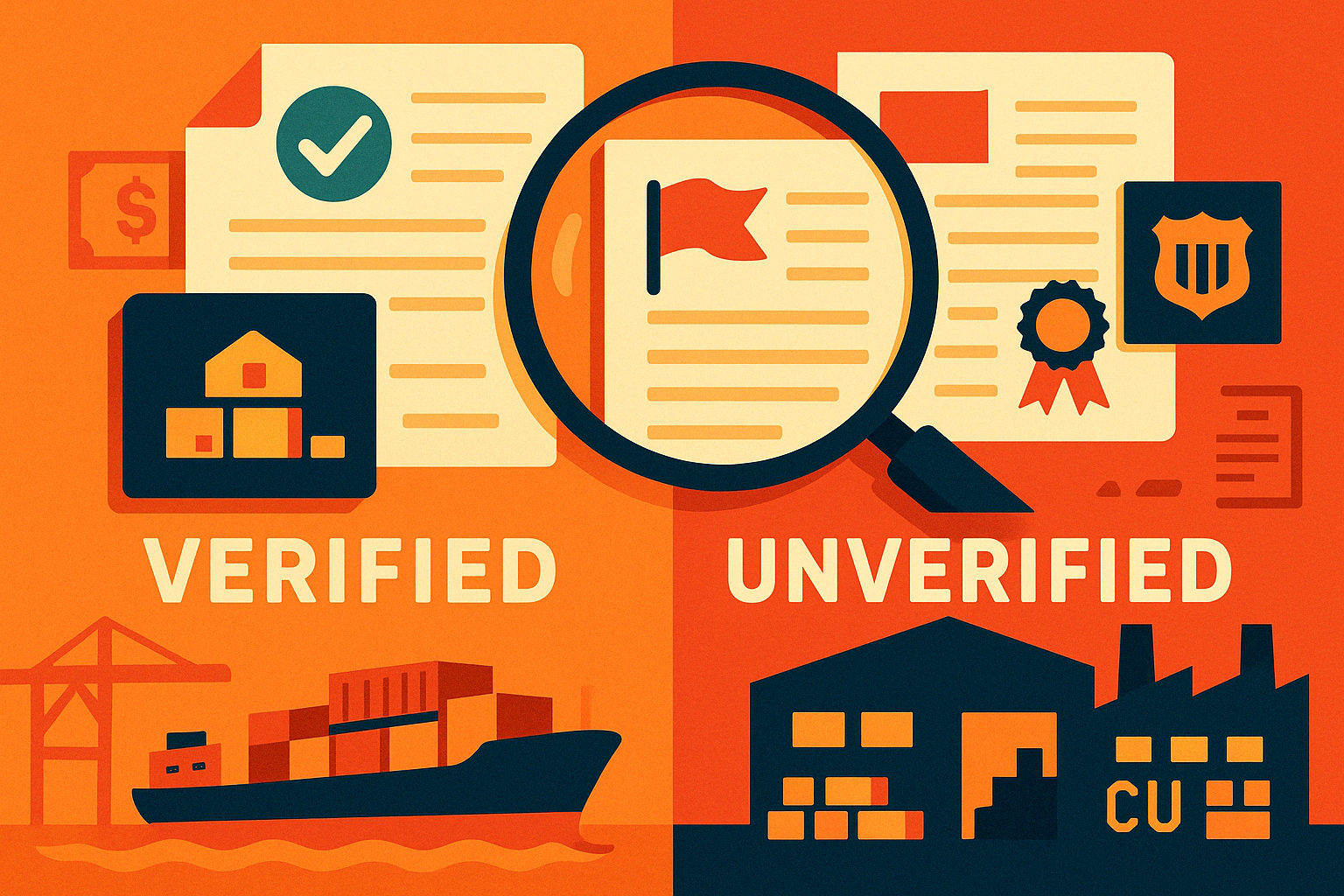
How to Know If Your Supplier Is Legit Before You Ship
In today’s global supply chain, sourcing overseas is easier than ever—but verifying your supplier is more critical than ever. With rising cases of customs seizures, fake documentation, and non-compliant goods entering the U.S., failing to confirm supplier legitimacy can result in expensive delays, fines, or even product destruction.
Whether you’re ordering from Alibaba, sourcing directly from a factory, or working through a trade agent, this guide will help you identify red flags and take the right steps to verify your supplier before you ship. These tips are especially important if you’re importing for resale, selling on Amazon, or handling regulated goods.
We’ll break down common warning signs, key documents to request, and practical steps you can take to protect your shipment—and your business.
Common Red Flags When Dealing with Overseas Suppliers
Before your shipment ever leaves port, there are often warning signs that a supplier may not be legitimate—or at least not fully compliant. These red flags can point to risk of scams, poor-quality goods, or customs issues down the line.
- 💰 Unrealistically low pricing: If a price seems too good to be true, it often is—especially for branded or regulated goods.
- 📜 Missing or vague documentation: Suppliers that hesitate to share invoices, export licenses, or business registration should raise concerns.
- 💳 Requests for 100% prepayment via wire transfer: Legitimate suppliers will usually accept secure payment platforms or structured terms (like 30/70 or escrow).
- 📦 Shifting specs or inconsistent communication: If product specs change mid-discussion, or emails come from inconsistent addresses, dig deeper.
- 🧾 Incorrect or recycled HS codes: Using vague or overly broad classification codes is a tactic some shady suppliers use to reduce duty—or hide issues.
How to Verify a Supplier: Step-by-Step
Even if you found your supplier on a large platform like Alibaba, Made-in-China, or Global Sources, it’s still your responsibility to verify them independently. Here’s a straightforward process to follow:
- Check the business license: Ask for a scanned copy of their export license or business registration. In China, you can verify it through Qichacha or the Chinese State Administration of Market Regulation (SAMR).
- Cross-check the contact details: Confirm the company’s address, phone number, and email domain match what’s listed on the business registry or government site.
- Look for export history: If the company claims to have exported to the U.S., ask for BOL samples, past customer references, or warehouse receipts.
- Search their name with keywords like “scam” or “fake goods”: Online trade forums often flag problem suppliers before regulators do.
- Use a third-party verification service: Companies like SGS, Bureau Veritas, and TUV can verify facilities and paperwork before payment or shipping.
It’s worth taking time at this stage—it’s much harder to fix a problem after your goods arrive at U.S. Customs.
Ask for These Documents Before You Ship
Verifying your supplier doesn’t stop at looking them up—you also need to request specific documents before you make final payment or authorize shipping. These are the minimum files you should have in hand for compliance, classification, and customs clearance.
- 🧾 Commercial Invoice (CI): Must include product description, quantity, unit price, Incoterms, and HTS code.
- 📦 Packing List: Helps confirm cargo contents and weight; often needed for clearance and logistics coordination.
- 📑 Bill of Lading (BOL) Template: Review in advance to ensure carrier and consignee data match your shipment.
- 📄 Certificate of Origin (CO): Required for duty exemption under FTAs or to establish origin for anti-dumping purposes.
- 🔍 Product-specific certificates: For electronics, toys, cosmetics, or other regulated items, ask for test reports (e.g. CE, FDA, UL).
Having these on file not only improves your customs compliance—it also filters out less professional or evasive suppliers.

What to Do If You’re Unsure
If something feels off about a supplier—or you’re making your first order—it’s smart to add a layer of protection. Here’s what you can do:
- ✅ Use escrow or platform-protected payments: Trade Assurance (Alibaba), Payoneer Escrow, or even PayPal can offer recourse if things go wrong.
- 🏭 Book a factory or pre-shipment inspection: Third-party firms can verify product quality and confirm shipment before it leaves the supplier.
- 📅 Start small: Begin with a test order to gauge reliability before placing a larger volume shipment.
- 👨⚖️ Consult a trade attorney or customs broker: If documents look questionable or you’re unsure about tariff classification, get an expert opinion.
These proactive steps cost less than a single delayed or seized shipment—and they build confidence with suppliers that you take compliance seriously.
U.S. Customs Risks of Working With Unverified Suppliers
If your supplier is not properly vetted, you’re not just risking poor product quality—you could face serious consequences at U.S. Customs. Here’s what can happen:
- 🚫 Seizure or destruction of goods: If items are counterfeit, incorrectly classified, or missing required documents, CBP may seize the shipment.
- 🛃 Customs holds and delays: Incomplete documentation, unclear origin, or vague invoices can trigger inspections and weeks-long delays.
- 📉 Fines or re-export orders: Incorrect HTS codes or undeclared regulatory items can lead to penalties or require you to ship the goods back at your own expense.
- 🔴 Red-flagged EIN or business account: Repeated issues can lead to heightened scrutiny of your future imports, affecting timelines and costs.
Remember—CBP holds the importer of record responsible, not the supplier. That’s why it’s essential to protect yourself up front.
Conclusion & Supplier Vetting Resources
Don’t wait until your shipment is en route to discover your supplier wasn’t who they claimed to be. A few hours of research and document review before placing an order can prevent months of stress, delays, and financial loss.
Whether you’re new to global sourcing or looking to tighten up your compliance process, verifying your supplier is a step that no importer should skip in 2025.
📚 Useful Resources:
- Qichacha – Chinese Business Verification
- SAMR – Chinese Corporate Registry
- U.S. Customs and Border Protection (CBP)
- SGS Inspection Services
- Bureau Veritas Global Trade Services

Why overpay for visibility? TRADLINX saves you 40% with transparent per–Master B/L pricing. Get 99% accuracy, 12 updates daily, and 80% ETA accuracy improvements, trusted by 83,000+ logistics teams and global leaders like Samsung and LG Chem.


Prefer email? Contact us directly at min.so@tradlinx.com (Americas) or henry.jo@tradlinx.com (EMEA/Asia)



Leave a Reply