
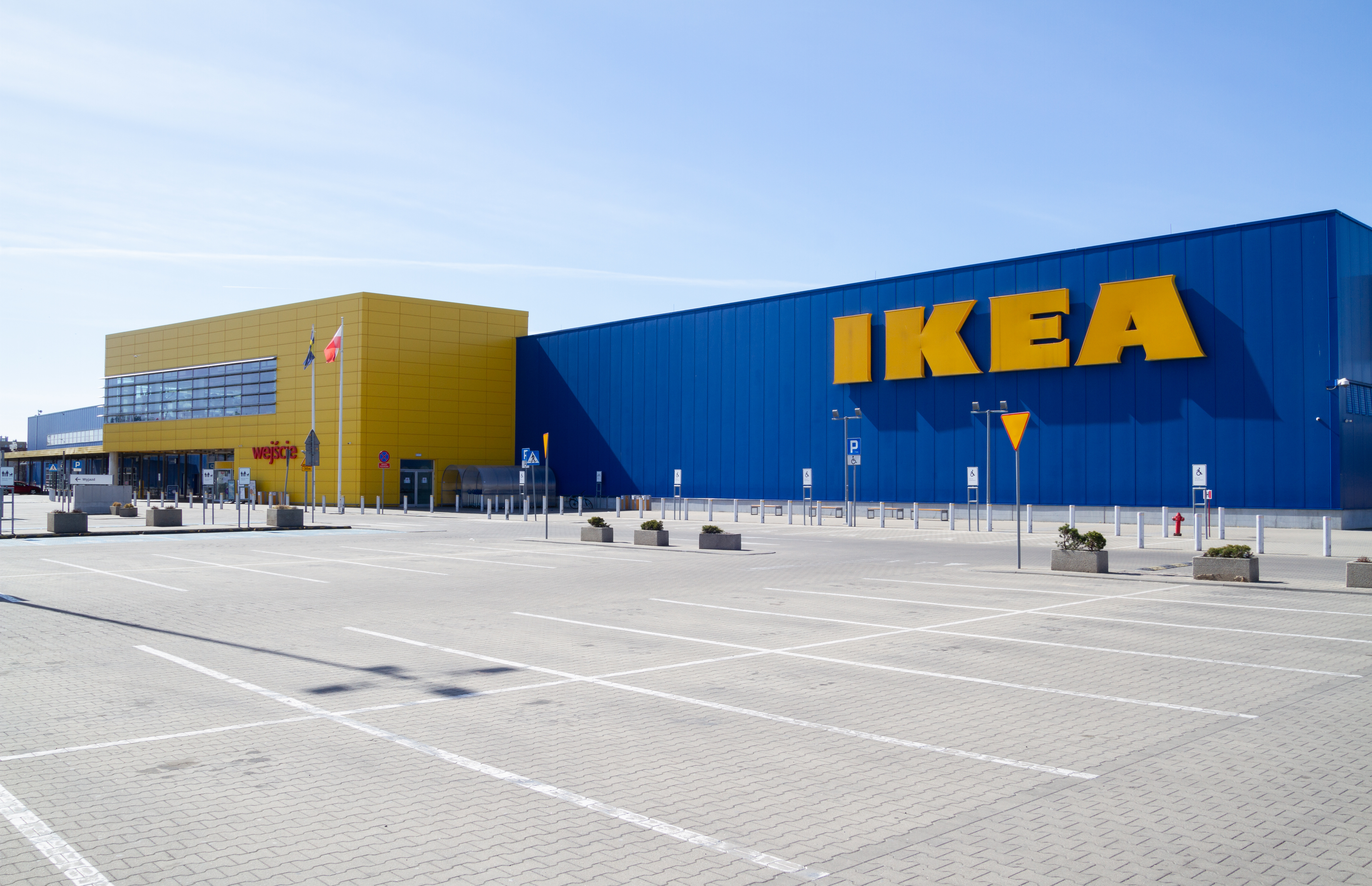
IKEA’s supply chain advantage is often described as “low cost at global scale.” The more accurate explanation is structural: IKEA designs products, packaging, and flows as one system—so logistics cost is influenced before a shipment exists.
This post breaks IKEA’s operating model down through three mechanisms that are both evergreen and transferable:
- Flat-pack economics (design → packaging → transport efficiency)
- Capacity smoothing (reducing variability so the system stays affordable)
- Network discipline (clear roles across sourcing, production, and goods flow)
The goal is not to romanticize “efficiency.” It’s to show why IKEA’s model works—and what tradeoffs it requires.
The core idea: logistics is built into product design
Most companies treat packaging as the last step before shipping. IKEA treats packaging as a first-class design constraint.
Flat-pack isn’t only a customer convenience. It changes the economics of:
- cube utilization (how much can fit in a container/truck),
- storage density,
- handling steps,
- and damage risk across multiple touchpoints.
This is why IKEA’s operating model is unusually coherent: product development and logistics are not separate functions—they’re coupled decisions.
Flat-pack economics: a supply chain lever, not a branding story
Flat-pack shifts value creation upstream:
- A product designed for flat-pack can be transported and stored more efficiently.
- Efficient transport and storage reduce per-unit logistics cost.
- Lower logistics cost supports IKEA’s affordability promise at scale.
It also creates operational requirements:
- packaging must protect the product through more handling steps,
- assembly responsibility shifts partially to the customer,
- and “ease of assembly” becomes a design constraint that affects parts, tolerances, and instructions.
The transferable lesson: if you want lower logistics cost, don’t start in the warehouse—start in design.
Capacity smoothing: keeping the system stable enough to stay cheap
Low cost isn’t only about cheaper carriers or cheaper labor. It’s about reducing variability so capacity is used efficiently.
In practice, IKEA-like capacity smoothing typically involves:
- creating repeatable goods flow patterns (so transport and handling can be planned and optimized),
- designing packaging and assortment so the network can run with fewer “special cases,”
- and scaling through standardization (so each additional market doesn’t require a brand-new logistics architecture).
You can see how IKEA talks about this through its supply chain operations focus on developing and delivering transport and logistics solutions across a global goods flow—an operating model built around the “flow,” not a collection of ad-hoc shipments.
Network discipline: a clean separation of roles
IKEA’s structure separates responsibilities that many companies blur:
- product development and range governance,
- sourcing and supplier relationships,
- manufacturing/production capability (including owned production in some categories),
- and supply chain operations responsible for transport and logistics solutions.
That separation matters because it supports consistent decisions:
- what gets produced where,
- how it is packaged and shipped,
- and how the global goods flow is managed over time.
The transferable lesson is governance: your network is only as reliable as your decision rights.
The resilience tradeoff: what IKEA optimizes for can create exposure
A highly optimized cost-and-flow system can be exposed when the environment changes:
- tariffs and trade friction,
- volatile international freight costs,
- or regional capacity constraints.
Recent reporting highlights IKEA’s push to increase production closer to certain end markets in response to tariff pressure—an example of how a cost-optimized global footprint can require adjustment when cross-border economics shift.
This isn’t a contradiction. It’s a reminder:
network discipline is not rigidity. It’s the ability to reconfigure while keeping the model coherent.
Linkable asset: Flat-Pack-to-Flow Economics Map
Use this table to explain “why flat-pack matters” in operational terms—without relying on vague claims.
| Design choice | Logistics effect | Cost mechanism | Operational risk created | Control to keep it stable |
|---|---|---|---|---|
| Flat-pack design | Higher cube utilization, denser storage | Lower transport/storage cost per unit | More touchpoints and handling | Packaging durability standards + damage feedback loop |
| Standardized packaging families | Predictable handling and stacking | Fewer exceptions, smoother throughput | Edge cases get ignored until they break | Exception review cadence + packaging governance |
| Customer assembly | Less finished-goods volume | Reduced shipping volume and labor at delivery | Higher returns if instructions/fit fail | Assembly clarity testing + returns root-cause tracking |
| Modular components | Easier assortment scaling | Simplifies stocking and replenishment | Variant complexity can creep in | SKU governance and variant rationalization |
| Repeatable goods flow | Stable transport and capacity planning | Better utilization, fewer expediting events | Disruption sensitivity if alternatives aren’t designed | Dual routing options for critical flows |
What logistics teams can borrow from IKEA (without becoming IKEA)
1) Treat packaging as a cost driver you can design, not a cost you pay
If packaging decisions are owned only by marketing or last-minute procurement, logistics will always be “expensive.”
2) Standardize the flow before you automate it
Automation in a chaotic flow scales chaos. IKEA’s model implies the opposite order:
standardize → smooth → then optimize.
3) Make “exceptions” an explicit operating category
A disciplined flow doesn’t remove exceptions—it isolates them so they don’t become the default workload.
4) Keep network decisions coherent under change
When tariffs, freight costs, or demand patterns shift, the answer isn’t random localization. It’s controlled reconfiguration:
- what categories should move closer to market,
- what must remain global,
- and what tradeoffs you accept.

Next Step: See Ocean Visibility Workflows in Practice
If you’re trying to reduce missed handoffs and late escalations, a short walkthrough can help you see how teams structure milestone updates and exception alerts in day-to-day operations.
Book a 30-minute Ocean Visibility walkthrough
Further Reading
- IKEA Museum — Flat-packs (history and why it matters)
- IKEA Global — The IKEA value chain (how IKEA frames the system)
- IKEA Global — How IKEA works with suppliers
- IKEA Supply — Supply Chain Operations decarbonisation catalogue (goods flow and logistics focus)
- Reuters — IKEA to ramp up U.S. production as tariffs bite (Dec 2025)
Prefer email? Contact us directly at min.so@tradlinx.com (Americas), sondre.lyndon@tradlinx.com (Europe) or henry.jo@tradlinx.com (EMEA/Asia)




Leave a Reply