
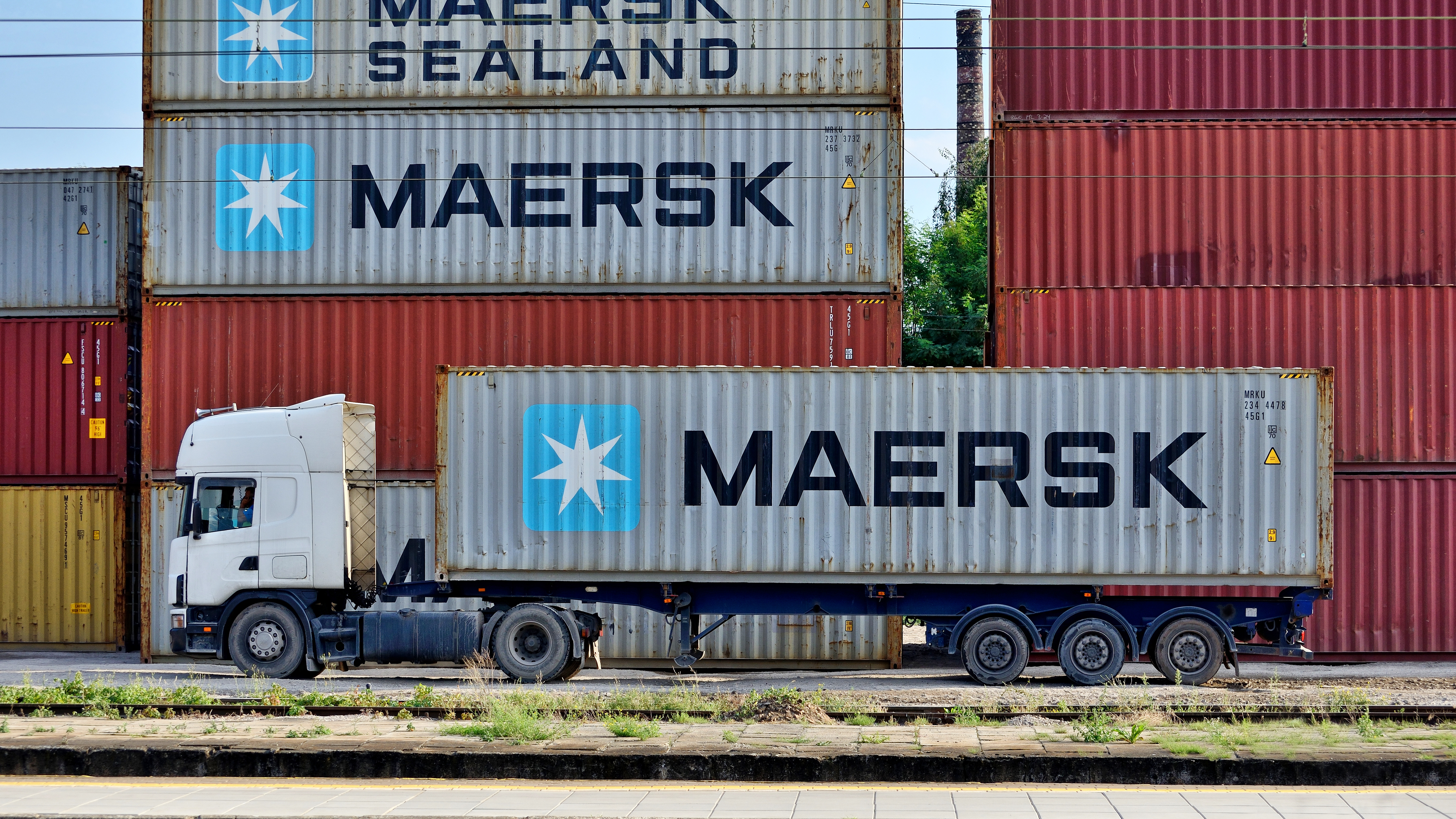
If you import through Los Angeles–Long Beach and route boxes inland by rail, the railroad carrying your eastbound containers may have changed in the last few weeks, even if the original booking assumptions still show the previous routing. Maersk has moved most of its outbound intermodal volume out of the SoCal port complex from BNSF to Union Pacific, and the kind of shift that reroutes your container is, in the carrier’s own words, something it handles directly only with the specific customers it decides are affected.
What actually changed
Maersk has concentrated most of its eastbound SoCal intermodal on Union Pacific’s Sunset Route and off BNSF’s Southern Transcontinental route. The data comes from RailState, which reads the ID on every container passing a network of trackside cameras and caught the move as it happened rather than waiting for it to surface in a quarterly report months later.
The volume involved is roughly 1,000 TEUs a week. Over the full tracking period Maersk moved about 100,000 TEUs east on this corridor, with around 90% previously handled by BNSF.
The handoff happened fast. UP held a single-digit share of Maersk’s volume through mid-May. By the week of June 1 it had passed 50% for the first time, climbing to roughly 76% by the week of June 8. Averaged across the whole transition, UP accounts for about 59% of the total — the lower figure reflects the weeks before the switch, the higher one where it landed.
The new traffic moves primarily on two named corridors. Industry observers point to UP’s Long Beach-to-Chicago service, reaching the Global 4 terminal near Joliet, Illinois, and the Long Beach-to-Dallas corridor. If your inland destination sits on or beyond either corridor, your booking is among those most likely to be affected, but the container-level routing still needs to be confirmed.
Why Maersk moved
Maersk holds contracts with both railroads and frames the change as routine inland balancing. “As an integrated logistics provider, Maersk continuously balances inland capacity across our rail partners to ensure reliable service for customers, particularly heading into peak season,” the carrier told FreightWaves, adding that it does not discuss the commercial terms of its rail relationships.
The timing sits against a live backdrop. UP is pressing a transcontinental merger with Norfolk Southern that BNSF has publicly opposed, and the shift lands as peak season moves into high gear — the window when inland rail capacity is tightest and routing decisions carry the most operational weight.
The one cost number to watch
UP has extended a reported $300 peak-season surcharge to Southern California intermodal customers that exceed their contractual weekly volume allocations. The charge does not automatically apply to every container moving on UP, and the threshold resets each week. Whether Maersk incurs it on the shifted volume — and whether any resulting cost appears in a customer’s quote or invoice — depends on the relevant rail and ocean-service contracts. Treat it as a capacity-related cost exposure to check, not as a confirmed $300 addition to each affected box.
What a railroad swap changes for your box — and what to re-check
Neither RailState’s data nor Maersk’s statement quantifies transit-time, dwell, or equipment effects for any specific lane, so treat the following as the operational logic of a rail-partner change rather than promised numbers. A different railroad means a different physical path through the network, and several things move with it.
The destination ramp can change. BNSF and UP run different intermodal terminals. A box that used to terminate at one Chicago-area ramp may now arrive at UP’s Global 4 near Joliet — a different facility, with its own location, its own drayage pool, and its own gate procedures. If your trucker was set up for the old ramp, that assumption needs re-checking.
Transit timing can shift. A different route and a different ramp can move your container’s arrival earlier or later than the schedule your planning was built on. The point isn’t that it’s slower or faster — it’s that the number you were using may no longer be the number, and only the actual milestones tell you which.
The applicable rail-storage clock may change. Free time and storage exposure at an inland rail ramp depend on the facility, railroad, service agreement, and the event that makes the container available. If the destination ramp changes, re-check the governing free-time terms and last free day rather than carrying over the assumptions attached to the previous terminal. Detention after pickup is a separate clock governed by the container provider’s terms.
Equipment return points may also move. Different inland networks can mean different empty-return locations and different street-dwell exposure. For drayage partners working on tight turns, a change to where the empty goes back is the kind of detail that can surface as a problem rather than a notice.
The thread running through all of it is visibility. Maersk said it works directly with customers “where routing adjustments affect specific customers,” but the original routing plan may still lag what is happening at the container level. Tracking containers against actual rail and terminal events, rather than relying only on the original plan, is how a reroute like this shows up as information instead of a surprise at the ramp.

If you’re moving boxes through LA–Long Beach this peak season and reconciling inland routing across carriers by hand, walk through how teams catch container-level routing changes as they happen.
Is this a one-lane tweak or a network signal?
For now it is one carrier, one origin complex, and one set of corridors. But the reason it’s worth watching beyond Maersk’s own customers is the mechanism RailState exposed: shifts like this stay private between railroads and shippers, and the volumes don’t reliably surface in public reporting at all. A carrier rebalancing inland rail during peak season is not unusual. Knowing it happened to your specific container — that’s the part the market doesn’t hand you.
Need help interpreting this disruption or your shipment?
For a quick question, chat with Tradlinx on WhatsApp. For a deeper discussion, book a time below.
Prefer email? Contact us directly at min.so@tradlinx.com (Americas), sondre.lyndon@tradlinx.com (Europe), or henry.jo@tradlinx.com (EMEA/Asia).


Leave a Reply