
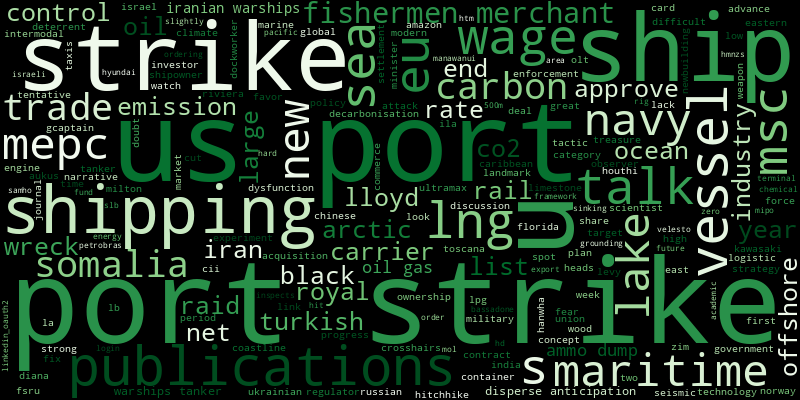
This week’s maritime sentiment has shifted toward a more cautious tone, reflecting ongoing concerns about operational disruptions, particularly around labor strikes and the rising costs associated with regulatory compliance. The industry’s mood remains predominantly neutral, but the spike in negative sentiment underscores the mounting pressures on logistics providers and forwarders. With port congestion, strikes, and regulatory changes at the forefront, flexibility and adaptability remain critical for shippers and forwarders to maintain resilience in their operations.
Maritime Market Mood Tracking: Positive
🔵 Neutral Sentiment: 76.90%
🔴 Negative Sentiment: 12.00%
🟢 Positive Sentiment: 11.10%
Overall Mood (Compound Score): 0.9686 (scale from -1 to +1)Z
Mood Interpretation: Positive
These scores reflect the sentiment of this week’s maritime headlines, offering an indicative snapshot of the industry’s tone. This analysis uses the VADER Sentiment Analyzer to evaluate the tone of headlines from leading maritime news sources.
While neutral sentiment continues to dominate, the growing negative sentiment highlights several key disruptions and challenges in the industry:
Negative Sentiment: Labor Strikes and Regulatory Pressures
Labor Strikes Disrupt Port Operations
Recent labor strikes across the East Coast and Gulf ports have severely disrupted operations, creating delays that ripple through supply chains. These strikes are increasing concerns about capacity constraints and rising shipping costs, forcing shippers and forwarders to develop contingency plans to minimize their impact. Read more
Rising Regulatory Costs Burdening Logistics Providers
The ongoing regulatory changes—especially around fuel standards and emissions—are adding financial pressure to maritime logistics companies. With rising fuel costs and compliance requirements, the industry’s margins are being squeezed. This is leading to higher operational costs, impacting freight rates and market competitiveness. Read more
Neutral Sentiment: Port Congestion and Labor Disputes
Port Congestion Remains a Critical Concern
As with previous weeks, port congestion continues to challenge the industry, especially in large international ports like Baltimore and Singapore. With limited capacity and bottlenecks, shippers are forced to seek alternative routes or face costly delays. Industry players must rely on agile planning and adaptive logistics strategies to mitigate these ongoing challenges. Read more
Supply Chain Adjustments in Response to Disruption
The combination of labor strikes and port congestion is prompting significant adjustments in supply chain operations. Logistics providers are increasingly looking for alternative ports and scheduling flexibility to keep goods moving. These disruptions are forcing stakeholders to rethink their shipping routes and timelines, putting strain on global logistics systems. Read more
Positive Sentiment: Technological Innovations and Energy Transitions
Technological Advances in LNG Logistics
While overall sentiment is skewed toward the negative, there are glimmers of optimism in the adoption of greener fuel alternatives such as LNG. Logistics providers are beginning to innovate around LNG-powered shipping, which is gradually gaining traction. This shift, while challenging, presents new opportunities for companies leading in sustainable practices. Read more
Expansion in Offshore Wind Projects
The offshore wind sector continues to grow, with increased demand for specialized project cargo shipping. Despite broader challenges in the industry, this sector remains a beacon of growth. Companies involved in transporting wind turbines and other renewable energy equipment are likely to see further opportunities as these projects expand globally. Read more
Top Talking Points

Strikes and Their Disruptive Impact
Labor strikes across key maritime hubs are forcing logistics companies to implement adaptive strategies to counter operational delays. Shippers are increasingly concerned about capacity constraints and higher shipping costs.
Baltimore Port Congestion
The city’s ports are at the forefront of congestion challenges, compounded by labor strikes and the overall strain on port capacity, which is affecting both import and export flows.
Stay ahead with predictive analytics, route visualization, and end-to-end real-time tracking.

The only constant in the maritime industry is change. With TRADLINX Ocean Visibility, you can ride the whims of the market and stay ahead of changing trends. Ready to enhance your logistics efficiency? Start your free trial today and experience the future of maritime logistics.




Leave a Reply