
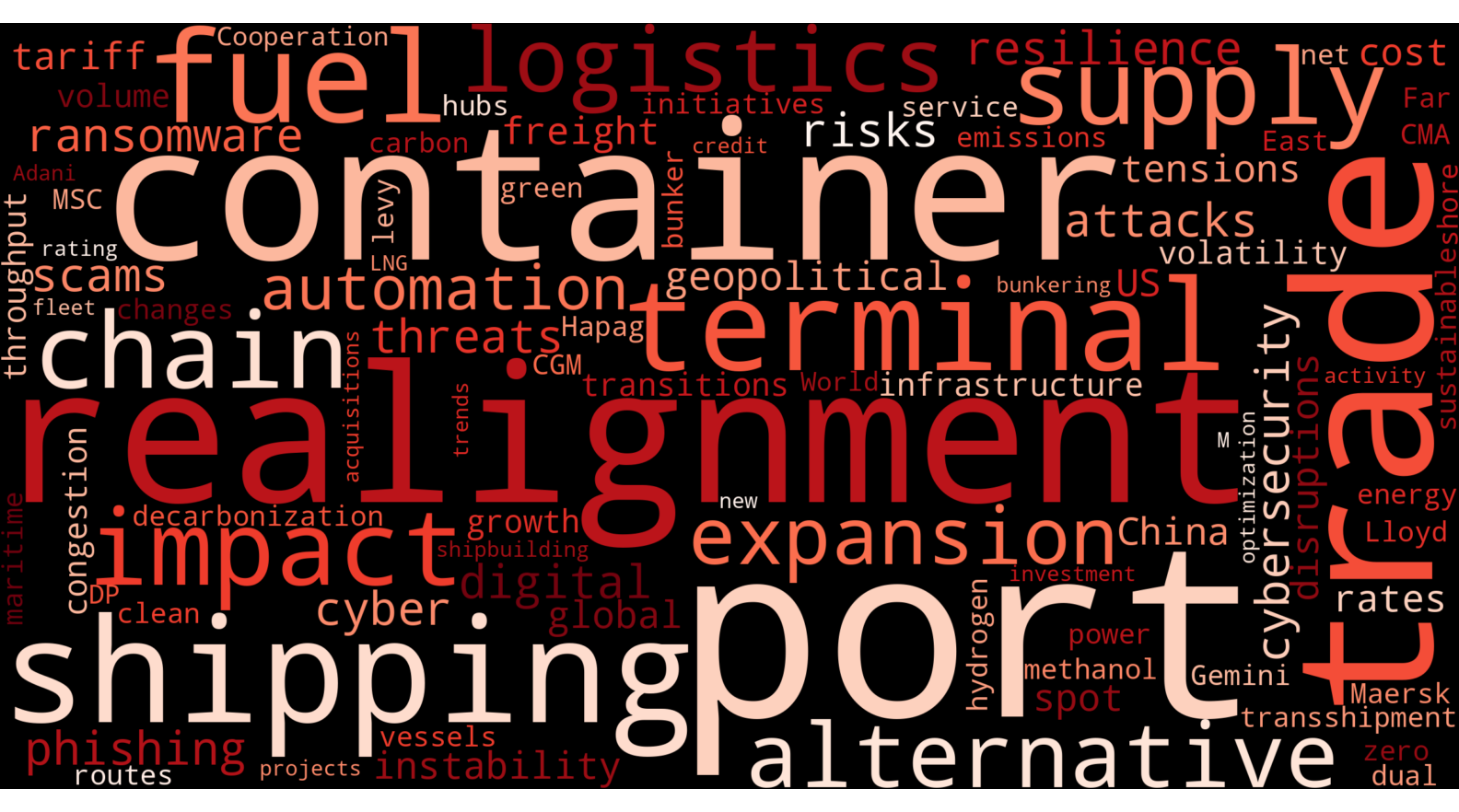
This week’s maritime sentiment reveals a cautious outlook as geopolitical tensions, cyber threats, and port restructuring continue to shape the industry. While trade volumes remain steady, concerns over security risks, regulatory pressures, and infrastructure adjustments have surfaced. Logistics service providers (LSPs) must navigate these complexities while capitalizing on emerging opportunities in green energy solutions and technological advancements in shipping.
Maritime Market Mood Tracking
- 🔵 Neutral Sentiment: 42%
- 🔴 Negative Sentiment: 38%
- 🟢 Positive Sentiment: 20%
Overall Mood (Compound Score): -0.15
Mood Snapshot: “Cautiously Uncertain” – The industry faces headwinds from cybersecurity threats and geopolitical instability, but trade activity remains resilient.
🔴 Cybersecurity & Geopolitical Disruptions
Cyber Threats in Maritime Operations Are Escalating
The maritime industry has seen a sharp rise in cyberattacks, particularly targeting port operations, shipping lines, and supply chain networks. Experts warn that ransomware incidents and phishing attacks could lead to severe financial and operational damage if security gaps are not addressed.
- Cyberattacks on shipping firms have increased by 35% year-over-year, highlighting vulnerabilities in logistics networks.
- Only 20% of global shipping companies have full-scale cybersecurity policies in place, leaving many exposed.
- Several ports worldwide have reported IT disruptions affecting cargo handling and logistics tracking systems.
What This Means for LSPs
- Ensure multi-layered cybersecurity defenses across shipping networks and digital port operations.
- Train personnel to recognize phishing scams and data breaches to prevent unauthorized access.
- Adopt real-time threat monitoring systems to detect and mitigate cyber risks before they escalate.
🔵 Trade Growth & Infrastructure Adjustments
Container Traffic Is Rising in Key Trade Hubs
Despite economic uncertainty, ports in North America and Asia are experiencing growth. The Port of Long Beach reported a 13.4% increase in container throughput in February, driven by early shipments ahead of expected tariff adjustments.
- U.S. West Coast ports saw a 12% rise in imports, as shippers reroute cargo to avoid East Coast congestion.
- European ports are seeing container backlogs due to geopolitical uncertainties.
- Major carriers like CMA CGM and MSC are restructuring services to optimize trade flow.
Key Impacts on Logistics Operations
- Monitor changes in carrier schedules to avoid delays caused by terminal shifts.
- Consider alternative ports or transport methods to mitigate congestion risks.
- Stay informed on upcoming tariff adjustments that may impact freight costs.
🟢 Green Energy & Shipping Innovations
Hydrogen and Methanol Fuel Are Gaining Ground
Ports and shipping lines are accelerating efforts to transition to low-carbon fuels. The UK launched its first Green Hydrogen Shore Power Demonstrator, providing a real-world test case for hydrogen-powered port operations. Meanwhile, CMA CGM’s first dual-fuel methanol vessel made its maiden voyage to Abu Dhabi.
- Green hydrogen projects are expected to reduce port emissions by up to 40%.
- Over 200 dual-fuel vessels are set to enter service by 2026, highlighting a shift towards cleaner energy.
- Port authorities worldwide are introducing incentives for ships using alternative fuels.
How LSPs Can Leverage Green Shipping
- Assess alternative fuel options for your fleet and consider early adoption incentives.
- Engage with green shipping initiatives to stay ahead of regulatory shifts.
- Explore partnerships with hydrogen and methanol fuel suppliers for long-term sustainability.
Top Talking Points
- Cybersecurity in Shipping: A Growing Risk
- Cyberattacks on maritime operations have risen by 35% YoY, exposing vulnerabilities in port IT systems, cargo tracking, and vessel communications.
- Why It Matters: A single cyberattack can halt port operations for days, leading to massive financial and logistical disruptions.
- Trade Lane Shifts & Terminal Transitions
- Ports are undergoing structural changes, with CMA CGM and MSC realigning services in key regions.
- Why It Matters: Logistics providers must adapt to new port rotations and anticipate potential delays.
- The Green Revolution: Hydrogen & Methanol in Shipping
- The UK’s first hydrogen shore power project and CMA CGM’s dual-fuel methanol vessel launch mark a major shift in maritime decarbonization.
- Why It Matters: Sustainability regulations are tightening—early adoption of alternative fuels will soon be a competitive advantage, not an option.
Strategic Outlook
The maritime industry is navigating a turbulent yet transformative period. Digital threats are growing, but investments in cybersecurity resilience can safeguard operations. Trade lanes are shifting, requiring LSPs to stay adaptable and informed. Meanwhile, green energy adoption is accelerating, pushing the sector toward sustainability.
The key to success in 2025? Cyber resilience, operational agility, and early adoption of green initiatives. Companies that integrate these into their strategy will not only weather disruptions but lead the industry forward.
Stay ahead with TRADLINX’s real-time maritime insights! 🚢📊
Prefer email? Contact us directly at min.so@tradlinx.com (Americas), sondre.lyndon@tradlinx.com (Europe) or henry.jo@tradlinx.com (EMEA/Asia)


Leave a Reply