

Key Takeaways
- Pre-war EIA forecasts projected U.S. diesel prices would average $3.47/gallon in 2026. As of late March, the national average hit $5.37/gallon, roughly 55% above where it was expected to be.
- For trucking, that translates to approximately $0.36 per mile in additional operating cost. Fuel typically represents about 21% of total cost per mile for trucking companies.
- Capacity is tightening not because demand surged, but because carriers are parking trucks, declining unprofitable loads, and slowing down. Available truck posts on DAT fell to their lowest Week 13 levels in at least 10 years across dry van, reefer, and flatbed.
- Spot rates are rising. Dry van spot rates averaged $2.01/mile in February, up from $1.65 in November. The spot-to-contract gap compressed from $0.39/mile a year ago to $0.11/mile by March. C.H. Robinson raised its 2026 dry van rate forecast from +10% to +12%.
- Intermodal is picking up volume (~3% YoY) as shippers seek lower-cost alternatives to truckload. But intermodal rates are capped by the truckload ceiling: if trucking rates don’t rise enough, intermodal can’t either.
- The diesel spike is not a standalone trucking story. It connects directly to the Hormuz crisis, the carrier emergency fuel surcharges on ocean trades, and the bunker supply pressure in Singapore. It is the same fuel disruption hitting different modes.
Who This Is For
This post is for shippers, importers/exporters, and logistics managers in the U.S. market who manage domestic freight, whether truckload, LTL, or intermodal. If your inland distribution costs are rising and your carrier relationships are tightening, this is the context.
What the Forecasts Got Wrong
Going into 2026, every major forecast expected diesel prices to decline. The EIA’s August 2025 outlook projected average U.S. on-highway diesel at $3.47/gallon for 2026, continuing a downward trend from $3.66 in 2025. The logic was sound at the time: U.S. crude production was at record levels (13.5 million barrels/day), non-OPEC+ supply growth was outpacing demand, and inventories were expected to rise.
Then the Strait of Hormuz effectively closed to most commercial traffic on February 28, 2026.
Within weeks, diesel prices surged over $1/gallon. The national average reached $5.37/gallon by late March, the highest weekly figure since late 2022. Some regions, including California, saw prices push even higher. The gap between forecast and reality is roughly $1.90/gallon, a 55% miss on what was supposed to be a calm fuel year.
How $5.37 Diesel Changes Trucking Economics
The American Trucking Research Institute benchmarks fuel at about 21% of total cost per mile. At $5.37/gallon, the math shifts quickly across the industry.
Owner-operators and small fleets are most exposed. Unlike large carriers, independent operators pay for fuel out of pocket, cannot hedge prices, and rarely negotiate bulk discounts. Many are operating in a market where rates have not increased fast enough to absorb the cost. The result: some owner-operators have parked trucks, others have moved into company driver roles, and those still running are cutting deadhead miles, declining unprofitable loads, and reducing highway speed from 75 to 65 mph to save 8-9 cents per mile in fuel.
Cash flow pressure is acute. Carriers pay for fuel at the pump, but payment on loads can take 30 days or longer. That gap between outgoing cost and incoming revenue is squeezing smaller operators, especially those already running thin after several years of depressed freight rates.
Capacity is shrinking, but not because of demand. This is the counterintuitive part. Freight volumes are not surging. Consumer spending is uneven. Manufacturing is showing only early signs of expansion. But available truck capacity is declining because trucks are coming off the road for economic reasons. Unlike 2022, when larger fleets absorbed lost capacity by hiring, that is not happening this time. Trucks parked now are not being replaced.
What the Rate Data Shows
The freight rate picture is shifting:
Spot rates are climbing. DAT data shows dry van spot rates averaged $2.01/mile in February, up from $1.65 in November. Reefer and flatbed are showing similar trends.
The spot-to-contract gap has compressed. A year ago, contract rates carried a $0.39/mile premium over spot. By March 2026, that gap narrowed to $0.11/mile. This compression means carriers have less incentive to honor contract rates when spot loads pay nearly the same, which weakens route guide performance for shippers.
Tender rejections are elevated. FreightWaves reports tender rejection rates around 14%, indicating carriers are being selective about which loads they accept. When route guide depth increases (meaning shippers have to go further down their carrier list to find coverage), it signals tightening capacity.
Rate forecasts are being revised upward. C.H. Robinson raised its 2026 dry van rate forecast from +10% to +12%. Bison Transport’s April market update notes that the combination of rising costs and tightening supply tends to “accelerate movement much faster than either factor alone.”
The Intermodal Effect
Domestic intermodal volumes are up roughly 3% year-over-year, driven by competitive pricing relative to truckload, strong service levels, and available capacity. For shippers with intermodal-eligible freight, the mode is an increasingly attractive option as trucking costs rise.
But intermodal pricing has a structural ceiling: it operates at a discount to truckload. If truckload rates do not rise significantly, intermodal rates cannot either. As one industry analyst put it, truckload provides the “rate ceiling under which intermodal must operate.”
The strategic question for shippers is whether the current diesel-driven trucking cost increase is large enough and sustained enough to justify converting more freight to intermodal. If diesel stays above $5/gallon through Q2 and Q3, the conversion math gets more compelling.
Why This Connects to Ocean Freight
If you have been following the emergency fuel surcharge coverage on this blog, the diesel story is the domestic extension of the same disruption.
The Strait of Hormuz situation is restricting global fuel supply. That restriction shows up as higher bunker fuel costs in Singapore (VLSFO nearly doubled), which shows up as emergency fuel surcharges from MSC, Maersk, CMA CGM, ONE, and Hapag-Lloyd, which shows up as inland fuel surcharges on carrier haulage in the US, Canada, and Europe, and which shows up as $5.37/gallon diesel at the truck stop.
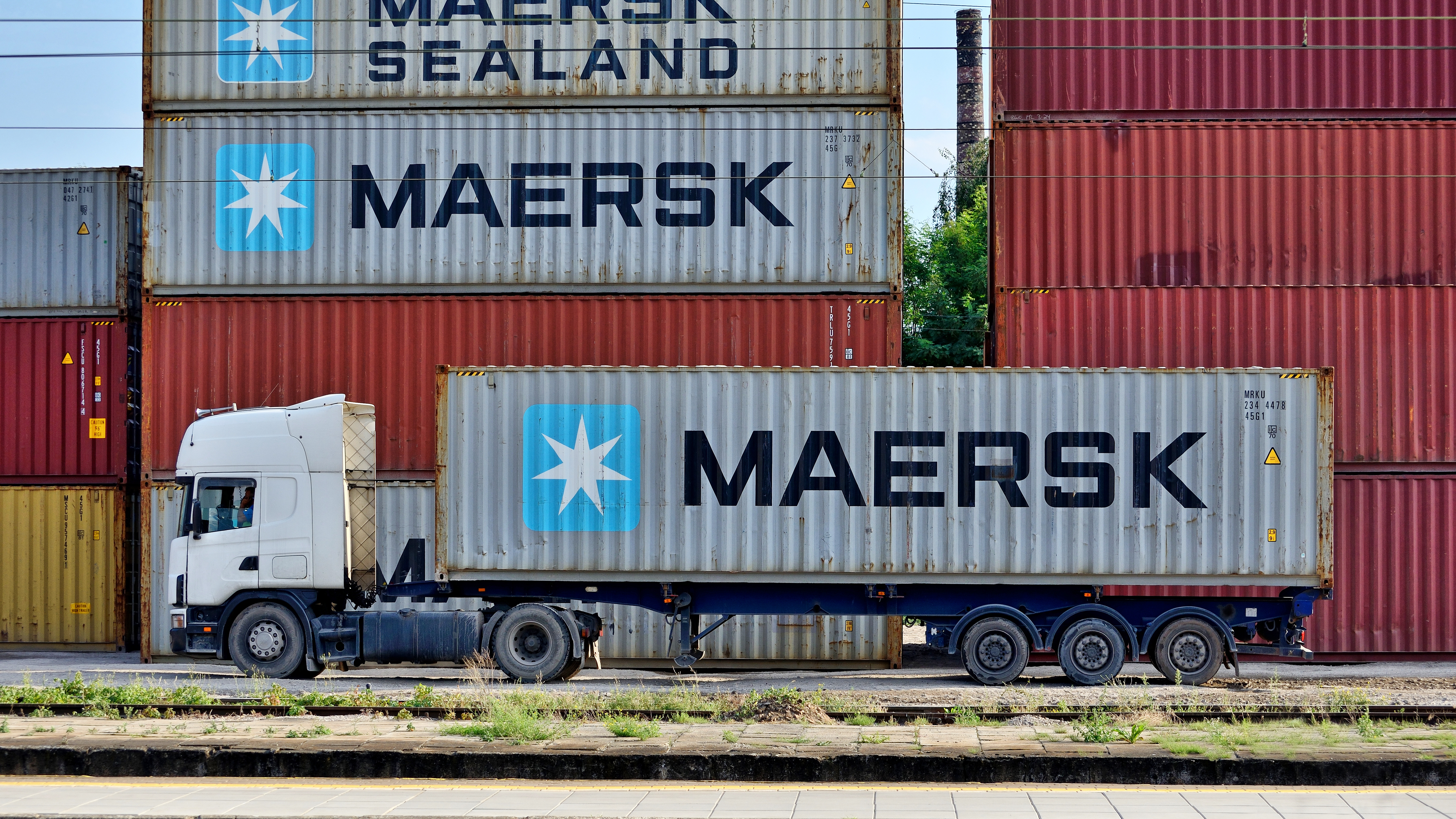
For shippers managing both ocean and domestic freight, the cost pressure is compounding. A container arriving at a U.S. port with an ocean EFS, an inland carrier surcharge, and a domestic trucking fuel surcharge applied is significantly more expensive to deliver to its final destination than it was three months ago.

What Shippers Should Be Doing
Review fuel surcharge mechanisms in your trucking contracts. Most contracts include a fuel surcharge that adjusts based on the EIA weekly diesel average. But fuel surcharges are designed for gradual price movement, not $1/gallon spikes in a month. The velocity of the current increase means surcharges may lag actual pump prices, creating a gap that carriers absorb in the short term but eventually push back on through rate renegotiation or load selectivity.
Monitor route guide performance. If your primary carriers are rejecting more freight than usual, it is likely cost-driven. Having backup carrier options and intermodal alternatives ready reduces the scramble for spot coverage at elevated rates.
Evaluate intermodal conversion opportunities. If you have freight lanes that are intermodal-eligible and you have not converted them, the cost gap is widening in intermodal’s favor. The savings may be significant enough to justify the operational adjustment.
Budget for sustained elevation, not a quick return. Diesel prices are tied to global oil market conditions and there is no clear timeline for relief from the Hormuz disruption. Planning around $4.50-$5.50/gallon diesel through at least Q2 is more realistic than expecting a return to sub-$4 levels in the near term.
Connect inland cost changes to your ocean freight picture. If your team manages ocean and domestic freight separately, the current environment argues for a more integrated cost view. The surcharge stacking (ocean EFS + inland carrier surcharge + domestic fuel surcharge) is easier to manage when all three are visible in one place.
Operational Note: When fuel-driven cost changes hit ocean, inland, and domestic legs simultaneously, the shipments hardest to manage are those where each leg is tracked in a different system. Connecting ocean tracking to inland milestones gives operations teams a single view of where cost exposure is building across the full delivery chain.
What to Watch
- EIA weekly diesel average. This is the benchmark that triggers most fuel surcharge adjustments. Watch for whether the average stabilizes, continues climbing, or begins to ease. As of late March, the 13-week trailing average was $3.76/gallon (reflecting pre-spike weeks), but the current weekly figure is significantly higher.
- DAT tender rejection rates. If rejections push above 15-16%, capacity tightening becomes severe. Below 12%, the market is loosening.
- C.H. Robinson and FreightWaves rate forecasts. Both are revising their 2026 outlooks. Further upward revisions signal sustained rate pressure.
- Carrier exit data. FMCSA carrier revocations and new carrier authority filings can signal whether the diesel spike is driving net capacity reduction. This is a lagging indicator but an important one.
- Intermodal volume trends. If domestic intermodal growth accelerates beyond 3% YoY, it signals meaningful mode conversion is underway.
Further Reading
- Emergency Fuel Surcharges April 2026 Update (Tradlinx)
- Singapore Bunker Fuel Supply Is Under Pressure (Tradlinx)
- C.H. Robinson: Diesel Fuel Market Update
- DC Velocity: Truck Freight Rates Tick Up Slightly to Start 2026
- FreightWaves: State of the Industry – April 2026
Need help interpreting this disruption or your shipment?
For a quick question, chat with Tradlinx on WhatsApp. For a deeper discussion, book a time below.
Prefer email? Contact us directly at min.so@tradlinx.com (Americas), sondre.lyndon@tradlinx.com (Europe), or henry.jo@tradlinx.com (EMEA/Asia).



Leave a Reply