
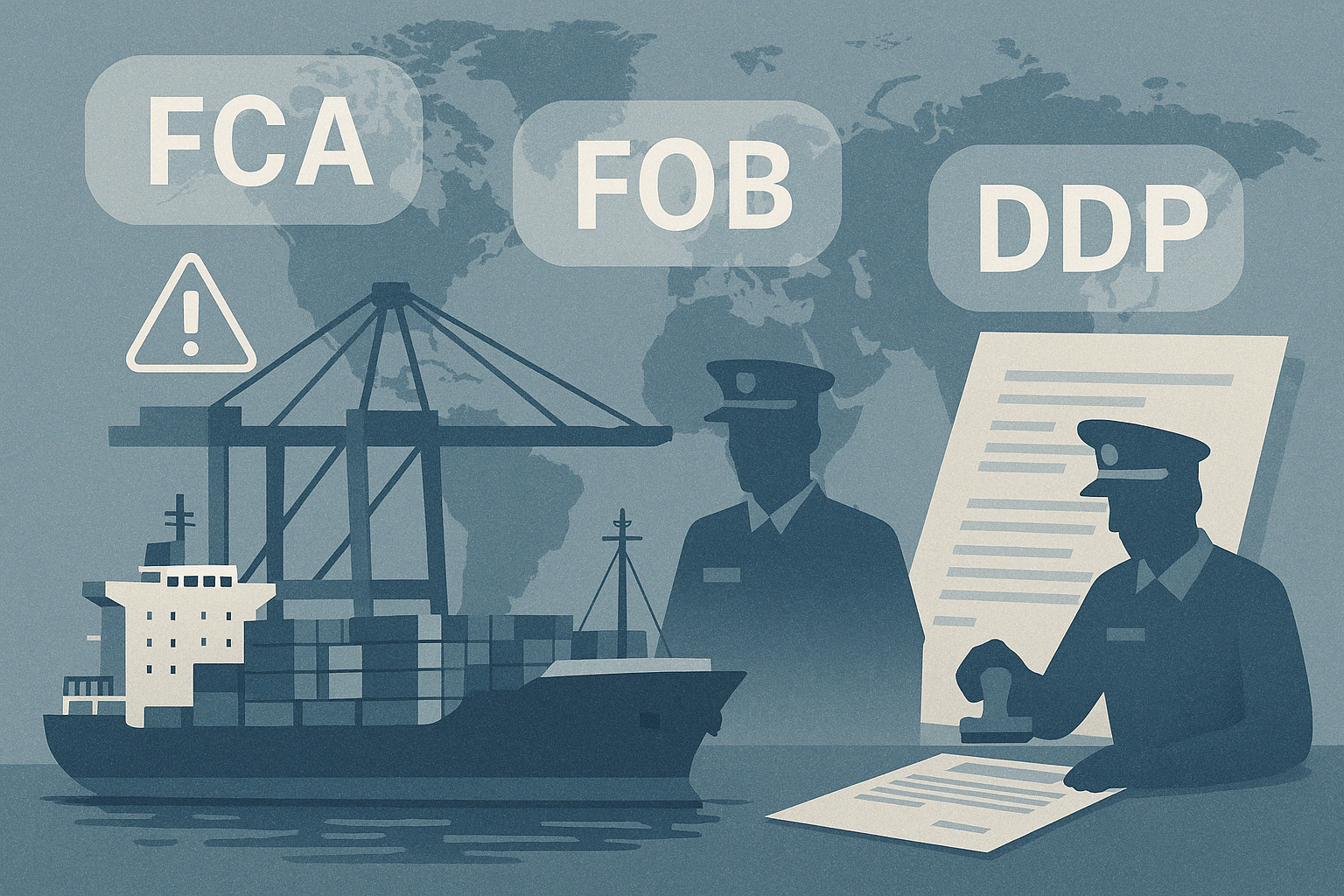
Avoiding Costly Mistakes: Why Incoterms Still Confuse Traders in 2025
In the fast-paced world of global trade, Incoterms® are essential—but often misunderstood. These standardized trade terms, published by the International Chamber of Commerce (ICC), define how costs, risks, and responsibilities are divided between buyers and sellers in international (and sometimes domestic) shipments. Yet, even experienced logistics professionals continue to misuse them.
The consequences? Costly disputes, delivery delays, customs problems, and legal headaches.
Whether you’re exporting machinery from Germany or importing consumer electronics into the U.S., choosing the wrong Incoterm—or applying the right one incorrectly—can derail your entire supply chain. In this guide, we’ll break down the 10 most common Incoterms mistakes, explain why they matter in 2025’s complex trade environment, and how to avoid them.
Why Is There an “®” After Incoterms?
Incoterms® is a registered trademark of the International Chamber of Commerce (ICC). The ® symbol indicates that the ICC legally owns the rights to publish and define the official Incoterms rules.
- ✅ Use Incoterms® when referencing the official ICC trade terms.
- ✅ Always specify the version—e.g., Incoterms® 2020—in contracts to avoid disputes.
- ✅ It’s okay to omit the “®” after the first mention in informal writing.
This trademark helps ensure global consistency and prevents misuse or unauthorized alterations of the rules that govern global trade.
Top 10 Most Common Incoterms® Mistakes (and How to Avoid Them)
Even seasoned importers and exporters fall into traps when applying Incoterms. Below are the most frequent—and costly—errors, with links to expert guidance on how to prevent them.
- Using the Wrong Incoterm for the Mode of Transport
Terms like FOB and CIF are intended for sea and inland waterway transport. For containerized cargo, use FCA, CPT, or CIP instead—since risk transfers when goods are handed over to the carrier, not loaded onto the vessel. - Failing to Specify the Exact Place or Port
Vague terms like just “Hamburg” or “Shanghai” can create confusion. Always specify the full delivery location—ideally using UN/LOCODEs or complete terminal addresses. - Confusing Transfer of Risk with Transfer of Ownership
Incoterms define risk transfer—not ownership. Clarify title transfer separately in your sales contract to avoid legal or financial ambiguity. - Misunderstanding Customs Responsibilities
Under FCA, the seller must handle export clearance—but many neglect this, causing delays. Double-check who handles customs at both origin and destination. - Using Delivered Duty Paid (DDP) Without Knowing Local Regulations
DDP requires the seller to manage import duties in the buyer’s country. Without deep local knowledge, this can lead to tax errors or legal issues. - Inadequate or Misunderstood Insurance Coverage
Under CIF and CIP, sellers must provide insurance—but the required 110% coverage is often misunderstood or insufficient. Confirm and supplement insurance as needed. - Overlooking Terminal Handling Charges (THC)
Costs like loading, unloading, and terminal fees can spark disputes. Clarify responsibility for THC in writing. - Using Outdated Incoterms Versions
The ICC updates Incoterms every decade (latest: 2020). Always specify the version used in the contract, e.g., “Incoterms® 2020.” - Ignoring Local Laws and Documentation Requirements
Incoterms don’t override national regulations. Even if a contract says the buyer clears exports, local law may require the seller to do so. - Assuming All Parties Interpret Incoterms the Same Way
Miscommunication is common—especially across cultures or languages. Always confirm mutual understanding and document agreed responsibilities.
🚢 Incoterms® Abbreviations Explained
Not sure what FCA, DDP, or CIF mean? Here’s a quick breakdown of the most commonly used Incoterms abbreviations in international trade:
- FOB (Free On Board) – Used for sea freight; seller delivers when goods are loaded onto the vessel.
- CIF (Cost, Insurance & Freight) – Seller covers cost, marine insurance, and freight to the destination port.
- FCA (Free Carrier) – Seller delivers goods to a carrier at a specified location; suitable for all transport modes.
- CPT (Carriage Paid To) – Seller pays for transport to the destination, but risk transfers earlier (at carrier handoff).
- CIP (Carriage and Insurance Paid To) – Like CPT, but seller also covers insurance (minimum coverage required).
- DDP (Delivered Duty Paid) – Seller assumes all costs and responsibilities, including import duties in buyer’s country.
- EXW (Ex Works) – Buyer handles everything from seller’s premises onward—including export clearance.
- THC (Terminal Handling Charges) – Costs related to loading/unloading containers at terminals (can lead to disputes).
- UN/LOCODE – UN Location Code used to uniquely identify delivery points, ports, terminals, and depots.
Pro Tip: Always specify the Incoterms® version and clearly define these terms in your sales contract to avoid disputes.
Incoterms Mistakes: Consequences & How to Avoid Them
This table summarizes the most common Incoterms® errors, their consequences, and what logistics professionals can do to mitigate risks.
| Mistake | Consequence | How to Avoid |
|---|---|---|
| Wrong Incoterm for transport mode | Costly disputes, increased risk | Match Incoterm to cargo type and route |
| Vague delivery location | Delays, miscommunication | Use full terminal address or UN/LOCODE |
| Risk vs. ownership confusion | Legal/contractual ambiguity | Define ownership transfer in the sales contract |
| Customs roles unclear | Export/import delays | Assign duties clearly for both parties |
| Misusing DDP | Import compliance issues | Use DDP only with strong local knowledge |
| Insurance mismanagement | Financial exposure in transit | Verify & upgrade coverage under CIF/CIP |
| Unassigned terminal charges | Surprise fees and disputes | Define THC cost responsibility in contract |
| Using outdated terms | Conflicting expectations | Always use and specify “Incoterms® 2020” |
| Ignoring local laws | Compliance penalties | Consult local trade experts or brokers |
| No shared interpretation | Cross-border misunderstandings | Confirm and document Incoterm meaning |
Why Do Incoterms Mistakes Cost So Much?
Using the wrong Incoterm—or applying the right one incorrectly—can have a cascading effect across your supply chain. From customs delays to financial disputes, the impact can be both immediate and long-term.
1. Financial Disputes and Unexpected Costs
Misallocated freight charges, insurance gaps, and terminal fees often result from incorrect Incoterms. These lead to disagreements over who should pay—and unexpected invoices for one side.
2. Legal Disputes and Contract Breaches
Incoterm misunderstandings can cause contract violations, triggering legal claims or lost shipments. Even a small oversight—like failing to specify the version (“Incoterms® 2020”)—can lead to conflicting interpretations.
3. Insurance Complications
Failing to meet CIF or CIP insurance obligations, or misunderstanding who arranges coverage, can result in claims being denied if goods are lost or damaged.
4. Customs Clearance Delays
Goods can be stuck at ports when it’s unclear who is responsible for filing export declarations or handling import permits. Delays like this not only cause missed deadlines but also increase demurrage and storage costs.
5. Supply Chain Disruption & Relationship Damage
When Incoterms aren’t aligned, shipments may be delayed or mishandled, eroding trust between business partners and reducing operational efficiency.

Incoterms in Domestic vs. International Trade
While Incoterms are designed for international trade, many businesses also use them in domestic transactions. However, their application and implications vary significantly across these two contexts.
1. Customs Duties & Regulatory Scope
- International Trade: Incoterms define who clears export/import customs and pays duties (e.g., DDP or EXW).
- Domestic Trade: Customs isn’t a factor, so Incoterms are used mainly for risk and delivery responsibilities.
2. Legal Recognition
- International: Incoterms are globally accepted, helping align expectations across jurisdictions.
- Domestic: Local trade terms may be more common and legally recognized, so clarity is crucial when using Incoterms.
3. Transport & Insurance Responsibilities
- International: Incoterms cover multimodal and cross-border risk, including insurance (e.g., CIF/CIP).
- Domestic: Insurance is often handled separately; Incoterms are used mainly to assign transport costs.
Summary Table: Domestic vs. International Incoterms Use
| Aspect | International Trade | Domestic Trade |
|---|---|---|
| Customs/Duties | Defines export/import clearance duties | Not applicable |
| Risk Allocation | Includes border, transit, and port risks | Limited to domestic delivery risk |
| Legal Framework | Widely recognized globally | May require local legal adaptation |
| Insurance | Often required (e.g., CIF) | Handled outside Incoterms |
| Clarity Requirement | Standardized across borders | Needs extra clarification with parties |
Key Takeaways for Logistics Professionals
Whether you’re drafting a sales contract or managing cross-border shipments, understanding Incoterms is no longer optional—it’s essential for minimizing risk and maintaining supply chain efficiency.
- Use mode-specific Incoterms: Choose terms like FCA or CPT for containerized cargo instead of FOB.
- Always specify: Include exact delivery points and Incoterms® version in all contracts.
- Clarify beyond Incoterms: Define ownership transfer, quality standards, and payment terms separately in the sales contract.
- Understand customs roles: Misalignment causes delays—know who clears what, especially under EXW or DDP.
- Insurance isn’t automatic: Only CIF and CIP require seller insurance—and even then, minimum coverages may not suffice.
- Don’t assume mutual understanding: Confirm all responsibilities in writing and align with local laws.
Consistently reviewing and updating your team’s understanding of Incoterms helps prevent costly mistakes—and positions your company as a trusted trade partner.
Key Takeaways for Logistics Professionals
Whether you’re drafting a sales contract or managing cross-border shipments, understanding Incoterms is no longer optional—it’s essential for minimizing risk and maintaining supply chain efficiency.
- Use mode-specific Incoterms: Choose terms like FCA or CPT for containerized cargo instead of FOB.
- Always specify: Include exact delivery points and Incoterms® version in all contracts.
- Clarify beyond Incoterms: Define ownership transfer, quality standards, and payment terms separately in the sales contract.
- Understand customs roles: Misalignment causes delays—know who clears what, especially under EXW or DDP.
- Insurance isn’t automatic: Only CIF and CIP require seller insurance—and even then, minimum coverages may not suffice.
- Don’t assume mutual understanding: Confirm all responsibilities in writing and align with local laws.
Consistently reviewing and updating your team’s understanding of Incoterms helps prevent costly mistakes—and positions your company as a trusted trade partner.
Conclusion: Get Incoterms Right—Your Bottom Line Depends On It
Incoterms are more than just trade lingo—they’re the legal and operational backbone of international logistics. Whether you’re handling freight from Shenzhen to Rotterdam or sourcing parts across borders, avoiding common Incoterms mistakes can protect your margins, reputation, and supply chain continuity.
In 2025, with global trade more digitized and regulated than ever, it’s crucial to:
- Match Incoterms to the right transport mode
- Clearly define delivery points, responsibilities, and version (e.g., “Incoterms® 2020”)
- Understand customs and insurance implications before committing to a term like DDP or CIP
- Regularly train your team and update contract templates
By mastering Incoterms, logistics professionals can reduce costly disputes, accelerate delivery timelines, and build stronger cross-border relationships.
Further Reading
- Maersk: 7 Most Common Incoterms Mistakes
- Incoterms Explained: Common Mistakes
- Haul247: Top 10 Incoterms Mistakes
- Customs Knowledge: Incoterms & Customs
- Geopostcodes: Shipping Mistakes to Avoid
- ICC Academy: Incoterms 2020 Explained
🚀 Ready to Avoid Costly Shipping Errors?
TRADLINX helps logistics teams stay compliant, coordinated, and connected — with real-time shipment tracking, document automation, and end-to-end visibility across your global supply chain.
Prefer email? Contact us directly at min.so@tradlinx.com (Americas), sondre.lyndon@tradlinx.com (Europe) or henry.jo@tradlinx.com (EMEA/Asia)



Leave a Reply