
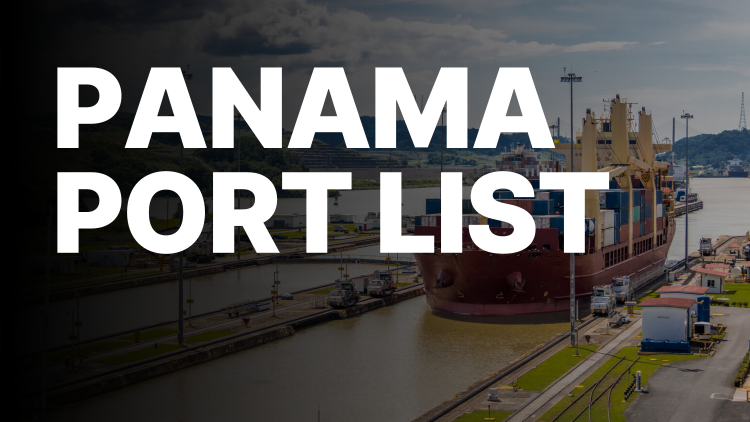
Panama, located at the crossroads of the Atlantic and Pacific Oceans, is a critical hub for global maritime trade. The Panama Canal, a cornerstone of global shipping, enhances the strategic importance of Panama’s ports, which handle over 9.57 million TEUs annually (2024). These ports facilitate transshipment, containerized cargo, and bulk goods, making Panama a vital link in global supply chains. Supported by modern infrastructure and strategic investments, Panama’s ports are key drivers of economic growth in the region.
Here’s an overview of Panama’s major ports ranked by significance and container throughput:
1. Port of Balboa: Pacific Gateway to the Panama Canal

Key Features:
- Location: Pacific side, near Panama City
- Annual Throughput: 2.63 million TEUs (2024)
- Significance:
- Largest port on the Pacific side of Panama; strategically located at the entrance to the Panama Canal.
- Handles containerized cargo, RoRo operations, and bulk goods.
- Acts as a critical transshipment hub for trade between Asia and the Americas.
- Recent Developments:
- Expansion of container-handling capacity with new gantry cranes and yard equipment.
- Implementation of rail and truck connectivity to Atlantic terminals for seamless cargo movement.
2. Port of Cristobal: Atlantic Transshipment Hub

Key Features:
- Location: Atlantic side, near Colón
- Annual Throughput: 1.11 million TEUs (2024)
- Significance:
- Major transshipment hub on the Atlantic side; complements Balboa with seamless connectivity via rail and road networks.
- Handles containers, general cargo, RoRo operations, and cruise passengers.
- Equipped with specialized facilities for refrigerated containers and hazardous goods storage.
- Recent Developments:
- Addition of a new berth terminal with a draft depth of 15 meters to accommodate larger vessels.
- Upgraded rail connectivity for efficient container transfers between Atlantic and Pacific terminals.
3. Manzanillo International Terminal (MIT): Key Transshipment Facility

Key Features:
- Location: Colón Free Trade Zone (Atlantic side)
- Annual Throughput: 2.71 million TEUs (2024)
- Significance:
- One of the busiest transshipment hubs in Latin America; handles containerized cargo for major global shipping lines like Maersk and MSC.
- Integrated with the Colón Free Trade Zone for value-added logistics services.
- Recent Developments:
- Expansion of quay length and addition of Post-Panamax gantry cranes to increase capacity.
4. PSA Panama International Terminal: Advanced Pacific Facility

Key Features:
- Location: Pacific side, near Balboa
- Annual Throughput: 1.39 million TEUs (2024)
- Significance:
- Strategically located at the Pacific entrance of the Panama Canal; supports transshipment and regional trade flows.
- Equipped with advanced infrastructure including remotely controlled gantry cranes and yard-handling equipment.
- Key contributor to employment and economic growth in Panama.
- Recent Developments:
- Achieved record-breaking throughput in 2024 with flexible stacking strategies to accommodate larger vessels.
Economic Impact
Panama’s ports are critical drivers of economic growth:
- Handle over 9.57 million TEUs annually, reflecting a robust increase in volumes (+15% from 2023).
- Contribute significantly to GDP through logistics services and employment generation across port operations.
- Ports like Balboa and Cristobal facilitate trade worth billions annually by connecting key global markets.
Future Outlook
- Sustainability Initiatives: Ports like Balboa are transitioning to electrified equipment and shore power facilities to reduce carbon emissions.
- Capacity Expansion Projects: Investments in additional berths and gantry cranes at Cristobal and MIT aim to accommodate growing container volumes.
- Digitalization & Automation: Integration of AI-based systems for real-time tracking and optimized cargo handling across major terminals.
- Green Energy Transition: PSA Panama is exploring renewable energy solutions to enhance operational sustainability.
- Strategic Partnerships: Collaboration with global shipping lines like Evergreen, Maersk, and MSC ensures continued growth in transshipment volumes.
Panama’s ports are more than just gateways—they are vital engines driving innovation, connectivity, and economic resilience across Latin America and beyond. From Balboa’s Pacific dominance to Cristobal’s strategic role on the Atlantic side, each port plays a unique role in keeping Panama at the forefront of global commerce while addressing future challenges with cutting-edge solutions.





Leave a Reply