
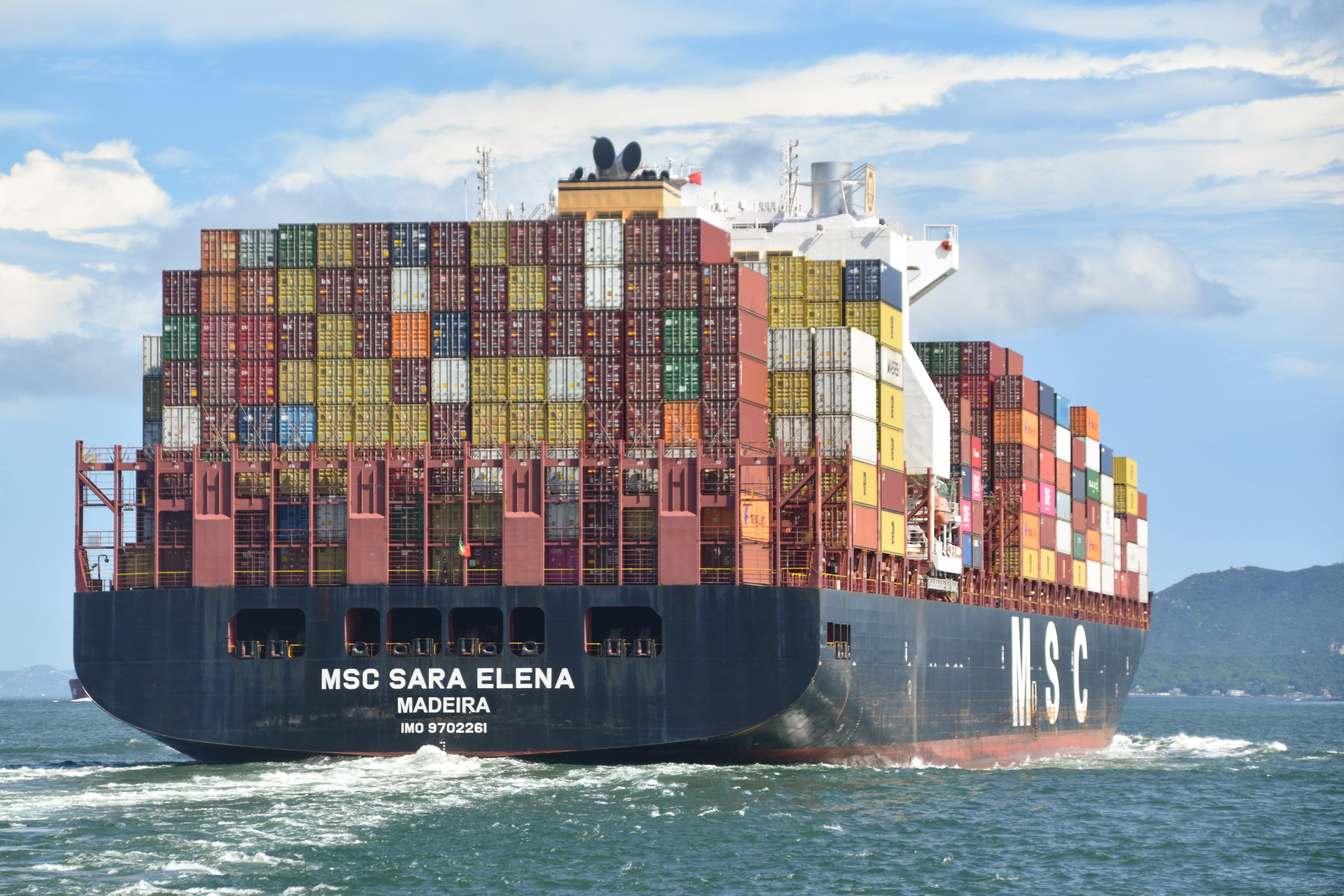
The Loadstar reported on November 24 that Maersk and Ocean Network Express (ONE) are working on a vessel sharing agreement (VSA) covering north-south trades globally, citing sources in Asia. As of November 25, neither carrier had confirmed the talks, and the report gave no start date. The lane it singles out is Far East–West Coast South America, where the two carriers hold about a quarter of weekly capacity on Linerlytica’s figures.
For shippers on that lane, the practical question is which company runs the ship under your booking. Maersk’s two Asia–West Coast South America strings have no partner today, per Xeneta figures cited in the report. Under a VSA, a container booked with one carrier can sail on a ship the other operates, under a voyage number that may not match the operator’s. Teams that tie containers to sailings by booking carrier and voyage number would feel that first.
What The Loadstar Reported
The report describes a deal in development, and its structure is unclear. The likely shape in the table below comes from The Loadstar’s provisional analysis; neither carrier has described it.
| Item | What was reported | Source |
|---|---|---|
| Status | VSA being worked on; not confirmed by either carrier | The Loadstar (Nov 24); DataPortuaria (Nov 25) |
| Scope | North-south trades globally, rather than lane by lane | The Loadstar |
| Lanes named | Far East–West Coast South America; Far East–Latin America | The Loadstar |
| Far East–WCSA capacity | Maersk 16.1% and ONE 9% of weekly capacity | Linerlytica, cited by The Loadstar |
| Start date | None given | The Loadstar; DataPortuaria |
| Likely structure | Core loops on one carrier’s ships where its fleet fits, shared loops where the ship mix requires it | The Loadstar (provisional analysis) |
North-south trades have run on a different model from east-west. Maersk’s Gemini Cooperation and ONE’s Premier Alliance both stop at east-west trades. According to the report, north-south has relied on classic VSAs, where each carrier’s slots follow the ships it provides and an agreement rarely covers more than two or three services. A single VSA covering north-south trades globally would be the first of its kind.
Why a Shared Sailing Carries Two Voyage Numbers
The Federal Maritime Commission (FMC) describes a VSA as carriers pooling vessel capacity on particular trade routes, with each partner’s share able to vary by port. When the partner provides the ship, your booking and bill of lading (B/L) still sit with the carrier you booked with.
That split shows up in the identifiers. In an example the Digital Container Shipping Association (DCSA) presented to the FMC’s National Shipper Advisory Committee in November 2023, one sailing carries a different service code and voyage number for the VSA partner and for the vessel operator. Only DCSA’s universal references match.
| Field | VSA partner | Vessel operator |
|---|---|---|
| Carrier service code | XYT12345 | RTW892 |
| Carrier voyage number | 202302E | 2023-02-RTM-SIG |
| Universal Service Reference | SR00000X | SR00000X |
| Universal Voyage Reference | 2302W | 2302W |
DCSA describes universal references as an agreed coding system layered on top of carriers’ existing service names, codes and voyage numbers. Whether one appears on your booking depends on what your carrier has adopted, so plan around carrier-specific codes.
This is where shared loops cost time. A blank sailing or port omission passes between the operator’s systems and its partners’ before it reaches you, and each carrier reports it under its own references. DCSA wrote its Operational Vessel Schedules standard for that exchange between vessel operators and their VSA partners. If your records hold only your booking carrier’s voyage number, each change has to be cross-referenced against the operator’s voyage code or the vessel and port call before you know which containers it affects.
If your team is matching Asia–Latin America bookings to vessel schedules one carrier portal at a time, see how ops teams consolidate container and vessel status updates across carriers in one view.

What Would Change on Asia–West Coast South America
The two carriers’ customers start from different places. Xeneta’s eeSea database, as cited by The Loadstar, lists Maersk’s two Asia–West Coast South America strings, AC1 and AC3, as standalone services. Hapag-Lloyd’s three services on the lane run in cooperation with MSC, HMM and ONE, so ONE already takes part in shared loops there.
If a deal goes ahead, Maersk customers could see their first Asia–West Coast South America bookings sail on ONE-operated ships. ONE’s existing partnerships would move as well. Hapag-Lloyd sits alongside ONE in several of the lane’s consortia, and the report says those would have to be reorganized with Maersk, Hapag-Lloyd’s Gemini partner.
The report’s case rests on fleet fit. Only 10 of ONE’s 62 ships in the 10,000–15,100 TEU class work Latin American routes today, and Linerlytica puts the average ship on Far East–Latin America at 10,032 TEU. ONE also has 13,724 TEU newbuilds due for deployment in 2027.
Two obstacles could slow or reshape a deal. The report expects regulators in Chile and Peru to take an interest in a combined quarter of the lane’s capacity, and Maersk’s Asia–West Africa cooperation with CMA CGM would need untangling. DataPortuaria adds that any agreement could change frequencies and port calls for Chile, Peru and Ecuador.
Frequently Asked Questions
- What is a vessel sharing agreement (VSA)? A VSA is an agreement in which carriers pool vessel capacity on specific trade routes, and each partner’s share of space can vary by port. The FMC treats an alliance as a broader version of the same arrangement, covering several trade routes under one set of terms.
- Why does my container show a different carrier’s vessel or voyage number? On a shared service, the carrier you booked with may not operate the ship. Each partner can refer to the same sailing by its own service code and voyage number, so your booking references and the vessel operator’s references can differ for one sailing. The vessel’s IMO number stays the same whichever partner sold you the slot.
- Have Maersk and ONE confirmed a north-south alliance? As of November 25, 2026, neither carrier had confirmed the talks. The Loadstar reported on November 24 that the two carriers are working on a vessel sharing agreement covering north-south trades globally, citing sources in Asia, and gave no start date or service list.
What to Check on Your Asia–Latin America Bookings Now
These checks apply whether or not the Maersk–ONE deal is confirmed, because shared loops already run on the lane.
- Record the vessel operator. For each open booking, note which carrier runs the ship as well as the carrier you booked with. If the booking confirmation doesn’t make it clear, ask your carrier which partner operates the vessel.
- Pair the IMO number with the voyage. The IMO number stays with a ship for its whole life, so on its own it identifies the vessel and can’t separate one sailing from the next. Keep booking and container numbers as your shipment keys. For each sea leg, match the vessel’s IMO number with its voyage number and port call, and ask for both carriers’ voyage numbers on shared sailings.
- Find out which of your services are already shared. If you book with ONE on Asia–West Coast South America, some of your cargo may already move on loops shared with Hapag-Lloyd, MSC or HMM. Ask your carrier representative for the partner list on each service you use.
- Read service advisories for code and partner changes. If Maersk and ONE announce service or partner changes, check whether the service codes, voyage numbers or partner lists on your open bookings have changed.
- Reconcile ETAs against the operator’s schedule. When your booking carrier’s ETA and the operator’s schedule disagree, check the vessel by name and IMO number in the operator’s schedule before you re-plan pickups.
Further Reading
- The Loadstar: EXCLUSIVE: Maersk and ONE tipped to create first global north-south alliance
- gCaptain: Maersk and ONE Eye Landmark Global North-South Shipping Alliance (The Loadstar report, republished)
- DataPortuaria: Maersk and ONE in Talks for Shipping’s First Global North-South Alliance
- Federal Maritime Commission: Agreements Overview
- DCSA presentation to the FMC National Shipper Advisory Committee (November 2023)
- DCSA: DCSA releases standards for Operational Vessel Schedules 3.0
Sources: capacity shares and average ship size are Linerlytica figures, and service structures for AC1, AC3 and Hapag-Lloyd’s Asia–West Coast South America services are from Xeneta’s eeSea database, both as cited by The Loadstar on November 24, 2026. Neither Maersk nor ONE had confirmed the reported agreement as of November 25, 2026 (DataPortuaria). The codes in the DCSA table are illustrative examples from a November 2023 presentation, not live services. Confirm service, operator and voyage details for your bookings with your carrier.
Need help interpreting this disruption or your shipment?
For a quick question, chat with Tradlinx on WhatsApp. For a deeper discussion, book a time below.

Leave a Reply