
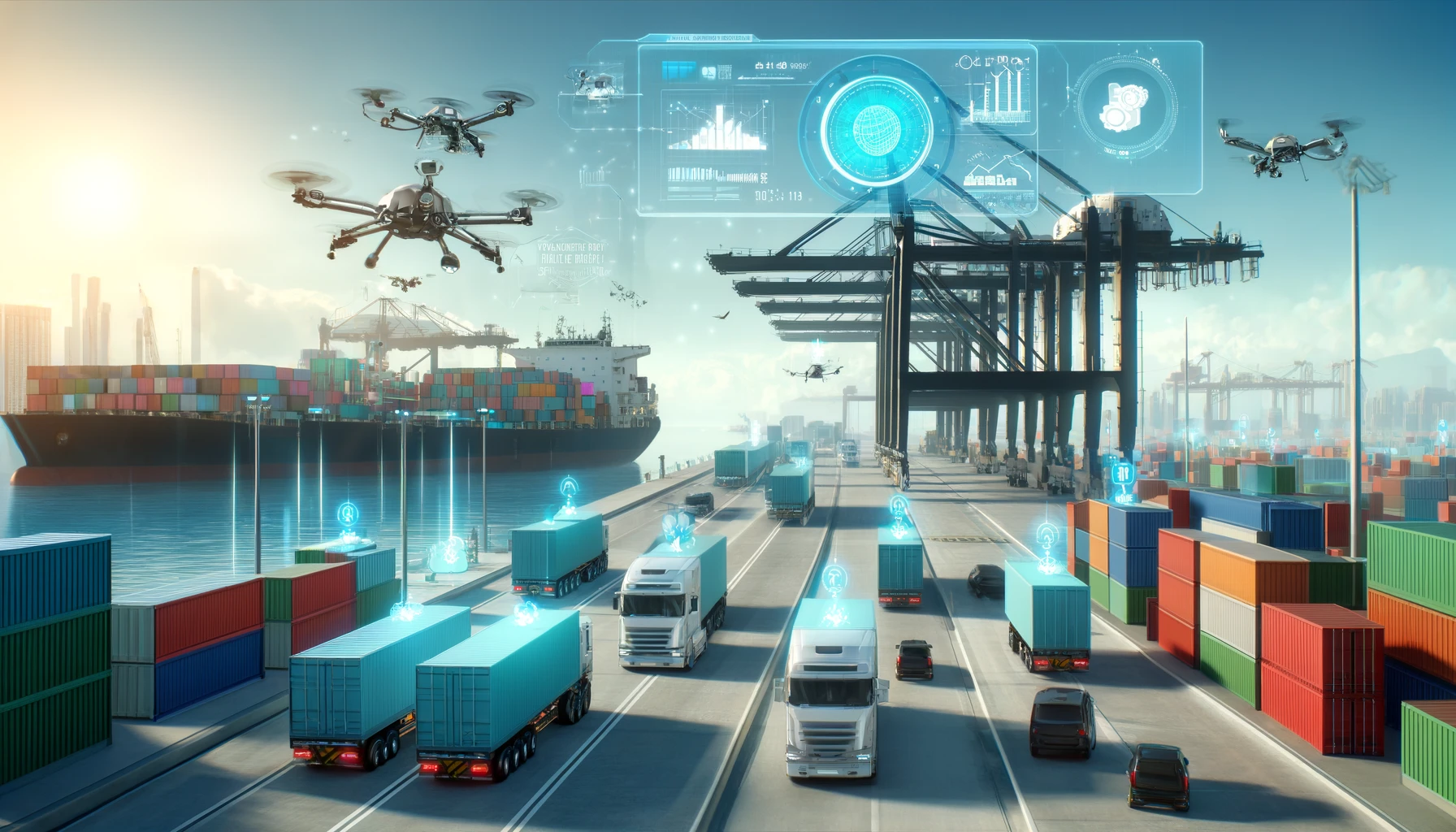
As technology rapidly advances, the world we once saw only in movies is becoming a reality. These innovations are increasingly integrated into our daily lives, extending their reach to ports and shaping the trend of ‘smart ports.’ Let’s explore how these advancements are shaping the future in the era of the Fourth Industrial Revolution.

What is a Smart Port?
A smart port leverages cutting-edge technology and automated systems to optimize its operations. Technologies such as the Internet of Things (IoT), Artificial Intelligence (AI), Big Data, Virtual Reality (VR), 5G, and Blockchain are employed to digitize processes, resulting in more efficient and effective port management.

Features and Benefits of Smart Ports
Enhanced Operational Efficiency
Automated systems significantly reduce human error and expedite the processing speeds for cargo handling and logistics operations. The use of automated cranes, drones, and autonomous vehicles is becoming increasingly common, streamlining port activities and ensuring faster turnaround times.
Real-time Data and Analytics
IoT sensors and Big Data analytics enable ports to monitor operations in real time, providing actionable insights for optimal strategy formulation. This predictive maintenance approach minimizes errors and reduces operational costs by preventing potential issues before they occur, thereby enhancing overall productivity.
Improved Security
Advanced surveillance systems, automated threat detection, and real-time monitoring, powered by AI and IoT, significantly bolster port security. Blockchain technology further enhances security by ensuring safe and streamlined documentation processes, thus reducing the risk of fraud and improving transparency.
Sustainability
Smart ports emphasize optimizing energy usage and efficient waste management to reduce environmental impact. They leverage technologies such as Ocean Visibility software for real-time route tracking and optimization, which helps in reducing carbon emissions. The integration of eco-friendly transport solutions further supports sustainable development goals.
Supply Chain Integration
Smart ports facilitate seamless coordination and collaboration among all stakeholders in the supply chain, including suppliers, manufacturers, transporters, and retailers. Technologies such as Blockchain, IoT, and AI enable real-time tracking and transparent data sharing, enhancing overall supply chain resilience, efficiency, and responsiveness.
Enhanced Customer Experience
Improved efficiency and transparency translate into faster processing times and increased reliability, maximizing customer satisfaction. Optimized supply chains lead to quicker delivery times, secure cargo handling, and alignment with environmental sustainability efforts, thereby significantly enhancing the customer experience.


Port of Rotterdam
The Port of Rotterdam in the Netherlands is a prime example of a smart port. Spanning approximately 40 kilometers, it is one of the longest ports globally and a pioneer in implementing Digital Twin technology. This technology creates a digital replica of physical assets, enabling real-time monitoring, analysis, and prediction of port operations. Through this, the port can monitor crane operations, container locations, and traffic within the port, providing predictive maintenance for equipment and infrastructure.
- Digitalization and Automation: Rotterdam is highly advanced in digitalization and automation. Automated crane systems efficiently load and unload cargo, while Automated Guided Vehicles (AGVs) autonomously transport goods within the port. These systems are managed via an integrated digital platform, enhancing both efficiency and safety.
- Blockchain: The Port of Rotterdam employs blockchain technology to bolster the transparency and security of logistics data. This technology records and shares all transactions and data exchanges within the port, including cargo entries and exits, transport contracts, and customs declarations, thereby preventing fraud and improving reliability.
- Environmentally Friendly Operations: The port adopts smart technologies to protect the environment and advance sustainable practices. For instance, it utilizes electric propulsion systems to reduce emissions and installs solar panels to harness renewable energy. Smart grids are also employed to manage energy consumption efficiently and develop various technological solutions.

Port of Los Angeles
The busiest port in the United States, the Port of Los Angeles, is a leading smart port, actively integrating the latest technologies. It has developed a cloud-based information portal, Port Optimizer, which provides real-time maritime transport data to supply chain stakeholders. This includes truck turn times, average container dwell times, and real-time data on cargo entries and exits. Nalin Jain, President of Wabtec’s Digital Electronics division, noted that Port Optimizer’s enhanced capabilities help stakeholders optimize operations, mitigate congestion due to increased global transport traffic, and deliver products to people faster.
Additionally, the port collaborates with Guangzhou Port to establish digital supply chain infrastructure and a transpacific green shipping corridor, sharing digital technology and sustainability best practices to reduce carbon emissions and improve supply chain efficiency.
Other technologies driving smooth port operations include:
- IoT and Data Analytics: The port’s equipment and infrastructure are equipped with IoT sensors that collect real-time data. This data is processed using Big Data analytics and AI algorithms, enabling operational optimization and predictive maintenance. For example, real-time tracking of trucks and containers helps reduce congestion and predict maintenance schedules.
- Mobile Apps and Automation Solutions: The Port of Los Angeles uses Cargomatic’s mobile app to accelerate the flow of containerized cargo. This app matches truck capacity with cargo owners, ensuring efficient cargo movement. Additionally, the web-based Free Flow program optimizes container movement among cargo owners, terminals, and trucking companies, enhancing efficiency and reducing congestion.
- Sustainable Development: The port adopts various eco-friendly technologies to enhance sustainability. Examples include hydrogen fuel cell trucks and battery-electric yard tractors to reduce emissions, and solar panels and smart grids to improve energy efficiency.

Port of Barcelona
Barcelona, one of Spain’s largest ports, utilizes various technologies to operate smartly and efficiently.
- Virtual Gates: One of the most innovative technologies at the Port of Barcelona is the ‘Virtual Gates’ platform. This platform uses sensors to provide real-time data on terminal entry and exit points, integrating this data into a shared system to manage container flow efficiently.
- Automation and IoT Integration: The port employs IoT sensors to collect real-time logistics data and has implemented extensive automation systems within the terminal. It monitors and manages the daily movement of over 4,000 trucks, ensuring smooth traffic flow and reduced congestion.
- Advanced Maritime Traffic Management: The Port of Barcelona’s control tower manages and coordinates maritime operations in real time. By collaborating with various port and emergency services, it efficiently manages docking and service provision, enhancing overall operational efficiency and safety.

Considerations and Challenges
- Cybersecurity : With the integration of various technologies, cybersecurity becomes a critical concern. Ports must strengthen network security, encrypt data, and conduct regular security audits to protect against cyber-attacks. Ensuring robust cybersecurity measures is essential to maintaining the integrity and smooth functioning of port operations.
- Clear Authority and Maintenance : Establishing a clear authority responsible for maintaining and managing the integrated IT platforms is essential. Continuous collaboration between governments, companies, and research institutions is necessary to ensure that new technologies are effectively utilized and maintained. Clear agreements on technology transfer and consistent maintenance protocols are crucial to prevent fragmentation and inefficiency.
Conclusion
As global logistics challenges continue to mount, the adoption of smart port technologies becomes increasingly essential. Companies involved in import and export must align with these advancements, integrating real-time tracking and smart management systems to maintain competitiveness in a rapidly evolving marketplace. Embracing these changes will be pivotal in navigating the future of global trade, ensuring resilience and efficiency in the supply chain.
TRADLINX Ocean Visibility revolutionizes supply chain operations with its Ocean Visibility features, offering real-time shipment tracking, predictive analytics for lead times, and seamless management tools for freight forwarders and shippers worldwide.



Leave a Reply