
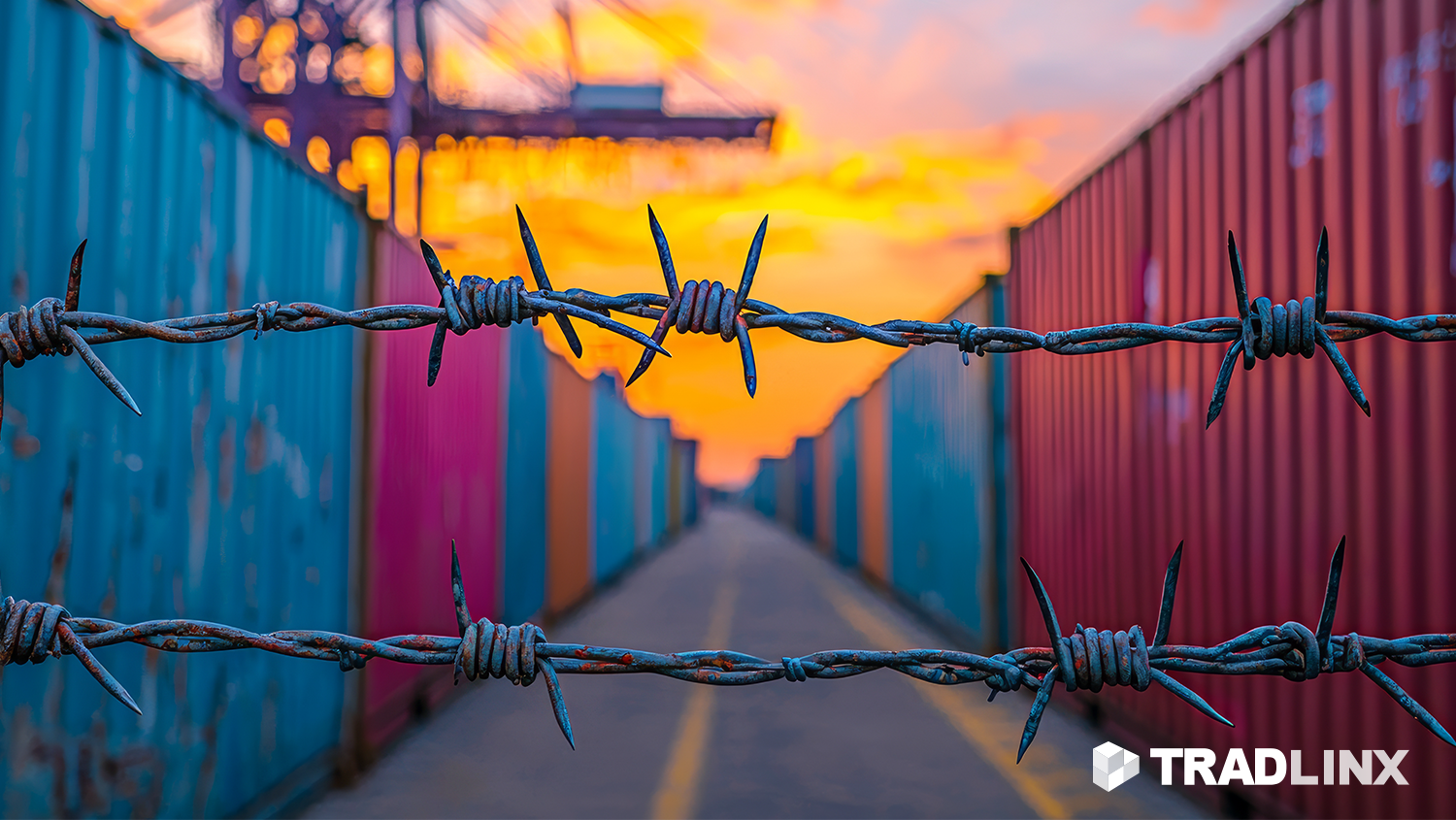
1. The Impact of Geopolitical Risks
As geopolitical tensions escalate in 2025, global trade routes are being redrawn. The Red Sea crisis and Taiwan Strait tensions are two major disruptors, causing delays, increased costs, and significant uncertainty in global shipping.
For shippers, and logistics service providers (LSPs), these risks demand careful planning and agile response strategies to minimize disruptions and protect supply chain integrity.
2. Key Geopolitical Disruptions
Red Sea Crisis
Current Status: Prolonged political tensions have forced carriers to reroute vessels around Africa’s Cape of Good Hope, bypassing the Red Sea.
- Impact: Transit times increased by 10–14 days.
- Freight rates: Surged from an average of $1,095 to as high as $5,040 per TEU on some routes.
- Port congestion: In Europe and the Gulf regions has intensified, complicating cargo delivery timelines.
- Future Scenarios: If bypassing continues, freight rates could stabilize at $2,400–2,600 per TEU—20–30% higher than pre-crisis levels.
- Rate differentials: A partial return to Red Sea routes might create rate differentials of up to $1,000 per TEU between carriers.
Taiwan Strait Tensions
Current Status: Heightened military activity is causing carriers to avoid the Strait, adding significant transit delays on Asia-Europe routes.
- Transit times: Could increase by 10–15 days, further straining schedules.
- Freight rates: May rise by over 45%, pushing costs from $2,000 to $2,900 per TEU.
- Critical sectors: Such as electronics and automotive, face severe supply chain disruptions due to delayed delivery of high-value goods.
- Future Implications: Companies are increasing inventory buffers and diversifying production bases to Southeast Asia to mitigate risks.
3. Implications for the Industry
Shipping Lines
- Rerouted voyages are consuming more fuel and driving up operational costs, which could impact financial performance.
- Carrier schedules are being revised, resulting in longer lead times for shipments.
Shippers and Forwarders
- Volatility in freight rates and transit times is causing cost unpredictability for shippers.
- Forwarders are under pressure to identify alternative routes and manage client expectations amid delays.
Regional Trade Dynamics
- Southeast Asia is emerging as a safer production and transshipment hub, as companies seek alternatives to the Taiwan Strait and Red Sea regions.
4. Actionable Strategies
For Shippers and Forwarders
- Diversify Supply Chains: Move production closer to end markets or explore safer routes through Southeast Asia.
- Invest in Inventory Management: Increase buffer stocks of critical components to offset potential delays.
For LSPs
- Leverage Predictive Tools: Use digital platforms to forecast risks and recommend optimized routing options.
- Enhance Client Communication: Keep clients informed about potential disruptions and collaborate on contingency plans.
For Shipping Lines
- Optimize Fleet Utilization: Adjust sailing schedules to reduce downtime and balance costs.
- Fuel Efficiency Investments: Explore solutions like slow steaming to mitigate increased fuel consumption on longer routes.
5. Adapting to Geopolitical Risks
Geopolitical tensions like the Red Sea crisis and Taiwan Strait disputes are reshaping global trade routes and creating new challenges for logistics professionals. By adopting proactive strategies—diversifying supply chains, enhancing communication, and leveraging technology—industry stakeholders can navigate these risks effectively.
Next in the Series
In Part 4, we’ll explore how emerging markets like ASEAN and the Middle East are reshaping the global logistics landscape and creating opportunities for growth.

In a world of uncertainty, staying informed and adaptable isn’t just a strategy—it’s the key to thriving in 2025’s logistics landscape. TRADLINX Ocean Visibility empowers you to stay agile with real-time insights and adaptive routing capabilities. Ready to enhance your logistics efficiency? Start your free trial today and navigate future challenges with ease.



Leave a Reply