
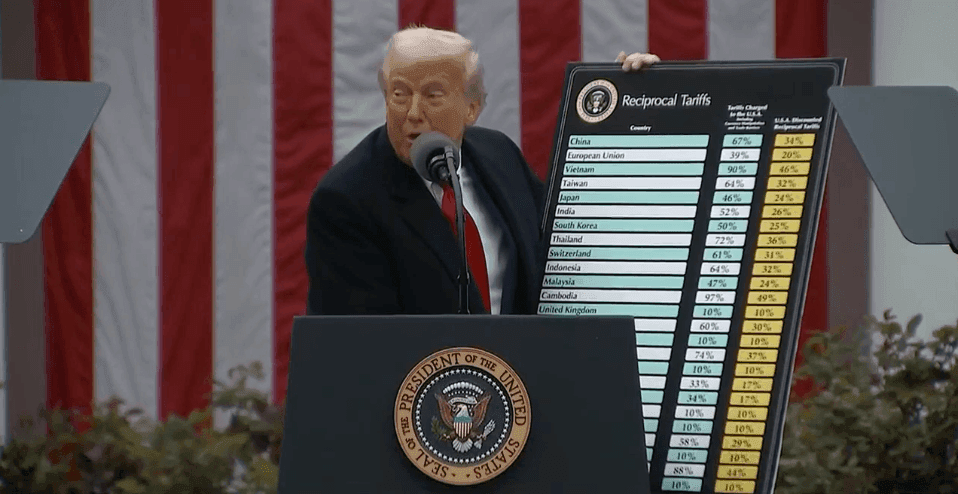
🔄 Update: Appeals Court Reinstates Trump’s Tariffs (May 30, 2025)
As of May 29, the U.S. Court of Appeals for the Federal Circuit has temporarily reinstated the tariffs while the legal process continues. Importers and logistics professionals should be aware that the tariffs are back in force—at least for now.
📅 Compact Timeline of Key Legal Events
| Date | Decision/Event |
|---|---|
| May 28, 2025 | U.S. Court of International Trade blocks Trump’s tariffs with a permanent injunction. Tariffs suspended immediately. |
| May 29, 2025 | U.S. Court of Appeals issues an emergency stay. Tariffs reinstated temporarily while appeal proceeds. |
📌 What This Means Right Now
- Tariffs are currently in effect again. Customs brokers, importers, and LSPs must collect and pay the duties as originally required.
- Legal situation remains fluid. A final ruling is pending, and arguments are due in early June. The next court date is set for June 5.
- Communications Update: If you’ve previously informed customers or partners that tariffs were suspended, it is now necessary to notify them that duties are once again being enforced.
⚠️ Disclaimer
This update reflects the latest court actions as of May 30, 2025. The legal situation may change again as the appeals process continues. Always consult with your customs broker or trade counsel for official guidance.
🔗 Sources
- Al Jazeera – Appeals Court Reinstates Tariffs
- CNN – Appeals Court Pauses Lower Ruling
- Forbes – Trump’s Tariffs Temporarily Reinstated
- Politico – Tariffs Temporarily Reinstated
- Bloomberg – Tariffs Stay in Effect
Editor’s Note:
The following section is the original post published on May 29, based on the U.S. Court of International Trade’s ruling that blocked the tariffs. While the facts remain relevant and legally significant, please note that the situation has changed since then—Trump’s tariffs are currently back in effect following a federal appeals court decision on May 30. We’ve kept the original content below for full context and record.
On May 28, 2025, the U.S. Court of International Trade struck down President Trump’s “Liberation Day” tariffs, issuing a permanent injunction against their enforcement. The tariffs—initially set at 10% on nearly all imports, with rates as high as 50% for countries like China—are no longer legally enforceable unless overturned on appeal.
This decision directly affects logistics professionals, customs brokers, and importers who were preparing for sweeping duty increases. The ruling offers short-term operational relief, but with an active appeal underway, policy volatility is far from over.
📌 What the Court Ruled — and What It Blocks
- Date: Ruling issued on May 28, 2025
- Tariffs Affected: Executive orders from April 2 that imposed:
- 10% baseline tariffs on all imports
- Up to 50% tariffs on goods from trade-deficit nations like China
- Legal Basis: The court ruled that the president exceeded authority under the International Emergency Economic Powers Act (IEEPA)
- Outcome: A permanent injunction was issued — these tariffs cannot be collected or enforced unless the ruling is stayed or reversed
- Appeal Filed: The Trump administration has already submitted a notice of appeal to the U.S. Court of Appeals for the Federal Circuit
For now, this means the logistics and importing community can resume normal operations without applying the blocked tariffs — but should closely monitor the appeals process.
Immediate Impact on Logistics and Supply Chains
The court’s decision offers direct operational relief for logistics service providers, importers, and their customers. With the tariffs blocked, there is no longer a need to collect or pay duties under the April 2 executive orders. This affects shipments already in transit as well as those in planning phases.
- Customs Clearance: Goods previously subject to the 10–50% tariffs can now be processed without added duties, lowering landed costs and administrative friction.
- Shipping Costs: Freight rates that had surged due to accelerated ordering or supplier shifts may begin to normalize.
- Warehousing: Inventory strategies based on tariff deadlines—such as stockpiling—can be reassessed to avoid unnecessary storage costs or obsolescence.
Short-Term Planning for Supply Chain Managers
While the injunction delivers immediate savings, uncertainty remains due to the pending appeal. Supply chain teams should stay flexible and avoid overcommitting to any single strategy.
- Scenario Modeling: Run both tariff and no-tariff cost models across key SKUs and routes in case legal outcomes shift.
- Contract Adjustments: Review incoterms and pricing agreements to clarify who bears the cost risk if tariffs are reinstated.
- Communications: Proactively update internal stakeholders, customers, and overseas suppliers on current duty status to avoid confusion and cost disputes.
- Regulatory Monitoring: Assign compliance teams or brokers to watch for developments from the Court of Appeals or U.S. Customs guidance in response to the injunction.
What the Ruling Means for Presidential Trade Authority
The court’s decision clarifies that the president cannot impose broad-based tariffs under emergency powers without Congressional authorization. This directly affects future trade measures that might bypass legislative approval.
- IEEPA Constraints: The court ruled that the International Emergency Economic Powers Act (IEEPA) does not justify tariffs responding to long-term trade deficits. Only true emergencies qualify.
- Constitutional Oversight: Under Article I, Section 8 of the U.S. Constitution, only Congress has the authority to regulate commerce with foreign nations. The ruling reinforces that separation of powers.
- Legal Precedent: Future tariff actions citing emergency authority will likely face similar scrutiny, especially if they broadly affect multiple industries or trading partners.
Strategic Recommendations for Logistics and Freight Professionals
To reduce risk exposure and maintain service reliability in a volatile regulatory environment, logistics professionals should prioritize the following:
- Build Adaptive Sourcing Models: Continue diversifying suppliers and transport lanes to avoid overreliance on any single country or region.
- Enhance Digital Visibility: Invest in real-time tracking tools and analytics platforms to adapt quickly to policy or market disruptions.
- Maintain Tariff Contingency Plans: Keep updated tariff classification databases and flexible billing systems ready for rapid policy changes.
- Review Customs Broker Agreements: Ensure brokers can respond to rapid rule changes and keep documentation updated to reflect any regulatory shifts.
Key Takeaways for Logistics Stakeholders
Trump’s global tariffs are blocked for now, but the legal process is ongoing. Logistics stakeholders must use this temporary relief window to optimize operations and hedge against further disruption.
- Tariffs introduced under the April 2 executive orders are invalidated and currently unenforceable.
- Importers and LSPs benefit from immediate cost relief but must monitor the appeal closely.
- Scenario planning, flexible sourcing, and tariff-responsive contracts remain essential tools.
- The ruling limits executive trade powers and may set precedent for future legal oversight.
Given the legal, economic, and geopolitical dimensions of this case, logistics professionals should treat this as both a reprieve and a signal to invest in long-term resilience strategies.
Next Steps for Trade-Exposed Businesses
With the court’s ruling offering short-term clarity but long-term uncertainty, logistics professionals should stay proactive. This is a pivotal opportunity to streamline operations, reassess tariff risk exposure, and reinforce compliance frameworks.
Looking for visibility and control in a shifting regulatory landscape? Tradlinx Ocean Visibility offers real-time tracking, customer updates, and seamless integration with your supply chain tech stack—helping logistics teams adapt, react, and lead.
➡️ Learn more about Tradlinx Ocean Visibility
📌 Quick Recap for Logistics Professionals
- Tariffs Blocked: Court has permanently halted Trump’s “Liberation Day” tariffs (10%+ on all imports).
- Who Benefits: Importers and SMEs get immediate cost relief; duties no longer collected as of May 28, 2025.
- Legal Uncertainty: An appeal is underway. Status could change if higher courts intervene.
- Inventory/Sourcing: Rethink overstocking or supplier shifts; stay agile in case of policy reversal.
- Freight Normalization: Panic shipping and congestion may subside as importers reassess urgency.
- Still Active: Section 232 tariffs (e.g., steel/aluminum) remain in place. This ruling does not affect them.
- Strategic Tip: Use this window to renegotiate contracts, optimize routing, and invest in supply chain visibility.
Source Links
- Reuters: US court blocks Trump’s tariffs
- Politico: Federal court ruling details
- Washington Post: Trade court ruling
- CNBC: Reciprocal tariff block coverage
- BBC: Legal analysis and implications
- NPR: Tariff ruling and executive authority

Key Legal Questions Answered
Why did the court strike down Trump’s tariffs?
The court ruled that President Trump overstepped his authority by using the International Emergency Economic Powers Act (IEEPA) to impose broad, permanent tariffs not tied to a clear and immediate national emergency. Trade regulation, the judges said, is Congress’s domain.
Are any tariffs still in effect?
Yes. This ruling only blocks the “Liberation Day” tariffs imposed on April 2, 2025. Other tariffs under Section 232 (steel/aluminum) and Section 301 (China) remain in place.
What happens next in the legal process?
The administration has filed an appeal. The case will now proceed to the U.S. Court of Appeals for the Federal Circuit. A stay could be requested, but it hasn’t been granted yet. Expect months of legal back-and-forth.
How soon could the tariffs return?
Unlikely within the next 3–6 months. The current injunction is permanent unless a higher court overturns it. Most legal experts believe that’s unlikely without a strong reversal of precedent.
Should logistics managers change their import plans now?
Yes, but cautiously. Tariff costs are paused, so businesses can resume normal procurement — but should maintain supplier flexibility and scenario plans in case the ruling is reversed.
Prefer email? Contact us directly at min.so@tradlinx.com (Americas), sondre.lyndon@tradlinx.com (Europe) or henry.jo@tradlinx.com (EMEA/Asia)
Disclaimer: This article is for informational purposes only and does not constitute legal, financial, or trade compliance advice. Readers are encouraged to consult with qualified professionals regarding their specific circumstances, especially as legal interpretations and regulatory developments may evolve.



Leave a Reply