
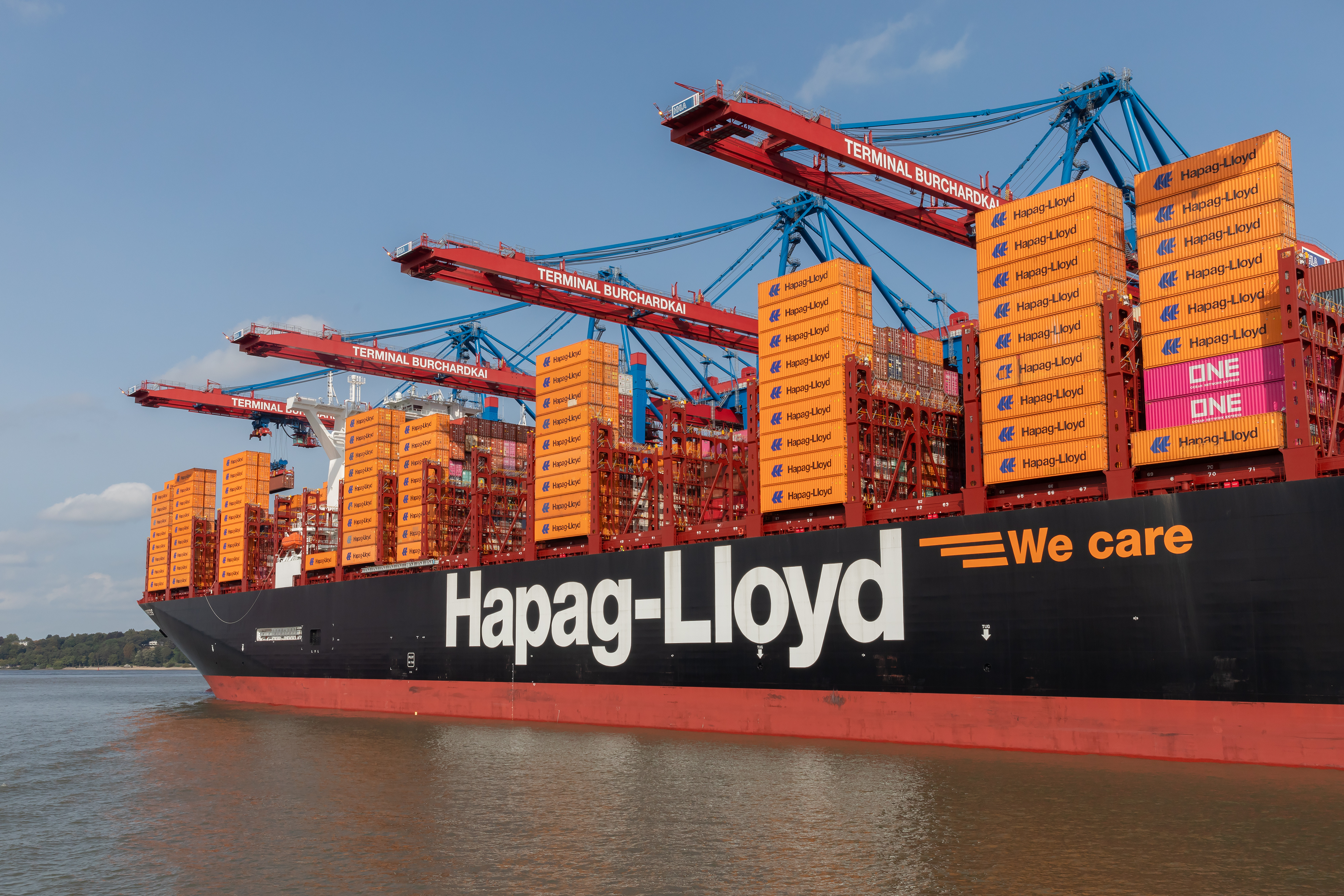
Hapag-Lloyd is adjusting the emergency inland fuel floater on Spanish inland haulage from 1 September 2026. The new levels are 3% on truck transport and 1% on combined rail and truck transport, applied to export and import inland moves to and from Spain, across all container types.
The standard Fuel Surcharge is not moving. FSO and FSD stay at 14% on truck and 8% on combined rail. The change is confined to the emergency codes FOI and FDI that sit on top of them.
What changes for Spain inland haulage on September 1
| Charge layer | Truck | Combined rail and truck |
|---|---|---|
| Emergency inland fuel floater (FOI / FDI), from 1 Sep 2026 | 3% | 1% |
| Standard Fuel Surcharge (FSO / FSD), unchanged | 14% | 8% |
Shipments under FMC rules do not pick up the new level until 1 October. During September, the same carrier, the same Spanish inland leg and the same charge code can therefore bill at two different levels depending on whether the shipment sits inside FMC scope.
Hapag-Lloyd attributes the adjustment to continued volatility in international energy markets and movement in diesel prices. The previous Spanish emergency floater was 0% on both truck and combined rail and truck transport, and this layer has been revised more than once during 2026. We tracked the wider structure across carriers in Every Major Carrier’s Inland Fuel Surcharge, April 2026 Edition.
The same charge codes sit at 15% in Italy
Hapag-Lloyd updated the Italian version of this charge a week earlier, covering the same Fuel Origin Inland and Fuel Destination Inland codes on the same export and import inland haulage. The levels are not close.
| Italy | Spain | |
|---|---|---|
| Effective, non-FMC trades | 24 Aug 2026 | 1 Sep 2026 |
| Effective, FMC-scope shipments | 12 Sep 2026 | 1 Oct 2026 |
| Truck | 15% | 3% |
| Combined rail and truck | 7.5% | 1% |
| Rail only | 0% | Not stated in the notice |
Italy moved up. Immediately before the 24 August revision, Hapag-Lloyd had the Italian floater at 11.5% on truck, 6% on combined rail and 0% on rail only. The new revision raises truck to 15% and combined rail to 7.5%, while rail-only remains at 0%.
The FMC lag is also different. Italy runs 19 days between the two effective dates. Spain runs 30. A shipper with both Iberian and Italian inland legs has four separate cutover dates to track across a six-week window on a single carrier.
The date that decides which level you pay is a container event
Neither notice ties the applicable level to the booking date or the invoice date. Both tie it to a specific movement, and the movement differs by direction and regulatory scope.
- Imports: the date the container is collected from the port.
- Exports under FMC rules: the full container gate-in date at the origin port.
- All other exports: the vessel departure date.
For a Spanish export, the operative event depends on FMC status. A non-FMC shipment falls under the new level based on its vessel departure date from 1 September. An FMC-regulated export does not move to the new level until 1 October, and its tariff date is the full-container gate-in date. Two containers under the same booking could therefore fall on opposite sides of the FMC cutover if their gate-in-full dates straddle 1 October. The carrier’s tariff answers this correctly. Reconstructing it after the invoice arrives means pulling gate-in and departure timestamps for each container and matching them against the applicable published effective date.
If you are checking September invoices against a cutover date one container at a time, see how ops teams pull gate-in and departure timestamps into a single view.

What to re-check before the September invoices
- Which of your Spanish moves are carrier haulage. The floater applies to Hapag-Lloyd’s own inland services. Merchant haulage legs are priced by your own hauliers and do not carry FOI or FDI.
- Whether your shipments are FMC scope. That single classification decides whether your Spanish inland legs move on 1 September or 1 October.
- Which mode is on the invoice line. The gap between truck and combined rail is 3% against 1% in Spain, and 15% against 7.5% in Italy. A move billed as truck when it ran as combined rail is worth catching.
- Your service contract’s charge-code references. Hapag-Lloyd renamed the North Europe inland codes from FOI and FDI to EFO and EFD earlier in 2026. If a carve-out names the old codes, confirm with your account team which naming applies to your Spanish and Italian legs.
- The applicable tariff event on moves around each cutover. Check port collection dates for imports, vessel departure dates for non-FMC exports, and gate-in-full dates for FMC exports. Those are the dates the tariff runs on, and they are the ones a dispute will turn on.
The wider pattern here is not new. When Hapag-Lloyd discontinued its ocean Emergency Fuel Surcharge on 1 July, the same trigger-date question decided whose bills actually dropped, which we covered in Why Hapag’s Emergency Fuel Surcharge Ends July 1. What has changed is the granularity. The layer now moves country by country on its own schedule.
Further Reading
- Spain: Update on Inland Fuel Surcharge — Hapag-Lloyd, August 2026
- Hapag-Lloyd updates inland fuel surcharge in Spain — Container News, 30 August 2026
- Hapag-Lloyd adjusts inland fuel surcharges in Italy — Container News, 12 August 2026
- Italy: Updated Inland Emergency Fuel & Energy Surcharges — Hapag-Lloyd, 8 April 2026
- North Europe: Updated Inland Emergency Fuel & Energy Surcharges — Hapag-Lloyd, April 2026
Spain floater levels (3% truck, 1% combined rail and truck), the unchanged FSO and FSD levels (14% and 8%), the FOI and FDI charge codes, the 1 September and 1 October effective dates and the tariff-date criteria are from Hapag-Lloyd’s Spain customer advisory. Italy levels (15%, 7.5%, 0%) and the 24 August and 12 September effective dates are from Hapag-Lloyd’s August 2026 Italy notice and Container News reporting. The immediately preceding Italy levels (11.5%, 6%, 0%) are from Hapag-Lloyd’s previous Italy announcement. The North Europe FOI/FDI to EFO/EFD renaming is from Hapag-Lloyd’s published local news notice. Surcharge levels, effective dates and charge codes vary by market and are revised without fixed cadence. Confirm current levels and the applicable tariff date against your own carrier tariff, service contract and booking confirmation before making commitments or disputing a charge.
Need help interpreting this disruption or your shipment?
For a quick question, chat with Tradlinx on WhatsApp. For a deeper discussion, book a time below.
Prefer email? Contact us directly at min.so@tradlinx.com (Americas), sondre.lyndon@tradlinx.com (Europe), or henry.jo@tradlinx.com (EMEA/Asia).



Leave a Reply