
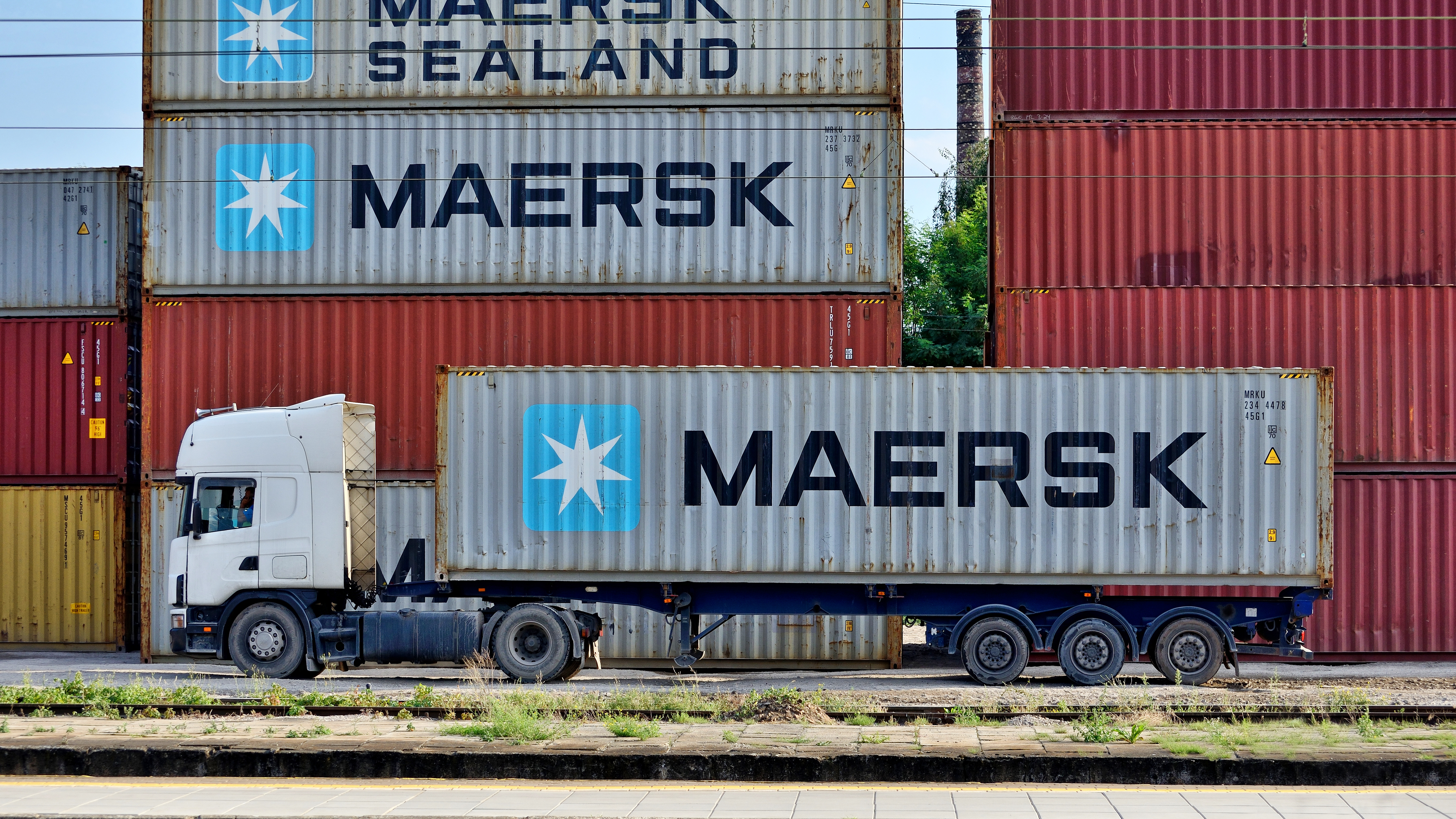
Maersk has filed an Emergency Contingency Surcharge on its S5S trade covering India, Bangladesh and Sri Lanka to South Africa and the Indian Ocean Islands. The amount is USD 1,500 per container, effective 10 September 2026.
Read the shape of the charge before the size of it. The same USD 1,500 applies to a 20ft dry box and to a 40ft dry box. Whatever sits behind Maersk’s pricing decision, the published tariff has a clear operational consequence: ECS exposure scales with the number of containers rather than their equipment size. Two covered dry containers generate twice the surcharge of one.
What Maersk filed
| Item | Detail |
|---|---|
| Trade | S5S: India, Bangladesh, Sri Lanka to South Africa and Indian Ocean Islands |
| Cargo type | All dry containers |
| 20DRY | USD 1,500 |
| 40DRY | USD 1,500 |
| Effective | 10 September 2026 |
| Stated reason | “Prolonged voyage deviations, increased transit times, equipment repositioning costs, capacity constraints, and higher operational expenses” |
Maersk does not identify fuel cost or fuel availability as a specific driver of this ECS. Those costs are addressed separately through its Emergency Bunker Surcharge mechanism. The S5S advisory instead frames the charge around wider network disruption, including voyage deviations, transit time, equipment repositioning, capacity constraints and higher operating expenses.
Why the flat rate is the useful signal
Maersk’s other ECS filings out of the Indian Subcontinent price differently by origin and equipment. On the Europe lanes, for example, a Bangladesh 40DRY and a North West India 20DRY sit more than a thousand dollars apart after the September adjustment. The S5S filing collapses the equipment-size distinction between its two published dry-container rates.
For a shipper, that creates a straightforward consolidation effect. Two 20DRY units covered by the new S5S tariff carry USD 3,000 of ECS between them. If the same cargo can genuinely move in one 40DRY instead, the published ECS on that container is USD 1,500. Where consolidation is operationally possible and does not create offsetting freight, weight, equipment or timing costs, removing one unit from the container count removes USD 1,500 of surcharge.
The important unresolved question is how Maersk will apply the 10 September effective date to individual shipments. Unlike its Europe advisory, the S5S notice does not identify a Price Calculation Date or another shipment-level trigger. Shippers with cargo moving around the effective date should confirm the applicable tariff rule for their booking or contract rather than assuming the sailing date, booking date or PCD governs.
The Europe lanes are moving the other way
Two days before the S5S filing, Maersk published a reduction to the ECS on E3W and E4W, its Indian Subcontinent to North Europe and Mediterranean scopes, effective from Price Calculation Date 1 September 2026. The geographic scopes are not identical, but they overlap across India, Bangladesh and Sri Lanka.
| Origin group | Destination | Equipment | Before | From 1 Sep |
|---|---|---|---|---|
| North West India, Pakistan | North Europe | 20DRY | USD 4,500 | USD 4,000 |
| North West India, Pakistan | North Europe | 40DRY/HDRY | USD 4,500 | USD 3,700 |
| Nepal, South & East India | North Europe | 40DRY/HDRY | USD 5,400 | USD 4,900 |
| Bangladesh | North Europe | 40DRY/HDRY | USD 5,800 | USD 5,300 |
| North West India, Pakistan | Mediterranean | 20DRY | USD 4,900 | USD 4,400 |
| North West India, Pakistan | Mediterranean | 40DRY/HDRY | USD 5,100 | USD 4,300 |
| Nepal, South & East India | Mediterranean | 40DRY/HDRY | USD 5,400 | USD 4,900 |
| Bangladesh | Mediterranean | 40DRY/HDRY | USD 5,800 | USD 5,300 |
Read together, the filings show sharply different ECS movements by destination. Maersk reduced rates on the Europe trades while introducing a new USD 1,500 charge on S5S within the same week. A shipper running both corridors therefore gets relief on one set of lanes and a new line item on another.
What is happening at the receiving end of this lane
Maersk names no port and no location as the cause of the S5S surcharge, so the following is context rather than a stated explanation. It is worth holding next to the filing anyway, because the South African receiving end of the trade has been operating under significant congestion through August.
Durban Gateway Terminal moved onto the NAVIS N4 terminal operating system starting at 18:00 on 15 August and has been working through the resulting backlog since. Industry updates reported that the terminal initially operated at about 70% of standard operating norms after the cutover. The NAVIS system was reported stable by 26 August, but the backlog had not yet been fully cleared.
Temporary recovery measures included the suspension of dual load-and-discharge landside transactions and a pause on reefer acceptance while existing reefer stock was loaded onto vessels. DGT said those measures would remain in place until 10:00 on 27 August rather than indefinitely.
| Measure | Reported |
|---|---|
| Anchorage wait, July | 80 hours |
| Berth time, July | 106 hours |
| Anchorage wait, early August | 166 hours |
| Berth time, early August | 116 hours |
| 7-day average vessel wait, 19–25 Aug | About 6 days |
| Pier 1 | 3 to 4 days |
| Pier 2 / DGT | 8 to 12 days |
Equipment repositioning cost and capacity constraints are among the drivers Maersk lists for the S5S surcharge. Congestion at a receiving terminal can contribute to slower equipment cycles and effective capacity pressure. Whether Durban is part of Maersk’s calculation, however, is not something the advisory answers, and treating that connection as established would go beyond the filing.
Which of your containers are actually exposed
Three checks identify shipments that may be exposed. The unresolved part is how the 10 September effective date is applied at shipment level.
- Effective-date treatment. The advisory says the ECS is effective 10 September but does not state whether PCD, booking confirmation, departure or another tariff trigger determines applicability. Confirm that rule for shipments moving around the date.
- Scope match. The published scope covers dry-container shipments from India, Bangladesh or Sri Lanka to South Africa or the Indian Ocean Islands under the S5S trade.
- Contract status. Maersk states implementation is subject to contractual arrangements. Named-account and long-term contract cargo may therefore require separate confirmation. Put that question to your account team before modelling the exposure.
That makes the effective-date check less mechanical than the Europe filing, where Maersk explicitly identifies PCD. For S5S, a booking list alone does not establish whether the new surcharge applies unless the tariff or contract also tells you which shipment date controls the September 10 transition.
If your team is working out which shipments cross carrier surcharge changes by opening one portal at a time, it may be worth walking through how ops teams hold booking and container status for every carrier in a single view.

What to check before 10 September
- Pull every open S5S shipment that could fall around the 10 September transition and confirm with Maersk which tariff date determines application of the new charge.
- For cargo not yet booked, check whether volume can genuinely consolidate into fewer units. Under the published flat 20DRY/40DRY tariff, removing one covered container from the count removes USD 1,500 of ECS.
- Confirm 40HC treatment with your Maersk representative. The advisory covers all dry containers but publishes amounts specifically for 20DRY and 40DRY.
- Confirm reefer, OOG, SOC and NOR treatment separately. None are separately identified in the published S5S tariff.
- Re-check the E3W and E4W corridor rates against your own contract. Their reduction takes effect from PCD 1 September, nine days before the stated S5S effective date.
- For containers already discharged at Durban, keep the discharge timestamp, availability posting and gate-out record per unit. DGT has waived its own terminal storage charges during the recovery, but carrier free-time and demurrage treatment needs to be checked separately.
The last point is easy to miss because terminal storage and carrier Demurrage & Detention are different charging layers. DGT has waived terminal storage charges for affected containers during the recovery and asked shipping lines to consider additional free time and demurrage relief. That does not establish the treatment on every carrier contract. Documentation that supports a later D&D dispute therefore still needs to be captured while the container is moving. Our earlier write-up on the Durban backlog and what to record per container covers that side in detail.
What is still open
- The September 10 application trigger. The S5S advisory gives an effective date but does not specify PCD or another shipment-level trigger. Confirm it against the applicable tariff or contract.
- Equipment coverage beyond 20DRY and 40DRY. The advisory states all dry containers but publishes amounts for two equipment types. 40HC and other dry configurations are not separately listed.
- Duration. No end date or review date is published. Maersk says market conditions will be reviewed and future adjustments communicated through its standard advisory channels.
- The Mediterranean size relationship. From PCD 1 September, the North West India and Pakistan to Mediterranean 40DRY/HDRY rate is USD 4,300, below the USD 4,400 20DRY rate. Confirm the applicable equipment rate against your own contract before modelling it.
- Whether competitors follow. Watch for comparable Southern Africa pricing changes from other carriers rather than assuming the Maersk filing will remain isolated.
Frequently asked questions
Is the Maersk S5S ECS a fuel surcharge?
Maersk does not identify fuel cost or availability as a specific driver of the S5S ECS. The advisory cites voyage deviations, increased transit times, equipment repositioning costs, capacity constraints and higher operating expenses, while Maersk separately uses an Emergency Bunker Surcharge mechanism for emergency bunker-related costs.
How much is the Maersk ECS on India to South Africa?
USD 1,500 per container for the published 20DRY and 40DRY equipment types, effective 10 September 2026. The same filing also covers Bangladesh and Sri Lanka origins and destinations in the Indian Ocean Islands.
Does the charge apply to cargo already booked?
The advisory does not specify how the 10 September effective date applies to cargo already booked. Unlike Maersk’s Europe ECS announcement, it does not identify a Price Calculation Date. Confirm the applicable tariff trigger and contractual treatment with Maersk for shipments moving around the effective date.
Is Maersk raising contingency surcharges everywhere out of India?
No. Maersk reduced the ECS on its Indian Subcontinent to North Europe and Mediterranean scopes from Price Calculation Date 1 September 2026, in the same week it announced the new Southern Africa and Indian Ocean Islands charge.
Further Reading
- Introduction of Emergency Contingency Surcharge (ECS) S5S Trade: India, Bangladesh & Sri Lanka to South Africa and Indian Ocean Islands (Maersk, 26 August 2026)
- Change to Emergency Contingency Surcharge Indian Subcontinent to North Europe & Mediterranean (E3W & E4W) (Maersk, 24 August 2026)
- Port operational updates from around the world, 19–25 August 2026 (Kuehne+Nagel)
- DGT NAVIS N4 Go-Live Update (SAAFF, 11 August 2026)
- NAVIS N4 rollout leaves Durban Gateway fighting operational backlog (WorldCargo News, 27 August 2026)
Sourcing: S5S surcharge amounts, scope, effective date and stated reasons from Maersk’s customer advisory dated 26 August 2026. The advisory states an effective date of 10 September 2026 but does not identify that date as a Price Calculation Date. E3W and E4W amounts and PCD treatment come from Maersk’s customer advisory dated 24 August 2026, with changes effective from PCD 1 September 2026. Durban Gateway Terminal operating conditions draw on DGT/SAAFF updates and Kuehne+Nagel’s 19–25 August port update. Maersk names no port or location as the cause of the S5S surcharge; the Durban section is contemporaneous context, not a stated cause. Surcharge application remains subject to regulatory requirements, local notice periods and contractual arrangements. Confirm the applicable effective-date rule and tariff against your own carrier contract before applying the charge to a shipment.
Need help interpreting this disruption or your shipment?
For a quick question, chat with Tradlinx on WhatsApp. For a deeper discussion, book a time below.
Prefer email? Contact us directly at min.so@tradlinx.com (Americas), sondre.lyndon@tradlinx.com (Europe), or henry.jo@tradlinx.com (EMEA/Asia).



Leave a Reply