
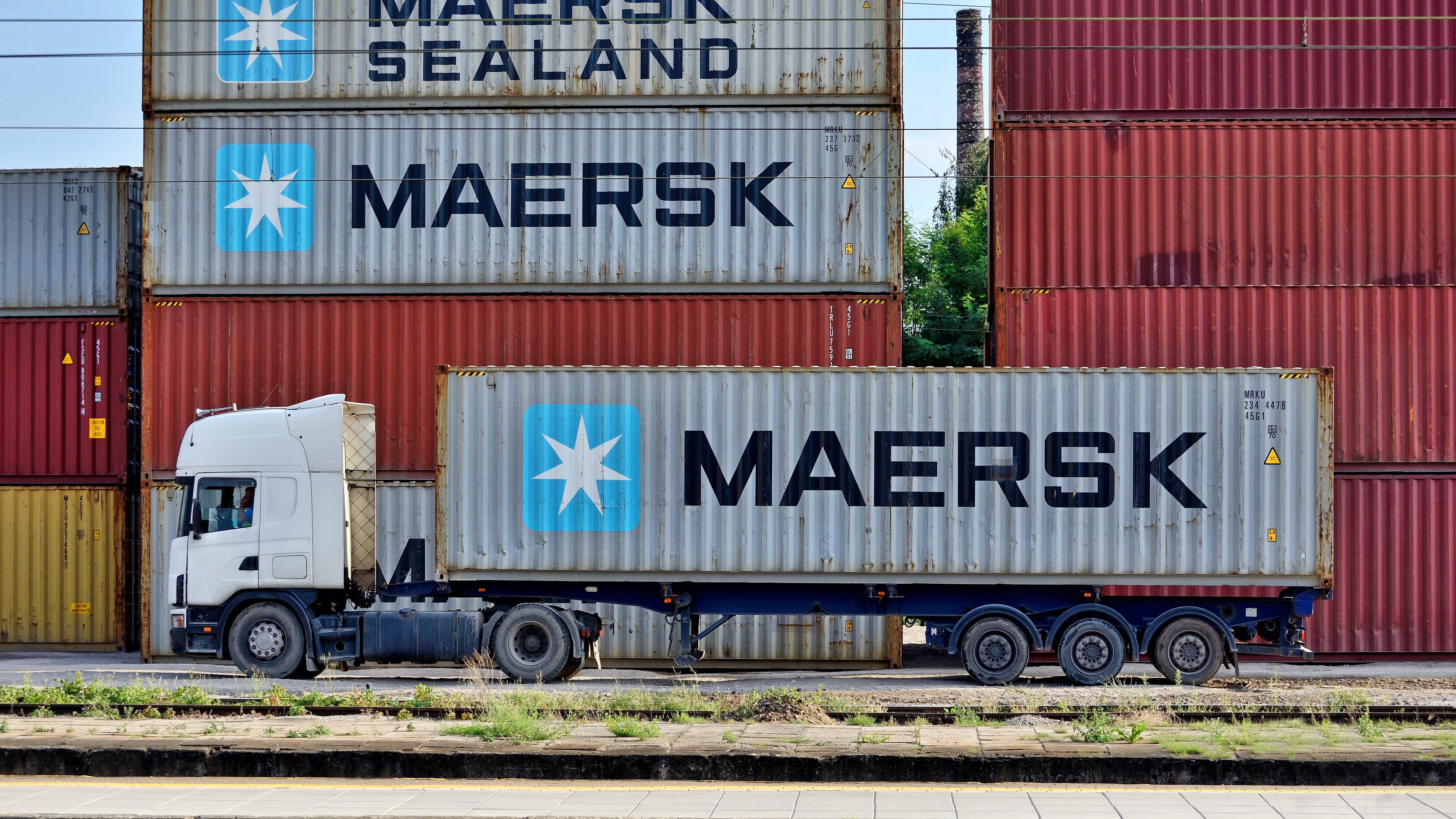
Maersk is lowering several inland fuel charges on December 1, 2026. Its Canadian drayage surcharge drops from 24% to 20% of inland haulage. The Intermodal Fuel Fee falls from 25% to 22% in five Australian states and from 27% to 23% in New Zealand.
Maersk prices these charges on a Price Calculation Date (PCD) tied to the booking and the vessel, and the truck move can come weeks later. A Canadian import that sailed in November and is trucked in December can therefore still be invoiced at 24%. Before you check December invoices against the new levels, you need to know which date Maersk will use for each container.
Maersk inland fuel charges for December 2026
Each charge below applies to inland moves Maersk performs or arranges, within the scope its notice sets. Levels were checked on November 25, 2026.
| Market | Charge and scope | December level | Applies | Review |
|---|---|---|---|---|
| Canada | EFS/IFS on drayage between the ocean terminal and the first inland node | 20% of inland haulage (24% in November) | From December 1, 2026, FMC and non-FMC | Monthly |
| Australia (VIC, NSW, QLD, SA, WA) | Intermodal Fuel Fee (EFS/IFS) on landside transport | 22% (25% in November) | December 1, 2026 to January 31, 2027 | Monthly |
| New Zealand | Intermodal Fuel Fee (EFS/IFS) on landside transport | 23% (27% in November) | December 1, 2026 to January 31, 2027 | Monthly |
| United Kingdom (FCL) | Intermodal Fuel Fee, truck or rail | 11.6% | Non-FMC from December 1; FMC from December 20 | December level; prior level not stated |
| Benelux | Intermodal Fuel Fee on inland haulage import and export charges (IHI/IHE) | Truck, barge and BCO 13%; RCO 6.5% | November 23 to December 7; FMC from December 22 | Every two weeks |
| DACH (Germany, Austria, Switzerland) | Intermodal Fuel Fee on IHI/IHE | Truck, barge and BCO 13%; RCO 6.5% | November 23 to December 7; FMC from December 22 | Every two weeks |
| Poland | Intermodal Fuel Fee on IHI/IHE | Truck 16%; RCO 8% | November 23 to December 7; FMC from December 22 | Every two weeks |
| United States | IFS/EFS on shipments under a Maersk ocean B/L where Maersk arranges trucking to or from the door within the United States | USD 215 per container (USD 140 before) | PCD on or after November 1, 2026 | No December change announced as of November 25 |
| United States and Canada | Emergency Intermodal Fuel Surcharge, rail ramp or container yard to ocean terminal | Import: USD 350 dry, USD 400 reefer. Export: USD 125 dry, USD 175 reefer | From November 16, 2026 | No December change announced as of November 25 |
Canada and the two Oceania markets get the December cuts. Both US charges stay at the levels Maersk raised in November. Maersk tied the US truck increase on November 1 to a rise of more than USD 0.10 per gallon in the 13-week average diesel price, and raised the rail ramp and container yard surcharge on November 16.
Why some Canadian containers still bill at 24% in December
Maersk’s December notice for Canada sets the Price Calculation Date in one of three ways, depending on the shipment:
- Non-FMC shipments: the ETD of the first vessel in the latest booking confirmation issued at the customer’s request.
- FMC shipments: the date Maersk or its authorized agent takes possession of the last container listed on the transport document.
- Imports where the inland leg is hired after the cargo leaves the origin port: the date the import shipment is created.
The same notice also says price calculation refers to the vessel departure date at the origin port. It does not say whether that means the actual sailing or the ETD on the booking confirmation. For a rolled booking, confirm the applicable PCD with Maersk before you dispute the surcharge. In Canada the 20% level applies from December 1 to FMC and non-FMC shipments alike.
Worked example: four Canadian shipments
The dates below are illustrative. Each row assumes a non-FMC shipment on Maersk carrier haulage. Where a vessel departure date is used to calculate the surcharge, it is assumed to match the first-vessel ETD on the latest booking confirmation issued at the customer’s request.
| Shipment | Inland leg booked | Date that prices the surcharge | Rate billed |
|---|---|---|---|
| Import, Asia to Vancouver. Vessel departs November 24; container trucked December 9 | With the ocean booking | Vessel departure, November 24 | 24% |
| Same import | Added December 4, after the vessel sailed; import shipment created December 4 | Import shipment creation, December 4 | 20% |
| Export trucked to the Vancouver terminal November 27. Vessel departs December 2 | With the ocean booking | Vessel departure, December 2 | 20% |
| Export booked on a November 30 vessel that rolls to December 3 | With the ocean booking | First-vessel ETD on the latest booking confirmation issued at the customer’s request | 24% if the confirmed ETD remains November 30; 20% if it changes to December 3. Confirm the PCD with Maersk if its separate origin-departure wording affects the charge. |
For non-FMC shipments with carrier haulage on the ocean booking, exports trucked to port in late November can take the 20% rate when the first-vessel ETD on their latest booking confirmation falls in December. Imports on the same terms reach 20% only when that ETD is on or after December 1, so the first of them arrive on Canadian trucks one full ocean transit after that date. FMC shipments and imports whose inland leg is hired after departure follow the dates listed above. On every 1,000 of inland haulage, the difference between 24% and 20% is 40.
To check a Canadian line, start with the PCD rule that applies: the first-vessel ETD on the latest booking confirmation for non-FMC shipments, the last-container possession date for FMC shipments, or the import shipment creation date for imports whose inland leg was hired after departure. Sorting a shipment into the right rule takes the actual departure date and the date the inland leg was booked. Those dates sit in booking records and container event histories, and that is where to check any PCD the invoice shows. If your team is lining up fuel lines against sailing and gate-in dates one container at a time, see how ops teams pull container events and booking dates into one view.

How the other markets date the charge
| Market | Non-FMC shipments | FMC shipments | Other rule in the notice |
|---|---|---|---|
| Canada | ETD of the first vessel in the latest booking confirmation | Possession of the last container on the transport document | Imports with the inland leg hired after departure: import shipment creation date |
| Australia, New Zealand | ETD of the first vessel in the most recent booking confirmation | Possession of the last container on the transport document | None stated |
| United Kingdom (FCL) | ETD of the first vessel in the most recent booking confirmation | Possession of the last container on the transport document | Port (CY) B/L containers: delivery or collection date |
| Benelux, DACH, Poland | ETD of the first vessel in the most recent booking confirmation | Possession of the last container on the transport document | Multi-carrier shipments: time the booking was placed |
| US and Canada rail ramp or container yard surcharge | Scheduled departure of the first water leg (non-spot bookings) | Last container gate-in date (non-spot bookings) | Spot bookings: first vessel ETD at booking confirmation |
| United States truck surcharge | Notice applies from PCD November 1 without defining PCD | Not stated | None stated |
Australia and New Zealand. Maersk’s notices give only the general definition, with no separate rule for imports whose inland leg is added later. Under that definition the truck date has no bearing: a non-FMC container on a vessel with a November ETD takes the November level of 25% in Australia or 27% in New Zealand. The December levels run to January 31, 2027, and Maersk says it will keep reviewing them monthly.
United Kingdom. Containers moving on a port (CY) B/L are priced on the delivery or collection date, so in the UK the haulage date does decide the rate for that cargo. Non-FMC shipments take the 11.6% level from December 1 and FMC shipments from December 20. Maersk notes that a higher rate may apply to customers with bespoke pricing and that account managers will communicate it.
Benelux, DACH and Poland. These levels reset every two weeks, and the current period ends December 7. FMC shipments take the current levels from December 22. For how Hapag-Lloyd and CMA CGM date their European inland fuel charges, see our September comparison of European inland fuel surcharges.
Nordic and Baltic store-door shipments. A separate Emergency Inland Fuel/Energy Surcharge applies to store-door shipments and is updated weekly. Maersk’s November 9 notice, effective for PCDs from November 11, set levels from 4% in Norway and Lithuania to 23% in Estonia. Electric truck and rail moves are not affected.
United States. As of November 25, Maersk had announced no December change to either US charge. The rail ramp and container yard surcharge covers CY and store-door cargo, and for store-door cargo Maersk bills it separately from any inland fuel charge for pickup or delivery. A door move through a rail ramp can therefore carry both lines.
What to check before December invoices arrive
- Find the first vessel’s ETD on the latest booking confirmation for each Canadian, Australian or New Zealand container on Maersk haulage. A November ETD on a non-FMC shipment means the November level applies to its December truck move.
- Check when the inland leg was added on Canadian imports. If it was hired after the vessel left the origin port, the import shipment creation date sets the rate.
- Flag bookings that rolled across November 30 and verify the billed PCD against the first-vessel ETD on the latest booking confirmation issued at the customer’s request.
- Split FMC from non-FMC shipments. FMC cargo prices on the last-container possession date, and the UK and European levels reach FMC cargo later, on December 20 and December 22.
- Use the delivery or collection date for UK containers on a port (CY) B/L.
- Recheck Benelux, DACH and Poland after December 7, when the two-week levels reset.
- Check for two fuel lines on qualifying US store-door moves through a rail ramp: the emergency intermodal surcharge and, where Maersk arranges US pickup or delivery trucking under its ocean B/L, the truck fuel surcharge.
Further Reading
- Maersk: Export and Import Fuel Surcharge Update in Canada (EFS and IFS), December 2026
- Maersk: Fuel Surcharge Update in Canada, Effective November 1, 2026
- Maersk: Intermodal Fuel Fee Update in Australia, December 2026
- Maersk: Intermodal Fuel Fee Update in Australia, November 2026
- Maersk: Intermodal Fuel Fee Update in New Zealand, December 2026
- Maersk: Intermodal Fuel Fee Update in New Zealand, November 2026
- Maersk: United Kingdom Intermodal Fuel Fee Update (FCL), December 2026
- DataPortuaria: Maersk sets 13% intermodal fuel fee for Benelux landside services
- DataPortuaria: Maersk sets intermodal fuel fee for Germany, Austria and Switzerland
- DataPortuaria: Maersk sets Intermodal Fuel Fee for Poland at 16% truck, 8% RCO
- Maersk: Emergency Inland Fuel/Energy Surcharge, Nordic Region, November 2026
- Maersk: Import/Export Fuel Surcharge Update for U.S. Inland Haulage, Effective November 1, 2026
- Maersk: U.S. & Canada Emergency Intermodal Fuel Surcharge, Inland Rail Ramps and Container Yards
Levels and date rules are taken from Maersk customer notices dated October 7, October 12, October 16, October 26, November 9, November 20 and November 24, 2026. Benelux, DACH and Poland levels are from Maersk’s November 17, 2026 notices as reproduced by DataPortuaria. All figures were checked on November 25, 2026, and most reset on cycles between one week and one month. The Canadian shipment dates are illustrative. Contract and bespoke pricing can differ from published levels, so confirm against your own Maersk tariff or contract before disputing a charge.
Need help interpreting this disruption or your shipment?
For a quick question, chat with Tradlinx on WhatsApp. For a deeper discussion, book a time below.


Leave a Reply