
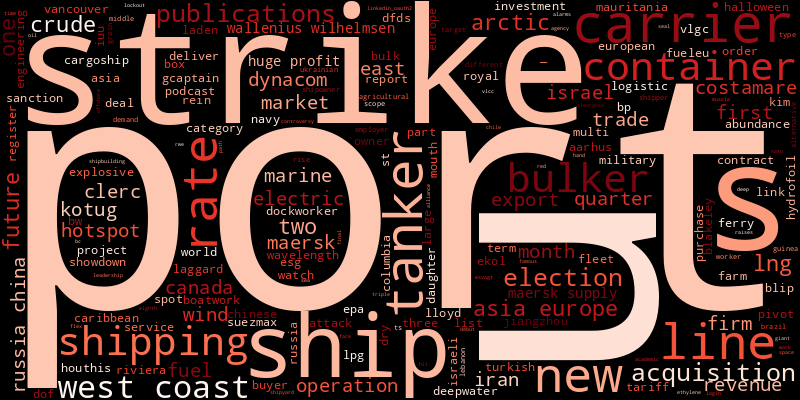
November 4 – Key Industry Updates on Strikes, Rates, and Policy
Welcome to this week’s edition of Maritime Mood Monitoring, where we delve into the key issues shaping the logistics landscape. Our goal is to help forwarders, logistics service providers (LSPs), and industry stakeholders stay informed and resilient amid today’s heightened uncertainties, driven by ongoing strikes, volatile rates, and the impact of political dynamics as year-end approaches.
Maritime Sentiment Snapshot
- 🔵 Neutral Sentiment: 82.30%
- 🔴 Negative Sentiment: 11.40%
- 🟢 Positive Sentiment: 6.30%
Overall Mood (Compound Score): -0.9944 (scale from -1 to +1)
Mood Interpretation: Negative
This week’s sentiment reflects a cautious outlook as logistics providers and industry stakeholders brace for potential disruptions from labor, policy, and market volatility.
Key Developments to Watch
Ongoing Strikes in North America: Canadian and U.S. Labor Uncertainty
Context and Impact: Labor unrest is escalating on both sides of the U.S.-Canada border. In Canada, recent disruptions at the Port of Vancouver continue to pose significant logistical challenges for LSPs, particularly as alternative routes are limited. At the same time, U.S. East and Gulf Coast ports face potential strike action as contract negotiations remain tenuous, with automation at the center of the union-employer standoff.
What This Means for Logistics Providers: These dual threats complicate contingency planning. For Canadian routes, securing early bookings and exploring longer-term logistics adjustments is essential, as alternative options, like rerouting through Montreal or other Canadian ports, may face similar labor pressures. In the U.S., a potential January strike on the East Coast could disrupt year-start planning, prompting LSPs to consider West Coast options or even Canadian ports if feasible.
Strategic Takeaway: With limited redundancy across North American ports, diversification and proactive contingency planning are paramount. Stay in close communication with clients to manage expectations, and prepare for potential shifts in capacity as both countries address labor-related disruptions.
Election Dynamics: Anticipating Trade and Labor Policy Changes
Context and Impact: The impending U.S. election introduces potential shifts in trade and labor policies that could influence logistics and trade flows into 2025. A Trump victory, for example, might bring more aggressive stances on tariffs and greater intervention in labor disputes, potentially creating a more interventionist approach to strikes and even new tariffs targeting imports from specific countries.
For Logistics Providers: The U.S. election outcome could lead to quick changes in tariffs, affecting cross-border and transpacific shipping volumes. For example, a reinstatement or escalation of tariffs on Chinese goods would shift import and routing strategies for many shippers. Forwarders and LSPs should remain adaptable, offering flexible route planning and pricing structures to anticipate sudden policy adjustments.
Strategic Takeaway: Help clients stay resilient against tariff fluctuations by offering flexible pricing and routing options tailored to geopolitical risks. Share timely insights post-election to guide clients in adapting their logistics to new policy realities.
Rate Volatility and Seasonal Demand Pressures
Context and Impact: Global container shipping rates remain volatile, with fluctuations influenced by seasonal demand, economic shifts, and strategic carrier moves. Carriers like Maersk and ONE have benefited from targeted rate hikes on high-demand routes, capitalizing on sustained demand. However, competition is intensifying, as seen with CMA CGM offering discounts on routes experiencing lower demand, particularly Indian exports.
For Logistics Providers: Rate unpredictability, especially during the end-of-year rush and early Chinese New Year spike, will require careful planning. For clients shipping from Asia, the anticipated rate hikes add pressure to secure cost-effective, timely options. LSPs can add value by advising clients on optimal timing and routing to avoid rate surges and maximize capacity utilization.
Strategic Takeaway: Flexibility in rate negotiation and shipment timing will be crucial. Encourage clients to consider alternative scheduling strategies and explore partnership options with carriers offering competitive rates in less congested lanes.
Connecting the Dots: Preparing for a Season of Uncertainty
The convergence of labor disruptions, election-driven policy uncertainty, and rate volatility creates a challenging landscape for logistics providers. Here are some actionable steps to navigate this environment:
- Proactive Route Diversification: Given the potential for Canadian and U.S. labor disruptions, develop alternative routing options that extend beyond traditional ports. Be prepared with agile rerouting strategies to help clients avoid bottlenecks if strikes extend into 2025.
- Stay Informed on Policy Shifts: The U.S. election results could bring immediate policy impacts. Position your operations to adapt quickly by monitoring shifts in tariff and labor policy and advising clients accordingly.
- Optimize Seasonal Planning: With rates likely to surge before Chinese New Year, work with clients on booking shipments early. This can avoid rate hikes, maximize cost-efficiency, and secure needed capacity as demand peaks.
Looking Forward
The ongoing challenges in maritime logistics reflect the industry’s broader shift toward resilience and adaptability. Each development this week underscores the importance of proactive planning and open client communication. By staying informed and agile, logistics providers can help their clients navigate uncertainties with confidence.

The only constant in the maritime industry is change. TRADLINX Ocean Visibility empowers you to stay agile with real-time insights and adaptive routing capabilities. Ready to enhance your logistics efficiency? Start your free trial today and navigate future challenges with ease.




Leave a Reply