
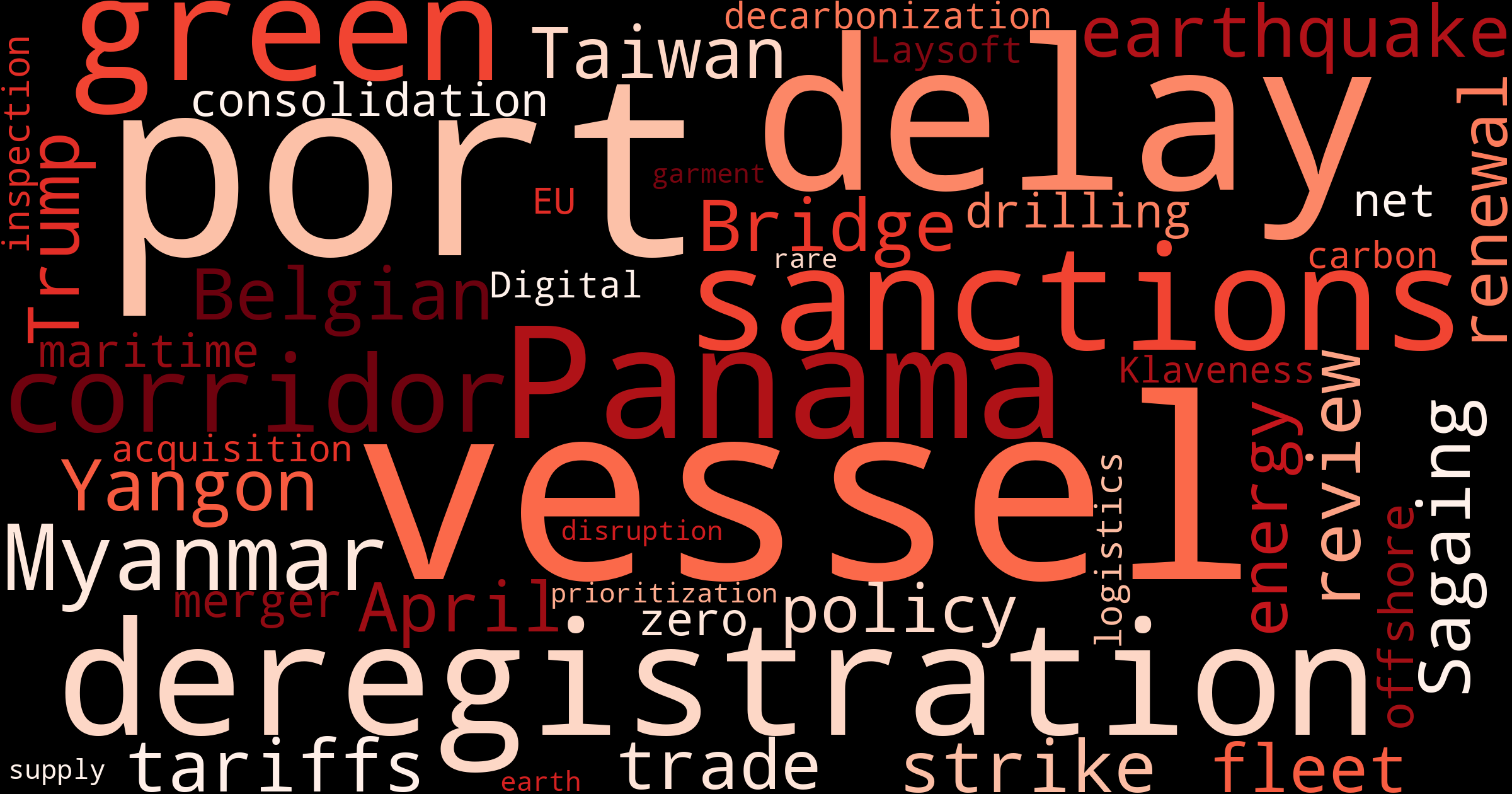
From sweeping deregistrations in Panama to looming tariff shocks, this week’s maritime developments demand close attention. With green corridors accelerating, offshore consolidation rising, and regulatory scrutiny tightening, LSPs and freight decision-makers face both opportunity and volatility. Whether you’re routing around disruption or planning your Q2 procurement, this digest flags what matters most—quickly, clearly, and in context.
Maritime Market Mood Tracking
Sanctions and strategic shifts weigh heavily, but a pocket of optimism lingers in decarbonization and offshore momentum.
- 🔵 Neutral Sentiment: 56%
- 🔴 Negative Sentiment: 25%
- 🟢 Positive Sentiment: 19%
Overall Mood (Compound Score): 0.08
Mood Snapshot: Sentiment analysis of 84 news headlines from the week ending March 31, 2025, reveals a mood shaped by tightening compliance, asset strategy shifts, and green innovation efforts.
Strategic Shifts: Fleet Reshuffles & Tech Upgrades Signal Cautious Maritime Optimism
This week’s neutral-dominant sentiment reflects realignment more than disruption. Asset consolidation and digital strategy upgrades point to an industry quietly preparing for new operating conditions.
- SeaBird and Energy Drilling merge to scale offshore capabilities—signal of growing project confidence in subsea and energy logistics.
- Thoresen Thai, DHT, and Tsakos execute fleet reshuffles through sales and secondhand acquisitions to rebalance asset portfolios.
- Klaveness Digital expands maritime SaaS visibility; Laysoft acquisition shows continued investment in logistics tech platforms.
- HHLA outlines new port connectivity strategy, aligning with shifting European cargo flows amid geopolitical pressure.
Global Watch: Disruption Alerts from Myanmar to Tariff D-Day
From earthquake fallout to regulatory chokepoints and looming trade shifts—here’s what you can’t afford to miss this week.
- Myanmar Earthquake Disruption: A 7.7 magnitude earthquake has devastated Myanmar’s infrastructure—severing the Sagaing Bridge, damaging Yangon Port, and halting exports of tin, garments, and rare earths. Industry recovery may take months to years.
- Belgium Port Strike: Antwerp, Ghent, and Zeebrugge face service interruptions from March 31–April 1. Disruptions affect port inspections and cargo flow—customs delays possible at GIP LO.
- Taiwan’s Vessel Scrutiny: Vessels with ties to China, Hong Kong, or Macau face new entry review rules starting March 31. Potential delays for platforms, tankers, and heavy-lift ships.
- April 2 “Liberation Day” Tariff Event: The Trump administration will enact reciprocal tariffs targeting China, EU, Japan, and Mexico. Forecasted to disrupt automotive, electronics, and metals supply chains. Economic impact estimates show up to 0.4% GDP hit.
Key Industry Signals: From Panama Crackdowns to Offshore Consolidation
This week’s top signals span sanctions enforcement, green corridor incentives, and smart tech investments—each pointing to deeper operational shifts.
- Panama Deregisters 107 Ships: Panama pulls flag registration amid Iran-linked sanction enforcement—impacting global compliance and fleet planning.
- Green Priority at the Panama Canal: Net-zero vessels will receive preference, creating early-mover benefits for decarbonized carriers.
- Offshore Consolidation: Energy Drilling and SeaBird merger underlines growing offshore project appetite in Asia.
- Digital Investments: Klaveness, HHLA, Laysoft—maritime tech adoption continues across supply chain visibility and infrastructure planning.
Reference: Panama cancels registrations of 107 sanctioned vessels (Reuters), SeaBird and Energy Drilling finalize merger (Splash247), HHLA unveils digital port strategy (Port Technology), Klaveness Digital acquires Laysoft (TradeWinds).
What This Week’s Signals Mean for Forwarders, Planners & Shippers
The takeaways for maritime strategists: real-time visibility, risk buffering, and agile procurement are no longer optional—they’re competitive edge essentials.
This week’s developments reflect a maritime sector in flux—navigating policy pressure, natural disasters, and shifting investment patterns. For LSPs and global shippers, the mandate is clear: monitor risk continuously, adapt fleet and routing decisions, and stay ahead of digital and environmental transition signals. Those who react early to these cues will outperform in both resilience and cost control.
Equip your supply chain team with real-time tracking, disruption alerts, and predictive routing. TRADLINX Ocean Visibility helps reduce detention fees, cut lead times, and stay agile—no matter what hits next.
Prefer email? Contact us directly at min.so@tradlinx.com (Americas), sondre.lyndon@tradlinx.com (Europe) or henry.jo@tradlinx.com (EMEA/Asia)



Leave a Reply