
Myanmar’s Earthquake Disrupts Tin, Garment, and Logistics Networks—What Global Shippers Need to Know
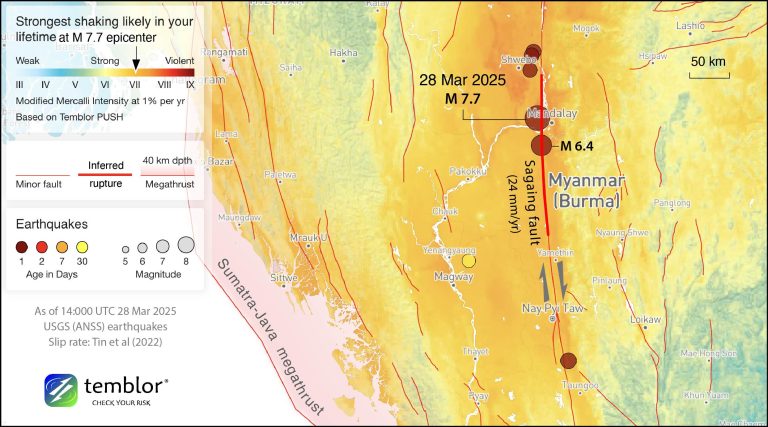
On March 28, 2025, a 7.7 magnitude earthquake struck Myanmar’s Sagaing Region, triggering massive destruction across the country’s logistics, manufacturing, and export infrastructure. The quake was felt as far as Thailand and Yunnan, China, and has resulted in over 2,600 confirmed deaths and thousands more injured or missing [1].
Beyond the immediate humanitarian crisis, the quake has also disrupted supply chains that stretch far beyond Myanmar’s borders. As a critical exporter of tin, rare earths, and garments—and home to key ports like Yangon and Mandalay—the country’s logistics shutdown is affecting shippers, freight forwarders, and manufacturers across Southeast Asia.
This article outlines what’s been affected, industry by industry, and provides a clear timeline for recovery—alongside practical steps for freight planning amid uncertainty.
What’s Been Disrupted: Ports, Bridges, and Core Export Sectors
The earthquake has directly impacted Myanmar’s inland and maritime infrastructure, halting key trade flows and industrial activity. Below are the most critical disruptions affecting supply chains:
- Sagaing (Ava) Bridge Collapse: A vital north-south logistics artery is now severed, disrupting road and rail freight between production centers in upper Myanmar and Yangon Port [2].
- Yangon Port Delays: Structural damage and redirected emergency efforts are reducing capacity at Myanmar’s largest commercial port. This affects the export of garments, copper, and agricultural commodities [3].
- Inland Port Disruptions (Mandalay & Sagaing): River ports such as Gaw Wein Jetty have been damaged, delaying maize, sugar, and cement shipments along the Irrawaddy River [4].
- Export Industry Shutdowns: Garment factories, tin mines, and rare earth processing sites have temporarily closed. Global buyers dependent on Myanmar’s manufacturing and mineral output are already seeing shipment delays [5].
These infrastructure failures are not isolated—they are causing delays across regional trade corridors and raising costs due to rerouting, demurrage, and supply shortfalls.
How the Myanmar Quake Is Creating Ripple Effects Across Southeast Asia Logistics
While the earthquake’s epicenter was in central Myanmar, its aftershocks are being felt far beyond the country’s borders—especially in interconnected Southeast Asian supply networks.
- Thailand Logistics Alert: Tremors reached parts of northern Thailand. While structural damage has been limited, Maersk facilities reported brief operational slowdowns—a red flag for companies relying on Thai ports as contingency routes [6].
- Trade Lane Pressures: The collapse of Myanmar’s bridge and port infrastructure is pushing freight toward alternate lanes via Malaysia, Singapore, and Vietnam. This may lead to increased congestion and spot rate volatility on eastbound lanes.
- Supply Chain Knock-On Effects: Myanmar supplies:
- Tin: Used in semiconductors, electronics, and batteries.
- Rare earths: Essential for electric vehicles, defense, and clean energy tech.
- Garments: Exported primarily to Japan and EU; many factories are mid-production cycle, creating timing-sensitive risks.
In short: Myanmar’s quake is not an isolated disruption. It intersects with ongoing port strikes, geopolitical instability, and raw material shortages—further exposing how fragile tightly connected logistics systems can be.
Recovery Timeline: How Long Will Myanmar’s Supply Disruption Last?
The impacts from Myanmar’s earthquake won’t disappear in weeks. Infrastructure damage, civil unrest, and sector-specific constraints mean that different parts of the supply chain will recover at different speeds.
| Phase | Timeline | Key Impacts |
|---|---|---|
| Short-Term | 1–3 Months | Bridge and road collapses sever logistics routes between Mandalay and Yangon [2]. Ports operate at reduced capacity as emergency operations continue [3]. Garment, mining, and agriculture production suspended or limited. Humanitarian access and workforce availability limited by unrest and power outages [8]. |
| Mid-Term | 3–12 Months | Gradual reopening of export routes, though major arteries like the Sagaing Bridge may take longer to rebuild [2]. Garment industry may stabilize by late 2025 depending on investment and safety conditions [5]. Rare earth and tin supply chains will recover slower due to geographic remoteness of mines and infrastructure damage [9]. |
| Long-Term | 1–3 Years | Full restoration of Myanmar’s logistics infrastructure depends on foreign aid and internal political stability. Brands and suppliers may reassess reliance on Myanmar for sourcing—potentially shifting long-term procurement strategies [10]. New regional trade routes and investment may emerge in more stable markets like Vietnam or Thailand. |
This staggered recovery will affect everything from contract pricing to capacity planning. Companies that adapt now—by building redundancy and improving visibility—will be far more resilient in 2025 and beyond.
Rerouting, Sourcing, Stock: How LSPs Can Navigate Myanmar’s Quake Impact
For logistics service providers (LSPs), freight forwarders, and global shippers, the key question is no longer just what’s disrupted, but how to adapt operations in the face of long-term instability.
Here are sector-specific actions LSPs and supply chain teams can take now and in the coming months:
- Reroute Through Alternative Gateways: Divert shipments through Thai, Vietnamese, or Malaysian ports to bypass Myanmar bottlenecks. Be prepared for longer transit times and rate volatility as demand shifts regionally.
- Proactively Communicate with Affected Clients: Shippers in garments, electronics, and mineral-based manufacturing should be notified about likely delays and sourcing adjustments. Time-sensitive industries may require re-prioritization of freight loads.
- Adjust Inventory and Procurement Cycles: Use historical shipment data to reforecast buffer stock levels—especially for components or materials previously sourced from Myanmar.
- Monitor Commodity Trends: Prices for tin, rare earths, and specialty metals may remain elevated well into 2025. Keep track of spot prices and sourcing alternatives across Southeast Asia and Africa.
- Digitize Exception Management: As manual coordination becomes riskier in disrupted regions, use systems that can automatically surface delays, port status changes, and revised ETAs across carrier networks.
These actions are about more than immediate recovery—they’re about building supply chain resilience for a region where shocks are likely to continue.
FAQs: What Logistics Teams Are Asking About the Myanmar Earthquake Impact
How has the Myanmar earthquake affected tin exports?
Myanmar is the world’s third-largest tin producer, and mining operations have been suspended due to infrastructure damage. This is delaying shipments and pushing global tin prices higher, especially for electronics and EV manufacturers.
What is the impact on garment supply chains from Myanmar?
Garment factories in Mandalay and Sagaing have shut down temporarily, halting production for EU and Japanese brands. Delays are expected into Q3 2025 as rebuilding progresses.
Which ports in Myanmar are currently disrupted?
Yangon Port—the country’s largest—is operating at reduced capacity. Inland ports like Gaw Wein (Mandalay) and Sagaing are also affected. The collapse of the Sagaing Bridge has further cut inland logistics links.
How should freight forwarders respond to this disruption?
LSPs should consider rerouting shipments via Thailand or Vietnam, communicate proactively with clients in textiles and electronics, monitor commodity pricing, and leverage real-time tracking tools for visibility on delays and alternative port status.
Managing Delays from Myanmar: The Visibility Gap in Crisis
The Myanmar earthquake illustrates a broader truth: real-time port status, transit delays, and ETA projections are not just conveniences—they are critical tools in risk environments.
Over the past year, global disruptions—from Red Sea diversions to U.S. port strikes—have highlighted how slow or incomplete data leads to missed deadlines, stockouts, and strained customer relationships. Myanmar adds another layer to this reality, especially for companies sourcing from high-risk or politically unstable regions.
What matters most for supply chain teams today:
- High-Frequency Tracking: Hourly or near-hourly data updates help detect and respond to fast-moving changes in routes or port capacity.
- Predictive ETA Models: When carriers can’t give a clear timeline, predictive tools help forwarders set realistic expectations with customers—avoiding escalations and chargebacks.
- Port Congestion Indicators: Knowing which nearby ports are under strain helps reroute smarter and anticipate delays before they happen.
- Scalable Visibility: Multi-container shipments tied to a single B/L need consolidated tracking—not fragmented container-level data.
In volatile conditions like these, proactive visibility becomes the operational advantage.
Prefer email? Contact us directly at min.so@tradlinx.com (Americas), sondre.lyndon@tradlinx.com (Europe) or henry.jo@tradlinx.com (EMEA/Asia)



Leave a Reply