
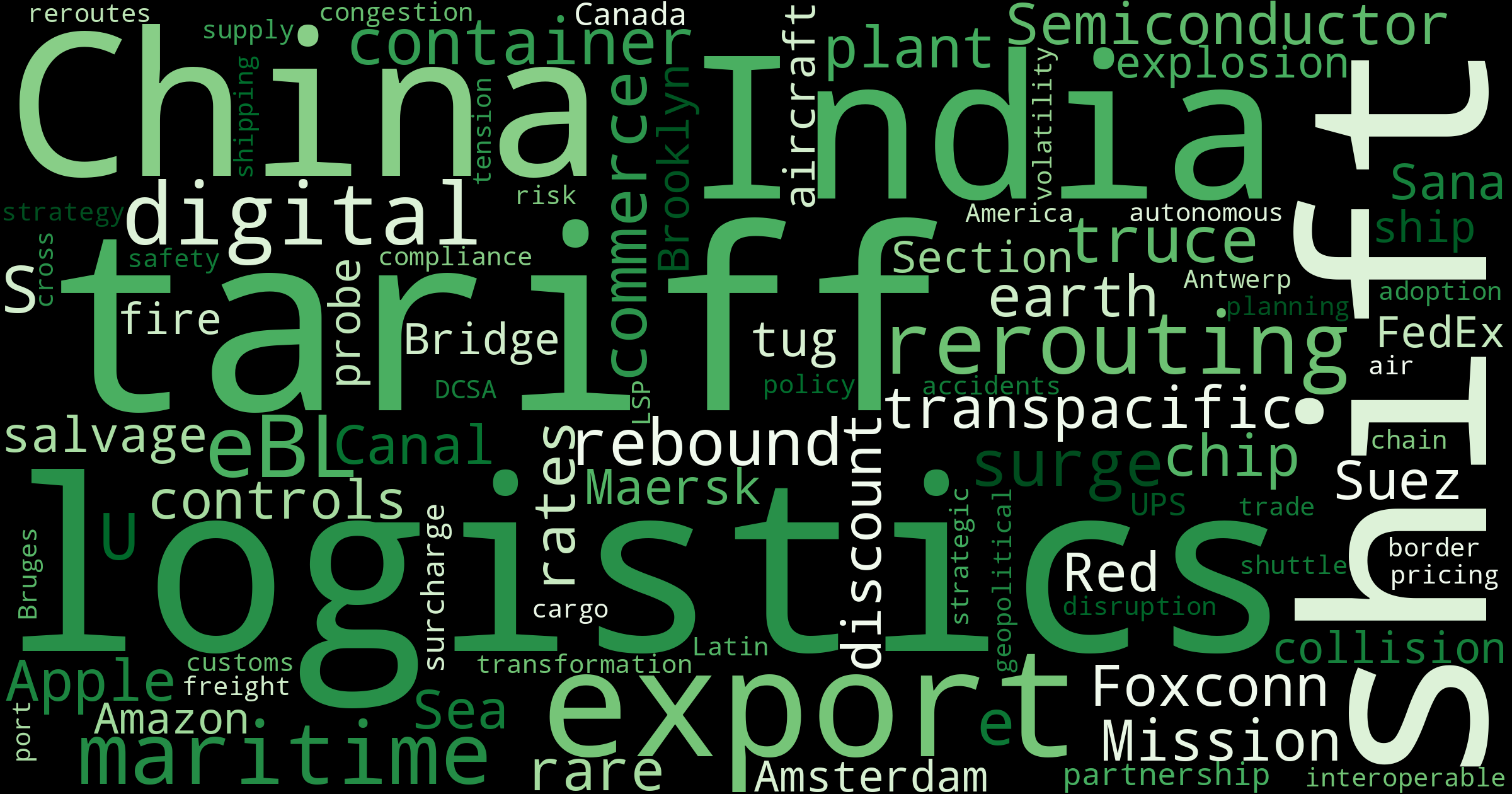
This week’s maritime sector landscape reflects a turbulent mix of geopolitical friction, digital milestones, and high-impact maritime incidents. The temporary U.S.–China tariff pause spurred a sharp spike in bookings and freight rates, offering a short-term demand boost. Simultaneously, serious operational disruptions—from a Maersk ship adrift in the Atlantic to a fatal collision involving a Mexican Navy vessel—have spotlighted ongoing maritime safety concerns. In parallel, breakthrough technologies like interoperable digital Bills of Lading and autonomous shuttles mark progress on the efficiency front. For logistics service providers (LSPs), understanding the crosscurrents of policy, safety, and digitalization remains key to navigating risk and opportunity.
Maritime Market Mood Tracking
- 🔵 Neutral Sentiment: 45%
- 🔴 Negative Sentiment: 35%
- 🟢 Positive Sentiment: 20%
Overall Mood (Compound Score): -0.05
Mood Snapshot: Cautiously Neutral – Resilient sentiment persists despite rising disruptions and uncertainty.
🚢 Maritime Incidents & Operations: Safety & Crisis Response
- Maersk Sana Salvage Operation Underway: The Maersk Sana suffered a major engine room explosion on April 28, drifting for weeks before salvage operations began en route to Freeport, Bahamas.
- Amsterdam Bulk Carrier Blaze Contained: A significant fire on the Marshall Islands-flagged Trade bulk carrier at the Amsterdam Scrap Terminal was extinguished after a multi-day operation.
- Fatal Brooklyn Bridge Collision: The Mexican Navy’s training ship Cuauhtémoc collided with the Brooklyn Bridge due to mechanical failure, killing two and injuring 22.
- Capri Marine Zone Violation: Silver Ray sailed too close to a protected marine zone near Capri, resulting in fines and a formal warning to the cruise line.
⚠️ Negative Sentiment: Policy Shocks & Trade Friction
- Tariff Pause Triggers Booking Surge: U.S.–China tariff truce sparked a 277% spike in transpacific container bookings, creating congestion and capacity imbalances.
- De Minimis Tariff Cuts: The U.S. slashed low-value parcel tariffs from 120% to 54%, impacting e-commerce flows from China and Hong Kong.
- EU Threatens $107B in Tariffs: The European Commission may retaliate against U.S. automotive tariffs with sweeping new levies.
- Suez Canal Fee Cuts: Egypt offers a 15% discount on canal transits to recover volumes lost due to Red Sea disruptions.
🚀 Positive Sentiment: Digitalization & Logistics Growth
- eBL Interoperability Achieved: DCSA and partners completed the first interoperable digital Bill of Lading transaction across platforms.
- Autonomous Electric Shuttle Debuts: Port of Antwerp-Bruges demonstrated a smart, driverless shuttle for container movements.
- Amazon–FedEx Partnership Restored: The new deal fills gaps in oversized delivery left by UPS withdrawal.
- Foxconn’s India Chip Plant Approved: Apple’s supplier begins building a $433M facility to diversify semiconductor production away from China.
Top Talking Points
- Maersk Sana Explosion: Highlights supply chain fragility and maritime safety needs.
- Tariff Truce Spike: LSPs must prepare for front-loaded demand and uncertain policy timelines.
- Interoperable eBL: A transformative milestone for digital logistics efficiency and cost savings.
- Suez Fee Cuts: Signal continued instability and rerouting around conflict-affected waters.
- Semiconductor Diversification: Foxconn’s India move reflects growing manufacturing reallocation trends.
Strategic Insights for LSPs
- Prepare for Demand Volatility: The U.S.–China tariff truce has front-loaded demand. LSPs should watch for a post-surge slump and align capacity plans accordingly, especially as August looms for possible tariff reinstatement.
- Diversification Beyond China Is Accelerating: With Apple and Foxconn expanding in India and rare earth tensions ongoing, expect more firms to adopt China+1 strategies. LSPs should strengthen India corridor capabilities and look at Vietnam, Mexico, and Eastern Europe as rising hubs.
- Red Sea & Suez Remain Fragile Arteries: Despite Egypt’s fee cuts, Red Sea rerouting continues. LSPs should continue monitoring geopolitical and insurance conditions, and rerouting costs must be factored into pricing strategies.
- Digital Infrastructure Is Becoming a Differentiator: Interoperable eBLs and autonomous port solutions are no longer experiments—they’re becoming essential for competitive efficiency. LSPs should explore partnerships with tech vendors or participate in pilot programs.
- Policy Risk Management Is Essential: From Europe’s retaliatory tariff threats to U.S. Section 232 probes, regulatory unpredictability is the norm. Scenario planning and flexible routing strategies are crucial in this environment.
Prefer email? Contact us directly at min.so@tradlinx.com (Americas), sondre.lyndon@tradlinx.com (Europe) or henry.jo@tradlinx.com (EMEA/Asia)
References
- Maersk Sana Salvage – gCaptain
- Amsterdam Ship Fire – Lloyd’s List
- Brooklyn Bridge Collision – NBC News
- Capri Cruise Fine – Cruise Mummy
- Tariff Surge – Reuters
- De Minimis Cuts – Reuters
- EU Tariff Threats – Yahoo Finance
- Suez Canal Fee Cuts – Reuters
- eBL Milestone – Marine Insight
- Antwerp Shuttle – Infomarine
- Amazon-FedEx Deal – Supply Chain Dive
- Foxconn Chip Plant – CNBC




Leave a Reply