
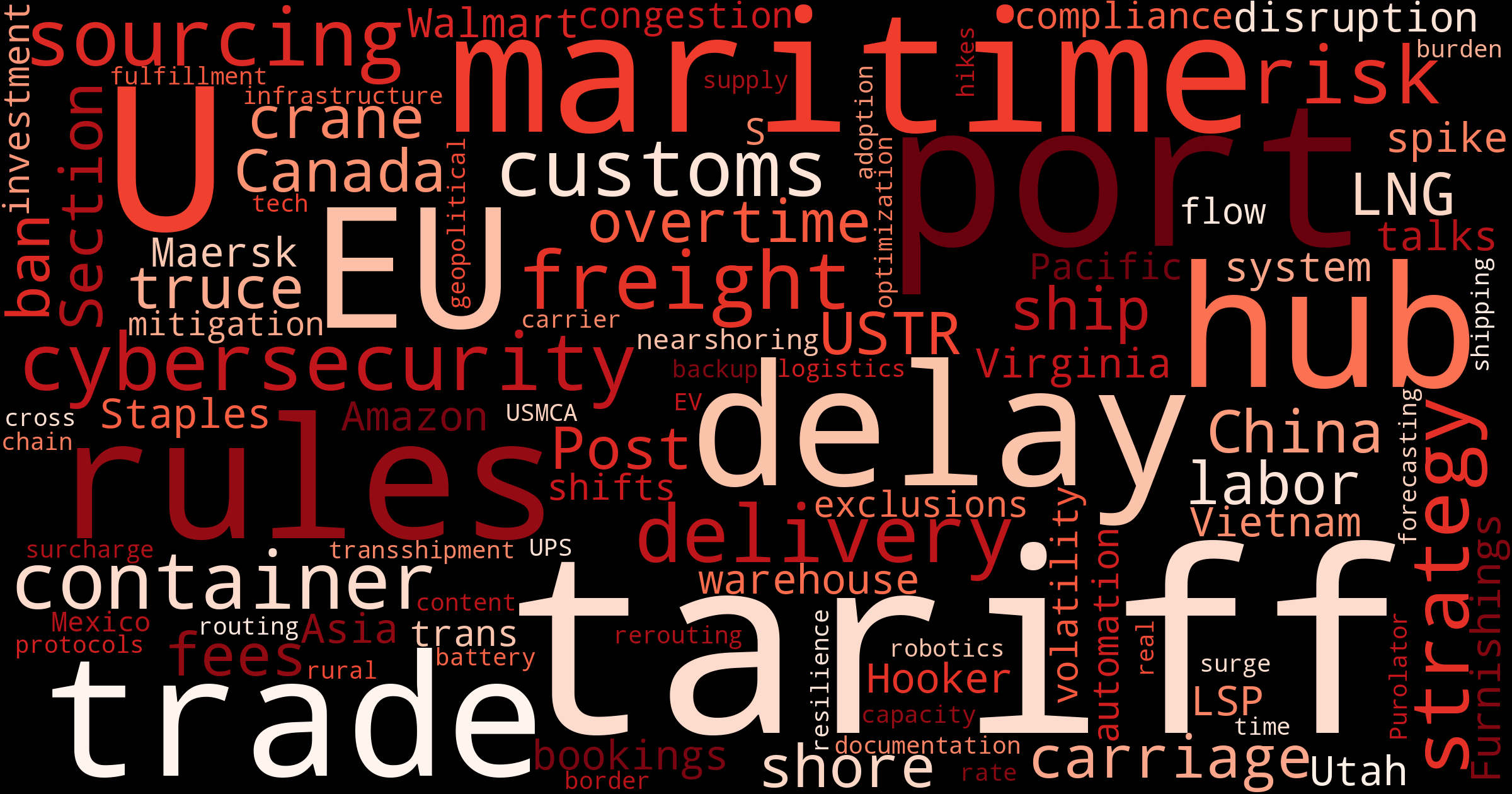
The global maritime and logistics environment experienced high volatility during the week of May 19–26, 2025. From postponed U.S.-EU tariffs and expanding USTR enforcement to tariff reprieves on Chinese imports and national labor disruptions in Canada, this week’s sentiment was shaped by geopolitical maneuvering. Logistics service providers (LSPs) must now operate within a policy-driven ecosystem requiring agility, compliance rigor, and operational resilience.
Maritime Market Mood Tracking
🔵 Neutral Sentiment: 30%
🔴 Negative Sentiment: 56%
🟢 Positive Sentiment: 14%
Overall Mood (Compound Score): -0.31
Mood Snapshot: Cautiously Defensive
🔴 Negative Sentiment: Regulatory Tension & Trade Policy Uncertainty
Tariff Developments: On May 23, Donald Trump threatened a 50% tariff on all EU imports. However, following a call with European Commission President Ursula von der Leyen, implementation was delayed to July 9. Tariffs on Chinese imports, meanwhile, were temporarily reduced from 145% to 30% under a 90-day truce beginning May 14, triggering a 47% surge in Asia–U.S. container bookings.
Section 301 Expansion: The USTR finalized critical maritime-sector measures:
- A phased fee schedule for Chinese-linked vessels at U.S. ports (up to $140/net ton by 2028)
- Proposed 100% tariffs on Chinese-built ship-to-shore cranes and infrastructure components
- Gradual enforcement of U.S.-built vessel carriage for LNG exports
Canada Post Labor Disruption: On May 23, Canada Post workers launched a legal nationwide overtime ban, disrupting over 8 million letters and 1.1 million parcels daily. This created delivery gridlocks in rural areas and forced a shift to UPS and Purolator, which faced delays from sudden volume increases.
Impact on LSPs: These developments significantly raised costs and complexity for LSPs, who must now verify ship-of-origin details for port compliance, manage rate volatility, and adjust delivery networks to mitigate strike-induced disruptions.
🔵 Neutral Sentiment: Infrastructure Shifts & Corporate Adjustments
Amazon and Walmart Fulfillment Moves: Amazon’s 3.1 million-square-foot robotic fulfillment center in Virginia progressed as part of its $20B U.S. automation strategy. Walmart expanded its self-owned logistics footprint with the acquisition of a 1-million-square-foot hub in Utah, enhancing cross-docking near intermodal lines.
Staples & Hooker Furnishings: Staples finalized its rollout of a cloud-based warehouse management system across nine U.S. centers, improving inventory accuracy and boosting next-day delivery reach to 98%. Hooker Furnishings, having exited its Georgia warehouse, reported full transition to a Vietnam-based facility, reducing lead times from six months to under six weeks.
🟢 Positive Sentiment: Trade Relief & Domestic Production Resilience
Section 301 Exclusion Extensions: On May 23, the USTR extended tariff exclusions on 164 Chinese goods (notably electronics and solar components) through May 31, offering relief for machinery-reliant LSP clients. Simultaneously, retailers maximized the 90-day China tariff truce window for inventory replenishment.
Domestic Supply Chain Strength: Utz Brands reaffirmed its 5–7% growth outlook, thanks to its 85% U.S.-based production. This week, the firm credited stable logistics costs and tariff insulation for its resilience, reinforcing nearshoring strategies.
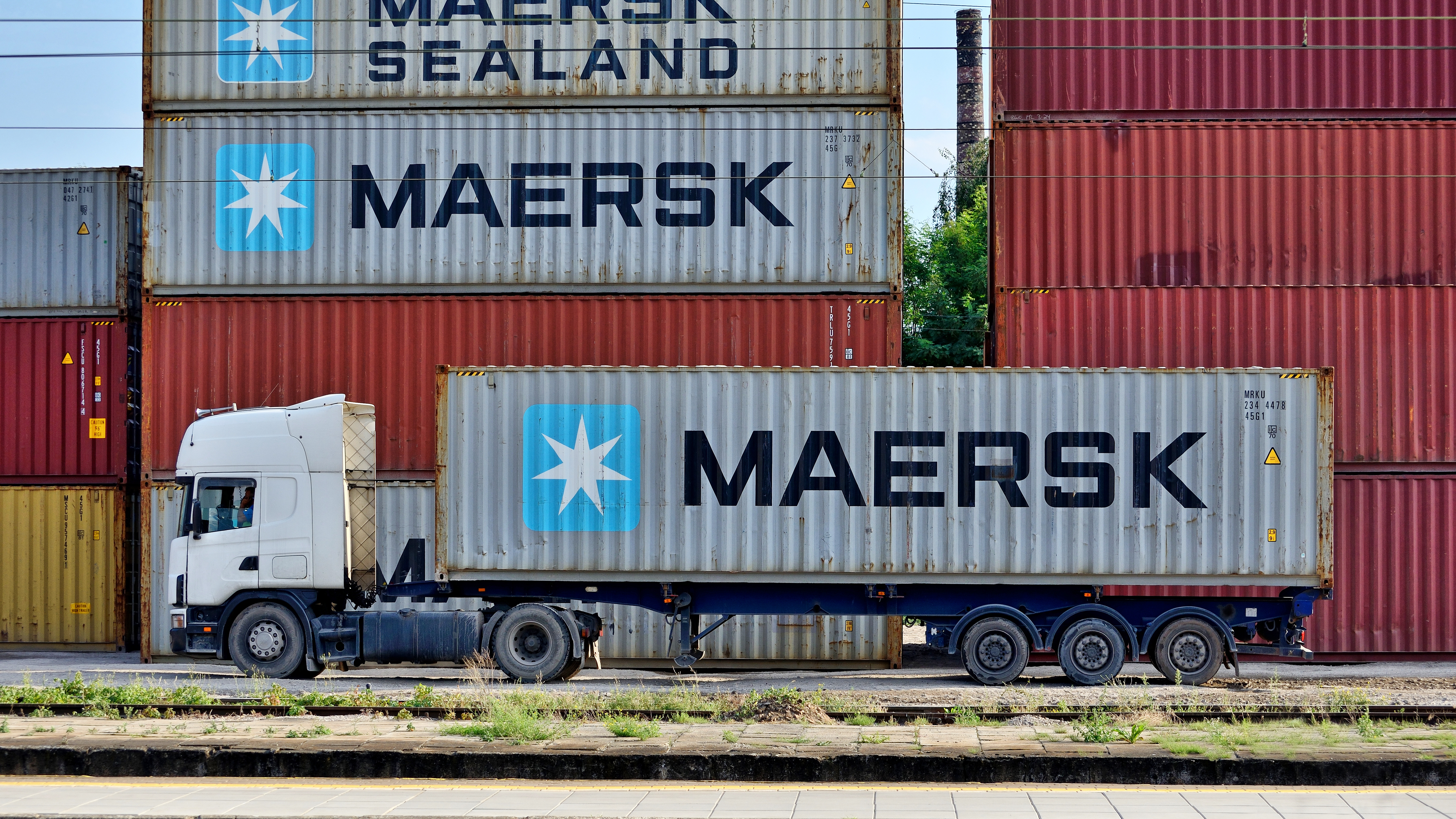
Maersk: Embedded Cybersecurity Focus: With 34% of recent breaches linked to third-party systems, Maersk intensified its integration of cybersecurity protocols into global operations. The firm emphasized real-time monitoring and threat detection as a core logistics pillar, aligning with rising geopolitical risk exposure.
Top Talking Points
- 50% EU Tariff Delay: New effective date of July 9 eases short-term pressure on transatlantic flows
- USTR Maritime Enforcement: Cranes, port fees, and LNG carriage reshaping global routing decisions
- Canada Post Strike Impact: Significant disruption to last-mile delivery in Canada
- Automation & Nearshoring: Resilient players investing in domestic facilities and smart warehouses
The week’s trends underscore a bifurcating trade regime, driven by national security logic and competitive infrastructure policy. For LSPs, success hinges on three imperatives:
- Strategic Diversification of supply nodes
- Automation-Enabled Agility in routing and fulfillment
- Proactive Compliance with evolving tariff, port, and data rules
As the U.S.-China tariff pause counts down to its August expiration, and EU negotiations remain fragile, TRADLINX will continue to offer frontline insights to help clients navigate disruption and opportunity with precision.

References
- Trump delays 50% tariffs on EU to July 9 – CNBC
- Trump 90-day tariff pause triggers logistics surge – Tech.co
- USTR Section 301 action on China’s maritime sector
- US Ports hit out at 100% crane tariff – Seatrade Maritime
- Maersk on global risk monitoring in supply chains
- Canada Post strike impacts logistics – Supply Chain Dive
- Stanley Black & Decker raises prices to offset tariffs
- Staples cloud WMS improves delivery capabilities
Prefer email? Contact us directly at min.so@tradlinx.com (Americas), sondre.lyndon@tradlinx.com (Europe) or henry.jo@tradlinx.com (EMEA/Asia)



Leave a Reply