

Drewry’s World Container Index came in at $4,526 per 40ft container in its 20 August assessment, up 4% week over week. That is the composite’s third straight weekly gain, following $4,339 on 13 August and $4,297 on 6 August. The headline number flattens a market moving in two directions at once: Shanghai to New York rose 9% to $9,507 and Shanghai to Los Angeles rose 9% to $6,802, while Shanghai to Genoa fell 2% to $4,955 and Shanghai to Rotterdam fell 1% to $4,401. Asia-Europe declined for another week, just far more shallowly than the 8% and 5% drops recorded seven days earlier.
This Week’s Rates
| Route | 20 Aug ($/FEU) | 13 Aug ($/FEU) | WoW |
|---|---|---|---|
| Shanghai to New York | $9,507 | $8,706 | +9% |
| Shanghai to Los Angeles | $6,802 | $6,244 | +9% |
| Shanghai to Genoa | $4,955 | $5,080 | -2% |
| Shanghai to Rotterdam | $4,401 | $4,425 | -1% |
| Drewry WCI composite | $4,526 | $4,339 | +4% |
What’s Driving the Move
Transpacific demand is meeting capacity carriers are actively withdrawing. Drewry’s 20 August commentary describes demand on the trade as resilient while carriers manage supply through blank sailings and capacity reductions. Seven blank sailings were announced on the Transpacific for week 35, running 24 to 30 August. Capacity in August declined 9% month over month on Asia to US East Coast services and 0.4% on Asia to US West Coast services, tightening space availability further. Drewry expected rates to remain stable through the week as that tightening continued.
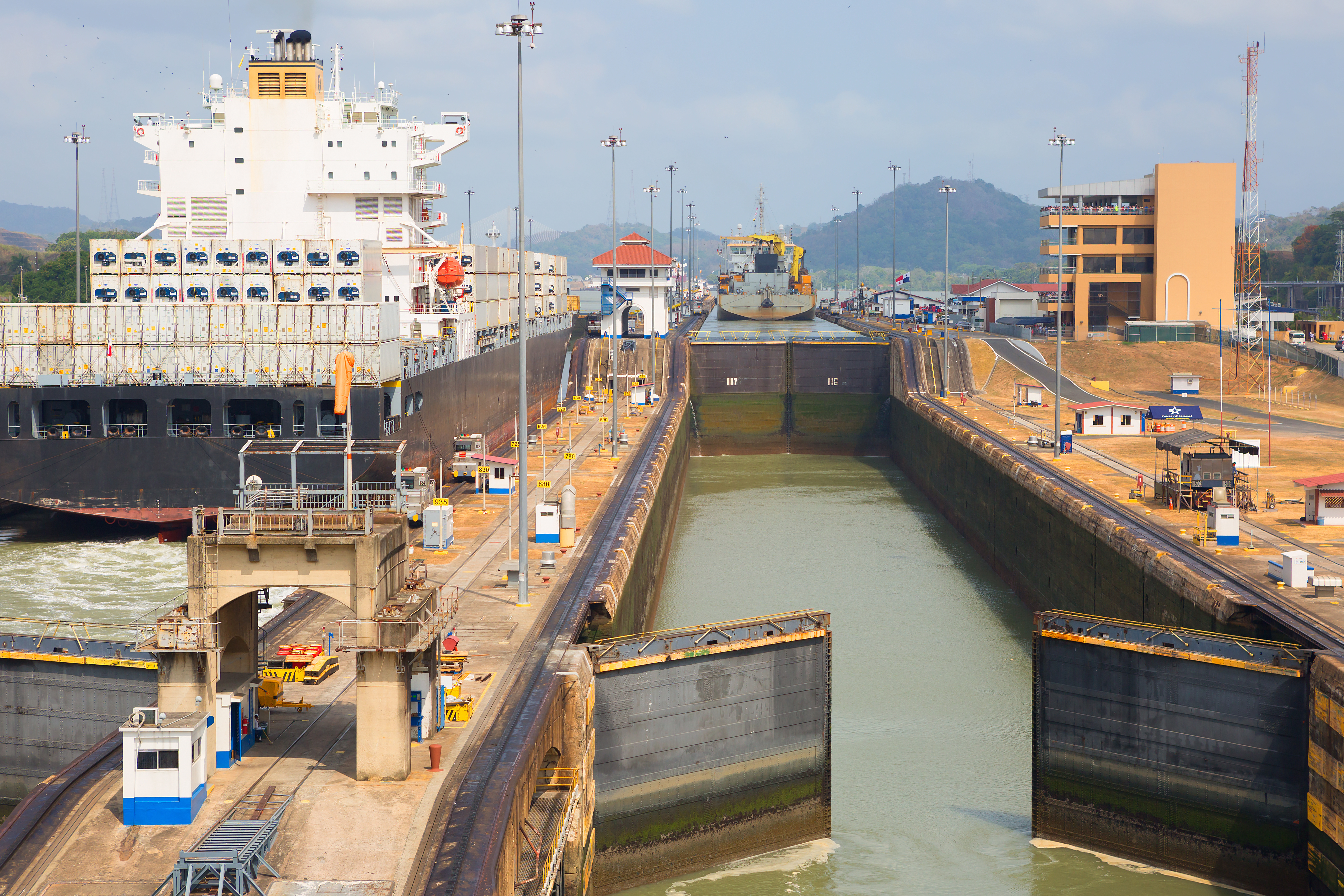
A September cost is already on the calendar. Several carriers have announced Panama Canal surcharges on Asia to US East Coast and Asia to US Gulf Coast trades, effective September. Drewry flags these as potential additional upward pressure on rates. If you are quoting September USEC or Gulf business now, check the amount and effective date in each carrier’s own notice and confirm whether the charge is already included in the quoted freight before adding it to your budget.
What is a blank sailing?
A blank sailing is a scheduled voyage that a carrier cancels, removing planned capacity for that rotation. Carriers can use blank sailings to manage supply against demand, although cancellations may also be used to recover schedules after congestion, weather or other disruption.
Drewry’s latest Cancelled Sailings Tracker, dated 21 August, counts 49 blank sailings across the major East-West trades for weeks 35 through 39, covering 24 August to 27 September. That represents a 6% cancellation rate, with 94% of scheduled sailings still expected to operate. Transpacific eastbound accounts for 60% of the cancellations, Asia to North Europe and the Mediterranean 21%, and the Transatlantic 19%.
Asia-Europe slowed its decline without turning. Genoa gave up 2% and Rotterdam 1%, against 8% and 5% the week before. Two blank sailings were announced on the trade for week 35, which Drewry describes as reflecting constrained capacity. Congestion at both ends eased in week 33, running 10 to 16 August, though it stayed elevated, with average vessel waiting times of 32.3 hours at Shanghai and 25.0 hours at Rotterdam. Drewry expected Asia-Europe rates to remain broadly stable through week 35.
The reliability picture behind the rates is the part worth planning around. Drewry characterises the East-West market as uncertain. The US-Iran memorandum on the Strait of Hormuz has expired without a lasting resolution, while some carriers are gradually resuming selected Red Sea and Suez Canal transits after improved security assessments. Port congestion across Asia and Europe, together with disruption following the German port strikes, continues to affect schedule reliability. Drewry advises shippers to book early and allow additional lead time to reduce exposure to cargo rollovers and transit delays. That is a booking-execution problem as much as a pricing one: the risk is a confirmed booking that does not sail on the vessel it was confirmed against.
If withdrawn capacity and port disruption are turning confirmed bookings into rollover exposure across your book, walk through how ops teams follow gate-in and load events per container across carriers in one view.
What This Means for Your Bookings
Transpacific. Shanghai to New York gained $801 per FEU in a single week and Los Angeles $558. Both moves came while carriers were managing available capacity downward, and Drewry expected those levels to remain stable through week 35. For September USEC and Gulf cargo, check the applicable Panama Canal surcharge against your carrier’s notice and confirm whether it is separately billed or already included in the quoted freight.
Asia-Europe. A 2% and 1% week after an 8% and 5% week is a slower decline, not evidence of a bottom. Nothing in this assessment attributes the change to recovering demand. If a Mediterranean or North Europe renewal is in front of you, this week’s numbers are better read as an early stabilisation signal than a confirmed floor. Another flat or rising weekly assessment would provide stronger evidence that the decline has actually stopped.
Don’t budget off the composite. Two lanes moved 9% this week and two moved between 1% and 2% in the opposite direction. A single blended figure hides that entirely. The latest cancelled-sailings data points in the same direction: 60% of announced cancellations across the major East-West trades are concentrated on Transpacific eastbound, even though the overall cancellation rate is only 6%.
For the off-index trades that the WCI does not cover, we looked at how Hapag-Lloyd and CMA CGM repriced three lanes with no weekly published spot benchmark earlier this month.
Further Reading
- World Container Index – 20 August 2026 (Daily Cargo News, 21 August 2026)
- World Container Index – 20 August (Drewry)
- Cancelled Sailings Tracker – 21 August (Drewry)
- World Container Index Methodology (Drewry)
Rate figures are Drewry World Container Index weekly assessments dated 20 August 2026 and 13 August 2026, reported per 40ft dry container. Under Drewry’s methodology, WCI ocean freight includes applicable surcharges, including bunker, peak-season, emergency-risk and Panama Canal surcharges where applicable. Terminal handling charges are included or excluded according to normal market practice on each route; inland transportation, documentation, booking and customs-clearance fees are excluded. Blank-sailing counts, the 6% cancellation rate and the lane split are from Drewry’s Cancelled Sailings Tracker dated 21 August 2026, covering weeks 35 to 39. Port waiting times are Drewry week 33 figures. Carrier-specific Panama Canal surcharge levels and effective dates vary; confirm against your own carrier tariff, contract or quotation before budgeting or booking.


Leave a Reply