
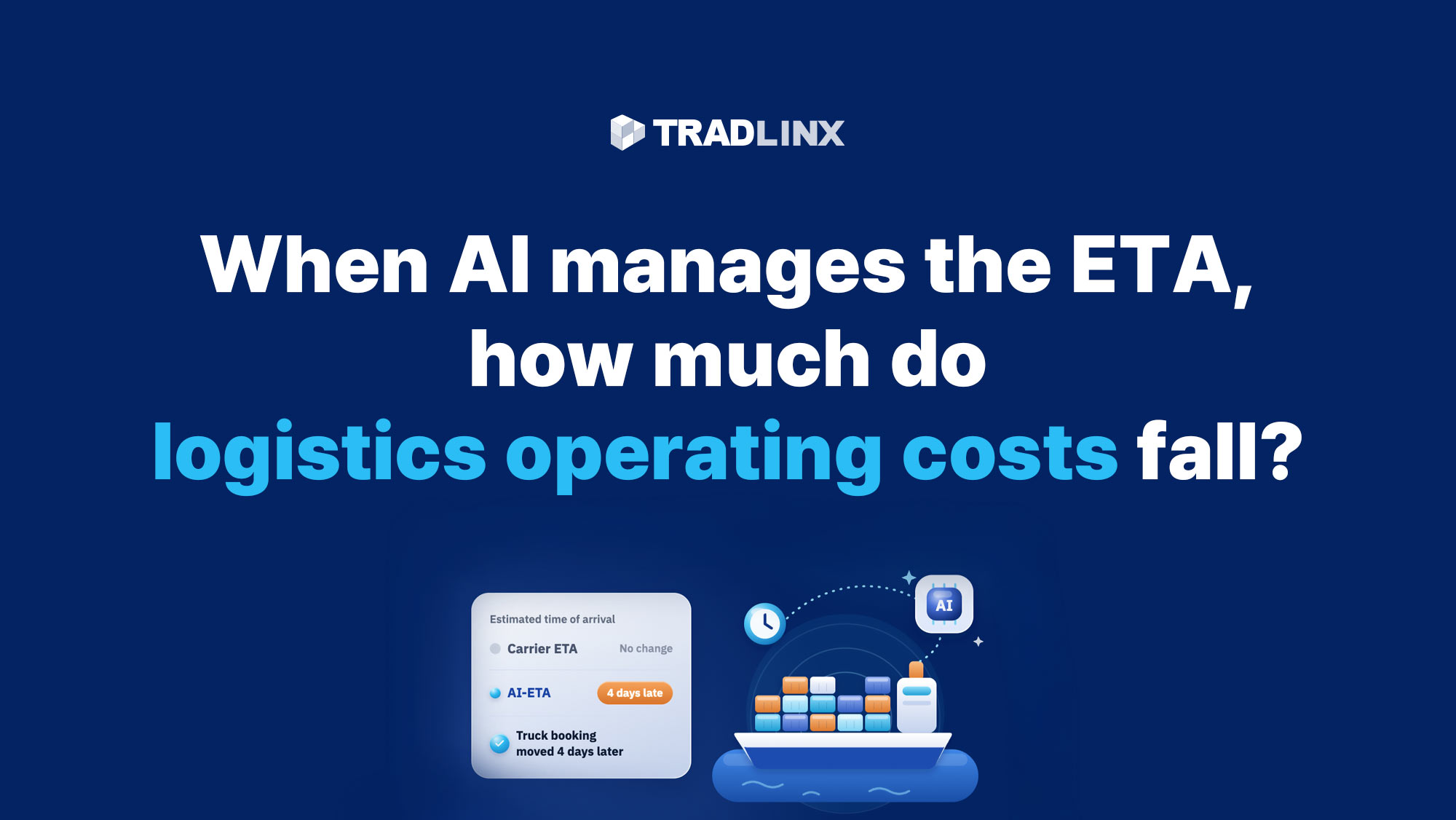
AI가 ETA를 관리하면,
물류 운영비는 얼마나 줄어들까?
운영비 평균
트럭 예약·창고 인력·통관 업무 기준
선사 ETA로 운영할 때와 비교
같은 화물의 운영비를 100으로 놓았을 때
- 25%트럭·인력이 화물을
기다린 시간 감소사례 최대 65% - 최대 56%한 사례의
운영비 절감브라질 3PL의 통관 인력 배정 - 31%도착 시각
예측 오차 감소평균 15.4시간 → 10.6시간 - 64개운영비를 30% 이상
줄인 사례전체 320개 중
미국·중남미 물류 현장 320개 사례 분석(화주 191개, 포워더·3PL 129개)
핵심만 먼저 보면
아래 %는 모두 선사 ETA로 운영할 때보다
운영비가 몇 % 줄었는지를 뜻합니다.
- 15.5%트럭·인력·통관 업무
도착 직전에 움직이는 업무에서 가장 많이 줄었습니다
- 트럭 예약, 창고 하역 인력, 통관 준비, 철도 예약: 평균 15.5% 절감(223개 사례)
- 고객 납기 약속, 안전재고 발주: 평균 2.7% 절감
- 320개 전체 평균: 12.9% 절감
앞의 업무들은 배가 도착하기 전 5일 안에 확정합니다.
AI-ETA가 지연을 먼저 알려 주면 확정하기 전에 일정을 옮길 수 있어 효과가 컸습니다. - 27%통관·검사 업무
업무별로는 통관·검사와 창고가 가장 많이 줄었습니다
- 통관·검사: 27% 절감
- 창고·CFS(여러 화주의 소량 화물을 모아 처리하는 창고): 24% 절감
- 철도 연계: 16% 절감
- 화주 산업군: 산업재 18%, 자동차·배터리 14% 절감
모두 도착 하루 이틀 전에 사람을 배치하는 업무입니다.
지연을 미리 알면 사람이 오지 않는 배를 기다리는 비용이 바로 줄어듭니다. - 15.8%환적 화물
환적 화물은 직항보다 두 배 가까이 줄었습니다
- 환적 화물(중간 항구에서 배를 갈아타는 화물): 15.8% 절감
- 직항 화물: 8.4% 절감
- 지역별 상위: 미국 걸프 23%, 중미·카리브 21%, 남미 17%
환적항에서 연결선을 놓친 사실은 선사 ETA에 늦게 반영됩니다.
그래서 환적이 많은 지역일수록 AI-ETA의 효과가 컸습니다. - 93%하루 1회 확인해도 남는 몫
비용을 줄인 핵심은 지연을 먼저 아는 것입니다
- 선사 ETA: 배가 늦어져도 며칠 뒤에야 바뀌는 경우가 있음
- AI-ETA: 트럭이나 인력을 확정하기 전에 지연을 알려 줌
- 하루 한 번만 확인해도: 절감액의 93%가 그대로 남음
얼마나 자주 확인하느냐보다 지연을 먼저 아는 것이 비용을 좌우했습니다.
- 약 21%초반 정확도가 확인되면
15.5%는 보수적으로 잡은 숫자입니다
- 이번 계산의 가정: AI-ETA는 항해 마지막 4분의 1 구간에서만 선사 ETA보다 정확
- 항해 초반에도 더 정확하다고 확인되면: 15.5%에서 약 21%로 상승
같은 배, 두 개의 ETA
- 업무: 미국 서배너항에 도착한 수입 컨테이너를 트럭으로 내륙 창고까지 옮기기
- 문제: 배가 4일 넘게 늦어졌지만, 선사 ETA는 이 지연을 한참 뒤에야 보여 줌
- 대상: 화주가 직접 트럭을 부르든 포워더가 대신 부르든 같은 일이 생김
두 담당자가 시점마다 한 일과 쌓인 비용입니다.
지연이 보이지 않아 원래 일정 유지
원래 일정으로 트럭 확정
트럭 도착, 컨테이너 없음. 12시간 대기+960달러
트럭이 빈 차로 돌아가고 다시 예약+450달러
선사 ETA가 이제야 지연 반영
다시 부른 트럭으로 컨테이너 반출
지연 확인. 트럭 예약을 4일 뒤로 옮김변경 비용 0달러
새 일정으로 트럭 확정
대기 없음
트럭이 도착하자마자 컨테이너 반출추가 비용 0달러
사례 정보
- 업무 주체: 미국 서배너의 포워더(드레이지·샤시 배정)
- 항로: 부산 → 서배너(파나마 운하 경유)
- 구간: 서배너 터미널 → 내륙 창고(트럭 운송)
- 같은 업무의 전체 화물 평균: 컨테이너당 운영비 157달러 → 91달러
샤시는 컨테이너를 싣는 트레일러입니다.
선사 ETA보다 먼저 알면 비용이 줄어듭니다
선사 ETA는 지연을 늦게 반영합니다
- 운항 중 지연이 생겨도 며칠 동안 그대로인 경우가 있음
- 아예 비어 있는 경우도 있음
환적항에서 놓친 연결선은 특히 늦게 보입니다
- 연결선을 놓치면 다음 배를 3~8일 기다림
- 선사 ETA는 그 배가 떠날 무렵에야 바뀌는 경우가 많음
큰 차이는 소수 화물에서 생깁니다
- 대부분 화물은 두 ETA가 비슷함
- 선사 ETA가 이틀 이상 틀린 약 5% 화물에서 큰 비용이 생김
확정하기 전에 알아야 비용이 줄어듭니다
- 트럭·인력·대체 운송을 확정한 뒤에 알면 바꾸는 데 돈이 듦
- 그래서 도착 직전에 확정하는 업무일수록 효과가 큼
AI-ETA 정확도 개선 4.8시간은 어디서 나왔을까
- 평균 오차: 선사 ETA 15.4시간, AI-ETA 10.6시간(트레드링스 AI-ETA, 508,055건 검증)
- 차이 4.8시간 중 84%: 선사 ETA가 48시간 이상 틀린 4.99% 화물에서 나옴
왜 도착 직전 업무에서 효과가 컸을까
- AI-ETA가 먼저 알려 주는 때: 30일 항해라면 도착 약 1주일 전부터 지연을 선사 ETA보다 먼저 반영합니다(이번 분석의 보수적 기준)
- 도착 직전 업무는 그 안에서 확정합니다: 트럭 예약, 하역 인력 배치, 통관 준비는 도착 1~5일 전에 정하므로, 지연을 알고 일정을 옮길 시간이 남습니다
- 조금만 어긋나도 비용이 바로 생깁니다: 트럭이 기다리면 시간당 70~95달러, 하역 인력이 기다리면 시간당 120~300달러가 듭니다
- 몇 주 앞서 정하는 업무는 그보다 먼저 끝납니다: 안전재고와 고객 납기 약속은 2~3주 전에 정해서, 그때는 두 ETA의 차이가 거의 없습니다
항해 초반 정확도가 자료로 확인되면 안전재고와 고객 약속에서도 효과를 기대할 수 있습니다.
카리브·파나마처럼 도착 가까이에 환적항이 있는 항로는 연결선을 놓치는 일이 이 구간에서 생겨 효과가 특히 컸습니다.
320개 사례에서 확인한 절감 효과
트럭·인력·통관 업무의 운영비 절감
도착 전 5일 안에 확정하는 223개 사례의 평균
95% 신뢰구간 15.0~16.0%(다섯 번 반복 계산)
한 사례에서 가장 많이 줄어든 폭
브라질 조인빌리 3PL의 통관 인력 배정(환적 화물)
320개 전체 사례의 운영비 절감
고객 납기 약속·안전재고(2.7% 절감)까지 합친 평균
운영비가 줄어든 폭별 사례 수
아래 줄은 위 줄을 포함한 숫자입니다.
- 나머지 51개: 비용이 줄어든 화물과 늘어난 화물이 섞여 뚜렷한 차이 없음(그중 35개는 일찍 정하는 업무)
- 29개는 오히려 운영비 증가. 이유는 네 가지입니다
- 고객 납기 약속 14개: 약속을 정하는 2~3주 전에는 AI-ETA가 더 정확하지 않아 줄일 비용이 없었습니다. 그런데 AI-ETA가 바뀔 때마다 약속을 고치면서 변경 비용이 늘었습니다(약속 변경 화물당 0.17회 → 0.30회)
- 트럭을 너무 자주 다시 부르는 운영 6개: ETA가 6시간만 바뀌어도 트럭을 다시 부르는 기준이라, 3시간마다 갱신되는 AI-ETA를 쓰자 재예약이 화물당 0.4회에서 1.3회로 늘었습니다. 재예약 비용이 절감액보다 커졌습니다
- 선사 ETA가 이미 정확한 직항 4개: 이 항로에서는 AI-ETA 오차가 오히려 조금 더 컸습니다(예: 14.3시간 대 14.8시간). 이를 따라 계획을 바꾼 만큼 손해가 났습니다
- 기타 5개: 안전재고 2개, 몇 주 전에 정하는 임시 창고·판촉 일정 2개, 위기 항로라 AI-ETA 정확도도 낮게 잡은 수에즈 경유 사례 1개입니다
운영비가 가장 많이 줄어든 5개 사례
| 사례 | 지역 | 항로 | 운영비 절감률 | 컨테이너당 절감액 |
|---|---|---|---|---|
| 조인빌리 통관 인력 배정3PL(조인빌리) | 남미 | 환적 | 56.2% | 114달러 |
| 캄피나스 통관 인력 배정3PL(캄피나스) | 남미 | 환적 | 55.1% | 111달러 |
| 발파라이소 통관 인력 배정글로벌 포워더(발파라이소) | 남미 | 직항 | 52.3% | 90달러 |
| 보고타 DC 입고 슬롯이커머스 기업(보고타) | 남미 | 환적 | 52.2% | 80달러 |
| 뉴올리언스 통관 인력 배정지역 포워더(뉴올리언스) | 미국 걸프 | 환적 | 52.1% | 295달러 |
상위 사례의 공통점
- 환적을 거쳐 중남미와 미국 걸프로 들어오는 화물
- 통관 검사나 물류센터 입고에 맞춰 인력을 배치하는 업무
- 도착 하루 이틀 전에 결정해서, AI-ETA가 더 정확한 구간 안에 들어옴
어디에서 효과가 가장 클까
포워더·3PL 업무별
- 통관·검사와 창고: 거의 모든 사례에서 운영비 감소
- 이유: 도착 1~3일 전에 인력을 배치하는 업무라, 지연을 미리 알면 대기 비용이 바로 줄어듦
막대는 운영비 절감률입니다. 오른쪽으로 길수록 많이 줄었고, 0보다 왼쪽은 늘었다는 뜻입니다.
- 내륙 트럭 운송(항구에서 창고까지 트럭으로 옮기는 업무): 평균적으로 운영비 증가
- 이유: ETA가 6시간만 바뀌어도 트럭을 다시 부르는 운영 사례 5개가 포함됨
- 다시 부르는 기준을 둔 나머지 사례: 21.0% 절감
화주 산업군별
- 산업재·자동차: 운영비의 약 92%가 생산 차질과 긴급 조치에서 발생
- 효과가 난 방식: 지연을 먼저 알고 항공 보충, 다른 공장 재고 이전, 생산량 조정을 제때 결정
- 유통·식품: 몇 주 전에 정하는 판촉·고객 약속이 많아 전체 평균이 낮음
유통과 식품도 도착 직전 업무만 보면 운영비가 유통 12.9%, 식품 10.5% 줄었습니다.
막대는 운영비 절감률입니다. 오른쪽으로 길수록 많이 줄었고, 0보다 왼쪽은 늘었다는 뜻입니다.
도착 지역별
- 미국 걸프, 중미·카리브, 남미: 킹스턴(자메이카), 카르타헤나(콜롬비아), 발보아(파나마), 싱가포르 같은 환적항을 거치는 화물이 많아 효과가 큼
- 미국 서안: 아시아에서 항해가 15일 안팎으로 짧아, AI-ETA가 더 정확한 구간을 도착 전 약 4일로만 잡아 효과가 작게 나옴
항해 초반 정확도가 확인되면 미국 서안도 약 22% 줄어듭니다.
막대는 운영비 절감률입니다. 오른쪽으로 길수록 많이 줄었고, 0보다 왼쪽은 늘었다는 뜻입니다.
- 미국발 수출: 대부분 2~3주 전에 고객에게 도착일을 약속하는 업무라 효과가 거의 잡히지 않음. 초반 정확도가 확인되면 약 22% 절감
항로 유형별
- 환적 화물: 직항의 두 배 가까이 운영비 감소
- 도착 가까이의 킹스턴·카르타헤나·발보아에서 환적: 23.1% 절감
막대는 운영비 절감률입니다. 오른쪽으로 길수록 많이 줄었고, 0보다 왼쪽은 늘었다는 뜻입니다.
기업 규모별(화주)
- 대기업과 중견·중소기업: 차이가 크지 않음
- 이유: 업무 구성이 비슷함(운영비 중 생산·긴급 조치 비중 83%와 82%)
기업 규모와 관계없이 도착 직전 업무에 연결하면 효과를 볼 수 있습니다.
막대는 운영비 절감률입니다. 오른쪽으로 길수록 많이 줄었고, 0보다 왼쪽은 늘었다는 뜻입니다.
비용은 이렇게 줄어듭니다
- AI-ETA를 쓰면 담당자가 계획을 조금 더 자주 바꿉니다
- 트럭 재예약이나 항공 같은 대체 운송 비용은 늘지만, 그 덕분에 피한 손실이 훨씬 큽니다
- 아래 금액은 업무별로 컨테이너 1개당 줄어든 비용입니다
항구↔창고 트럭 운송
트럭이 빈 차로 돌아가거나 기사가 기다리는 일이 줄어 절감창고 하역 인력·입고 예약
하역 인력이 기다리거나 창고 입고 시간을 다시 잡는 일이 줄어 절감철도·통관
철도를 다시 예약하거나 통관·검사 인력이 기다리는 일이 줄어 절감생산 부품·원료
부품이 늦어 생산 라인이 서는 일이 줄어 화물 1건당 절감- 트럭·인력·장비가 화물을 기다린 시간: 화물 1건당 평균 8.4시간에서 6.3시간으로 25% 감소(일정 맞추기 업무 169개)
- 생산 부품이 모자란 시간: 15% 감소(긴급 조치 업무)
- 금액 범위: 사례를 금액순으로 세웠을 때 가운데 절반이 들어가는 범위
- 늘어난 조치 비용: 줄어든 손실 1달러당 약 0.20달러를 트럭 재예약과 대체 운송에 더 씀
휴스턴 화학 공장, 자메이카 킹스턴 환적
환적항에서 연결선을 놓친 것을 먼저 알고 공정을 조정했습니다
- 도착 7일 전모선에 6일 가까운 지연이 생겼고, 두 ETA 모두 이틀 뒤 이를 반영했습니다.
- 도착 예정 1일 뒤늦게 도착한 모선이 킹스턴에서 휴스턴행 연결선을 놓쳤습니다. 다음 배까지 6일을 기다려야 합니다.
- 10시간 뒤AI-ETA가 연결 실패를 반영했고, 공장은 결정 마감(도착 예정 5일 뒤)보다 훨씬 앞서 공정 조건을 바꿨습니다.
- 도착 예정 7일 뒤선사 ETA는 결정 마감이 지난 뒤, 다음 배가 떠날 무렵에야 바뀌었습니다.
코스타리카 의료기기 공장, 콜롬비아 카르타헤나 환적
연결 지연을 알고 입고 인력 배치를 미리 바꿨습니다
- 도착 3일 전카르타헤나에서 연결선을 놓쳐 5일 반을 더 기다리게 됐습니다.
- 도착 2.5일 전AI-ETA가 연결 실패를 반영했습니다. 선사 ETA는 도착할 때까지 바뀌지 않았습니다.
- 도착 2일 전입고 인력을 확정했습니다. AI-ETA 기준은 실제 도착과 17시간, 선사 ETA 기준은 74시간 차이가 났습니다.
조지아 배터리 공장, 부산 출발 직항
라인이 서기 전에 다른 공장 재고를 옮겨 왔습니다
- 도착 13일 전배터리 셀 화물에 선사가 공지하지 않은 5일 가까운 지연이 생겼습니다.
- 도착 1.5일 전공지된 4일 반의 지연이 추가로 생겼습니다. 선사 ETA만 보면 여유 재고로 버틸 수 있어 보였습니다.
- 도착 예정 3.7일 뒤AI-ETA가 숨은 지연까지 반영했고, 공장은 다른 공장 재고를 트럭으로 옮기기로 했습니다(36시간, 긴급 할증 포함 1만 3,500달러).
- 도착 예정 9.7일 뒤선사 ETA는 결정 마감이 지난 뒤에야 지연을 반영했습니다.
AI-ETA를 더 잘 쓰는 법
AI-ETA를 도입한 기업이 효과를 더 키우려면 무엇을 챙겨야 할까요?
320개 사례에서 효과가 컸던 운영 방식을 정리했습니다.
도착 1~5일 전에 확정하는 업무를 우선적으로 체크하세요
- 분석 결과: 트럭 예약, 하역 인력 배치, 통관 준비처럼 도착 직전에 확정하는 업무는 운영비가 평균 15.5% 줄었습니다. 통관·검사 27%, 창고 24%로 특히 컸습니다
- 트레드링스 AI-ETA: 도착이 가까운 화물의 도착 시각을 평균 오차 9.2시간으로 예측하며, 실제 도착의 92.5%가 예측 ±24시간 안에 들어옵니다
이렇게 활용하세요트럭과 인력을 확정하기 전에 AI-ETA를 먼저 확인하는 순서를 정해 두세요. 창고·야드 슬롯은 AI-ETA가 보여 주는 ’24시간 안에 도착할 확률’을 보고 잡으면 중복 예약과 빈 슬롯을 함께 줄일 수 있습니다.
환적 화물은 더 자세히 살펴보세요
- 분석 결과: 환적 화물은 운영비가 15.8% 줄어 직항(8.4%)의 두 배 가까이 됩니다. 도착 가까이의 킹스턴, 카르타헤나, 발보아에서 환적하는 화물은 23.1%였습니다
- 트레드링스 AI-ETA: 선사 ETA가 이틀 넘게 틀리는 화물은 장거리·환적 여정이나 기상·항만 혼잡에서 주로 생기는데, AI-ETA는 이런 화물의 오차를 평균 90.0시간에서 9.2시간으로 줄였습니다. 선사가 ETA를 비워 두기 쉬운 환적 구간도 자체 예측으로 채웁니다
이렇게 활용하세요환적 화물은 따로 묶어 AI-ETA 변화를 매일 확인하세요. 환적항에서 ETA가 크게 밀리면 도착지의 트럭·인력 일정을 바로 다시 점검하는 것이 좋습니다.
AI-ETA는 최소 하루 한 번 이상 체크하세요
- 분석 결과: 하루 한 번만 확인해도 절감액의 93%를 얻었습니다. 3시간마다 자동으로 받으면 나머지 효과까지 얻을 수 있습니다
- 트레드링스 AI-ETA: 2~4시간마다 갱신되며, 선사가 ETA를 비워 둔 화물도 예측값을 채워 보여 줍니다
이렇게 활용하세요매일 정해진 시간에 도착 1주일 안쪽 화물의 AI-ETA를 확인하는 것을 기본 업무로 정하세요. 사내 시스템 연동이 끝나기 전이라도 바로 시작할 수 있습니다.
일정이 바뀔 때의 대응책을 미리 마련해 두세요
- 대응 기준이 없을 때: ETA가 6시간만 바뀌어도 트럭을 다시 부르던 6개 사례는 재예약이 화물당 0.4회에서 1.3회로 늘어 운영비가 오히려 84% 늘었습니다
- 대응 기준을 정한 뒤: “ETA가 24시간 이상 바뀔 때만, 화물당 최대 2회”로 바꾸자 평균 12% 절감으로 돌아섰습니다(3개는 21~31% 절감, 3개는 거의 차이 없음)
이렇게 활용하세요지연 폭에 따라 무엇을 할지 미리 정해 두세요. 작은 변동은 그대로 두고, 일정 시간 이상 밀리면 트럭·인력 일정을 다시 잡고, 큰 지연에는 대체 운송이나 생산 조정을 검토하는 식으로 단계를 나누면 됩니다.
사례 320개 전체 보기
금액은 화물(대부분 40피트 컨테이너) 1개당 달러입니다. 도시, 업무, 산업군으로 찾을 수 있습니다.
| ID | 사례 | 업무·산업 | 결정 | 선사 ETA 기준 비용 | 절감액 | 감소율 | 판정 |
|---|
도입 전과 후를 어떻게 비교했나
- 같은 컨테이너를 두 번 보낼 수는 없습니다
- 도입 전후를 비교하면 시장 상황이 다르고, 다른 회사와 비교하면 규모와 항로가 다릅니다
- 그래서 같은 화물을 두 팀이 운영하는 방식으로 비교했습니다
같은 화물을 준비합니다
사례마다 항로(환적 포함), 지연 빈도, 창고·트럭 조건, 비용 단가를 현장 기준으로 정하고 화물 4만~12만 건을 준비합니다.
두 팀이 똑같이 운영합니다
A팀은 선사 ETA를 하루 한 번 확인하고, B팀은 AI-ETA를 3시간마다 받습니다. 배, 지연, 창고, 트럭은 두 팀이 같습니다.
그때 보이던 정보로만 결정합니다
두 팀 모두 결정 마감 시점에 보이던 ETA로만 판단합니다. 언제 움직일지 정하는 기준은 각 팀에게 가장 유리하게 따로 맞췄습니다.
두 팀의 비용을 비교합니다
배가 도착한 뒤 비용을 모두 더해 비교합니다. AI-ETA를 보고 잘못 움직여 생긴 비용도 빠짐없이 넣었습니다.
AI-ETA 개선폭은 실측보다 작게
사례들에서 AI-ETA가 줄인 평균 오차는 1.7시간으로, 트레드링스 실측값(4.8시간)보다 작게 잡았습니다.
더 정확한 구간도 좁게
AI-ETA가 항해 마지막 4분의 1 구간(30일 항해라면 도착 전 약 7~8일)에서만 선사 ETA보다 정확하다고 보았습니다.
위기 항로는 더 보수적으로
홍해 경유, 파나마 제한기, 환적항 혼잡 사례에서는 AI-ETA 정확도도 함께 낮췄습니다.
평균도 보수적인 방식으로
운영비 감소율은 모든 사례의 절감액 합계를 선사 ETA로 운영할 때의 운영비 합계로 나눈 값입니다. 사례별 감소율을 단순 평균하면 도착 직전 업무 17.0%, 전체 13.4%로 더 높습니다.
- 비교 대상
- 선사 ETA(하루 1회 확인) 운영과 AI-ETA(3시간마다 자동 수신) 운영
- AI-ETA 정확도
- 트레드링스 AI-ETA 기술 리포트(2026년 5월, 508,055건): 평균 오차 15.4시간에서 10.6시간
- 도착 직전 업무
- 최종 결정 마감이 도착(긴급 조치는 물건이 필요한 시점) 전 5일 안에 있는 트럭 예약, 창고 하역 인력 배치, 창고 입고 예약, 통관, 철도 예약과 긴급 조치 업무(223개)
- 사례 구성
- 미국 중심 120개와 중남미·환적 중심 200개. 화주 191개, 포워더·3PL 129개. 기존 120개 일정 맞추기 55%·긴급 조치 21%·고객 약속 19%·안전재고 5%, 확대 200개 일정 맞추기 56%·긴급 조치 22%·고객 약속 18%·안전재고 4%
- 환적
- 환적항에서 연결선을 놓치면 다음 배편까지 3~8일 대기. 선사 ETA는 절반은 하루 안팎에, 나머지는 다음 배가 떠날 무렵 반영
- 현장 조건
- 선사 ETA 평균 오차 직항 14~35시간, 환적 29~48시간(항해 전체 구간, 2026년 정시성 하락 반영). 결품·납기형 업무의 기존 정시율 중앙값 94%. 출항 전에 끝나는 결정이나 변경할 수 없는 약속 같은 사례도 미국 중심 묶음(6.7%)과 비슷한 비율(7.5%)로 넣었습니다.
- 읽을 때 참고
- 운영비 감소율은 해당 업무의 운영비 기준이며 회사 전체 물류비 기준이 아닙니다. 같은 컨테이너가 여러 업무에 걸리므로 업무별 절감액을 더하지 않습니다. 중남미 인건비와 트럭 단가는 미국 대비 지수로 잡았고, 기업별 실제 단가를 넣으면 결과가 달라질 수 있습니다.
비용 단가(2026년 시장 자료)
| 항목 | 시장 단가 | 사례에 쓴 값 | 출처 |
|---|---|---|---|
| LA·롱비치 드레이지(항구↔창고 트럭) | 25마일 이내 약 471달러, 온타리오 약 650달러 | 트럭 재예약 350~500달러 | Gateway Lines |
| 트럭 대기와 빈 차 회차(미국) | 시간당 50~100달러, 건당 200~500달러 | 시간당 70~95달러, 건당 350~500달러 | Dashdoc, FreightAmigo |
| 디머리지(미국) | 무료 기간 후 하루 약 200달러, 장기 약 350달러 | 무료 4일 후 하루 240달러, 10일 후 384달러(무료 기간에도 야드·샤시 하루 약 43달러) | FreightFigures |
| D&D(브라질 수입 40ft) | 무료 5일, 6~10일 하루 90달러, 11~14일 175달러(2026.1.15부터) | 같은 구간 적용 | Maersk |
| 창고 인건비(미국) | 창고·보관업 평균 시급 26.87달러(현장직 26.02달러, 2026.9 잠정) | 하역 인력 대기 시간당 120~300달러 | 미국 노동통계국 |
| 인건비(멕시코·중남미) | 멕시코 최저임금 하루 315.04페소(약 17달러, 2026) | 미국 대비 인건비 0.3~0.45배, 트럭 0.4~0.45배 | Bloomberg Law |
| 항공 운임(중국→LAX) | kg당 5.85~7.69달러(2026.10) | 항공 보충 1회 1.8만~4.5만 달러 | Freight Right 보도 |
| 공장 정지 손실 | 자동차 대형 공장 시간당 230만 달러 | 핵심 화물 부족 시 시간당 800~7,000달러(보수적) | Siemens 2024 |
최근 해상·항만 상황
- 홍해·수에즈
- 2026년 7월 후티의 선박 공격이 재개된 뒤에도 아시아-유럽 항로 선복의 63%가 홍해 경유로 돌아왔습니다(9월 15일~10월 15일). 2026년 수에즈 통항은 하루 약 41척으로 2023년(약 74척)보다 적습니다. Seatrade Maritime, Ship & Bunker, The Rio Times
- 정시성
- 2026년 8월 세계 정시성 49.9%(2022년 9월 이후 최저), 9월 아시아→북미 정시 도착 20%. Sea-Intelligence, Xeneta
- 환적 거점
- 8월 싱가포르 정시성 32.4%, 콜롬보 환적 연결 위험, 카리브·파나마 항로는 평균 3.9일마다 서비스 변경. Seatrade Maritime, Kuehne+Nagel, The Loadstar
- 남미
- 산투스 선석 대기 2019년 8~9시간에서 2024년 약 35시간, 2026년에도 터미널 혼잡 지속. Datamar News
- 미국
- LA·롱비치 철도행 체류 9월 평균 7.19일. 파나마 운하는 9월 15일부터 하루 32척으로 제한한 뒤 11월 34척으로 완화. C.H. Robinson, Kuehne+Nagel, gCaptain
When AI manages the ETA,
how much do logistics operating costs fall?
Average operating cost
For truck booking, warehouse staffing and customs
Compared with running on the carrier ETA
Operating cost for the same cargo, indexed to 100
- 25%less time trucks and staff spent waiting for cargoUp to 65% in a single case
- Up to 56%lower operating cost in a single caseCustoms staffing at a Brazilian 3PL
- 31%smaller error in predicted arrival timeAverage 15.4 h → 10.6 h
- 64cases that cut operating costs by 30% or moreOut of 320
Based on 320 logistics cases in the US and Latin America (191 shippers, 129 forwarders and 3PLs)
The short version
Every percentage below shows how much lower operating costs were
than when the same cargo was run on the carrier ETA.
- 15.5%Trucks, staff, customs
Tasks handled right before arrival saw the largest drop
- Truck booking, warehouse unloading staff, customs preparation, rail booking: 15.5% lower on average (223 cases)
- Customer delivery commitments, safety stock orders: 2.7% lower on average
- All 320 cases: 12.9% lower
The first group of tasks is confirmed in the last 5 days before the vessel arrives.
When AI-ETA flags a delay early, the schedule can move before anything is confirmed. - 27%Customs and inspections
By task, customs and warehouses gained the most
- Customs and inspections: 27% lower
- Warehouses and CFS (facilities that consolidate small shipments from many shippers): 24% lower
- Rail connections: 16% lower
- Shipper industries: machinery and chemicals 18%, automotive and batteries 14%
All of these assign staff a day or two before arrival.
An early warning cuts the cost of people waiting for a ship that has not arrived. - 15.8%Transshipped cargo
Transshipped cargo saw close to twice the drop of direct cargo
- Transshipped cargo (cargo that changes ships at a hub): 15.8% lower
- Direct cargo: 8.4% lower
- Leading regions: US Gulf Coast 23%, Central America and Caribbean 21%, South America 17%
A missed connection at a hub reaches the carrier ETA late.
Regions with more transshipment therefore gained more from AI-ETA. - 93%Kept with one check a day
Knowing about a delay early is what lowers costs
- Carrier ETA: sometimes changes days after the vessel falls behind
- AI-ETA: shows the delay before trucks or staff are confirmed
- Checking only once a day: still keeps 93% of the savings
Early knowledge of the delay mattered more than how often anyone checked.
- About 21%If early-voyage accuracy holds
15.5% is a conservative figure
- Assumption used here: AI-ETA is more accurate than the carrier ETA only in the last quarter of the voyage
- If it proves more accurate earlier too: the figure rises from 15.5% to about 21%
Same vessel, two ETAs
- Task: trucking import containers from the Port of Savannah to an inland warehouse
- Problem: the vessel ran more than four days late, and the carrier ETA showed it much later
- Who: the same thing happens whether the shipper or a forwarder books the trucks
What each planner did at each point, and the cost that built up.
Delay not visible, original schedule kept
Truck confirmed for the original schedule
Truck arrives, no container. 12 hours of waiting+$960
Truck leaves empty and is rebooked+$450
Carrier ETA finally shows the delay
Rebooked truck picks up the container
Delay spotted. Truck booking moved 4 days laterChange cost $0
Truck confirmed for the new schedule
No waiting
Container picked up as the truck arrivesExtra cost $0
About this case
- Who: a forwarder in Savannah, US, assigning drayage trucks and chassis
- Route: Busan → Savannah (via the Panama Canal)
- Leg: Savannah terminal → inland warehouse (by truck)
- Average across all cargo in this task: operating cost per container $157 → $91
A chassis is the trailer a container sits on.
Knowing before the carrier ETA does lowers costs
Carrier ETAs pick up delays late
- The ETA can stay unchanged for days after a delay at sea
- Sometimes it is missing altogether
Missed connections at a hub show up especially late
- Missing a connection means waiting 3–8 days for the next ship
- The carrier ETA often changes only when that ship sails
The big gaps sit in a few shipments
- For most cargo the two ETAs are close
- Large costs come from the roughly 5% of shipments where the carrier ETA is off by two days or more
Costs fall only if you know before you confirm
- Changing trucks, staff or alternate transport after confirming them costs money
- Tasks confirmed right before arrival gain the most
Where AI-ETA’s 4.8-hour accuracy gain comes from
- Mean error: 15.4 hours for the carrier ETA, 10.6 hours for AI-ETA (Tradlinx AI-ETA, 508,055 predictions validated)
- 84% of the 4.8-hour gap: from the 4.99% of shipments where the carrier ETA was off by 48 hours or more
Why near-arrival tasks gained the most
- When AI-ETA gets ahead: on a 30-day voyage, it shows delays before the carrier ETA from about a week before arrival (the conservative basis used here)
- Near-arrival tasks are confirmed inside that week: truck booking, unloading staff and customs preparation are fixed 1 to 5 days before arrival, so there is still time to move the schedule
- Small misses cost money right away: a waiting truck costs $70–95 per hour, and waiting unloading staff $120–300 per hour
- Tasks set weeks ahead finish before then: safety stock and customer delivery dates are fixed 2 to 3 weeks out, when the two ETAs barely differ
If data confirms early-voyage accuracy, safety stock and customer commitments can benefit as well.
On routes with a hub close to the destination, such as the Caribbean and Panama, missed connections happen inside this stretch, so the effect was especially large.
Savings measured across 320 cases
Lower operating cost for trucks, staff and customs
Average of 223 cases confirmed in the last 5 days before arrival
95% confidence interval 15.0–16.0% (five repeated runs)
Largest drop in a single case
Joinville customs staffing, 3PL (transshipment)
Lower operating cost across all 320 cases
Including customer commitments and safety stock (2.7% lower)
Number of cases by size of cost drop
Each row includes the rows above it.
- Another 51 cases: cheaper and costlier shipments mixed, with no clear difference (35 of them are tasks decided earlier)
- In 29 cases operating costs rose, for four reasons
- Customer delivery commitments (14): 2 to 3 weeks out, when the promise is made, AI-ETA is no more accurate, so there was nothing to save. Changing the promise each time AI-ETA moved added cost (promise changes per shipment 0.17 → 0.30)
- Operations that rebook trucks too often (6): with a rule to rebook whenever the ETA moves six hours, AI-ETA’s three-hourly updates raised rebookings from 0.4 to 1.3 per shipment, and the rebooking cost outgrew the savings
- Direct services where the carrier ETA is already accurate (4): on these routes AI-ETA’s error was slightly larger (for example 14.3 h against 14.8 h), and following it to change plans cost money
- Others (5): two safety stock cases, two temporary storage and promotion schedules set weeks ahead, and one Suez routing where AI-ETA accuracy was also set lower for the crisis
The 5 cases with the largest cost drop
| Case | Region | Route | Cost drop | Saving per container |
|---|---|---|---|---|
| Joinville customs staffing3PL (Joinville) | South America | Transshipment | 56.2% | $114 |
| Campinas customs staffing3PL (Campinas) | South America | Transshipment | 55.1% | $111 |
| Valparaíso customs staffingGlobal forwarder (Valparaíso) | South America | Direct services | 52.3% | $90 |
| Bogotá DC receiving slotsE-commerce company (Bogotá) | South America | Transshipment | 52.2% | $80 |
| New Orleans customs staffingRegional forwarder (New Orleans) | US Gulf Coast | Transshipment | 52.1% | $295 |
What the top cases share
- Cargo transshipped into Latin America and the US Gulf
- Staff assigned to customs inspections or distribution center receiving
- Decisions made a day or two before arrival, inside the stretch where AI-ETA is more accurate
Where does it pay most?
Forwarder and 3PL tasks
- Customs, inspections and warehouses: costs fell in almost every case
- Why: staff are assigned 1 to 3 days before arrival, so an early warning cuts waiting costs right away
Bars show the cost drop. Longer to the right means a larger drop; left of zero means costs rose.
- Inland trucking (moving containers from port to warehouse): costs rose on average
- Why: it includes 5 operations that rebook trucks whenever the ETA moves by six hours
- The other cases, with a rule for when to rebook: 21.0% lower
Shippers by industry
- Machinery, chemicals and automotive: about 92% of operating cost comes from production disruption and expedites
- How they saved: knowing a delay early, they flew in parts, moved stock from another plant or adjusted output in time
- Retail and food: more promotions and customer commitments set weeks ahead, so the overall figure is lower
For near-arrival tasks alone, costs fell by 12.9% in retail and 10.5% in food.
Bars show the cost drop. Longer to the right means a larger drop; left of zero means costs rose.
By destination region
- US Gulf, Central America and Caribbean, South America: much of the cargo moves through hubs such as Kingston (Jamaica), Cartagena (Colombia), Balboa (Panama) and Singapore
- US West Coast: voyages from Asia take about 15 days, so the stretch where AI-ETA is more accurate was set at only about 4 days and the result came out small
If early-voyage accuracy is confirmed, West Coast costs fall by about 22%.
Bars show the cost drop. Longer to the right means a larger drop; left of zero means costs rose.
- US exports: mostly customer arrival dates promised two to three weeks ahead, so almost no savings are counted. With early-voyage accuracy confirmed, about 22% lower
By route type
- Transshipped cargo: close to twice the cost drop of direct cargo
- Transshipped at Kingston, Cartagena or Balboa, close to the destination: 23.1% lower
Bars show the cost drop. Longer to the right means a larger drop; left of zero means costs rose.
By company size (shippers)
- Large and mid-sized or smaller companies: similar results
- Why: a similar task mix (production and expedites make up 83% and 82% of operating cost)
Companies of any size see results when AI-ETA feeds near-arrival tasks.
Bars show the cost drop. Longer to the right means a larger drop; left of zero means costs rose.
How the savings show up
- With AI-ETA, planners change plans a little more often
- Rebooking trucks or using air and other alternate transport costs more, but the losses avoided are far larger
- The amounts below are savings per container for each task
Port-to-warehouse trucking
Fewer trucks leaving empty and less driver waiting timeUnloading staff and receiving appointments
Less staff waiting and fewer warehouse appointments rebookedRail and customs
Saved per container from fewer rail rebookings and less idle customs staffProduction parts and materials
Saved per shipment from fewer line disruptions- Time trucks, staff and equipment spent waiting for cargo: down 25% per shipment, from 8.4 to 6.3 hours on average (169 scheduling tasks)
- Hours short of production parts: down 15% (expedite tasks)
- Amount ranges: the middle half of cases for each task, ranked by amount
- Extra action cost: about $0.20 more spent on truck rebooking and alternate transport for every dollar of loss avoided
Chemical plant in Houston, transshipped at Kingston, Jamaica
Knowing about the missed connection early, the plant adjusted its process
- 7 days before arrivalThe mother vessel fell almost six days behind. Both ETAs reflected it two days later.
- 1 day after planned arrivalArriving late, the vessel missed its Houston connection in Kingston. The next ship was six days away.
- 10 hours laterAI-ETA reflected the missed connection, and the plant changed its process settings well before the decision deadline (5 days after planned arrival).
- 7 days after planned arrivalThe carrier ETA changed only after the deadline, around the time the next ship sailed.
Medical device plant in Costa Rica, transshipped at Cartagena, Colombia
Knowing about the connection delay, the plant reassigned receiving staff in time
- 3 days before arrivalThe cargo missed its connection in Cartagena and faced five and a half more days of waiting.
- 2.5 days beforeAI-ETA reflected the missed connection. The carrier ETA did not change before arrival.
- 2 days beforeReceiving staff were locked in. The AI-ETA plan was 17 hours from the actual arrival; the carrier ETA plan was 74 hours off.
Battery plant in Georgia, direct service from Busan
Stock from another plant arrived before the line stopped
- 13 days before arrivalThe battery cell shipment picked up a delay of almost five days that the carrier did not announce.
- 1.5 days beforeAn announced delay of four and a half days followed. On the carrier ETA alone, existing buffer stock looked sufficient.
- 3.7 days after planned arrivalAI-ETA captured the hidden delay as well, and the plant moved stock from another plant by truck (36 hours, $13,500 including a rush surcharge).
- 9.7 days after planned arrivalThe carrier ETA reflected the delay only after the decision deadline.
Getting more out of AI-ETA
What should a company using AI-ETA focus on to get more from it?
These are the practices that paid off most across the 320 cases.
Check tasks confirmed 1 to 5 days before arrival first
- Results: tasks confirmed right before arrival, such as truck booking, unloading staff and customs preparation, cut operating costs by 15.5% on average, with customs and inspections at 27% and warehouses at 24%
- Tradlinx AI-ETA: predicts arrival for cargo close to port with a mean error of 9.2 hours, and 92.5% of shipments arrive within ±24 hours of the prediction
How to use itMake checking AI-ETA the step before trucks and staff are confirmed. Book warehouse and yard slots using AI-ETA’s probability of arrival within 24 hours to cut both double bookings and empty slots.
Look more closely at transshipped cargo
- Results: transshipped cargo cut operating costs by 15.8%, close to double the 8.4% for direct cargo. Cargo transshipped at Kingston, Cartagena or Balboa, close to the destination, reached 23.1%
- Tradlinx AI-ETA: carrier ETAs that are off by more than two days occur mostly on long-haul and transshipment journeys or amid weather and port congestion, and AI-ETA cut the error on these shipments from 90.0 to 9.2 hours on average. It also fills hub legs where carriers often leave the ETA blank
How to use itGroup transshipped cargo and review its AI-ETA every day. If the ETA slips sharply at the hub, recheck truck and staff schedules at the destination right away.
Check AI-ETA at least once a day
- Results: checking just once a day captured 93% of the savings. Receiving it automatically every three hours captures the rest
- Tradlinx AI-ETA: updates every 2 to 4 hours and shows its own prediction where the carrier leaves the ETA blank
How to use itMake a daily review of AI-ETA for cargo due within a week a standard task at a set time. You can start before system integration is finished.
Prepare your response to schedule changes in advance
- Without a response rule: the 6 cases that rebooked trucks whenever the ETA moved six hours saw rebookings rise from 0.4 to 1.3 per shipment, and operating costs rose by 84%
- With a response rule: switching to “only when the ETA moves 24 hours or more, at most twice per shipment” turned the result into a 12% average drop (21–31% lower in three cases, little change in the other three)
How to use itDecide in advance what to do at each size of delay. Leave small shifts alone, rebook trucks and staff once a delay passes a set number of hours, and consider alternate transport or production changes for large delays.
All 320 cases
Amounts are US dollars per shipment, mostly 40 ft containers. Search by city, task or industry.
| ID | Case | Task or industry | Decision | Cost on carrier ETA | Saving | Drop | Result |
|---|
How we compared operations with and without AI-ETA
- You cannot ship the same container twice
- Market conditions change between before and after adoption, and other companies differ in size and routes
- So we compared two teams running the same cargo
Prepare identical cargo
Each case sets its route (including transshipment), delay frequency, warehouse and trucking conditions and unit costs to field conditions, with 40,000 to 120,000 shipments.
Both teams operate the same way
Team A checks the carrier ETA once a day. Team B receives AI-ETA every three hours. Vessels, delays, warehouses and trucks are identical.
Decide only on what was visible then
Both teams decide on the ETA visible at the decision deadline. Each team’s trigger rule was tuned separately to its own advantage.
Compare the two teams’ costs
After arrival, all costs are added up and compared, including any cost from acting on AI-ETA when it turned out wrong.
AI-ETA gain set below the measured value
In these cases AI-ETA reduced the mean error by 1.7 hours, less than the 4.8 hours Tradlinx measured.
A narrow stretch for AI-ETA’s lead
AI-ETA was assumed to be more accurate than the carrier ETA only in the last quarter of the voyage (about 7 to 8 days before arrival on a 30-day voyage).
Extra caution on crisis routes
For Red Sea routings, Panama Canal restrictions and hub congestion, AI-ETA accuracy was lowered as well.
A conservative way to average
The cost drop is total savings across cases divided by total operating cost on the carrier ETA. A simple average of each case’s drop would be higher: 17.0% for near-arrival tasks and 13.4% overall.
- What is compared
- Operations on the carrier ETA (checked once a day) versus AI-ETA (received automatically every three hours)
- AI-ETA accuracy
- Tradlinx AI-ETA Technical Report (May 2026, 508,055 predictions): mean error from 15.4 to 10.6 hours
- Near-arrival tasks
- Truck booking, warehouse unloading staff, receiving appointments, customs, rail booking and expedite tasks whose final decision falls in the last 5 days before arrival (or before the goods are needed, for expedites) (223 cases)
- Case mix
- 120 US-focused cases and 200 Latin America and transshipment cases. 191 shippers, 129 forwarders and 3PLs. Task mix for the US-focused 120: 55% scheduling, 21% expedites, 19% customer commitments, 5% safety stock; for the other 200: 56%, 22%, 18% and 4%.
- Transshipment
- A missed connection at the hub means 3–8 days of waiting for the next ship. The carrier ETA reflects it within about a day half the time, and otherwise around when the next ship sails
- Field conditions
- Carrier ETA mean error 14–35 hours on direct services and 29–48 hours with transshipment (whole voyage, reflecting lower 2026 schedule reliability). Median baseline on-time rate for stock-out and delivery tasks 94%. Cases such as decisions closed before departure or commitments that cannot change were included at a similar share (7.5%) to the US-focused set (6.7%).
- Reading the numbers
- The cost drop refers to the operating cost of the task, not total company logistics spend. The same container touches several tasks, so task savings should not be added together. Latin American labor and trucking costs are indexed to US levels, and results will vary with each company’s actual rates.
Unit costs (2026 market data)
| Item | Market rate | Used in the cases | Source |
|---|---|---|---|
| LA/Long Beach drayage (port to warehouse trucking) | About $471 within 25 miles, about $650 to Ontario, CA | Truck rebooking $350–500 | Gateway Lines |
| Truck detention and dry runs (US) | $50–100 per hour, $200–500 per event | $70–95 per hour, $350–500 per event | Dashdoc, FreightAmigo |
| Demurrage (US) | About $200 a day after free time, about $350 for long stays | $240 a day after 4 free days, $384 after day 10 (yard and chassis about $43 a day during free time) | FreightFigures |
| D&D (Brazil imports, 40 ft) | 5 free days, $90 a day for days 6–10, $175 for days 11–14 (from January 15, 2026) | Same tiers | Maersk |
| Warehouse labor (US) | Warehousing and storage average hourly earnings $26.87 (production workers $26.02, September 2026, preliminary) | Idle unloading staff $120–300 per hour | US Bureau of Labor Statistics |
| Labor (Mexico and Latin America) | Mexico minimum wage 315.04 pesos a day (about $17, 2026) | Labor 0.3–0.45x and trucking 0.4–0.45x US levels | Bloomberg Law |
| Air freight (China to LAX) | $5.85–7.69 per kg (October 2026) | Air replenishment $18,000–45,000 per move | Freight Right, via press |
| Plant downtime | $2.3 million per hour at a large auto plant | Critical cargo shortage $800–7,000 per hour (conservative) | Siemens 2024 |
Recent ocean and port conditions
- Red Sea and Suez
- Even after Houthi attacks on vessels resumed in July 2026, 63% of Asia to Europe capacity returned to the Red Sea routing (September 15 to October 15). Suez transits in 2026 average about 41 a day, below about 74 in 2023. Seatrade Maritime, Ship & Bunker, The Rio Times
- Schedule reliability
- Global schedule reliability 49.9% in August 2026 (lowest since September 2022); 20% of Asia to North America arrivals on time in September. Sea-Intelligence, Xeneta
- Transshipment hubs
- Singapore on-time berthing 32.4% in August, connection risk at Colombo, and Caribbean and Panama services changing every 3.9 days on average. Seatrade Maritime, Kuehne+Nagel, The Loadstar
- South America
- Santos berth waiting time rose from 8–9 hours in 2019 to about 35 hours in 2024, with terminal congestion continuing in 2026. Datamar News
- United States
- LA/Long Beach rail dwell averaged 7.19 days in September. The Panama Canal limited transits to 32 a day from September 15, easing to 34 in November. C.H. Robinson, Kuehne+Nagel, gCaptain
Si la IA gestiona el ETA,
¿cuánto bajan los costos operativos de logística?
Costo operativo promedio
En reserva de camiones, personal de almacén y aduana
Frente a operar con el ETA de la naviera
Costo operativo de la misma carga, con base 100
- 25%menos tiempo de camiones y personal esperando cargaHasta 65% en un caso
- Hasta 56%menos costo operativo en un solo casoPersonal aduanero de un 3PL en Brasil
- 31%menos error en la hora de arribo previstaPromedio 15,4 h → 10,6 h
- 64casos que bajaron su costo operativo 30% o másDe 320
Basado en 320 casos logísticos de Estados Unidos y Latinoamérica (191 cargadores, 129 agentes de carga y 3PL)
Lo esencial
Cada porcentaje indica cuánto bajó el costo operativo
frente a operar la misma carga con el ETA de la naviera.
- 15,5%Camiones, personal, aduana
Las tareas que se resuelven justo antes del arribo bajaron más
- Reserva de camiones, personal de descarga, preparación aduanera, reserva ferroviaria: 15,5% menos en promedio (223 casos)
- Compromisos de entrega con clientes, pedidos de inventario de seguridad: 2,7% menos en promedio
- Los 320 casos: 12,9% menos
El primer grupo de tareas se confirma en los 5 días previos al arribo del buque.
Si AI-ETA avisa antes del retraso, el plan se puede mover antes de confirmar nada. - 27%Aduana e inspecciones
Por tarea, aduana y almacén ganaron más
- Aduana e inspecciones: 27% menos
- Almacenes y CFS (instalaciones que consolidan carga pequeña de varios cargadores): 24% menos
- Conexión ferroviaria: 16% menos
- Industrias de cargadores: maquinaria y química 18%, automotriz y baterías 14%
En todas ellas se asigna personal uno o dos días antes del arribo.
Un aviso temprano reduce el costo de tener gente esperando un buque que no llega. - 15,8%Carga con transbordo
La carga con transbordo bajó casi el doble que la directa
- Carga con transbordo (cambia de buque en un hub): 15,8% menos
- Carga directa: 8,4% menos
- Regiones al frente: Golfo de EE. UU. 23%, Centroamérica y Caribe 21%, Sudamérica 17%
Una conexión perdida en el hub llega tarde al ETA de la naviera.
Por eso las regiones con más transbordo ganaron más con AI-ETA. - 93%Se conserva revisando una vez al día
Lo que baja el costo es conocer antes el retraso
- ETA de la naviera: a veces cambia días después de que el buque se atrasa
- AI-ETA: muestra el retraso antes de confirmar camiones o personal
- Revisando solo una vez al día: se conserva el 93% del ahorro
Saber antes del retraso pesó más que la frecuencia de consulta.
- Cerca de 21%Si se confirma la precisión inicial
El 15,5% es una cifra conservadora
- Supuesto de este análisis: AI-ETA es más preciso que el ETA de la naviera solo en el último cuarto del viaje
- Si también lo es al inicio del viaje: la cifra sube de 15,5% a cerca de 21%
El mismo buque, dos ETA
- Tarea: llevar en camión contenedores de importación del puerto de Savannah a un almacén en el interior
- Problema: el buque se retrasó más de cuatro días y el ETA de la naviera lo mostró mucho después
- Quién: pasa lo mismo si reserva los camiones el cargador o un agente de carga
Lo que hizo cada planificador en cada momento y el costo acumulado.
El retraso no se ve y se mantiene el plan original
Camión confirmado para el plan original
Llega el camión y no hay contenedor. 12 horas de espera+US$960
El camión se va vacío y se reasigna+US$450
El ETA de la naviera por fin muestra el retraso
El camión reasignado retira el contenedor
Retraso detectado. La reserva del camión se mueve 4 díasCosto del cambio US$0
Camión confirmado para el nuevo plan
Sin espera
Retiro inmediato al llegar el camiónCosto adicional US$0
Datos del caso
- Quién: un agente de carga en Savannah, EE. UU., que asigna camiones de acarreo y chasis
- Ruta: Busan → Savannah (por el canal de Panamá)
- Tramo: terminal de Savannah → almacén en el interior (en camión)
- Promedio de toda la carga de esta tarea: costo operativo por contenedor US$157 → US$91
El chasis es el remolque sobre el que va el contenedor.
Saber antes que el ETA de la naviera baja los costos
El ETA de la naviera refleja tarde los retrasos
- Puede quedar igual durante días tras un retraso en el mar
- A veces ni siquiera está disponible
Las conexiones perdidas en el hub se ven especialmente tarde
- Perder la conexión obliga a esperar 3–8 días al siguiente buque
- El ETA de la naviera suele cambiar recién cuando ese buque zarpa
Las grandes diferencias están en pocos embarques
- En la mayoría de la carga los dos ETA son parecidos
- Los costos grandes vienen del 5% de embarques en que el ETA de la naviera falla por dos días o más
El costo baja solo si se sabe antes de confirmar
- Cambiar camiones, personal o transporte alterno ya confirmados cuesta dinero
- Por eso ganan más las tareas que se confirman justo antes del arribo
De dónde viene la mejora de precisión de 4,8 horas de AI-ETA
- Error medio: 15,4 horas con el ETA de la naviera, 10,6 horas con AI-ETA (AI-ETA de Tradlinx, 508.055 predicciones validadas)
- 84% de la diferencia de 4,8 horas: viene del 4,99% de embarques en que el ETA de la naviera falló por 48 horas o más
Por qué ganaron más las tareas cercanas al arribo
- Cuándo se adelanta AI-ETA: en un viaje de 30 días, refleja los retrasos antes que el ETA de la naviera desde una semana antes del arribo, aproximadamente (criterio conservador de este análisis)
- Las tareas cercanas al arribo se confirman dentro de esa semana: la reserva de camiones, el personal de descarga y la preparación aduanera se fijan 1 a 5 días antes, así que todavía hay tiempo para mover el plan
- Un desfase pequeño cuesta de inmediato: un camión en espera cuesta US$70–95 por hora, y el personal de descarga en espera, US$120–300 por hora
- Las tareas que se fijan con semanas de anticipación terminan antes: el inventario de seguridad y las fechas para clientes se definen 2 a 3 semanas antes, cuando los dos ETA casi no difieren
Si los datos confirman la precisión al inicio del viaje, el inventario de seguridad y los compromisos con clientes también pueden beneficiarse.
En rutas con un hub cerca del destino, como el Caribe y Panamá, las conexiones perdidas ocurren dentro de este tramo, y el efecto fue especialmente grande.
Ahorro medido en 320 casos
Menos costo operativo en camiones, personal y aduana
Promedio de 223 casos que se confirman en los 5 días previos al arribo
Intervalo de confianza del 95%: 15,0–16,0% (cinco cálculos repetidos)
Mayor baja en un solo caso
Personal de aduana en Joinville, 3PL (transbordo)
Menos costo operativo en los 320 casos
Incluye compromisos con clientes e inventario de seguridad (2,7% menos)
Número de casos según el tamaño de la baja
Cada fila incluye las de arriba.
- Otros 51 casos: mezclan embarques más baratos y más caros sin diferencia clara (35 de ellos son tareas que se deciden antes)
- En 29 casos el costo operativo subió, por cuatro motivos
- Compromisos de entrega con clientes (14): 2 a 3 semanas antes, cuando se fija el compromiso, AI-ETA no es más preciso, así que no había nada que ahorrar. Cambiar el compromiso cada vez que AI-ETA se movía sumó costo (cambios por embarque 0,17 → 0,30)
- Operaciones que vuelven a reservar camiones con demasiada frecuencia (6): con la regla de reservar de nuevo si el ETA se mueve seis horas, las actualizaciones de AI-ETA cada tres horas subieron las nuevas reservas de 0,4 a 1,3 por embarque, y ese costo superó el ahorro
- Servicios directos con un ETA de la naviera ya preciso (4): en estas rutas el error de AI-ETA fue algo mayor (por ejemplo 14,3 h frente a 14,8 h), y cambiar el plan siguiéndolo costó dinero
- Otros (5): dos casos de inventario de seguridad, dos de almacén temporal y promociones fijados con semanas de anticipación, y una ruta por Suez en la que también se redujo la precisión de AI-ETA por la crisis
Los 5 casos con mayor baja de costo
| Caso | Región | Ruta | Baja de costo | Ahorro por contenedor |
|---|---|---|---|---|
| Personal de aduana en Joinville3PL (Joinville) | Sudamérica | Transbordo | 56,2% | US$114 |
| Personal de aduana en Campinas3PL (Campinas) | Sudamérica | Transbordo | 55,1% | US$111 |
| Personal de aduana en ValparaísoAgente de carga global (Valparaíso) | Sudamérica | Servicios directos | 52,3% | US$90 |
| Citas de recepción en CD en BogotáEmpresa de e-commerce (Bogotá) | Sudamérica | Transbordo | 52,2% | US$80 |
| Personal de aduana en Nueva OrleansAgente de carga regional (Nueva Orleans) | Golfo de EE. UU. | Transbordo | 52,1% | US$295 |
Lo que comparten los primeros casos
- Carga con transbordo hacia Latinoamérica y el Golfo de EE. UU.
- Personal asignado a inspecciones aduaneras o a la recepción en centros de distribución
- Decisiones tomadas uno o dos días antes del arribo, dentro del tramo en que AI-ETA es más preciso
¿Dónde rinde más?
Tareas de agentes de carga y 3PL
- Aduana, inspecciones y almacén: el costo bajó en casi todos los casos
- Por qué: el personal se asigna 1 a 3 días antes del arribo, así que un aviso temprano reduce de inmediato el costo de espera
Las barras muestran la baja de costo. Más larga a la derecha, mayor baja; a la izquierda de cero, el costo subió.
- Transporte terrestre (llevar contenedores del puerto al almacén): el costo subió en promedio
- Por qué: incluye 5 operaciones que vuelven a reservar camiones cada vez que el ETA se mueve seis horas
- Los demás casos, con una regla para volver a reservar: 21,0% menos
Cargadores por industria
- Maquinaria, química y automotriz: cerca del 92% del costo operativo viene de paros de producción y urgencias
- Cómo ahorraron: al saber antes del retraso, trajeron piezas por avión, movieron inventario desde otra planta o ajustaron la producción a tiempo
- Comercio y alimentos: más promociones y compromisos con clientes fijados con semanas de anticipación, por eso la cifra general es menor
Solo en tareas cercanas al arribo, el costo bajó 12,9% en comercio y 10,5% en alimentos.
Las barras muestran la baja de costo. Más larga a la derecha, mayor baja; a la izquierda de cero, el costo subió.
Por región de destino
- Golfo de EE. UU., Centroamérica y Caribe, Sudamérica: gran parte de la carga pasa por hubs como Kingston (Jamaica), Cartagena (Colombia), Balboa (Panamá) y Singapur
- Costa oeste de EE. UU.: los viajes desde Asia duran unos 15 días, así que el tramo en que AI-ETA es más preciso se fijó en solo unos 4 días y el resultado salió bajo
Si se confirma la precisión al inicio del viaje, el costo en la costa oeste baja cerca de 22%.
Las barras muestran la baja de costo. Más larga a la derecha, mayor baja; a la izquierda de cero, el costo subió.
- Exportaciones de EE. UU.: en su mayoría fechas de arribo prometidas a clientes con dos o tres semanas de anticipación, así que casi no se registra ahorro. Con la precisión inicial confirmada, cerca de 22% menos
Por tipo de ruta
- Carga con transbordo: casi el doble de baja que la carga directa
- Con transbordo en Kingston, Cartagena o Balboa, cerca del destino: 23,1% menos
Las barras muestran la baja de costo. Más larga a la derecha, mayor baja; a la izquierda de cero, el costo subió.
Por tamaño de empresa (cargadores)
- Grandes empresas y medianas o pequeñas: resultados parecidos
- Por qué: mezcla de tareas similar (producción y urgencias pesan 83% y 82% del costo operativo)
Empresas de cualquier tamaño obtienen resultados cuando AI-ETA alimenta tareas cercanas al arribo.
Las barras muestran la baja de costo. Más larga a la derecha, mayor baja; a la izquierda de cero, el costo subió.
Cómo se refleja el ahorro
- Con AI-ETA, los planificadores cambian el plan con algo más de frecuencia
- Volver a reservar camiones o usar avión y otros transportes alternos cuesta más, pero las pérdidas evitadas son mucho mayores
- Los montos de abajo son el ahorro por contenedor en cada tarea
Camión del puerto al almacén
Menos camiones que vuelven vacíos y menos espera de operadoresPersonal de descarga y citas de recepción
Menos personal esperando y menos citas de almacén reprogramadasFerrocarril y aduana
Ahorro por contenedor gracias a menos reservas ferroviarias repetidas y menos personal aduanal en esperaPiezas y materias primas de producción
Ahorro por embarque gracias a menos paros de línea- Tiempo de camiones, personal y equipos esperando la carga: 25% menos por embarque, de 8,4 a 6,3 horas en promedio (169 tareas de programación)
- Horas con falta de piezas de producción: 15% menos (tareas de urgencia)
- Rangos de montos: la mitad central de los casos de cada tarea, ordenados por monto
- Costo adicional de acción: unos US$0,20 más en nuevas reservas de camiones y transporte alterno por cada dólar de pérdida evitada
Planta química en Houston, transbordo en Kingston, Jamaica
Al saber a tiempo de la conexión perdida, la planta ajustó su proceso
- 7 días antes del arriboEl buque madre acumuló casi seis días de retraso. Ambos ETA lo reflejaron dos días después.
- 1 día después del arribo previstoPor llegar tarde, el buque perdió en Kingston la conexión a Houston. El siguiente buque salía seis días después.
- 10 horas despuésAI-ETA reflejó la conexión perdida y la planta ajustó su proceso mucho antes del cierre de decisión (5 días después del arribo previsto).
- 7 días después del arribo previstoEl ETA de la naviera cambió recién después del cierre, cuando zarpaba el siguiente buque.
Planta de dispositivos médicos en Costa Rica, transbordo en Cartagena, Colombia
Al conocer el retraso de la conexión, la planta reasignó a tiempo al personal de recepción
- 3 días antes del arriboLa carga perdió su conexión en Cartagena y debía esperar cinco días y medio más.
- 2,5 días antesAI-ETA reflejó la conexión perdida. El ETA de la naviera no cambió antes del arribo.
- 2 días antesSe confirmó el personal de recepción. El plan con AI-ETA quedó a 17 horas del arribo real; el plan con el ETA de la naviera, a 74 horas.
Planta de baterías en Georgia, servicio directo desde Busan
El inventario de otra planta llegó antes de que se detuviera la línea
- 13 días antes del arriboEl embarque de celdas sufrió un retraso de casi cinco días que la naviera no anunció.
- 1,5 días antesSe sumó un retraso anunciado de cuatro días y medio. Con solo el ETA de la naviera, el inventario disponible parecía suficiente.
- 3,7 días después del arribo previstoAI-ETA captó también el retraso oculto, y la planta trasladó inventario de otra planta en camión (36 horas, US$13.500 con recargo por urgencia).
- 9,7 días después del arribo previstoEl ETA de la naviera reflejó el retraso recién después del cierre de decisión.
Cómo sacar más provecho de AI-ETA
¿Qué debe cuidar una empresa que ya usa AI-ETA para obtener más de él?
Estas son las prácticas que más rindieron en los 320 casos.
Revise primero las tareas que se confirman 1 a 5 días antes del arribo
- Resultados: las tareas que se confirman justo antes del arribo, como la reserva de camiones, el personal de descarga y la preparación aduanera, bajaron su costo operativo 15,5% en promedio; aduana e inspecciones 27% y almacenes 24%
- AI-ETA de Tradlinx: predice el arribo de la carga próxima a puerto con un error medio de 9,2 horas, y el 92,5% de los embarques llega dentro de ±24 horas de la predicción
Cómo usarloHaga que revisar AI-ETA sea el paso previo a confirmar camiones y personal. Reserve las citas de almacén y patio con la probabilidad de arribo dentro de 24 horas que muestra AI-ETA para reducir tanto las reservas duplicadas como los espacios vacíos.
Siga más de cerca la carga con transbordo
- Resultados: la carga con transbordo bajó su costo operativo 15,8%, casi el doble del 8,4% de la carga directa. La que transborda en Kingston, Cartagena o Balboa, cerca del destino, llegó a 23,1%
- AI-ETA de Tradlinx: los ETA de la naviera que fallan por más de dos días se dan sobre todo en viajes largos y con transbordo, o por clima y congestión portuaria, y AI-ETA redujo el error de estos embarques de 90,0 a 9,2 horas en promedio. También completa los tramos de transbordo donde la naviera suele dejar el ETA vacío
Cómo usarloAgrupe la carga con transbordo y revise su AI-ETA todos los días. Si el ETA se atrasa mucho en el hub, vuelva a revisar de inmediato los camiones y el personal en destino.
Revise AI-ETA al menos una vez al día
- Resultados: revisarlo solo una vez al día dio el 93% del ahorro. Recibirlo en automático cada tres horas aporta el resto
- AI-ETA de Tradlinx: se actualiza cada 2 a 4 horas y muestra su propia predicción donde la naviera deja el ETA vacío
Cómo usarloEstablezca como tarea diaria, a una hora fija, la revisión de AI-ETA de la carga que llega en la próxima semana. Puede empezar antes de terminar la integración de sistemas.
Prepare de antemano cómo responder a los cambios de itinerario
- Sin una regla de respuesta: los 6 casos que volvían a reservar camiones cada vez que el ETA se movía seis horas pasaron de 0,4 a 1,3 nuevas reservas por embarque, y el costo operativo subió 84%
- Con una regla de respuesta: pasar a “solo si el ETA cambia 24 horas o más, máximo dos veces por embarque” llevó el resultado a una baja promedio de 12% (21–31% menos en tres casos, casi sin cambio en los otros tres)
Cómo usarloDefina con anticipación qué hacer según el tamaño del retraso. Deje pasar los cambios pequeños, reprograme camiones y personal cuando el retraso supere cierto número de horas y evalúe transporte alterno o ajustes de producción ante retrasos grandes.
Los 320 casos
Montos en dólares por embarque, en su mayoría contenedores de 40 pies. Busque por ciudad, tarea o industria.
| ID | Caso | Tarea o industria | Decisión | Costo con ETA de la naviera | Ahorro | Baja | Resultado |
|---|
Cómo comparamos la operación con y sin AI-ETA
- No se puede enviar el mismo contenedor dos veces
- Entre el antes y el después de la adopción el mercado cambia, y otras empresas tienen otro tamaño y otras rutas
- Por eso comparamos a dos equipos que operan la misma carga
Preparar la misma carga
Cada caso fija ruta (incluido el transbordo), frecuencia de retrasos, condiciones de almacén y transporte y costos unitarios según la operación real, con 40.000 a 120.000 embarques.
Ambos equipos operan igual
El equipo A revisa el ETA de la naviera una vez al día. El equipo B recibe AI-ETA cada tres horas. Buques, retrasos, almacenes y camiones son idénticos.
Decidir solo con lo visible en ese momento
Ambos equipos deciden con el ETA visible al cierre de decisión. La regla de acción de cada equipo se ajustó por separado a su favor.
Comparar los costos de los dos equipos
Tras el arribo se suman y comparan todos los costos, incluido cualquier costo por actuar con un AI-ETA que resultó equivocado.
Mejora de AI-ETA por debajo de la medida
En estos casos AI-ETA redujo el error medio en 1,7 horas, menos que las 4,8 horas medidas por Tradlinx.
Un tramo estrecho de ventaja
Se asumió que AI-ETA es más preciso que el ETA de la naviera solo en el último cuarto del viaje (unos 7 a 8 días antes del arribo en un viaje de 30 días).
Más cautela en rutas en crisis
Para rutas por el mar Rojo, restricciones del canal de Panamá y congestión en hubs, también se redujo la precisión de AI-ETA.
Un promedio conservador
La baja de costo es el ahorro total de los casos dividido por el costo operativo total con el ETA de la naviera. El promedio simple de la baja de cada caso sería mayor: 17,0% en tareas cercanas al arribo y 13,4% en total.
- Qué se compara
- Operación con el ETA de la naviera (revisado una vez al día) frente a AI-ETA (recibido automáticamente cada tres horas)
- Precisión de AI-ETA
- AI-ETA Technical Report de Tradlinx (mayo de 2026, 508.055 predicciones): error medio de 15,4 a 10,6 horas
- Tareas cercanas al arribo
- Reserva de camiones, personal de descarga en almacén, citas de recepción, aduana, reserva ferroviaria y urgencias con decisión final en los 5 días previos al arribo (o a la fecha en que se necesita la mercancía, en urgencias) (223 casos)
- Composición
- 120 casos centrados en EE. UU. y 200 de Latinoamérica y transbordo. 191 cargadores, 129 agentes de carga y 3PL. Mezcla de tareas en los 120 de EE. UU.: 55% programación, 21% urgencias, 19% compromisos con clientes, 5% inventario de seguridad; en los otros 200: 56%, 22%, 18% y 4%.
- Transbordo
- Perder la conexión en el hub implica 3–8 días de espera al siguiente buque. El ETA de la naviera lo refleja en cerca de un día la mitad de las veces y, si no, cuando zarpa el siguiente buque
- Condiciones de campo
- Error medio del ETA de la naviera de 14–35 horas en servicios directos y 29–48 horas con transbordo (todo el viaje, reflejando la menor confiabilidad de 2026). Mediana de cumplimiento base en tareas de quiebre de stock y entrega: 94%. Casos como decisiones cerradas antes del zarpe o compromisos que no pueden cambiar se incluyeron en una proporción similar (7,5%) a la del grupo de EE. UU. (6,7%).
- Cómo leer las cifras
- La baja de costo se refiere al costo operativo de la tarea, no al gasto logístico total de la empresa. Un mismo contenedor pasa por varias tareas, así que los ahorros por tarea no se suman. La mano de obra y el transporte en Latinoamérica se indexaron a niveles de EE. UU., y los resultados variarán con las tarifas reales de cada empresa.
Costos unitarios (datos de mercado 2026)
| Concepto | Tarifa de mercado | Valor usado | Fuente |
|---|---|---|---|
| Acarreo en LA/Long Beach (camión del puerto al almacén) | Cerca de US$471 dentro de 25 millas y US$650 a Ontario, California | Nueva reserva de camión US$350–500 | Gateway Lines |
| Espera y viaje en falso de camión (EE. UU.) | US$50–100 por hora, US$200–500 por evento | US$70–95 por hora, US$350–500 por evento | Dashdoc, FreightAmigo |
| Demoras (EE. UU.) | Cerca de US$200 diarios tras los días libres y US$350 en estadías largas | US$240 diarios tras 4 días libres y US$384 desde el día 10 (patio y chasís cerca de US$43 diarios en días libres) | FreightFigures |
| D&D (importación a Brasil, 40 pies) | 5 días libres, US$90 diarios en los días 6–10 y US$175 en los días 11–14 (desde el 15 de enero de 2026) | Mismos tramos | Maersk |
| Mano de obra de almacén (EE. UU.) | Ingreso medio por hora en almacenamiento US$26,87 (personal operativo US$26,02, septiembre de 2026, preliminar) | Personal de descarga en espera US$120–300 por hora | Oficina de Estadísticas Laborales de EE. UU. |
| Mano de obra (México y Latinoamérica) | Salario mínimo en México 315,04 pesos diarios (cerca de US$17, 2026) | Mano de obra 0,3–0,45 veces y transporte 0,4–0,45 veces el nivel de EE. UU. | Bloomberg Law |
| Flete aéreo (China a LAX) | US$5,85–7,69 por kg (octubre de 2026) | Reposición aérea US$18.000–45.000 por envío | Freight Right, en prensa |
| Paro de planta | US$2,3 millones por hora en una gran planta automotriz | Falta de carga crítica US$800–7.000 por hora (conservador) | Siemens 2024 |
Situación reciente en mar y puertos
- Mar Rojo y Suez
- Aun después de que los hutíes reanudaran los ataques a buques en julio de 2026, el 63% de la capacidad Asia-Europa volvió a la ruta por el mar Rojo (15 de septiembre a 15 de octubre). En 2026 el tránsito por Suez promedia unos 41 buques diarios, frente a unos 74 en 2023. Seatrade Maritime, Ship & Bunker, The Rio Times
- Confiabilidad
- Confiabilidad global de itinerarios de 49,9% en agosto de 2026 (la más baja desde septiembre de 2022); en septiembre solo el 20% de los arribos Asia-Norteamérica fue puntual. Sea-Intelligence, Xeneta
- Hubs de transbordo
- Atraques puntuales en Singapur de 32,4% en agosto, riesgo de conexión en Colombo y servicios del Caribe y Panamá que cambian en promedio cada 3,9 días. Seatrade Maritime, Kuehne+Nagel, The Loadstar
- Sudamérica
- La espera de atraque en Santos pasó de 8–9 horas en 2019 a cerca de 35 horas en 2024, y la congestión en terminales continúa en 2026. Datamar News
- Estados Unidos
- La permanencia de contenedores con destino ferroviario en LA/Long Beach promedió 7,19 días en septiembre. El canal de Panamá limitó los tránsitos a 32 diarios desde el 15 de septiembre y los amplió a 34 en noviembre. C.H. Robinson, Kuehne+Nagel, gCaptain
Quando a IA gerencia o ETA,
quanto caem os custos operacionais da logística?
Custo operacional médio
Em reserva de caminhões, equipe de armazém e desembaraço
Em relação a operar pelo ETA do armador
Custo operacional da mesma carga, com base 100
- 25%menos tempo de caminhões e equipes esperando cargaAté 65% em um caso
- Até 56%menos custo operacional em um único casoEquipe de desembaraço de um 3PL no Brasil
- 31%menos erro no horário de chegada previstoMédia 15,4 h → 10,6 h
- 64casos que reduziram o custo operacional em 30% ou maisDe 320
Com base em 320 casos logísticos nos EUA e na América Latina (191 embarcadores, 129 agentes de carga e 3PLs)
O essencial
Cada porcentagem mostra quanto o custo operacional caiu
em relação a operar a mesma carga pelo ETA do armador.
- 15,5%Caminhões, equipes, desembaraço
As tarefas feitas logo antes da chegada tiveram a maior queda
- Reserva de caminhões, equipe de descarga, preparação do desembaraço, reserva ferroviária: 15,5% menor em média (223 casos)
- Compromissos de entrega com clientes, pedidos de estoque de segurança: 2,7% menor em média
- Os 320 casos: 12,9% menor
O primeiro grupo de tarefas é confirmado nos 5 dias antes da chegada do navio.
Quando o AI-ETA avisa do atraso cedo, o plano pode mudar antes de qualquer confirmação. - 27%Desembaraço e inspeções
Por tarefa, desembaraço e armazém ganharam mais
- Desembaraço e inspeções: 27% menor
- Armazéns e CFS (instalações que consolidam cargas pequenas de vários embarcadores): 24% menor
- Conexão ferroviária: 16% menor
- Setores dos embarcadores: máquinas e química 18%, automotivo e baterias 14%
Em todas elas a equipe é escalada um ou dois dias antes da chegada.
Um aviso antecipado reduz o custo de ter gente esperando um navio que não chega. - 15,8%Carga com transbordo
A carga com transbordo caiu quase o dobro da direta
- Carga com transbordo (troca de navio em um hub): 15,8% menor
- Carga direta: 8,4% menor
- Regiões na frente: Golfo dos EUA 23%, América Central e Caribe 21%, América do Sul 17%
Uma conexão perdida no hub chega tarde ao ETA do armador.
Por isso as regiões com mais transbordo ganharam mais com o AI-ETA. - 93%Mantido com uma consulta por dia
O que reduz o custo é saber do atraso antes
- ETA do armador: às vezes muda dias depois que o navio atrasa
- AI-ETA: mostra o atraso antes de confirmar caminhões ou equipes
- Consultando só uma vez por dia: mantém 93% da economia
Saber do atraso antes pesou mais que a frequência de consulta.
- Cerca de 21%Se a precisão inicial se confirmar
Os 15,5% são um número conservador
- Hipótese desta análise: o AI-ETA é mais preciso que o ETA do armador só no último quarto da viagem
- Se ele também for mais preciso no início: o número sobe de 15,5% para cerca de 21%
O mesmo navio, dois ETAs
- Tarefa: levar de caminhão contêineres de importação do porto de Savannah a um armazém no interior
- Problema: o navio atrasou mais de quatro dias e o ETA do armador só mostrou isso muito depois
- Quem: acontece o mesmo se quem reserva os caminhões é o embarcador ou um agente de carga
O que cada planejador fez em cada momento e o custo acumulado.
O atraso não aparece e o plano original é mantido
Caminhão confirmado no plano original
O caminhão chega e não há contêiner. 12 horas de espera+US$ 960
O caminhão volta vazio e é reprogramado+US$ 450
O ETA do armador enfim mostra o atraso
O caminhão reprogramado retira o contêiner
Atraso detectado. Reserva do caminhão adiada em 4 diasCusto da mudança US$ 0
Caminhão confirmado no novo plano
Sem espera
Retirada imediata na chegada do caminhãoCusto adicional US$ 0
Dados do caso
- Quem: um agente de carga em Savannah, EUA, que escala caminhões de drayage e chassis
- Rota: Busan → Savannah (pelo canal do Panamá)
- Trecho: terminal de Savannah → armazém no interior (de caminhão)
- Média de toda a carga desta tarefa: custo operacional por contêiner US$ 157 → US$ 91
O chassi é o reboque em que o contêiner vai apoiado.
Saber antes do ETA do armador reduz custos
O ETA do armador reflete atrasos tarde
- Pode ficar dias sem mudar depois de um atraso no mar
- Às vezes nem está disponível
Conexões perdidas no hub aparecem especialmente tarde
- Perder a conexão significa esperar 3–8 dias pelo próximo navio
- O ETA do armador costuma mudar só quando esse navio parte
As grandes diferenças estão em poucos embarques
- Na maior parte da carga os dois ETAs são parecidos
- Os custos grandes vêm dos cerca de 5% de embarques em que o ETA do armador erra por dois dias ou mais
O custo só cai se a informação chega antes da confirmação
- Mudar caminhões, equipes ou transporte alternativo já confirmados custa dinheiro
- Por isso ganham mais as tarefas confirmadas logo antes da chegada
De onde vem o ganho de precisão de 4,8 horas do AI-ETA
- Erro médio: 15,4 horas no ETA do armador, 10,6 horas no AI-ETA (AI-ETA da Tradlinx, 508.055 previsões validadas)
- 84% da diferença de 4,8 horas: vem dos 4,99% de embarques em que o ETA do armador errou por 48 horas ou mais
Por que as tarefas perto da chegada ganharam mais
- Quando o AI-ETA sai na frente: em uma viagem de 30 dias, ele mostra os atrasos antes do ETA do armador a partir de cerca de uma semana antes da chegada (critério conservador desta análise)
- As tarefas perto da chegada são confirmadas nessa semana: a reserva de caminhões, a equipe de descarga e a preparação do desembaraço são definidas 1 a 5 dias antes, então ainda há tempo para mudar o plano
- Um pequeno descompasso custa na hora: um caminhão esperando custa US$ 70–95 por hora, e a equipe de descarga esperando, US$ 120–300 por hora
- As tarefas definidas com semanas de antecedência terminam antes: o estoque de segurança e as datas para clientes são definidos 2 a 3 semanas antes, quando os dois ETAs quase não diferem
Se os dados confirmarem a precisão no início da viagem, o estoque de segurança e os compromissos com clientes também podem se beneficiar.
Em rotas com um hub perto do destino, como o Caribe e o Panamá, as conexões perdidas acontecem dentro deste trecho, e o efeito foi especialmente grande.
Economia medida em 320 casos
Custo operacional menor em caminhões, equipes e desembaraço
Média de 223 casos confirmados nos 5 dias antes da chegada
Intervalo de confiança de 95%: 15,0–16,0% (cinco cálculos repetidos)
Maior queda em um único caso
Equipe de desembaraço em Joinville, 3PL (transbordo)
Custo operacional menor nos 320 casos
Inclui compromissos com clientes e estoque de segurança (2,7% menor)
Número de casos pelo tamanho da queda
Cada linha inclui as de cima.
- Outros 51 casos: misturam embarques mais baratos e mais caros sem diferença clara (35 deles são tarefas decididas antes)
- Em 29 casos o custo operacional subiu, por quatro motivos
- Compromissos de entrega com clientes (14): 2 a 3 semanas antes, quando o compromisso é feito, o AI-ETA não é mais preciso, então não havia o que economizar. Mudar o compromisso a cada movimento do AI-ETA somou custo (mudanças por embarque 0,17 → 0,30)
- Operações que reservam caminhões de novo com frequência demais (6): com a regra de reservar de novo se o ETA mudar seis horas, as atualizações do AI-ETA a cada três horas elevaram as novas reservas de 0,4 para 1,3 por embarque, e esse custo superou a economia
- Serviços diretos com ETA do armador já preciso (4): nessas rotas o erro do AI-ETA foi um pouco maior (por exemplo 14,3 h contra 14,8 h), e mudar o plano seguindo-o custou dinheiro
- Outros (5): dois casos de estoque de segurança, dois de armazém temporário e promoções definidos com semanas de antecedência, e uma rota por Suez em que a precisão do AI-ETA também foi reduzida pela crise
Os 5 casos com maior queda de custo
| Caso | Região | Rota | Queda de custo | Economia por contêiner |
|---|---|---|---|---|
| Equipe de desembaraço em Joinville3PL (Joinville) | América do Sul | Transbordo | 56,2% | US$ 114 |
| Equipe de desembaraço em Campinas3PL (Campinas) | América do Sul | Transbordo | 55,1% | US$ 111 |
| Equipe de desembaraço em ValparaísoAgente de carga global (Valparaíso) | América do Sul | Serviços diretos | 52,3% | US$ 90 |
| Janelas de recebimento no CD em BogotáEmpresa de e-commerce (Bogotá) | América do Sul | Transbordo | 52,2% | US$ 80 |
| Equipe de desembaraço em Nova OrleansAgente de carga regional (Nova Orleans) | Golfo dos EUA | Transbordo | 52,1% | US$ 295 |
O que os primeiros casos têm em comum
- Carga com transbordo para a América Latina e o Golfo dos EUA
- Equipes escaladas para inspeções aduaneiras ou para o recebimento em centros de distribuição
- Decisões tomadas um ou dois dias antes da chegada, dentro do trecho em que o AI-ETA é mais preciso
Onde o efeito é maior?
Tarefas de agentes de carga e 3PLs
- Desembaraço, inspeções e armazém: o custo caiu em quase todos os casos
- Por quê: a equipe é escalada 1 a 3 dias antes da chegada, então um aviso antecipado reduz na hora o custo de espera
As barras mostram a queda de custo. Mais longa à direita, maior a queda; à esquerda do zero, o custo subiu.
- Transporte rodoviário (levar contêineres do porto ao armazém): o custo subiu na média
- Por quê: inclui 5 operações que reservam caminhões de novo sempre que o ETA muda seis horas
- Os demais casos, com uma regra para reservar de novo: 21,0% menor
Embarcadores por setor
- Máquinas, química e automotivo: cerca de 92% do custo operacional vem de paradas de produção e urgências
- Como economizaram: sabendo do atraso antes, trouxeram peças de avião, transferiram estoque de outra fábrica ou ajustaram a produção a tempo
- Varejo e alimentos: mais promoções e compromissos com clientes definidos com semanas de antecedência, por isso o número geral é menor
Só nas tarefas perto da chegada, o custo caiu 12,9% no varejo e 10,5% em alimentos.
As barras mostram a queda de custo. Mais longa à direita, maior a queda; à esquerda do zero, o custo subiu.
Por região de destino
- Golfo dos EUA, América Central e Caribe, América do Sul: grande parte da carga passa por hubs como Kingston (Jamaica), Cartagena (Colômbia), Balboa (Panamá) e Singapura
- Costa oeste dos EUA: as viagens da Ásia levam cerca de 15 dias, então o trecho em que o AI-ETA é mais preciso ficou em só cerca de 4 dias e o resultado saiu baixo
Se a precisão no início da viagem se confirmar, o custo na costa oeste cai cerca de 22%.
As barras mostram a queda de custo. Mais longa à direita, maior a queda; à esquerda do zero, o custo subiu.
- Exportações dos EUA: em sua maioria datas de chegada prometidas a clientes com duas a três semanas de antecedência, então quase não há economia registrada. Com a precisão inicial confirmada, cerca de 22% menor
Por tipo de rota
- Carga com transbordo: queda quase duas vezes maior que a da carga direta
- Com transbordo em Kingston, Cartagena ou Balboa, perto do destino: 23,1% menor
As barras mostram a queda de custo. Mais longa à direita, maior a queda; à esquerda do zero, o custo subiu.
Por porte da empresa (embarcadores)
- Empresas grandes e médias ou pequenas: resultados parecidos
- Por quê: composição de tarefas semelhante (produção e urgências representam 83% e 82% do custo operacional)
Empresas de qualquer porte têm resultado quando o AI-ETA alimenta tarefas perto da chegada.
As barras mostram a queda de custo. Mais longa à direita, maior a queda; à esquerda do zero, o custo subiu.
Como a economia aparece
- Com o AI-ETA, os planejadores mudam o plano com um pouco mais de frequência
- Reservar caminhões de novo ou usar avião e outros transportes alternativos custa mais, mas as perdas evitadas são muito maiores
- Os valores abaixo são a economia por contêiner em cada tarefa
Caminhão do porto ao armazém
Menos caminhões voltando vazios e menos espera de motoristasEquipe de descarga e janelas de recebimento
Menos equipe esperando e menos janelas de armazém remarcadasFerrovia e desembaraço
Economia por contêiner com menos reservas ferroviárias refeitas e menos equipe aduaneira ociosaPeças e matérias-primas de produção
Economia por embarque com menos paradas de linha- Tempo de caminhões, equipes e equipamentos esperando a carga: 25% menor por embarque, de 8,4 para 6,3 horas em média (169 tarefas de programação)
- Horas com falta de peças de produção: 15% menos (tarefas de urgência)
- Faixas de valores: a metade central dos casos de cada tarefa, ordenados por valor
- Custo adicional de ação: cerca de US$ 0,20 a mais em novas reservas de caminhão e transporte alternativo para cada dólar de perda evitada
Fábrica química em Houston, transbordo em Kingston, Jamaica
Sabendo cedo da conexão perdida, a fábrica ajustou o processo
- 7 dias antes da chegadaO navio-mãe acumulou quase seis dias de atraso. Os dois ETAs refletiram isso dois dias depois.
- 1 dia após a chegada previstaAtrasado, o navio perdeu em Kingston a conexão para Houston. O próximo navio sairia seis dias depois.
- 10 horas depoisO AI-ETA refletiu a conexão perdida e a fábrica ajustou o processo bem antes do prazo de decisão (5 dias após a chegada prevista).
- 7 dias após a chegada previstaO ETA do armador só mudou depois do prazo, quando o próximo navio partia.
Fábrica de dispositivos médicos na Costa Rica, transbordo em Cartagena, Colômbia
Sabendo do atraso da conexão, a fábrica remanejou a equipe de recebimento a tempo
- 3 dias antes da chegadaA carga perdeu a conexão em Cartagena e teria de esperar mais cinco dias e meio.
- 2,5 dias antesO AI-ETA refletiu a conexão perdida. O ETA do armador não mudou até a chegada.
- 2 dias antesA equipe de recebimento foi confirmada. O plano pelo AI-ETA ficou a 17 horas da chegada real; o plano pelo ETA do armador, a 74 horas.
Fábrica de baterias na Geórgia, serviço direto de Busan
O estoque de outra fábrica chegou antes de a linha parar
- 13 dias antes da chegadaO embarque de células sofreu um atraso de quase cinco dias que o armador não anunciou.
- 1,5 dia antesVeio um atraso anunciado de quatro dias e meio. Só pelo ETA do armador, o estoque disponível parecia suficiente.
- 3,7 dias após a chegada previstaO AI-ETA captou também o atraso oculto, e a fábrica trouxe estoque de outra unidade por caminhão (36 horas, US$ 13.500 com taxa de urgência).
- 9,7 dias após a chegada previstaO ETA do armador só refletiu o atraso depois do prazo de decisão.
Como tirar mais proveito do AI-ETA
O que uma empresa que já usa o AI-ETA deve acompanhar para tirar mais dele?
Estas são as práticas que mais renderam nos 320 casos.
Confira primeiro as tarefas confirmadas 1 a 5 dias antes da chegada
- Resultados: as tarefas confirmadas logo antes da chegada, como reserva de caminhões, equipe de descarga e preparação do desembaraço, reduziram o custo operacional em 15,5% em média; desembaraço e inspeções 27% e armazéns 24%
- AI-ETA da Tradlinx: prevê a chegada da carga perto do porto com erro médio de 9,2 horas, e 92,5% dos embarques chegam dentro de ±24 horas da previsão
Como usarFaça da consulta ao AI-ETA o passo anterior à confirmação de caminhões e equipes. Reserve as janelas de armazém e pátio pela probabilidade de chegada em 24 horas que o AI-ETA mostra, para reduzir tanto reservas duplicadas quanto janelas vazias.
Acompanhe mais de perto a carga com transbordo
- Resultados: a carga com transbordo reduziu o custo operacional em 15,8%, quase o dobro dos 8,4% da carga direta. A que faz transbordo em Kingston, Cartagena ou Balboa, perto do destino, chegou a 23,1%
- AI-ETA da Tradlinx: os ETAs do armador que erram por mais de dois dias surgem sobretudo em viagens longas e com transbordo, ou com clima e congestionamento portuário, e o AI-ETA reduziu o erro desses embarques de 90,0 para 9,2 horas em média. Ele também preenche os trechos de transbordo em que o armador costuma deixar o ETA em branco
Como usarAgrupe a carga com transbordo e acompanhe o AI-ETA dela todos os dias. Se o ETA atrasar muito no hub, confira na hora os caminhões e as equipes no destino.
Consulte o AI-ETA pelo menos uma vez por dia
- Resultados: consultar só uma vez por dia trouxe 93% da economia. Receber automaticamente a cada três horas traz o restante
- AI-ETA da Tradlinx: é atualizado a cada 2 a 4 horas e mostra a própria previsão onde o armador deixa o ETA em branco
Como usarDefina como tarefa diária, em horário fixo, a consulta ao AI-ETA da carga que chega na próxima semana. Dá para começar antes de concluir a integração de sistemas.
Prepare com antecedência a resposta a mudanças de programação
- Sem uma regra de resposta: os 6 casos que reservavam caminhões de novo sempre que o ETA mudava seis horas passaram de 0,4 para 1,3 novas reservas por embarque, e o custo operacional subiu 84%
- Com uma regra de resposta: passar para “só se o ETA mudar 24 horas ou mais, no máximo duas vezes por embarque” levou o resultado a uma queda média de 12% (21–31% menor em três casos, quase sem mudança nos outros três)
Como usarDefina com antecedência o que fazer conforme o tamanho do atraso. Deixe passar as mudanças pequenas, reprograme caminhões e equipes quando o atraso passar de certo número de horas e avalie transporte alternativo ou ajuste de produção nos atrasos grandes.
Os 320 casos
Valores em dólares por embarque, na maioria contêineres de 40 pés. Busque por cidade, tarefa ou setor.
| ID | Caso | Tarefa ou setor | Decisão | Custo pelo ETA do armador | Economia | Queda | Resultado |
|---|
Como comparamos a operação com e sem AI-ETA
- Não dá para enviar o mesmo contêiner duas vezes
- Entre o antes e o depois da adoção o mercado muda, e outras empresas têm outro porte e outras rotas
- Por isso comparamos duas equipes operando a mesma carga
Preparar a mesma carga
Cada caso define rota (incluindo transbordo), frequência de atrasos, condições de armazém e transporte e custos unitários conforme a operação real, com 40.000 a 120.000 embarques.
As duas equipes operam do mesmo jeito
A equipe A consulta o ETA do armador uma vez por dia. A equipe B recebe o AI-ETA a cada três horas. Navios, atrasos, armazéns e caminhões são idênticos.
Decidir só com o que estava visível
As duas equipes decidem pelo ETA visível no prazo de decisão. A regra de ação de cada equipe foi ajustada separadamente a seu favor.
Comparar os custos das duas equipes
Depois da chegada, todos os custos são somados e comparados, inclusive qualquer custo de agir com um AI-ETA que se mostrou errado.
Ganho do AI-ETA abaixo do medido
Nestes casos o AI-ETA reduziu o erro médio em 1,7 horas, menos que as 4,8 horas medidas pela Tradlinx.
Um trecho estreito de vantagem
Supôs-se que o AI-ETA é mais preciso que o ETA do armador só no último quarto da viagem (cerca de 7 a 8 dias antes da chegada em uma viagem de 30 dias).
Mais cautela em rotas em crise
Para rotas pelo mar Vermelho, restrições no canal do Panamá e congestionamento em hubs, a precisão do AI-ETA também foi reduzida.
Uma média conservadora
A queda de custo é a economia total dos casos dividida pelo custo operacional total pelo ETA do armador. A média simples da queda de cada caso seria maior: 17,0% nas tarefas perto da chegada e 13,4% no total.
- O que se compara
- Operação pelo ETA do armador (consultado uma vez por dia) versus AI-ETA (recebido automaticamente a cada três horas)
- Precisão do AI-ETA
- AI-ETA Technical Report da Tradlinx (maio de 2026, 508.055 previsões): erro médio de 15,4 para 10,6 horas
- Tarefas perto da chegada
- Reserva de caminhões, equipe de descarga do armazém, janelas de recebimento, desembaraço, reserva ferroviária e urgências com decisão final nos 5 dias antes da chegada (ou da data em que a mercadoria é necessária, nas urgências) (223 casos)
- Composição
- 120 casos com foco nos EUA e 200 de América Latina e transbordo. 191 embarcadores, 129 agentes de carga e 3PLs. Composição de tarefas nos 120 dos EUA: 55% programação, 21% urgências, 19% compromissos com clientes, 5% estoque de segurança; nos outros 200: 56%, 22%, 18% e 4%.
- Transbordo
- Perder a conexão no hub significa 3–8 dias de espera pelo próximo navio. O ETA do armador reflete isso em cerca de um dia na metade das vezes e, nas demais, quando o próximo navio parte
- Condições de campo
- Erro médio do ETA do armador de 14–35 horas em serviços diretos e 29–48 horas com transbordo (viagem inteira, refletindo a menor confiabilidade de 2026). Mediana de pontualidade base em tarefas de ruptura e entrega: 94%. Casos como decisões fechadas antes da partida ou compromissos que não podem mudar entraram em proporção parecida (7,5%) à do grupo dos EUA (6,7%).
- Como ler os números
- A queda de custo se refere ao custo operacional da tarefa, não ao gasto logístico total da empresa. O mesmo contêiner passa por várias tarefas, então as economias por tarefa não se somam. Mão de obra e transporte na América Latina foram indexados ao nível dos EUA, e os resultados vão variar com as tarifas reais de cada empresa.
Custos unitários (dados de mercado de 2026)
| Item | Preço de mercado | Valor usado | Fonte |
|---|---|---|---|
| Drayage em LA/Long Beach (caminhão do porto ao armazém) | Cerca de US$ 471 até 25 milhas e US$ 650 até Ontario, Califórnia | Nova reserva de caminhão US$ 350–500 | Gateway Lines |
| Espera e viagem perdida de caminhão (EUA) | US$ 50–100 por hora, US$ 200–500 por evento | US$ 70–95 por hora, US$ 350–500 por evento | Dashdoc, FreightAmigo |
| Demurrage (EUA) | Cerca de US$ 200 por dia após o free time e US$ 350 em estadias longas | US$ 240 por dia após 4 dias livres e US$ 384 a partir do dia 10 (pátio e chassis cerca de US$ 43 por dia no free time) | FreightFigures |
| D&D (importação no Brasil, 40 pés) | 5 dias livres, US$ 90 por dia do 6º ao 10º dia e US$ 175 do 11º ao 14º (a partir de 15 de janeiro de 2026) | Mesmas faixas | Maersk |
| Mão de obra de armazém (EUA) | Ganho médio por hora em armazenagem US$ 26,87 (pessoal operacional US$ 26,02, setembro de 2026, preliminar) | Equipe de descarga esperando US$ 120–300 por hora | Bureau of Labor Statistics dos EUA |
| Mão de obra (México e América Latina) | Salário mínimo no México de 315,04 pesos por dia (cerca de US$ 17, 2026) | Mão de obra 0,3–0,45 vez e transporte 0,4–0,45 vez o nível dos EUA | Bloomberg Law |
| Frete aéreo (China para LAX) | US$ 5,85–7,69 por kg (outubro de 2026) | Reposição aérea US$ 18.000–45.000 por envio | Freight Right, na imprensa |
| Parada de fábrica | US$ 2,3 milhões por hora em uma grande montadora | Falta de carga crítica US$ 800–7.000 por hora (conservador) | Siemens 2024 |
Situação recente no mar e nos portos
- Mar Vermelho e Suez
- Mesmo depois que os houthis retomaram os ataques a navios em julho de 2026, 63% da capacidade Ásia-Europa voltou à rota pelo mar Vermelho (15 de setembro a 15 de outubro). Em 2026 o trânsito por Suez fica em cerca de 41 navios por dia, abaixo dos cerca de 74 de 2023. Seatrade Maritime, Ship & Bunker, The Rio Times
- Confiabilidade
- Confiabilidade global de escalas de 49,9% em agosto de 2026 (a menor desde setembro de 2022); em setembro só 20% das chegadas Ásia-América do Norte foram pontuais. Sea-Intelligence, Xeneta
- Hubs de transbordo
- Atracações pontuais em Singapura de 32,4% em agosto, risco de conexão em Colombo e serviços do Caribe e Panamá mudando em média a cada 3,9 dias. Seatrade Maritime, Kuehne+Nagel, The Loadstar
- América do Sul
- A espera para atracar em Santos passou de 8–9 horas em 2019 para cerca de 35 horas em 2024, e o congestionamento nos terminais continua em 2026. Datamar News
- Estados Unidos
- A permanência de contêineres com destino ferroviário em LA/Long Beach ficou em média em 7,19 dias em setembro. O canal do Panamá limitou os trânsitos a 32 por dia a partir de 15 de setembro e ampliou para 34 em novembro. C.H. Robinson, Kuehne+Nagel, gCaptain
Wenn KI die ETA steuert:
Wie stark sinken die Betriebskosten in der Logistik?
Durchschnittliche Betriebskosten
Bei Lkw-Disposition, Lagerpersonal und Verzollung
Im Vergleich zur Planung nach Reederei-ETA
Betriebskosten für dieselbe Ladung, Index 100
- 25%weniger Wartezeit von Lkw und Personal auf die LadungIm besten Einzelfall bis zu 65 %
- Bis zu 56%niedrigere Betriebskosten in einem EinzelfallZollpersonal bei einem 3PL in Brasilien
- 31%kleinerer Fehler bei der prognostizierten AnkunftszeitIm Mittel 15,4 h → 10,6 h
- 64Fälle mit mindestens 30 % niedrigeren BetriebskostenVon 320
Grundlage: 320 Logistikfälle in den USA und Lateinamerika (191 Verlader, 129 Spediteure und 3PL-Dienstleister)
Das Wichtigste in Kürze
Alle Prozentwerte unten zeigen, um wie viel die Betriebskosten niedriger lagen
als bei Planung derselben Ladung nach Reederei-ETA.
- 15,5%Lkw, Personal, Zoll
Am stärksten sanken die Kosten bei Aufgaben kurz vor der Ankunft
- Lkw-Disposition, Entladepersonal im Lager, Zollvorbereitung, Bahnbuchung: im Schnitt 15,5 % niedriger (223 Fälle)
- Lieferzusagen an Kunden, Bestellungen für den Sicherheitsbestand: im Schnitt 2,7 % niedriger
- Alle 320 Fälle: 12,9 % niedriger
Die erste Gruppe wird in den letzten 5 Tagen vor Ankunft des Schiffs festgelegt.
Meldet AI-ETA eine Verspätung früh, lässt sich der Plan noch anpassen, bevor etwas fix ist. - 27%Zoll und Beschau
Nach Aufgabe lagen Zoll und Lager vorn
- Zoll und Beschau: 27 % niedriger
- Lager und CFS (Anlagen, in denen Sammelgut vieler Verlader zusammengeführt wird): 24 % niedriger
- Bahnanschluss: 16 % niedriger
- Branchen der Verlader: Maschinenbau und Chemie 18 %, Automobil und Batterien 14 %
In all diesen Bereichen wird Personal ein bis zwei Tage vor Ankunft eingeplant.
Eine frühe Warnung spart die Kosten für Leute, die auf ein Schiff warten, das noch nicht da ist. - 15,8%Umgeschlagene Ladung
Bei umgeschlagener Ladung sanken die Kosten fast doppelt so stark wie im Direktdienst
- Umgeschlagene Ladung (Ladung, die in einem Hub das Schiff wechselt): 15,8 % niedriger
- Direktdienst: 8,4 % niedriger
- Stärkste Regionen: US-Golfküste 23 %, Mittelamerika und Karibik 21 %, Südamerika 17 %
Ein verpasster Anschluss im Hub kommt in der Reederei-ETA erst spät an.
Regionen mit viel Umschlag profitierten deshalb stärker von AI-ETA. - 93%Mit einem Blick pro Tag
Wer eine Verspätung früh kennt, spart Kosten
- Reederei-ETA: ändert sich manchmal erst Tage, nachdem das Schiff in Verzug geraten ist
- AI-ETA: zeigt die Verspätung, bevor Lkw oder Personal fest eingeplant sind
- Nur einmal täglich prüfen: sichert immer noch 93 % der Einsparung
Entscheidend war, wie früh die Verspätung bekannt war, und weniger, wie oft jemand nachgesehen hat.
- Rund 21%Wenn die Genauigkeit früh in der Reise hält
15,5 % ist ein vorsichtiger Wert
- Annahme dieser Auswertung:AI-ETA ist nur im letzten Viertel der Reise genauer als die Reederei-ETA
- Wenn sie sich auch früher als genauer erweist: steigt der Wert von 15,5 % auf rund 21 %
Ein Schiff, zwei ETAs
- Aufgabe: Importcontainer per Lkw vom Hafen Savannah in ein Lager im Hinterland bringen
- Problem: Das Schiff lag mehr als vier Tage im Verzug, die Reederei-ETA zeigte das erst viel später
- Wer betroffen ist: Es spielt keine Rolle, ob der Verlader oder ein Spediteur die Lkw bucht
Was beide Disponenten zu jedem Zeitpunkt taten und welche Kosten aufliefen.
Verspätung nicht sichtbar, ursprünglicher Plan bleibt
Lkw für den ursprünglichen Plan fest gebucht
Lkw kommt an, kein Container. 12 Stunden Wartezeit+960 $
Lkw fährt leer zurück und wird neu gebucht+450 $
Reederei-ETA zeigt die Verspätung erst jetzt
Neu gebuchter Lkw holt den Container ab
Verspätung erkannt. Lkw-Buchung um 4 Tage verschobenÄnderungskosten 0 $
Lkw für den neuen Plan fest gebucht
Keine Wartezeit
Container wird abgeholt, sobald der Lkw da istZusatzkosten 0 $
Zu diesem Fall
- Wer: ein Spediteur in Savannah (USA), der Drayage-Lkw und Chassis disponiert
- Route: Busan → Savannah (über den Panamakanal)
- Abschnitt: Terminal Savannah → Lager im Hinterland (per Lkw)
- Durchschnitt über alle Ladungen dieser Aufgabe: Betriebskosten pro Container 157 $ → 91 $
Ein Chassis ist der Auflieger, auf dem der Container steht.
Wer früher Bescheid weiß als die Reederei-ETA, spart
Reederei-ETAs erfassen Verspätungen spät
- Nach einer Verzögerung auf See kann die ETA tagelang gleich bleiben
- Manchmal fehlt sie ganz
Verpasste Anschlüsse im Hub zeigen sich besonders spät
- Wer den Anschluss verpasst, wartet 3–8 Tage auf das nächste Schiff
- Die Reederei-ETA ändert sich oft erst, wenn dieses Schiff ausläuft
Die großen Abweichungen betreffen wenige Sendungen
- Bei den meisten Ladungen liegen beide ETAs nah beieinander
- Hohe Kosten entstehen bei den rund 5 % der Sendungen, bei denen die Reederei-ETA um zwei Tage oder mehr danebenliegt
Kosten sinken nur, wenn man es vor der Festlegung weiß
- Lkw, Personal oder Ausweichtransporte nach der Festlegung umzuplanen, kostet Geld
- Aufgaben, die kurz vor Ankunft festgelegt werden, profitieren am meisten
Woher die 4,8 Stunden Genauigkeitsgewinn von AI-ETA kommen
- Mittlerer Fehler: 15,4 Stunden bei der Reederei-ETA, 10,6 Stunden bei AI-ETA (Tradlinx AI-ETA, 508.055 geprüfte Prognosen)
- 84 % der 4,8 Stunden Abstand: stammen aus den 4,99 % der Sendungen, bei denen die Reederei-ETA um 48 Stunden oder mehr danebenlag
Warum Aufgaben kurz vor Ankunft am meisten gewannen
- Ab wann AI-ETA vorne liegt: Auf einer 30-tägigen Reise zeigt sie Verspätungen etwa ab einer Woche vor Ankunft früher an als die Reederei-ETA (die vorsichtige Basis dieser Auswertung)
- Aufgaben kurz vor Ankunft fallen in diese Woche: Lkw-Disposition, Entladepersonal und Zollvorbereitung werden 1 bis 5 Tage vor Ankunft festgelegt, der Plan lässt sich also noch verschieben
- Kleine Fehler kosten sofort Geld: Ein wartender Lkw kostet 70–95 $ pro Stunde, wartendes Entladepersonal 120–300 $ pro Stunde
- Wochen vorher geplante Aufgaben sind dann schon erledigt: Sicherheitsbestand und Liefertermine für Kunden werden 2 bis 3 Wochen vorher festgelegt, wenn sich beide ETAs kaum unterscheiden
Bestätigen die Daten die Genauigkeit früh in der Reise, können auch Sicherheitsbestand und Kundenzusagen profitieren.
Auf Routen mit einem Hub nahe am Ziel, etwa in der Karibik und in Panama, passieren verpasste Anschlüsse genau in diesem Abschnitt. Dort war der Effekt besonders groß.
Gemessene Einsparung in 320 Fällen
Niedrigere Betriebskosten bei Lkw, Personal und Zoll
Durchschnitt aus 223 Fällen, die in den letzten 5 Tagen vor Ankunft festgelegt werden
95-%-Konfidenzintervall 15,0–16,0 % (fünf Wiederholungsläufe)
Größter Rückgang in einem Einzelfall
Personaleinsatz in der Verzollung in Joinville, 3PL (Umschlag)
Niedrigere Betriebskosten über alle 320 Fälle
Einschließlich Kundenzusagen und Sicherheitsbestand (2,7 % niedriger)
Anzahl der Fälle nach Höhe des Kostenrückgangs
Jede Zeile enthält die Zeilen darüber.
- Weitere 51 Fälle: günstigere und teurere Sendungen gemischt, ohne klaren Unterschied (davon 35 mit früher entschiedenen Aufgaben)
- In 29 Fällen stiegen die Betriebskosten, aus vier Gründen
- Lieferzusagen an Kunden (14): 2 bis 3 Wochen vorher, wenn die Zusage gemacht wird, ist AI-ETA nicht genauer, es gab also nichts zu sparen. Die Zusage bei jeder Bewegung der AI-ETA zu ändern, verursachte Mehrkosten (Änderungen pro Sendung 0,17 → 0,30)
- Betriebe, die Lkw zu oft umbuchen (6): Mit der Regel, bei jeder ETA-Verschiebung um sechs Stunden neu zu buchen, ließen die dreistündlichen Updates von AI-ETA die Umbuchungen pro Sendung von 0,4 auf 1,3 steigen. Die Umbuchungskosten übertrafen die Einsparung
- Direktdienste mit bereits genauer Reederei-ETA (4): Auf diesen Routen war der Fehler von AI-ETA etwas größer (zum Beispiel 14,3 h gegenüber 14,8 h), und Planänderungen danach kosteten Geld
- Sonstige (5): zwei Fälle mit Sicherheitsbestand, zwei Zwischenlager- und Aktionspläne mit Wochen Vorlauf sowie eine Suez-Route, bei der die AI-ETA-Genauigkeit wegen der Krise ebenfalls niedriger angesetzt war
Die 5 Fälle mit dem größten Kostenrückgang
| Fall | Region | Route | Rückgang | Einsparung pro Container |
|---|---|---|---|---|
| Personaleinsatz in der Verzollung in Joinville3PL (Joinville) | Südamerika | Umschlag | 56,2% | 114 $ |
| Personaleinsatz in der Verzollung in Campinas3PL (Campinas) | Südamerika | Umschlag | 55,1% | 111 $ |
| Personaleinsatz in der Verzollung in ValparaísoGlobaler Spediteur (Valparaíso) | Südamerika | Direktdienste | 52,3% | 90 $ |
| DC-Anlieferslots in BogotáE-Commerce-Unternehmen (Bogotá) | Südamerika | Umschlag | 52,2% | 80 $ |
| Personaleinsatz in der Verzollung in New OrleansRegionaler Spediteur (New Orleans) | US-Golfküste | Umschlag | 52,1% | 295 $ |
Was die Spitzenfälle gemeinsam haben
- Ladung mit Umschlag nach Lateinamerika und an die US-Golfküste
- Personal für Zollbeschau oder Wareneingang im Distributionszentrum
- Entscheidungen ein bis zwei Tage vor Ankunft, also in dem Abschnitt, in dem AI-ETA genauer ist
Wo lohnt es sich am meisten?
Aufgaben von Spediteuren und 3PL-Dienstleistern
- Zoll, Beschau und Lager: Die Kosten sanken in fast allen Fällen
- Warum: Personal wird 1 bis 3 Tage vor Ankunft eingeplant, eine frühe Warnung senkt die Wartekosten also sofort
Die Balken zeigen den Kostenrückgang. Je weiter nach rechts, desto stärker der Rückgang; links von null sind die Kosten gestiegen.
- Lkw-Nachlauf (Container vom Hafen ins Lager bringen): Die Kosten stiegen im Schnitt
- Warum: Darin stecken 5 Betriebe, die Lkw bei jeder ETA-Verschiebung um sechs Stunden umbuchen
- Die übrigen Fälle mit einer Regel, wann umgebucht wird: 21,0 % niedriger
Verlader nach Branche
- Maschinenbau, Chemie und Automobil: Rund 92 % der Betriebskosten entstehen durch Produktionsstörungen und Eiltransporte
- Wie gespart wurde: Mit früher Kenntnis der Verspätung wurden Teile rechtzeitig eingeflogen, Bestand aus einem anderen Werk geholt oder die Produktion angepasst
- Handel und Lebensmittel: Mehr Aktionen und Kundenzusagen mit Wochen Vorlauf, daher fällt der Gesamtwert niedriger aus
Nur bei Aufgaben kurz vor Ankunft sanken die Kosten im Handel um 12,9 % und bei Lebensmitteln um 10,5 %.
Die Balken zeigen den Kostenrückgang. Je weiter nach rechts, desto stärker der Rückgang; links von null sind die Kosten gestiegen.
Nach Zielregion
- US-Golfküste, Mittelamerika und Karibik, Südamerika: Ein großer Teil der Ladung läuft über Hubs wie Kingston (Jamaika), Cartagena (Kolumbien), Balboa (Panama) und Singapur
- US-Westküste: Die Reise aus Asien dauert rund 15 Tage. Der Abschnitt, in dem AI-ETA genauer ist, wurde daher nur mit rund 4 Tagen angesetzt, und das Ergebnis fiel klein aus
Bestätigt sich die Genauigkeit früh in der Reise, sinken die Kosten an der Westküste um rund 22 %.
Die Balken zeigen den Kostenrückgang. Je weiter nach rechts, desto stärker der Rückgang; links von null sind die Kosten gestiegen.
- US-Exporte: Überwiegend Ankunftstermine, die Kunden zwei bis drei Wochen vorher zugesagt werden, daher ist kaum Einsparung eingerechnet. Mit bestätigter Genauigkeit früh in der Reise rund 22 % niedriger
Nach Routentyp
- Umgeschlagene Ladung: fast doppelt so starker Kostenrückgang wie im Direktdienst
- Umschlag in Kingston, Cartagena oder Balboa nahe am Ziel: 23,1 % niedriger
Die Balken zeigen den Kostenrückgang. Je weiter nach rechts, desto stärker der Rückgang; links von null sind die Kosten gestiegen.
Nach Unternehmensgröße (Verlader)
- Großunternehmen und Mittelstand: ähnliche Ergebnisse
- Warum: ein ähnlicher Aufgabenmix (Produktion und Eiltransporte machen 83 % bzw. 82 % der Betriebskosten aus)
Unternehmen jeder Größe sehen Ergebnisse, wenn AI-ETA in die Aufgaben kurz vor Ankunft einfließt.
Die Balken zeigen den Kostenrückgang. Je weiter nach rechts, desto stärker der Rückgang; links von null sind die Kosten gestiegen.
Wie sich die Einsparung zeigt
- Mit AI-ETA ändern Disponenten ihre Pläne etwas häufiger
- Umbuchungen von Lkw oder Luftfracht und andere Ausweichtransporte kosten mehr, doch die vermiedenen Verluste sind weit größer
- Die Beträge unten sind Einsparungen pro Container und Aufgabe
Lkw vom Hafen ins Lager
Weniger Leerfahrten und weniger Wartezeit für FahrerEntladepersonal und Anliefertermine
Weniger wartendes Personal und weniger umgebuchte LagertermineBahn und Zoll
Pro Container gespart durch weniger Bahnumbuchungen und weniger untätiges ZollpersonalProduktionsteile und Material
Pro Sendung gespart durch weniger Bandstillstände- Wartezeit von Lkw, Personal und Gerät auf die Ladung: pro Sendung um 25 % gesunken, im Schnitt von 8,4 auf 6,3 Stunden (169 Planungsaufgaben)
- Stunden mit fehlenden Produktionsteilen: um 15 % gesunken (Aufgaben mit Eiltransport)
- Betragsspannen: die mittlere Hälfte der Fälle je Aufgabe, nach Betrag sortiert
- Zusätzliche Maßnahmenkosten: Für jeden vermiedenen Dollar Verlust wurden rund 0,20 $ mehr für Lkw-Umbuchungen und Ausweichtransporte ausgegeben
Chemiewerk in Houston, Umschlag in Kingston (Jamaika)
Weil der verpasste Anschluss früh bekannt war, passte das Werk seinen Prozess an
- 7 Tage vor AnkunftDas Mutterschiff geriet fast sechs Tage in Verzug. Beide ETAs zeigten das zwei Tage später.
- 1 Tag nach geplanter AnkunftWegen der Verspätung verpasste das Schiff in Kingston den Anschluss nach Houston. Das nächste Schiff kam erst sechs Tage später.
- 10 Stunden späterAI-ETA erfasste den verpassten Anschluss, und das Werk stellte seine Prozessparameter lange vor Entscheidungsschluss um (5 Tage nach geplanter Ankunft).
- 7 Tage nach geplanter AnkunftDie Reederei-ETA änderte sich erst nach Fristablauf, etwa zu der Zeit, als das nächste Schiff auslief.
Medizintechnikwerk in Costa Rica, Umschlag in Cartagena (Kolumbien)
Weil die Anschlussverspätung bekannt war, plante das Werk das Wareneingangspersonal rechtzeitig um
- 3 Tage vor AnkunftDie Ladung verpasste in Cartagena den Anschluss, es drohten fünfeinhalb weitere Tage Wartezeit.
- 2,5 Tage vorherAI-ETA erfasste den verpassten Anschluss. Die Reederei-ETA änderte sich bis zur Ankunft nicht.
- 2 Tage vorherDas Wareneingangspersonal wurde fest eingeplant. Der Plan nach AI-ETA lag 17 Stunden neben der tatsächlichen Ankunft, der nach Reederei-ETA 74 Stunden.
Batteriewerk in Georgia, Direktdienst ab Busan
Bestand aus einem anderen Werk kam an, bevor das Band stand
- 13 Tage vor AnkunftDie Sendung mit Batteriezellen geriet fast fünf Tage in Verzug, ohne dass die Reederei es meldete.
- 1,5 Tage vorherEs folgte eine gemeldete Verspätung von viereinhalb Tagen. Nach Reederei-ETA allein schien der vorhandene Pufferbestand auszureichen.
- 3,7 Tage nach geplanter AnkunftAI-ETA erfasste auch die verdeckte Verspätung, und das Werk holte Bestand per Lkw aus einem anderen Werk (36 Stunden, 13.500 $ inklusive Eilzuschlag).
- 9,7 Tage nach geplanter AnkunftDie Reederei-ETA zeigte die Verspätung erst nach Entscheidungsschluss.
Mehr aus AI-ETA herausholen
Worauf sollte ein Unternehmen achten, das AI-ETA nutzt, um mehr daraus zu machen?
Das sind die Vorgehensweisen, die sich in den 320 Fällen am meisten ausgezahlt haben.
Zuerst die Aufgaben prüfen, die 1 bis 5 Tage vor Ankunft festgelegt werden
- Ergebnis: Aufgaben, die kurz vor Ankunft festgelegt werden, etwa Lkw-Disposition, Entladepersonal und Zollvorbereitung, senkten die Betriebskosten im Schnitt um 15,5 %, Zoll und Beschau um 27 %, Lager um 24 %
- Tradlinx AI-ETA: prognostiziert die Ankunft hafennaher Ladung mit einem mittleren Fehler von 9,2 Stunden, und 92,5 % der Sendungen kommen innerhalb von ±24 Stunden der Prognose an
So nutzen Sie esMachen Sie den Blick auf AI-ETA zum letzten Schritt, bevor Lkw und Personal fest eingeplant werden. Buchen Sie Lager- und Yard-Slots anhand der Wahrscheinlichkeit von AI-ETA für eine Ankunft innerhalb von 24 Stunden. So vermeiden Sie Doppelbuchungen und leere Slots.
Umgeschlagene Ladung genauer im Blick behalten
- Ergebnis: Umgeschlagene Ladung senkte die Betriebskosten um 15,8 %, fast doppelt so viel wie die 8,4 % im Direktdienst. Bei Umschlag in Kingston, Cartagena oder Balboa nahe am Ziel waren es 23,1 %
- Tradlinx AI-ETA: Reederei-ETAs, die um mehr als zwei Tage danebenliegen, treten vor allem auf langen Strecken und bei Umschlag auf oder bei Wetter und Hafenstau. AI-ETA senkte den Fehler bei diesen Sendungen im Schnitt von 90,0 auf 9,2 Stunden. Außerdem füllt sie Hub-Abschnitte, für die Reedereien oft keine ETA angeben
So nutzen Sie esFassen Sie umgeschlagene Ladung zusammen und prüfen Sie deren AI-ETA täglich. Rutscht die ETA im Hub deutlich nach hinten, prüfen Sie Lkw- und Personalpläne am Ziel sofort neu.
AI-ETA mindestens einmal am Tag prüfen
- Ergebnis: Schon ein Blick pro Tag sicherte 93 % der Einsparung. Der automatische Empfang alle drei Stunden holt den Rest
- Tradlinx AI-ETA: aktualisiert alle 2 bis 4 Stunden und zeigt eine eigene Prognose, wo die Reederei keine ETA angibt
So nutzen Sie esMachen Sie die tägliche Durchsicht von AI-ETA für Ladung, die innerhalb einer Woche ankommt, zur festen Aufgabe zu einer festen Uhrzeit. Damit können Sie beginnen, bevor die Systemanbindung fertig ist.
Reaktion auf Planänderungen vorab festlegen
- Ohne Reaktionsregel: In den 6 Fällen, die Lkw bei jeder ETA-Verschiebung um sechs Stunden umbuchten, stiegen die Umbuchungen pro Sendung von 0,4 auf 1,3, und die Betriebskosten stiegen um 84 %
- Mit Reaktionsregel: Nach der Umstellung auf „nur bei einer ETA-Verschiebung ab 24 Stunden, höchstens zweimal pro Sendung“ sanken die Kosten im Schnitt um 12 % (in drei Fällen 21–31 % niedriger, in den anderen drei kaum Veränderung)
So nutzen Sie esLegen Sie vorab fest, was bei welcher Verspätung passiert. Kleine Verschiebungen lassen Sie laufen. Ab einer festgelegten Stundenzahl buchen Sie Lkw und Personal um, und bei großen Verspätungen prüfen Sie Ausweichtransporte oder Produktionsänderungen.
Alle 320 Fälle
Beträge in US-Dollar pro Sendung, überwiegend 40-Fuß-Container. Suche nach Stadt, Aufgabe oder Branche.
| ID | Fall | Aufgabe oder Branche | Entscheidung | Kosten nach Reederei-ETA | Einsparung | Rückgang | Ergebnis |
|---|
So haben wir den Betrieb mit und ohne AI-ETA verglichen
- Denselben Container kann man nicht zweimal verschiffen
- Vor und nach der Einführung ändert sich die Marktlage, und andere Unternehmen unterscheiden sich in Größe und Routen
- Deshalb haben wir zwei Teams mit derselben Ladung verglichen
Identische Ladung vorbereiten
Jeder Fall bildet Route (einschließlich Umschlag), Verspätungshäufigkeit, Lager- und Lkw-Bedingungen sowie Kostensätze nach den realen Bedingungen ab, mit 40.000 bis 120.000 Sendungen.
Beide Teams arbeiten gleich
Team A prüft die Reederei-ETA einmal am Tag. Team B erhält AI-ETA alle drei Stunden. Schiffe, Verspätungen, Lager und Lkw sind identisch.
Nur auf Basis dessen entscheiden, was damals sichtbar war
Beide Teams entscheiden auf Basis der ETA, die zum Entscheidungsschluss sichtbar ist. Die Auslöseregel jedes Teams wurde getrennt zu seinem eigenen Vorteil eingestellt.
Die Kosten beider Teams vergleichen
Nach der Ankunft werden alle Kosten addiert und verglichen, auch Kosten aus Maßnahmen nach einer AI-ETA, die sich als falsch erwies.
AI-ETA-Gewinn unter dem Messwert angesetzt
In diesen Fällen senkte AI-ETA den mittleren Fehler um 1,7 Stunden, weniger als die 4,8 Stunden, die Tradlinx gemessen hat.
Ein enger Abschnitt für den Vorsprung von AI-ETA
AI-ETA wurde nur im letzten Viertel der Reise als genauer als die Reederei-ETA angenommen (rund 7 bis 8 Tage vor Ankunft bei einer 30-tägigen Reise).
Zusätzliche Vorsicht auf Krisenrouten
Für Routen über das Rote Meer, Einschränkungen am Panamakanal und Staus in Hubs wurde die AI-ETA-Genauigkeit ebenfalls herabgesetzt.
Eine vorsichtige Art der Mittelung
Der Kostenrückgang ist die Summe der Einsparungen aller Fälle geteilt durch die Summe der Betriebskosten nach Reederei-ETA. Ein einfacher Durchschnitt der Rückgänge je Fall läge höher: 17,0 % bei Aufgaben kurz vor Ankunft und 13,4 % insgesamt.
- Was verglichen wird
- Betrieb nach Reederei-ETA (einmal täglich geprüft) gegenüber AI-ETA (automatischer Empfang alle drei Stunden)
- Genauigkeit von AI-ETA
- Tradlinx AI-ETA Technical Report (Mai 2026, 508.055 Prognosen): mittlerer Fehler von 15,4 auf 10,6 Stunden
- Aufgaben kurz vor Ankunft
- Lkw-Disposition, Entladepersonal im Lager, Anliefertermine, Zoll, Bahnbuchung und Eiltransporte, deren endgültige Entscheidung in die letzten 5 Tage vor Ankunft fällt (bei Eiltransporten: bevor die Ware gebraucht wird) (223 Fälle)
- Fallmix
- 120 Fälle mit Schwerpunkt USA und 200 Fälle aus Lateinamerika und mit Umschlag. 191 Verlader, 129 Spediteure und 3PL-Dienstleister. Aufgabenmix der 120 US-Fälle: 55 % Terminplanung, 21 % Eiltransporte, 19 % Kundenzusagen, 5 % Sicherheitsbestand; bei den übrigen 200: 56 %, 22 %, 18 % und 4 %.
- Umschlag
- Ein verpasster Anschluss im Hub bedeutet 3–8 Tage Warten auf das nächste Schiff. Die Reederei-ETA zeigt das in der Hälfte der Fälle innerhalb etwa eines Tages, sonst erst um die Zeit, zu der das nächste Schiff ausläuft
- Reale Bedingungen
- Mittlerer Fehler der Reederei-ETA 14–35 Stunden im Direktdienst und 29–48 Stunden mit Umschlag (gesamte Reise, entsprechend der geringeren Fahrplanzuverlässigkeit 2026). Median der Pünktlichkeitsquote im Ausgangsfall bei Fehlbestands- und Lieferaufgaben 94 %. Fälle wie Entscheidungen, die vor dem Auslaufen fallen, oder unveränderbare Zusagen wurden in ähnlichem Anteil (7,5 %) aufgenommen wie im US-Set (6,7 %).
- So lesen Sie die Zahlen
- Der Kostenrückgang bezieht sich auf die Betriebskosten der jeweiligen Aufgabe, nicht auf die gesamten Logistikausgaben eines Unternehmens. Derselbe Container durchläuft mehrere Aufgaben, die Einsparungen je Aufgabe dürfen also nicht addiert werden. Personal- und Lkw-Kosten in Lateinamerika sind auf US-Niveau indexiert, die Ergebnisse hängen von den tatsächlichen Sätzen jedes Unternehmens ab.
Kostensätze (Marktdaten 2026)
| Position | Marktpreis | In den Fällen verwendet | Quelle |
|---|---|---|---|
| Drayage LA/Long Beach (Lkw vom Hafen ins Lager) | Rund 471 $ bis 25 Meilen, rund 650 $ bis Ontario (Kalifornien) | Lkw-Umbuchung 350–500 $ | Gateway Lines |
| Standzeiten und Leerfahrten von Lkw (USA) | 50–100 $ pro Stunde, 200–500 $ pro Vorfall | 70–95 $ pro Stunde, 350–500 $ pro Vorfall | Dashdoc, FreightAmigo |
| Demurrage (USA) | Rund 200 $ pro Tag nach der freien Zeit, rund 350 $ bei langer Standzeit | 240 $ pro Tag nach 4 freien Tagen, 384 $ ab Tag 10 (Yard und Chassis rund 43 $ pro Tag während der freien Zeit) | FreightFigures |
| D&D (Importe Brasilien, 40 Fuß) | 5 freie Tage, 90 $ pro Tag für Tag 6–10, 175 $ für Tag 11–14 (ab 15. Januar 2026) | Gleiche Staffel | Maersk |
| Lagerpersonal (USA) | Durchschnittlicher Stundenlohn in Lagerei und Lagerhaltung 26,87 $ (Produktionskräfte 26,02 $, September 2026, vorläufig) | Untätiges Entladepersonal 120–300 $ pro Stunde | US Bureau of Labor Statistics |
| Personal (Mexiko und Lateinamerika) | Mindestlohn Mexiko 315,04 Pesos pro Tag (rund 17 $, 2026) | Personal 0,3–0,45-fach und Lkw 0,4–0,45-fach des US-Niveaus | Bloomberg Law |
| Luftfracht (China nach LAX) | 5,85–7,69 $ pro kg (Oktober 2026) | Luftfracht-Nachschub 18.000–45.000 $ pro Sendung | Freight Right, laut Presse |
| Produktionsstillstand | 2,3 Mio. $ pro Stunde in einem großen Autowerk | Fehlen kritischer Ladung 800–7.000 $ pro Stunde (vorsichtig) | Siemens 2024 |
Aktuelle Lage auf See und in den Häfen
- Rotes Meer und Suez
- Auch nachdem die Huthi im Juli 2026 ihre Angriffe auf Schiffe wieder aufgenommen hatten, kehrten 63 % der Kapazität zwischen Asien und Europa auf die Route über das Rote Meer zurück (15. September bis 15. Oktober). Die Suez-Passagen lagen 2026 im Schnitt bei rund 41 pro Tag, nach rund 74 im Jahr 2023. Seatrade Maritime, Ship & Bunker, The Rio Times
- Fahrplanzuverlässigkeit
- Weltweite Fahrplanzuverlässigkeit im August 2026 bei 49,9 % (niedrigster Wert seit September 2022). Im September kamen 20 % der Ankünfte von Asien nach Nordamerika pünktlich an. Sea-Intelligence, Xeneta
- Umschlaghubs
- Pünktliche Liegeplatzbelegung in Singapur im August bei 32,4 %, Anschlussrisiko in Colombo, und Dienste in der Karibik und in Panama ändern sich im Schnitt alle 3,9 Tage. Seatrade Maritime, Kuehne+Nagel, The Loadstar
- Südamerika
- Die Wartezeit auf einen Liegeplatz in Santos stieg von 8–9 Stunden 2019 auf rund 35 Stunden 2024, und auch 2026 halten die Staus an den Terminals an. Datamar News
- USA
- Die Bahn-Verweildauer in LA/Long Beach lag im September im Schnitt bei 7,19 Tagen. Der Panamakanal begrenzte die Passagen ab 15. September auf 32 pro Tag und lockerte im November auf 34. C.H. Robinson, Kuehne+Nagel, gCaptain
AIがETAを管理すると、
物流の運用コストはどれだけ下がるのか
物流の
平均運用コスト
トラック手配・倉庫要員・通関業務で
船社ETAで
同じ
- 25%トラックや
作業員が 1事例で貨物を 待つ 時間の 短縮 最大65% - 最大56%1事例での
運用コスト削減 ブラジルの3PLの 通関要 員 - 31%到着予測時刻の
誤差の 平均15.4時間 → 10.6時間縮小 - 64運用コストを
30%以上 320事例中削減した 事例数
米国・中南米の
要点
以下の
運用コストが
- 15.5%トラック・要員・通関
到着直前に
確定する 業務で 削減幅が 最も 大きい - トラック手配、
倉庫の 平均15.5%削減荷下ろし要員、 通関準備、 鉄道予約: (223事例) - 顧客への
納期回答、 平均2.7%削減安全在庫の 発注: - 320事例全体:12.9%削減
前者の
業務は 本船到着前の 5日以内に 確定します。
AI-ETAが遅延を 早めに 知らせれば、 確定前に 予定を 動かせます。 - トラック手配、
- 27%通関・
検査 業務別では
通関と 倉庫の 効果が 大きい - 通関・
検査: 27%削減 - 倉庫・CFS(複数荷主の
小口貨物を 集約する 施設):24%削減 - 鉄道接続:16%削減
- 荷主の
業種: 機械・化学18%、自動車・電池14%
いずれも
到着の 1~2日前に 要員を 割り 当てる 業務です。
早めに警告が 出れば、 まだ 着かない 船を 人が 待つコストを 減らせます。 - 通関・
- 15.8%積み替え貨物
積み替え貨物の
削減幅は 直航貨物の 約2倍 - 積み替え貨物(ハブ港で
別の 船に 積み替える 貨物):15.8%削減 - 直航貨物:8.4%削減
- 削減幅の
大きい 米国ガルフ23%、地域: 中米・カリブ21%、 南米17%
ハブ港での
接続ミスは、 船社ETAへの 反映が 遅れがちです。
そのため積み替えの 多い 地域ほど AI-ETAの 効果が 大きくなりました。 - 積み替え貨物(ハブ港で
- 93%1日1回の
確認で 維持 遅延を
早く 知ることが コスト削減に つながる - 船社ETA:本船が
遅れてから 数日たって 変わる ことがある - AI-ETA:トラックや
要員が 確定する 前に 遅延を 示す - 確認が
1日1回だけでも: 削減効果の93%を 確保
効果を
左右したのは 確認の 頻度より、 遅延を どれだけ 早く 把握できたかでした。 - 船社ETA:本船が
- 約21%航海初期も
精度が 保たれる 場合 15.5%は
控えめに 見積もった 数値 - 本分析の
前提: AI-ETAが船社ETAより 正確なのは 航海の 最後の 4分の 1のみ - それ以前も
正確だと 15.5%から確認できれば: 約21%に 上昇
- 本分析の
同じ本船、2つのETA
- 業務:サバンナ港から
内陸倉庫への 輸入コンテナの トラック輸送 - 問題:本船が
4日以上 遅れたが、 船社ETAへの 反映は ずっと 後だった - 対象:トラックを
手配するのが 荷主でも フォワーダーでも 同じことが 起きる
2人の
遅延が
当初の
トラック到着、
トラックが
船社ETAが
再手配した
遅延を
新しい
待機なし
トラック到着と
この事例について
- 対象:米国サバンナで
ドレージトラックと シャーシを 手配する フォワーダー - 航路:釜山 → サバンナ
(パナマ運河経由) - 区間:サバンナの
ターミナル → 内陸倉庫 (トラック) - この
業務の コンテナ1本あたりの全貨物平均: 運用コスト157ドル → 91ドル
シャーシとは、
船社ETAより先に知ることでコストが下がる
船社ETAは遅延の反映が遅い
- 海上で
遅延が 起きても、 ETAが 何日も 変わらない ことがある - ETA自体が
空欄の こともある
ハブ港での接続ミスは特に反映が遅い
- 接続に
乗り遅れると 次の 船まで 3~8日 待つ - 船社ETAは
その 次の 船が 出港する 頃に ようやく 変わる ことが 多い
大きなずれは一部の貨物に集中
- 大半の
貨物では 2つの ETAに 大きな 差は ない - 大きな
コストが 生じるのは、 船社ETAが 2日以上 ずれる 約5%の 貨物
確定前に知ってこそコストが下がる
- 確定後に
トラックや 要員、 代替輸送を 変更すると 費用が かかる - 到着直前に
確定する 業務ほど 効果が 大きい
AI-ETAの精度改善4.8時間の内訳
- 平均誤差:船社ETA 15.4時間、
AI-ETA 10.6時間 (Tradlinx AI-ETA、 508,055件の 予測を 検証) - 4.8時間の
差の 船社ETAが84%: 48時間以上 ずれた 4.99%の 貨物から 生じている
到着直前の業務で効果が大きかった理由
- AI-ETAが
先行する 30日の時期: 航海なら 到着の 約1週間前から、 船社ETAより 先に 遅延を 示す (本分析で 採用した 控えめな 前提) - 到着直前の
業務は トラック手配、この 1週間の 中で 確定: 荷下ろし要員、 通関準備は 到着の 1~5日前に 確定する ため、 まだ 予定を 動かせる - 小さな
ずれも トラックのすぐ 費用に なる: 待機は 1時間70~95ドル、 荷下ろし要員の 待機は 1時間120~300ドル - 数週間前に
決める 安全在庫や業務は その前に 確定済み: 顧客への 納期は 2~3週間前に 確定し、 その 時点では 2つの ETAに ほとんど 差が ない
データで
カリブや
320事例で測定した削減効果
トラック・要員・通関の運用コスト削減
到着前の
95%信頼区間15.0~16.0%
1事例での最大削減幅
ジョインヴィレの
320事例全体の運用コスト削減
顧客への
コスト削減幅別の事例数
各行は
- この
ほか コストが51事例: 下がった 貨物と 上がった 貨物が 混在し、 明確な 差は なし (うち35事例は 早めに 決める 業務) - 29事例では
運用コストが 理由は増加。 4つ - 顧客への
納期回答 納期を(14事例): 回答する 2~3週間前の 時点では AI-ETAの 精度が 変わらず、 削減の 余地が なかった。 AI-ETAが 動く たびに 回答を 変えた 分、 コストが 増えた (貨物1件あたりの 回答変更0.17 → 0.30回) - トラックの
再手配が ETAが多すぎる 運用 (6事例): 6時間動く たびに 再手配する ルールのもとで、 3時間ごとに 更新される AI-ETAに より 貨物1件あたりの 再手配が 0.4回から 1.3回に 増え、 再手配コストが 削減額を 上回った - 船社ETAが
すでに これらの正確な 直航航路 (4事例): 航路では AI-ETAの 誤差が やや 大きく (例:14.3時間に 対し14.8時間)、 それに 合わせて 計画を 変えた 分の 費用が 発生 - その
他 安全在庫2事例、(5事例): 数週間前に 決める 臨時倉庫と 販促日程の 2事例、 危機対応で AI-ETAの 精度も 低く 設定した スエズ経由の 1事例
- 顧客への
コスト削減幅が大きい上位5事例
| 事例 | 地域 | 航路 | 削減幅 | コンテナ1本あたりの削減額 |
|---|---|---|---|---|
| ジョインヴィレの | 南米 | 積み替え | 56.2% | 114ドル |
| カンピーナスの | 南米 | 積み替え | 55.1% | 111ドル |
| バルパライソの | 南米 | 直航 | 52.3% | 90ドル |
| ボゴタの | 南米 | 積み替え | 52.2% | 80ドル |
| ニューオーリンズの | 米国ガルフ | 積み替え | 52.1% | 295ドル |
上位事例の
- 中南米と
米国ガルフ向けの 積み替え貨物 - 税関検
査や 物流センターの 入荷に 要員を 割り 当てる 業務 - 到着の
1~2日前、 AI-ETAの ほうが 正確な 区間での 判断
どこで効果が最も大きいか
フォワーダー・3PLの業務
- 通関・
検査・倉庫: ほぼすべての 事例で コストが 減少 - 理由:到着の
1~3日前に 要員を 割り 当てる ため、 早めの 警告が すぐに 待機コストの 削減に つながる
棒は
- 内陸トラック輸送(港から
倉庫への コンテナ輸送):平均では コストが 増加 - 理由:ETAが
6時間動く たびに トラックを 再手配する 運用が 5事例含まれる ため - 再手配の
ルールを 21.0%削減決めている その 他の 事例:
業種別の荷主
- 機械・化学・
自動車: 運用コストの約92%を 生産の 混乱と 緊急輸送が 占める - 削減の
方法: 遅延を早く 把握し、 部品の 航空輸送、 他工場からの 在庫移管、 生産量の 調整を 間に 合わせた - 小売・
食品: 数週間前に決める 販促や 顧客への 納期回答が 多く、 全体の 数値は 低め
到着直前の
棒は
仕向地域別
- 米国ガルフ、
中米・カリブ、 キングストン南米: (ジャマイカ)、 カルタヘナ (コロンビア)、 バルボア (パナマ)、 シンガポールなどの ハブ港を 経由する 貨物が 多い - 米国西岸:アジアからの
航海は 約15日の ため、 AI-ETAの ほうが 正確な 区間を 約4日と 短く 設定し、 結果も 小さくなった
航海初期の
棒は
- 米国発の
輸出: 2~3週間前に顧客へ 約束する 到着日が 中心で、 削減効果は ほとんど 計上していない。 航海初期の 精度が 確認できれば 約22%削減
航路タイプ別
- 積み替え貨物:直航貨物の
約2倍の コスト削減 - 仕向地に
近い 23.1%削減キングストン、 カルタヘナ、 バルボアでの 積み替え:
棒は
企業規模別(荷主)
- 大企業と
中堅・中小企業: 結果はほぼ 同じ - 理由:業務の
構成が 似ている (生産と 緊急輸送が 運用コストに 占める 割合は 83%と 82%)
AI-ETAを
棒は
削減効果の内訳
- AI-ETAを
使うと、 担当者は 計画を 少し こまめに 変える - トラックの
再手配や 航空便などの 代替輸送の 費用は 増えるが、 避けられた 損失の ほうが はるかに 大きい - 以下の
金額は、 業務ごとの コンテナ1本あたりの 削減額です
港から倉庫へのトラック輸送
空荷下ろし要員と入荷予約
要員の鉄道と通関
鉄道予約の生産用の部品と資材
ラインの- トラック・要員・設備が
貨物を 貨物1件あたり25%短縮、待った 時間: 平均8.4時間から 6.3時間へ (日程調整業務169事例) - 生産部品が
不足した 15%短縮時間: (緊急対応業務) - 金額の
幅: 業務ごとに金額順に 並べた 事例の 中央50% - 追加の
対応コスト: 避けられた損失1ドルに つき、 トラックの 再手配や 代替輸送に 約0.20ドルを 追加で 支出
ヒューストンの
接続ミスを早く把握し、工場が工程を調整
- 到着7日前本船の
遅れが 6日近くに 拡大。 2つの ETAとも 2日後に 反映。 - 到着予定の
1日後 遅れて着いた 本船が キングストンで ヒューストン行きの 接続便に 間に 合わず。 次の 船は 6日後。 - 10時間後AI-ETAが
接続ミスを 反映し、 工場は 判断期限 (到着予定の 5日後)より かなり 前に 工程の 設定を 変更。 - 到着予定の
7日後 船社ETAが変わったのは 期限後、 次の 船が 出港する 頃だった。
コスタリカの
接続遅延を把握し、工場が入荷要員を間に合うように配置換え
- 到着3日前カルタヘナで
接続便に 乗り遅れ、 さらに 5日半の 待ちが 発生。 - 2.5日前AI-ETAが
接続ミスを 反映。 船社ETAは 到着まで 変わらず。 - 2日前入荷要員を
確定。 AI-ETAに 基づく 計画は 実際の 到着と 17時間差、 船社ETAに 基づく 計画は 74時間差だった。
ジョージアの
ラインが止まる前に他工場の在庫が到着
- 到着13日前電池セルの
貨物に 約5日の 遅れが 発生したが、 船社からの 告知は なかった。 - 1.5日前続いて
4日半の 遅延が 告知された。 船社ETAだけを 見ると、 手元の バッファー在庫で 足りるように 見えた。 - 到着予定の
3.7日後 AI-ETAは告知されていない 遅れも 捉え、 工場は 他工場の 在庫を トラックで 移管 (36時間、 特急料金込みで 13,500ドル)。 - 到着予定の
9.7日後 船社ETAに遅延が 反映されたのは 判断期限の 後だった。
AI-ETAをもっと活用するには
AI-ETAを
320事例で
到着の
1~5日前に 確定する 業務を 優先的に チェックする - 分析結果:トラック手配、
荷下ろし要員、 通関準備など 到着直前に 確定する 業務では、 運用コストが 平均15.5%削減。 通関・ 検査は 27%、 倉庫は 24% - Tradlinx AI-ETA:港に
近づいた 貨物の 到着を 平均誤差9.2時間で 予測し、 92.5%の 貨物が 予測の ±24時間以内に 到着
活用方法トラックや
要員を 確定する 直前に、 AI-ETAを 確認する 手順を 入れましょう。 倉庫や ヤードの 枠は、 AI-ETAが 示す24時間以内の 到着確率を もとに 予約すれば、 二重予約も 空き枠も 減らせます。 - 分析結果:トラック手配、
積み替え貨物は
より 細かく 確認する - 分析結果:積み替え貨物の
運用コスト削減は 15.8%で、 直航貨物の 8.4%の 約2倍。 仕向地に 近い キングストン、 カルタヘナ、 バルボアで 積み替える 貨物は 23.1% - Tradlinx AI-ETA:2日以上
ずれる 船社ETAは 主に 長距離・積み替え 航路や、 悪天候・港湾混雑の ときに 発生しており、 AI-ETAは こうした 貨物の 誤差を 平均90.0時間から 9.2時間に 縮小。 船社が ETAを 空欄にしがちな ハブ港の 区間も 補う
活用方法積み替え貨物を
まとめて 管理し、 毎日 AI-ETAを 確認しましょう。 ハブ港で ETAが 大きく 後ろに ずれたら、 すぐに 仕向地の トラックと 要員の 予定を 見直します。 - 分析結果:積み替え貨物の
AI-ETAは
最低でも 1日1回以上 チェックする - 分析結果:1日1回の
確認だけで 削減効果の 93%を 確保。 3時間ごとの 自動受信で 残りも 取り込める - Tradlinx AI-ETA:2~4時間ごとに
更新され、 船社が ETAを 空欄に している 場合も 独自の 予測を 表示
活用方法1週間以内に
到着する 貨物の AI-ETAを、 決まった 時刻に 毎日 確認する 定例業務に しましょう。 システム連携が 終わる 前から 始められます。 - 分析結果:1日1回の
予定変更への
対応策を あらかじめ用意しておく - 対応ルールが
ない ETAが場合: 6時間動く たびに トラックを 再手配した 6事例では、 貨物1件あたりの 再手配が 0.4回から 1.3回に 増え、 運用コストは 84%増加 - 対応ルールが
ある 「ETAが場合: 24時間以上 動いた ときのみ、 貨物1件あたり 最大2回まで」に 変えると、 平均12%の 削減に 転じた (3事例で 21~31%削減、 残り3事例は ほぼ変化なし)
活用方法遅延の
大きさごとに 何を するかを 事前に 決めて おきましょう。 小さな ずれは 様子を 見て、 一定の 時間を 超えたら トラックと 要員を 再手配し、 大きな 遅延では 代替輸送や 生産の 変更を 検討します。 - 対応ルールが
320事例一覧
金額は
| ID | 事例 | 業務・業種 | 判断対象 | 船社ETAでのコスト | 削減額 | 削減幅 | 結果 |
|---|
AI-ETAを使う場合と使わない場合をどう比べたか
- 同じ
コンテナを 2回輸送する ことは できない - 導入の
前後では 市況が 変わり、 他社とは 規模も 航路も 異なる - そこで、
同じ 貨物を 2つの チームで 運用して 比べた
同じ
貨物を 用意する 事例ごとに
航路 (積み替えを 含む)、 遅延の 頻度、 倉庫と トラックの 条件、 コスト単価を 現場の 状況に 合わせ、 40,000~120,000件の 貨物で 計算しました。 2つの
チームは 同じやり方で 運用 Aチームは
船社ETAを 1日1回確認し、 Bチームは 3時間ごとに AI-ETAを 受け取ります。 本船、 遅延、 倉庫、 トラックは すべて 同じです。 その
時点で 見えていた 情報だけで 判断 両チームとも
判断期限の 時点で 見えている ETAで 判断します。 判断を 切り 替える 基準は、 チームごとに 最も 有利に なるよう 別々に 調整しました。 2つの
チームの コストを 比べる 到着後に
すべての コストを 合計して 比べます。 AI-ETAが 外れた ときに それに 従って 動いた 費用も 含みます。
AI-ETAの改善幅は実測値より低く設定
これらの
AI-ETAが先行する区間は狭く設定
AI-ETAが
危機が続く航路はさらに慎重に
紅海経由の
控えめな平均の取り方
コスト削減幅は、
- 比較の
対象 - 船社ETAでの
運用 (1日1回確認)と AI-ETAでの 運用 (3時間ごとに 自動受信) - AI-ETAの
精度 - Tradlinx AI-ETA Technical Report
(2026年5月、 予測508,055件):平均誤差15.4時間 → 10.6時間 - 到着直前の
業務 - トラック手配、
倉庫の 荷下ろし要員、 入荷予約、 通関、 鉄道予約、 緊急対応の うち、 最終判断が 到着前の 5日以内 (緊急対応は 貨物が 必要に なる 前)に 来る 業務 (223事例) - 事例の
構成 - 米国中心の
120事例と、 中南米・積み替えの 200事例。 荷主191社、 フォワーダー・3PL129社。 米国中心の 120事例の 業務構成は、 日程調整55%、 緊急対応21%、 顧客への 約束19%、 安全在庫5%。 残り200事例は それぞれ56%、 22%、 18%、 4%。 - 積み替え
- ハブ港で
接続に 乗り遅れると、 次の 船まで 3~8日待ちに なります。 船社ETAへの 反映は 半数が 約1日以内、 残りは 次の 船が 出港する 頃 - 現場の
条件 - 船社ETAの
平均誤差は 直航で 14~35時間、 積み替えありで 29~48時間 (全航海、 2026年の スケジュール信頼性の 低下を 反映)。 欠品・納品業務の 基準定時率の 中央値は 94%。 出港前に 締め切る 判断や 変更できない 約束などの 事例も、 米国中心の 事例 (6.7%)と 同程度の 割合 (7.5%)で 含めています。 - 数値の
見方 - コスト削減幅は
該当業務の 運用コストに 対する もので、 企業の 物流費全体に 対する ものではありません。 同じ コンテナが 複数の 業務に かかわる ため、 業務ごとの 削減額を 足し合わせる ことは できません。 中南米の 人件費と トラック費用は 米国水準に 対する 比率で 設定しており、 実際の 結果は 各社の 単価に よって 変わります。
コスト単価(2026年の市場データ)
| 項目 | 市場の水準 | 事例で使った値 | 出典 |
|---|---|---|---|
| LA・ロングビーチの | 25マイル以内で | トラック再手配350~500ドル | Gateway Lines |
| トラックの | 1時間50~100ドル、 | 1時間70~95ドル、 | Dashdoc, FreightAmigo |
| デマレージ | フリータイム後は | フリータイム4日の | FreightFigures |
| D&D | フリータイム5日、 | 同じ | Maersk |
| 倉庫の | 倉庫・保管業の | 荷下ろし要員の | 米国労働統計局 |
| 人件費 | メキシコの | 人件費は | Bloomberg Law |
| 航空 | 1kgあたり5.85~7.69ドル | 航空 | Freight Right |
| 工場の | 大手 | 重要貨物の | Siemens 2024 |
最近の海上・港湾の状況
- 紅海・スエズ
- 2026年7月に
フーシ派が 船舶への 攻撃を 再開した 後も、 アジア・欧州間の 船腹の 63%が 紅海経由に 戻った (9月15日~10月15日)。 2026年の スエズ運河通航数は 1日平均約41隻で、 2023年の 約74隻を 下回る。Seatrade Maritime、Ship & Bunker、The Rio Times - スケジュール信頼性
- 2026年8月の
世界の スケジュール信頼性は 49.9% (2022年9月以来の 低水準)。 9月の アジア発北米向けの 定時到着は 20%。Sea-Intelligence、Xeneta - 積み替えの
ハブ港 - シンガポールの
8月の 定時着岸率は 32.4%、 コロンボでは 接続リスク、 カリブ・パナマの サービスは 平均3.9日ごとに 変更。Seatrade Maritime、Kuehne+Nagel、The Loadstar - 南米
- サントスの
着岸待ち時間は 2019年の 8~9時間から 2024年には 約35時間に 延び、 2026年も ターミナルの 混雑が 続いている。Datamar News - 米国
- LA・ロングビーチの
鉄道滞留日数は 9月平均7.19日。 パナマ運河は 9月15日から 通航を 1日32隻に 制限し、 11月に 34隻へ 緩和。C.H. Robinson、Kuehne+Nagel、gCaptain
由AI管理ETA,
物流运营成本能降多少?
物流
运营成本
卡车
与按船公司
同一批
- 25%卡车
和人员 单个等货时间 缩短 案例 最多缩短 65% - 最高56%单个
案例 巴西运营成本 降幅 某3PL的 清关 人员 - 31%预计
到港 平均时间误差 缩小 15.4小时 → 10.6小时 - 64运营成本
降低 共320个30% 以上的 案例数
基于
一页看懂
以下
运营成本
- 15.5%卡车、
人员、 清关 临近到港
才确定的 业务, 降幅 最大 - 卡车
预约、 平均仓库 卸货人员、 清关 准备、 铁路 订舱: 降低 15.5% (223个案例) - 客户
交期承诺、 平均安全库存 订货: 降低 2.7% - 全部
320个案例: 降低12.9%
前一类
业务 在船舶 到港 前5天内确定。
AI-ETA提前 提示 延误, 就能在确定 之前 调整 安排。 - 卡车
- 27%清关
与查验 按业务
看, 清关 和仓库 获益最多 - 清关
与查验: 降低27% - 仓库
和CFS (集中处理多家 货主 零散 货物的 场站):降低 24% - 铁路
衔接: 降低16% - 货主
行业: 机械和化工 18%, 汽车 和电池 14%
这些
业务 都在到港 前一两天 安排 人员。
提前预警, 就能省下人员 干等未到船舶的 成本。 - 清关
- 15.8%中转
货物 中转
货物的 降幅 接近 直航 货物的 两倍 - 中转
货物 (在中转港换船的货物):降低 15.8% - 直航
货物: 降低8.4% - 降幅
领先的 美国地区: 墨西哥湾 23%, 中美洲 和加勒比 21%, 南美 17%
在中转港
没赶上 二程船, 船公司 ETA 往往 很晚才更新。
因此中转 越多的地区, 从AI-ETA 获益 越大。 - 中转
- 93%每天
查看 一次 即可 保住 越早知道
延误, 成本越低 - 船公司
ETA: 有时在船舶 已经 延误 几天 后才更新 - AI-ETA:在卡车
或人员 确定 之前 就显示 延误 - 每天
只查看 仍能保住一次: 93%的 节省
关键在于
多早知道 延误, 查看 频率 倒是其次。 - 船公司
- 约21%如果
航程 前段的 准确度 也能保持 15.5%
是保守 数字 - 本分析的
假设: 只有在航程的 最后 四分之一, AI-ETA 才比船公司 ETA更准 - 如果
证实 数字更早阶段 也更准: 将从15.5% 升至 约21%
- 本分析的
同一艘船,两个ETA
- 业务:用卡车
把进口 集装箱 从萨凡纳 港拖到内陆 仓库 - 问题:船舶
延误 超过 四天, 船公司 ETA 却很久之后 才反映 出来 - 涉及
谁: 无论是货主 还是 货代 来约车, 情况 都一样
两位
看不到
按原计划
卡车
卡车
船公司
重新
发现
按新计划
无需
卡车
案例说明
- 主体:美国
萨凡纳 一家 负责 安排 拖车 和底盘车的 货代 - 航线:釜山
→ 萨凡纳 (经巴拿马运河) - 区段:萨凡纳
码头 → 内陆 仓库 (卡车 运输) - 该业务
全部 每个货物的 平均值: 集装箱 运营成本 157美元 → 91美元
底盘车
比船公司ETA更早知道,成本就能降下来
船公司ETA反映延误偏慢
- 海上
发生 延误 后, ETA 可能 好几天 都不变 - 有时
干脆 没有 ETA
在中转港错过二程船,反映得尤其晚
- 错过
衔接 要再等3–8天才 有下一班船 - 船公司
ETA 往往 要等那班船 开航 才更新
大偏差集中在少数货物
- 大多数
货物的 两个 ETA 相差 不大 - 大额
成本 来自 约5%的 货物, 这些 货物的 船公司 ETA 偏差 在两天 以上
要在确定之前知道,成本才会降
- 卡车、
人员 或替代 运输 一旦 确定 再改, 就要 花钱 - 越临近到港
才确定的 业务, 获益越大
AI-ETA准确度提升4.8小时,从哪里来
- 平均误差:船公司
ETA 15.4小时, AI-ETA 10.6小时 (Tradlinx AI-ETA, 验证 508,055次预测) - 4.8小时
差距 来自中的84%: 船公司 ETA 偏差 48小时 以上的 4.99% 货物
为什么临近到港的业务获益最大
- AI-ETA
领先的 以30天航程时段: 为例, 大约 从到港 前一周 开始, AI-ETA 会比船公司 ETA 更早显示 延误 (本分析 采用的 保守 假设) - 临近到港的
业务 卡车正好 在这一周 内确定: 预约、 卸货人员、 清关 准备 在到港 前1 到5天确定, 因此 还来得及 调整 - 小偏差
也马上 卡车花钱: 等待 每小时 70–95美元, 卸货人员 等待 每小时 120–300美元 - 提前
几周 安全库存定的业务 早已 确定: 和客户 交期提前 2 到3周确定, 那时 两个 ETA 几乎 没有 差别
如果
在加勒比、
320个案例实测的节省效果
卡车、人员、清关的运营成本降幅
到港
95%
单个案例最大降幅
若茵维莱
全部320个案例的运营成本降幅
含客户
按成本降幅统计的案例数
每一行
- 另有51个案例:成本
降低 和升高的 货物 都有, 差别 不明显 (其中 35个是提前 决定的 业务) - 有29个案例
运营成本 原因上升, 有四 - 客户
交期承诺 做出(14个): 承诺的 时间 点在2 到3周前, 此时 AI-ETA 并不更准, 没有 可省的空间。 AI-ETA 一变就改承诺, 反而 增加了 成本 (每票 承诺 变更 次数 0.17 → 0.30) - 卡车
改约过于 规则频繁的 运营 (6个): 是ETA 变动 6小时 就重新约车, 而AI-ETA 每3小时 更新 一次, 每票 改约次数 从0.4次增至 1.3次, 改约成本 超过了 节省 - 船公司
ETA 这些本来 就准的直航 航线 (4个): 航线 上AI-ETA的 误差 略大(例如 14.3小时 对14.8小时), 照着 它改计划 反而花了钱 - 其他
(5个): 两个安全库存 案例, 两个 提前 几周 安排的 临时 仓库 和促销 档期, 以及 一个 经苏伊士的 航线 (因危机 同样 调低了 AI-ETA 准确度)
- 客户
成本降幅最大的5个案例
| 案例 | 地区 | 航线 | 降幅 | 每个集装箱节省 |
|---|---|---|---|---|
| 若茵维莱 | 南美 | 中转 | 56.2% | 114美元 |
| 坎皮纳斯 | 南美 | 中转 | 55.1% | 111美元 |
| 瓦尔帕莱索 | 南美 | 直航 | 52.3% | 90美元 |
| 波哥大 | 南美 | 中转 | 52.2% | 80美元 |
| 新奥尔良 | 美国 | 中转 | 52.1% | 295美元 |
头部
- 经中转运
往拉美 和美国 墨西哥湾的 货物 - 为海关
查验 或配送 中心 收货 安排 人员 - 在到港
前一两天、 也就是 AI-ETA 更准的时段 内做决定
哪里效果最大?
货代和3PL业务
- 清关、
查验 几乎和仓库: 所有 案例 成本 都下降 - 原因:人员
在到港 前1 到3天安排, 提前 预警 能马上 减少 等待 成本
条形
- 内陆
卡车 (把集装箱运输 从港口 拖到仓库):平均 成本 反而 上升 - 原因:其中
有5个运营 案例, ETA 每变动 6小时 就重新约车 - 其余
定好改约规则的 降低案例: 21.0%
货主(按行业)
- 机械、
化工 约92%的和汽车: 运营成本 来自 生产 中断 和紧急 运输 - 怎么
省下来的: 提前知道 延误, 及时 空运 零部件、 从其他 工厂 调货 或调整 产量 - 零售
和食品: 提前几周 定下的 促销 和客户 承诺 较多, 所以 整体 数字 偏低
仅看临近到港的
条形
按目的地地区
- 美国
墨西哥湾、 大量中美洲 和加勒比、 南美: 货物 经金斯敦 (牙买加)、 卡塔赫纳 (哥伦比亚)、 巴尔博亚 (巴拿马)、 新加坡 等中转港 - 美西:从亚洲
出发 航程 约15天, AI-ETA 更准的时段 只按约4天计算, 结果偏小
如果
条形
- 美国
出口: 大多是提前 两三周 向客户 承诺的 到港 日期, 几乎 没有 计入 节省。 若证实 航程 前段 同样 准确, 可降低 约22%
按航线类型
- 中转
货物: 成本降幅 接近 直航 货物的 两倍 - 在靠近
目的地的 降低金斯敦、 卡塔赫纳 或巴尔博亚 中转: 23.1%
条形
按企业规模(货主)
- 大企业
与中型 结果及中小企业: 相近 - 原因:业务
构成 相近 (生产 和紧急 运输 分别 占运营成本的 83% 和82%)
只要
条形
节省体现在哪里
- 用了AI-ETA,
计划 人员 调整计划 会稍微 频繁 一些 - 重新约车、
改用 空运 等替代 运输的 花费 会增加, 但避免的 损失 要大得多 - 以下
金额 为各业务 每个 集装箱的 节省额
港口到仓库的卡车运输
空跑卸货人员与收货预约
人员铁路与清关
铁路生产零部件与原材料
产线中断- 卡车、
人员 每票和设备 等货时间: 缩短 25%, 平均 从8.4小时 降至6.3小时 (169个排程业务) - 生产
零部件 缩短短缺 时间: 15% (紧急 应对 业务) - 金额
区间: 各业务按金额 排序 后居中 一半的 案例 - 额外
应对 每避免成本: 1美元 损失, 约多花0.20美元 用于 重新约车 和替代 运输
休斯敦
提前得知错过衔接,工厂及时调整了工艺
- 到港
前7天 一程船延误 将近 6天, 两个 ETA 都在两天 后才反映。 - 计划
到港 船舶后1天 晚到, 在金斯敦 没赶上 开往 休斯敦的 二程船, 下一班 船要6天后。 - 10小时后AI-ETA
反映了 错过 衔接, 工厂 在决策 截止 (计划 到港 后5天) 之前 很早就 调整了 工艺 参数。 - 计划
到港 船公司后7天 ETA 直到 截止 之后、 下一班 船开航 前后 才更新。
哥斯达黎加
得知衔接延误,工厂及时重新安排了收货人员
- 到港
前3天 货物在卡塔赫纳 错过 衔接, 还要 再等五天 半。 - 提前
2.5天 AI-ETA反映了 错过 衔接, 船公司 ETA 直到 到港 都没变。 - 提前
2天 收货人员排班 确定。 按AI-ETA的 计划 与实际 到港 相差 17小时, 按船公司 ETA的 计划 相差 74小时。
佐治亚州
产线停下之前,其他工厂的库存已经运到
- 到港
前13天 电芯货物出现 将近 5天的延误, 船公司 没有 发布 通知。 - 提前
1.5天 随后发布了 4天半的延误 通知。 只看船公司 ETA, 现有 缓冲 库存 似乎 够用。 - 计划
到港 AI-ETA后3.7天 同时 捕捉到了 未公布的 延误, 工厂 用卡车 从其他 工厂 调货 (36小时, 含加急 费13,500美元)。 - 计划
到港 船公司后9.7天 ETA 直到 决策 截止 后才反映 延误。
如何把AI-ETA用得更好
已经
以下
优先
检查 到港 前1 到5天确定的 业务 - 分析
结果: 卡车预约、 卸货人员、 清关 准备 等临近到港 才确定的 业务, 运营成本 平均 降低 15.5%, 其中 清关 与查验 27%, 仓库 24% - Tradlinx AI-ETA:对临近
港口的 货物, 到港 预测 平均误差 为9.2小时, 92.5%的 货物 在预测 时间 ±24小时 内到港
用法在卡车
和人员 确定 之前, 把查看 AI-ETA 设为必经的 一步。 仓库 和堆场的 时段 预约, 参考 AI-ETA 给出的 24小时 内到港 概率, 可以 同时 减少 重复 预约 和空置 时段。 - 分析
对中转
货物要看得更细 - 分析
结果: 中转货物 运营成本 降低 15.8%, 接近 直航 货物 8.4%的 两倍。 在靠近 目的地的 金斯敦、 卡塔赫纳 或巴尔博亚 中转的 货物 达到 23.1% - Tradlinx AI-ETA:偏差
超过 两天的 船公司 ETA, 主要 出现 在长航线 和中转 航线, 或遇上 恶劣 天气、 港口 拥堵的 时候。 AI-ETA 把这类货物的 误差 平均 从90.0小时 降到 9.2小时, 还能补上船公司 常常 不给ETA的 中转 区段
用法把中转
货物 单独 归组, 每天 查看 AI-ETA。 一旦 在中转港 ETA 明显 推迟, 马上 重新 核对 目的港的 卡车 和人员 安排。 - 分析
每天
至少 查看 一次 AI-ETA - 分析
结果: 每天只看一次, 就能保住 93%的 节省。 每3小时 自动 接收, 可以 拿到 其余部分 - Tradlinx AI-ETA:每2
到4小时 更新 一次, 船公司 没有 给出 ETA 时也会显示 自己的 预测
用法把每天
定时 查看 一周 内到港 货物的 AI-ETA, 定为 固定 工作。 系统 对接 完成 之前 就可以 开始。 - 分析
提前准备
好应对 计划 变动的 方案 - 没有
应对 6个ETA规则 时: 变动 6小时 就重新约车的 案例, 每票 改约次数 从0.4次增至 1.3次, 运营成本 上升 84% - 有应对
规则 改为时: “ ETA 变动 24小时 以上 才调整, 每票 最多两次 ” 后, 结果 变为 平均 降低 12% (三个 案例 降低 21–31%, 另外 三个 变化 不大)
用法提前
定好不同 延误 幅度 下怎么 做。 小幅 变动 先观察, 延误 超过 设定的 小时数 就重新安排 卡车 和人员, 延误 很大 时再考虑 替代 运输 或调整 生产。 - 没有
全部320个案例
金额
| ID | 案例 | 业务或行业 | 决策事项 | 按船公司ETA的成本 | 节省 | 降幅 | 结果 |
|---|
怎样比较用与不用AI-ETA的运营
- 同一个
集装箱 不可能 运两次 - 上线
前后 市场行情 会变, 不同 企业的 规模 和航线 也不一样 - 所以
我们 让两个 团队 运营 同一批 货物 来比较
准备
相同的 货物 每个
案例的 航线 (含中转)、 延误 频率、 仓库 和卡车 条件 以及 成本 单价 都按现场 情况 设定, 货物 量为40,000 到120,000 票。 两个
团队的 做法 相同 A
组每天 查看 一次 船公司 ETA, B 组每3小时 接收 一次 AI-ETA。 船舶、 延误、 仓库 和卡车 完全相同。 只按当时
能看到的 信息 决策 两个
团队 都按决策 截止 时能看到的 ETA 做决定。 各组的 触发 规则 分别 调到对自己 最有利。 比较
两个 团队的 成本 到港
后把所有 成本 加总 比较, 也包括 AI-ETA 预测 失准时 照着 行动 所产生的 费用。
AI-ETA提升幅度设得低于实测值
这些
AI-ETA领先的时段设得很窄
假设
危机航线更加保守
对红海
保守的平均算法
成本
- 比较
对象 - 按船公司
ETA 运营 (每天 查看 一次) 对比 按AI-ETA 运营 (每3小时 自动 接收) - AI-ETA
准确度 - Tradlinx
AI-ETA Technical Report (2026年5月, 508,055次预测): 平均误差 从15.4小时 降至10.6小时 - 临近到港的
业务 - 卡车
预约、 仓库 卸货人员、 收货 预约、 清关、 铁路 订舱和紧急 应对 中, 最终 决策 落在到港 前5天内(紧急 应对 为需要 用货之前)的 业务 (223个案例) - 案例
构成 - 以美国
为主的 120个案例, 以及 拉美 和中转的 200个案例。 货主 191 家, 货代 和3PL129 家。 以美国 为主的 120个案例 中, 排程类占55%, 紧急 应对 占21%, 客户 承诺 占19%, 安全库存 占5%; 其余 200个案例 依次 为56%、 22%、 18% 和4%。 - 中转
- 在中转港
错过 衔接, 要等3–8天才 有下一班 船。 船公司 ETA 有一半 在约一天 内反映, 其余 要到下一班 船开航 前后 - 现场
条件 - 船公司
ETA 平均误差: 直航 14–35小时, 中转 29–48小时 (全程, 反映 2026年船期 可靠性 下降)。 缺货 和交付 类业务的 基准 准时 率中位数 为94%。 开航 前就截止的 决策、 无法 更改的 承诺 等案例, 也按与美国 案例 (6.7%) 相近的 比例 (7.5%) 纳入。 - 怎么
看这些 数字 - 成本
降幅 针对的 是该业务的 运营成本, 不是 企业 物流 总支出。 同一个 集装箱 会经过 多个 业务 环节, 各业务的 节省 额不能 相加。 拉美的 人工 和卡车 成本 按美国 水平 折算, 实际 结果 会随各企业的 真实 费率 而变化。
成本单价(2026年市场数据)
| 项目 | 市场价格 | 案例中采用 | 来源 |
|---|---|---|---|
| 洛杉矶 | 25英里 | 重新约车 | Gateway Lines |
| 卡车 | 每小时 | 每小时 | Dashdoc, FreightAmigo |
| 滞期费(美国) | 免费 | 4天免费 | FreightFigures |
| D&D | 免费 | 同样的 | Maersk |
| 仓库 | 仓储业 | 卸货人员 | 美国 |
| 人工 | 墨西哥 | 人工 | Bloomberg Law |
| 空运 | 每公斤 | 空运 | Freight |
| 工厂 | 大型 | 关键 | Siemens 2024 |
近期海运和港口情况
- 红海
与苏伊士 - 胡塞武装
2026年7月恢复 袭击 船舶 后, 亚欧 航线 仍有63%的 运力 回到 红海 航线 (9月15日至10月15日)。 2026年苏伊士运河 日均 通行 约41艘, 低于 2023年的约74艘。Seatrade Maritime、Ship & Bunker、The Rio Times - 船期
可靠性 - 2026年8月全球
船期 可靠性 为49.9% (2022年9月以来 最低); 9月亚洲 至北美 航线 准时 到港 比例 为20%。Sea-Intelligence、Xeneta - 中转
枢纽港 - 新加坡
8月准时 靠泊 率为32.4%, 科伦坡 存在 衔接 风险, 加勒比 和巴拿马 航线 服务 平均 每3.9天调整 一次。Seatrade Maritime、Kuehne+Nagel、The Loadstar - 南美
- 桑托斯
港等泊时间 从2019年的8–9小时 增至 2024年的约35小时, 2026年码头 拥堵 仍在持续。Datamar News - 美国
- 9月洛杉矶
/ 长滩 铁路 在场 平均 7.19天。 巴拿马运河 自9月15日起将日通行 量限制 为32艘, 11月放宽 至34艘。C.H. Robinson、Kuehne+Nagel、gCaptain
由AI管理ETA,
物流營運成本能降多少?
物流
營運成本
卡車
與按航商
同一批
- 25%卡車和人員等貨時間縮短單個案例
最多縮短65% - 最高56%單個案例
營運成本 巴西降幅 某3PL的 通關人員 - 31%預計到港時間誤差縮小平均
15.4小時 → 10.6小時 - 64營運成本
降低 共320個30% 以上的 案例數
基於美國和拉丁美洲的
一頁看懂
以下
營運成本
- 15.5%卡車、
人員、 通關 臨近到港
才確定的業務, 降幅 最大 - 卡車
預約、 平均倉庫卸貨人員、 通關 準備、 鐵路訂艙: 降低 15.5% (223個案例) - 客戶交期承諾、
安全庫存 平均訂貨: 降低 2.7% - 全部
320個案例: 降低12.9%
前一類業務在船舶
到港 前5天內確定。
AI-ETA提前 提示 延誤, 就能在確定之前 調整安排。 - 卡車
- 27%通關與查驗
按業務看,
通關和倉庫獲益最多 - 通關
與查驗: 降低27% - 倉庫和CFS(集中
處理多家 貨主零散 貨物的場站):降低 24% - 鐵路銜接:降低
16% - 貨主行業:機械和化工
18%, 汽車和電池14%
這些業務都在到港
前一兩天安排 人員。
提前預警, 就能省下人員乾等未到船舶的 成本。 - 通關
- 15.8%轉運貨物
轉運貨物的降幅
接近 直航貨物的兩倍 - 轉運貨物(在轉運港換船的貨物):降低
15.8% - 直航
貨物: 降低8.4% - 降幅
領先的地區: 美國墨西哥灣23%, 中美洲 和加勒比 21%, 南美 17%
在轉運港沒趕上二程船,
航商 ETA 往往 很晚才更新。
因此轉運越多的地區, 從AI-ETA 獲益越大。 - 轉運貨物(在轉運港換船的貨物):降低
- 93%每天
檢視一次 即可 保住 越早知道
延誤, 成本越低 - 航商
ETA: 有時在船舶已經延誤幾天後才更新 - AI-ETA:在卡車
或人員確定之前就顯示延誤 - 每天
只檢視一次: 仍能保住93%的節省
關鍵在於多早知道
延誤, 檢影片 率倒是其次。 - 航商
- 約21%如果
航程 前段的 準確度 也能保持 15.5%
是保守數字 - 本分析的
假設: 只有在航程的 最後四分之一, AI-ETA 才比航商 ETA更準 - 如果
證實更早階段也更準: 數字將從15.5%升至 約21%
- 本分析的
同一艘船,兩個ETA
- 業務:用卡車
把進口貨櫃 從薩凡納港拖到內陸倉庫 - 問題:船舶
延誤超過四天, 航商 ETA 卻很久之 後才反映出來 - 涉及
誰: 無論是貨主還是承攬業者來約車,情況都一樣
兩位排程員在各個時間點做了什麼,
看不到
按原計畫確定卡車
卡車
卡車
航商
重新
發現延誤,
按新計畫確定卡車
無需等待
卡車
案例說明
- 主體:美國薩凡納
一家 負責安排 拖車 和板架車的 承攬業者 - 航線:釜山
→ 薩凡納 (經巴拿馬運河) - 區段:薩凡納
碼頭 → 內陸倉庫(卡車 運輸) - 該業務全部
貨物的平均值: 每個貨櫃營運成本 157美元 → 91美元
板架車
比航商ETA更早知道,成本就能降下來
航商ETA反映延誤偏慢
- 海上
發生延誤後, ETA 可能好幾天都不變 - 有時乾脆
沒有ETA
在轉運港錯過二程船,反映得尤其晚
- 錯過銜接要再等3–8天才
有下一班船 - 航商
ETA 往往 要等那班船 開航才更新
大偏差集中在少數貨物
- 大多
數貨物的兩個ETA 相差 不大 - 大額成本
來自約5%的 貨物, 這些貨物的航商 ETA 偏差 在兩天以上
要在確定之前知道,成本才會降
- 卡車、
人員或替代 運輸一旦 確定再改, 就要花錢 - 越臨近到港
才確定的業務,獲益越大
AI-ETA準確度提升4.8小時,從哪裡來
- 平均
誤差: 航商ETA 15.4小時, AI-ETA 10.6小時(Tradlinx AI-ETA, 驗證508,055次預測) - 4.8小時差距
中的84%: 來自航商ETA 偏差 48小時以上的 4.99%貨物
為什麼臨近到港的業務獲益最大
- AI-ETA
領先的時段: 以30天航程為例, 大約從到港 前一週開始, AI-ETA 會比航商 ETA 更早顯示延誤(本分析 採用的保守 假設) - 臨近到港的
業務正好 卡車在這一週內確定: 預約、 卸貨人員、 通關 準備在到港 前1 到5天確定, 因此還來得及調整 - 小偏差
也馬上花錢: 卡車等待 每小時70–95美元, 卸貨人員 等待 每小時120–300美元 - 提前
幾周定的業務早已 安全庫存確定: 和客戶交期提前 2 到3週確定, 那時兩個ETA幾乎沒有差別
如果
在加勒比、
320個案例實測的節省效果
卡車、人員、通關的營運成本降幅
到港
95%
單個案例最大降幅
若茵維萊報關人員安排、
全部320個案例的營運成本降幅
含客戶承諾和安全庫存
按成本降幅統計的案例數
每一行
- 另有51個案例:成本
降低 和升高的 貨物都有, 差別不明 顯(其中 35個是提前 決定的業務) - 有29個案例
營運成本 原因上升, 有四 - 客戶交期承諾(14個):做出
承諾的時間點在2 到3週前, 此時AI-ETA 並不更準, 沒有可省的空間。 AI-ETA 一變就改承諾, 反而 增加了 成本 (每票 承諾變更次數0.17 → 0.30) - 卡車
改約過於頻繁的營運(6個): 規則是ETA變動6小時就重新約車, 而AI-ETA 每3小時更新 一次, 每票 改約次數從0.4次增至 1.3次, 改約成本超過了節省 - 航商
ETA 這些航線上AI-ETA的本來就準的直航 航線(4個): 誤差略大(例如 14.3小時對14.8小時), 照著它改計畫反而花了錢 - 其他
(5個): 兩個安全庫存案例, 兩個提前 幾周安排的 臨時倉庫和促銷檔期, 以及 一個經蘇伊士的 航線(因危機同樣調低了AI-ETA 準確度)
- 客戶交期承諾(14個):做出
成本降幅最大的5個案例
| 案例 | 地區 | 航線 | 降幅 | 每個貨櫃節省 |
|---|---|---|---|---|
| 若茵維萊報關人員安排3PL | 南美 | 轉運 | 56.2% | 114美元 |
| 坎皮納斯報關人員安排3PL | 南美 | 轉運 | 55.1% | 111美元 |
| 瓦爾帕萊索報關人員安排國際承攬業者 | 南美 | 直航 | 52.3% | 90美元 |
| 波哥大 | 南美 | 轉運 | 52.2% | 80美元 |
| 紐奧良報關人員安排在地承攬業者 | 美國墨西哥灣 | 轉運 | 52.1% | 295美元 |
頭部案例的
- 經轉運運往拉丁美洲
和美國墨西哥灣的貨物 - 為海關查驗或物流
中心 收貨安排人員 - 在到港
前一兩天、 也就是 AI-ETA更準的時段內做決定
哪裡效果最大?
承攬業者和3PL業務
- 通關、
查驗和倉庫: 幾乎所有案例 成本 都下降 - 原因:人員在到港
前1 到3天安排, 提前 預警能馬上減少等待 成本
條形表示
- 內陸卡車運輸(把貨櫃
從港口 拖到倉庫):平均 成本 反而 上升 - 原因:其中
有5個營運案例, ETA 每變動6小時就重新約車 - 其餘定好改約規則的案例:降低
21.0%
貨主(按行業)
- 機械、
化工 約92%的和汽車: 營運成本來自生產中斷和緊急運輸 - 怎麼省下來的:提前
知道 延誤, 及時空運零組件、 從其他工廠調貨或調整產量 - 零售
和食品: 提前幾周定下的 促銷和客戶承諾較多, 所以 整體數字偏低
僅看臨近到港的
條形表示
按目的地地區
- 美國墨西哥灣、
中美洲 大量和加勒比、 南美: 貨物經金斯敦 (牙買加)、 卡塔赫納 (哥倫比亞)、 巴爾博亞 (巴拿馬)、 新加坡等轉運港 - 美西:從亞洲出發航程
約15天, AI-ETA 更準的時段只按約4天計算,結果偏小
如果
條形表示
- 美國出口:大多
是提前 兩三週向客戶承諾的到港 日期, 幾乎沒有計入節省。 若證實航程 前段 同樣準確, 可降低 約22%
按航線型別
- 轉運貨物:成本
降幅 接近 直航貨物的兩倍 - 在靠近
目的地的 降低金斯敦、 卡塔赫納 或巴爾博亞 轉運: 23.1%
條形表示
按企業規模(貨主)
- 大企業與中型
及中小 結果相近企業: - 原因:業務構成相近
(生產和緊急運輸分別佔營運成本的 83% 和82%)
只要
條形表示
節省體現在哪裡
- 用了AI-ETA,
計畫人員調整計畫會稍微 頻繁一些 - 重新約車、
改用 空運等替代 運輸的花費會增加, 但避免的 損失要大得多 - 以下
金額為各業務每個貨櫃的節省額
港口到倉庫的卡車運輸
空跑卸貨人員與收貨預約
人員等待鐵路與通關
鐵路改訂和通關生產零組件與原材料
產線中斷減少,- 卡車、
人員和裝置等貨時間: 每票縮短25%, 平均 從8.4小時降至6.3小時(169個排程業務) - 生產零組件短缺
時間: 縮短15%(緊急應對業務) - 金額區間:各業務按金
額排序 後居中 一半的 案例 - 額外應對成本:每避免
1美元 損失, 約多花0.20美元 用於重新約車 和替代運輸
休士頓
提前得知錯過銜接,工廠及時調整了製程
- 到港
前7天 一程船延誤將近6天, 兩個ETA 都在兩天後才反映。 - 計畫到港
後1天 船舶晚到, 在金斯敦 沒趕上開往休士頓的 二程船, 下一班 船要6天后。 - 10小時後AI-ETA
反映了 錯過銜接, 工廠在決策截止 (計畫到港 後5天) 之前 很早就 調整了製程引數。 - 計畫到港
後7天 航商ETA 直到 截止 之後、 下一班 船開航前後才更新。
哥斯大黎加醫療器械
得知銜接延誤,工廠及時重新安排了收貨人員
- 到港
前3天 貨物在卡塔赫納錯過銜接, 還要再等五天 半。 - 提前
2.5天 AI-ETA反映了 錯過銜接, 航商 ETA 直到 到港 都沒變。 - 提前
2天 收貨人員排班 確定。 按AI-ETA的 計畫與實際到港 相差 17小時, 按航商 ETA的 計畫相差 74小時。
喬治亞州電池廠,
產線停下之前,其他工廠的庫存已經運到
- 到港
前13天 電芯貨物出現將近5天的延誤,航商 沒有釋出通知。 - 提前
1.5天 隨後釋出了4天半的延誤通知。只看航商 ETA, 現有緩衝庫存似乎 夠用。 - 計畫到港
後3.7天 AI-ETA同時捕捉到了 未公佈的延誤, 工廠用卡車 從其他 工廠調貨(36小時, 含加急 費13,500美元)。 - 計畫到港
後9.7天 航商ETA 直到 決策截止 後才反映 延誤。
如何把AI-ETA用得更好
已經在用AI-ETA的
以下
優先檢查到港
前1 到5天確定的業務 - 分析
結果: 卡車預約、 卸貨人員、 通關 準備等臨近到港 才確定的業務, 營運成本 平均 降低 15.5%, 其中 通關 與查驗27%, 倉庫24% - Tradlinx AI-ETA:對臨近港口的
貨物, 到港 預測平均 誤差為9.2小時, 92.5%的 貨物在預測時間±24小時內到港
用法在卡車
和人員確定之前, 把檢視AI-ETA 設為必經的一步。 倉庫和貨櫃 場的時段預約, 參考AI-ETA 給出的24小時內到港 機率, 可以 同時減少重複預約和空置 時段。 - 分析
對轉運貨物要看得更細
- 分析
結果: 轉運貨物營運成本降低 15.8%, 接近 直航 貨物8.4%的 兩倍。 在靠近 目的地的 金斯敦、 卡塔赫納 或巴爾博亞 轉運的貨物達到23.1% - Tradlinx AI-ETA:偏差
超過兩天的航商 ETA, 主要 出現在長航線和轉運航線, 或遇上 惡劣天氣、 港口 擁堵的時候。 AI-ETA 把這類貨物的誤差平均 從90.0小時降到 9.2小時, 還能補上航商 常常 不給ETA的轉運區段
用法把轉運貨物單獨歸組,
每天 檢視AI-ETA。 一旦 在轉運港ETA 明顯推遲, 馬上重新 核對目的港的 卡車 和人員安排。 - 分析
每天
至少 檢視一次 AI-ETA - 分析
結果: 每天只看一次, 就能保住 93%的 節省。 每3小時自動接收, 可以 拿到 其餘部分 - Tradlinx AI-ETA:每2
到4小時更新 一次, 航商 沒有給出ETA 時也會顯示自己的預測
用法把每天
定時檢視一週內到港 貨物的AI-ETA, 定為固定 工作。 系統串接 完成 之前 就可以 開始。 - 分析
提前
準備好應對計畫變動的方案 - 沒有應對規則時:6個ETA
變動6小時就重新約車的 案例, 每票 改約次數從0.4次增至 1.3次, 營運成本 上升 84% - 有應對規則時:改為“
ETA 變動24小時以上 才調整, 每票 最多兩次” 後, 結果變為平均 降低 12% (三個案例 降低 21–31%, 另外 三個變化不大)
用法提前
定好不同 延誤幅度 下怎麼做。 小幅 變動先觀察, 延誤超過設定的小時數就重新安排 卡車 和人員, 延誤很大 時再考慮替代 運輸或調整生產。 - 沒有應對規則時:6個ETA
全部320個案例
金額為每票
| ID | 案例 | 業務或行業 | 決策事項 | 按航商ETA的成本 | 節省 | 降幅 | 結果 |
|---|
怎樣比較用與不用AI-ETA的營運
- 同一
個貨櫃 不可能運兩次 - 上線前後市場行情
會變, 不同企業的規模和航線也不一樣 - 所以
我們讓兩個團隊營運同一批貨物來比較
準備相同的貨物
每個案例的
航線(含轉運)、 延誤頻率、 倉庫和卡車 條件以及 成本 單價都按現場情況設定, 貨物量為40,000 到120,000 票。 兩個團隊的做法
相同 A
組每天 檢視一次 航商 ETA, B 組每3小時接收 一次 AI-ETA。 船舶、 延誤、 倉庫和卡車 完全相同。 只按當時能看到的資訊決策
兩個團隊都按決策截止
時能看到的 ETA 做決定。 各組的觸發規則分別調到對自己 最有利。 比較兩個團隊的成本
到港
後把所有 成本 加總比較, 也包括 AI-ETA 預測失準時照著行動所產生的費用。
AI-ETA提升幅度設得低於實測值
這些案例
AI-ETA領先的時段設得很窄
假設AI-ETA
危機航線更加保守
對紅海航
保守的平均演算法
成本
- 比較物件
- 按航商
ETA 營運(每天 檢視一次) 對比按AI-ETA 營運(每3小時自動接收) - AI-ETA
準確度 - Tradlinx
AI-ETA Technical Report (2026年5月, 508,055次預測): 平均 誤差從15.4小時降至10.6小時 - 臨近到港的業務
- 卡車
預約、 倉庫卸貨人員、 收貨預約、 通關、 鐵路訂艙和緊急應對中, 最終決策落在到港 前5天內(緊急應對為需要 用貨之前)的 業務(223個案例) - 案例構成
- 以美國為主的120個案例,
以及 拉丁美洲 和轉運的200個案例。 貨主191 家, 承攬業者 和3PL129 家。 以美國為主的120個案例 中, 排程類佔55%, 緊急應對佔21%, 客戶承諾佔19%, 安全庫存 佔5%; 其餘200個案例 依次 為56%、 22%、 18% 和4%。 - 轉運
- 在轉運港錯過銜接,
要等3–8天才 有下一班 船。 航商 ETA 有一半 在約一天 內反映, 其餘要到下一班船開航前後 - 現場條件
- 航商
ETA 平均 誤差: 直航 14–35小時, 轉運29–48小時(全程, 反映 2026年船期 可靠性 下降)。 缺貨和交付 類業務的基準準時率中位數為94%。 開航前就截止的 決策、 無法更改的 承諾等案例, 也按與美國案例 (6.7%) 相近的 比例 (7.5%) 納入。 - 怎麼看這些數字
- 成本
降幅 針對的是該業務的營運成本, 不是 企業物流 總支出。 同一 個貨櫃 會經過多個業務環節, 各業務的節省額不能 相加。 拉丁美洲的 人力 和卡車 成本 按美國水平 折算, 實際結果會隨各企業的真實費率而變化。
成本單價(2026年市場資料)
| 專案 | 市場價格 | 案例中採用 | 來源 |
|---|---|---|---|
| 洛杉磯/ | 25英里 | 重新約車 | Gateway Lines |
| 卡車 | 每小時50–100美元, | 每小時70–95美元, | Dashdoc, FreightAmigo |
| 延滯費(美國) | 免費期後每天 | 4天免費期後每天 | FreightFigures |
| D&D | 免費5天, | 同樣的階梯費率 | Maersk |
| 倉庫人力 | 倉儲業平均 | 卸貨人員 | 美國勞工統計局 |
| 人力 | 墨西哥 | 人力 | Bloomberg Law |
| 空運(中國至洛杉磯) | 每公斤 | 空運補貨每次 | Freight |
| 工廠停產 | 大型 | 關鍵貨物短缺 | Siemens 2024 |
近期海運和港口情況
- 紅海與蘇伊士
- 胡塞武裝2026年7月恢復襲擊船舶
後, 亞歐航線仍有63%的 運力回到 紅海航 線(9月15日至10月15日)。 2026年蘇伊士 運河日均 通行 約41艘, 低於2023年的約74艘。Seatrade Maritime、Ship & Bunker、The Rio Times - 船期
可靠性 - 2026年8月全球
船期 可靠性 為49.9% (2022年9月以來最低); 9月亞洲至北美 航線準時到港 比例 為20%。Sea-Intelligence、Xeneta - 轉運樞紐港
- 新加坡
8月準時靠泊 率為32.4%, 可倫坡存在 銜接風險, 加勒比 和巴拿馬航線服務平均 每3.9天調整一次。Seatrade Maritime、Kuehne+Nagel、The Loadstar - 南美
- 桑托斯
港等泊時間從2019年的8–9小時增至 2024年的約35小時, 2026年碼頭擁堵仍在持續。Datamar News - 美國
- 9月洛杉磯/
長灘鐵路在場平均 7.19天。 巴拿馬運河 自9月15日起將日通行 量限制 為32艘, 11月放寬至34艘。C.H. Robinson、Kuehne+Nagel、gCaptain

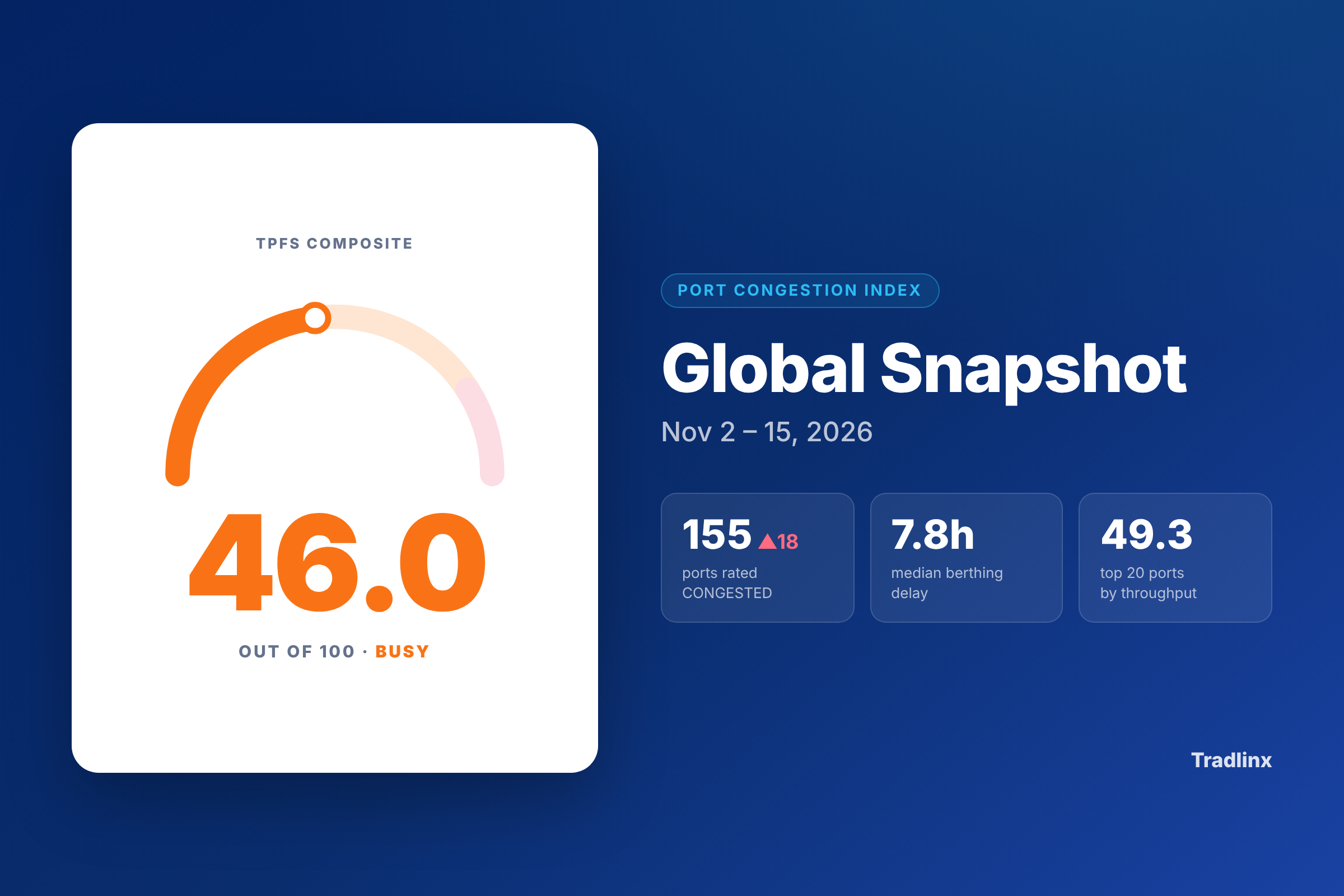
Leave a Reply