
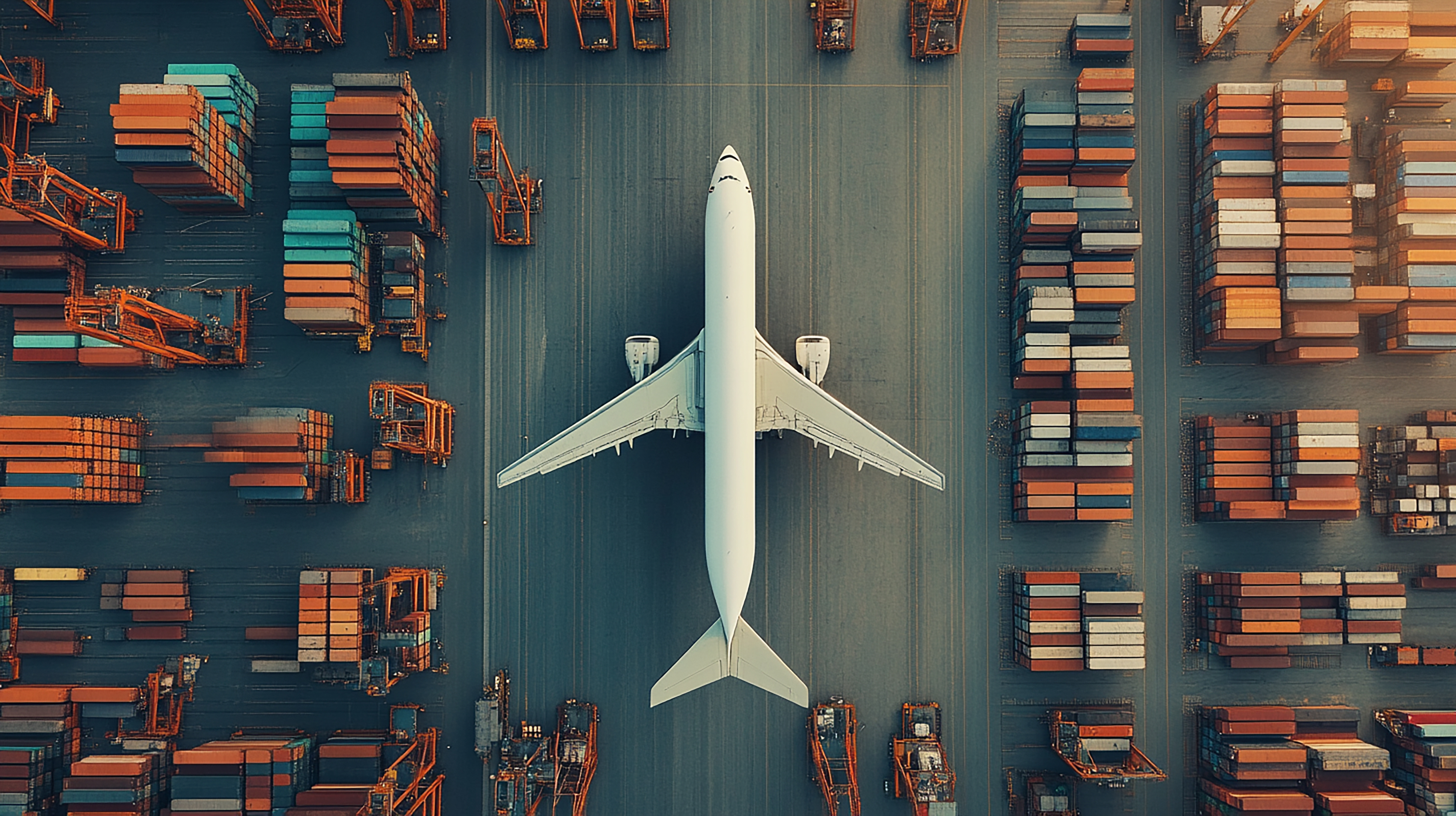
Freight costs are surging, regulatory policies are tightening, and global supply chains are undergoing a major transformation. For years, air cargo dominated e-commerce logistics, ensuring speed and flexibility. But in 2025, businesses are re-evaluating their reliance on air freight as rising costs, tariffs, and supply chain disruptions force a shift toward ocean freight.
The logistics industry is now dealing with:
- New U.S. Tariffs & De Minimis Rule Changes: Duty-free e-commerce imports are gone, increasing customs costs and reducing the appeal of air freight.
- Record-High Air Cargo Rates: Despite post-peak declines, rates remain historically elevated.
- Shifting Demand & Carrier Capacity Challenges: E-commerce-driven air cargo is losing share to ocean freight.
So, are we seeing a temporary correction or a long-term shift toward ocean freight dominance?
This post breaks down:
- Why businesses are pivoting from air to ocean freight
- How U.S. policies are accelerating this transition
- Rate trends & capacity shifts across key trade lanes
- What LSPs and shippers must do to stay ahead
1️⃣ Why Shippers Are Moving from Air to Ocean Freight
From rising cost pressures to changing regulations, the air freight industry is facing multiple challenges, pushing many businesses toward cheaper and more sustainable ocean shipping.
📉 The Rising Cost of Air Freight
Air cargo rates have fluctuated in response to global demand shifts, geopolitical tensions, and supply constraints. Despite seasonal post-holiday declines, rates remain historically high compared to pre-pandemic levels.
| Air Freight Rate Trends (Q1 2025) | Impact on Logistics |
|---|---|
| Baltic Air Freight Index (BAI00) ↑ 12.8% YoY | Global air cargo rates continue to rise, though growth is slowing. |
| China-U.S. Rates ↓ 9% from December Peak | Lower post-peak demand, but still higher than pre-pandemic averages. |
| South Asia-Europe Rates ↑ 70% | Geopolitical disruptions in the Red Sea are forcing costly rerouting. |
| Latin America-U.S. Rates Remain Elevated | Continued strong demand supports high air cargo prices. |
Key Takeaway: Air freight remains a premium option, but sustained high costs are leading businesses to explore alternatives like ocean freight.
📦 The U.S. E-Commerce Tariff Shift
The U.S. de minimis rule change is another major factor accelerating the shift from air to ocean freight.
- Elimination of $800 Duty-Free Threshold: E-commerce shipments now face full tariffs and customs processing.
- Increased Customs Complexity: More paperwork, higher compliance costs, and longer processing times.
- Shift to Bulk Ocean Freight: Large e-commerce platforms like Shein & Temu are prioritizing containerized shipments.
Example: Previously, a direct-to-consumer shipment from China under $800 could enter the U.S. duty-free. Now, it requires full customs filings and applicable duties, leading shippers to consolidate goods into bulk ocean freight shipments.
Market Reaction:
- Chinese exporters shifting low-value e-commerce shipments to ocean freight.
- More regional fulfillment centers opening in the U.S. and Mexico to avoid import delays.
- Retailers using bulk shipping + regional inventory storage to manage increased customs complexity.
Key Takeaway: With air freight no longer a cost-effective option for low-value goods, e-commerce giants are investing heavily in ocean freight and nearshoring strategies.
2️⃣ Ocean Freight Trends & Market Reactions
As air freight costs rise and e-commerce logistics shift, ocean freight has become the preferred alternative for many shippers. However, this transition comes with its own challenges—port congestion, geopolitical risks, and volatile shipping rates all play a role in shaping the market.
🚢 Global Ocean Freight Market in 2025: Demand vs. Capacity
After years of pandemic-induced volatility, the ocean freight market is entering a period of adjustment. While demand remains high due to the e-commerce shift, the industry faces mixed signals as supply chains rebalance.
| Key Ocean Freight Trends (2025) | Impact on Logistics |
|---|---|
| Trans-Pacific Spot Rates Remain Elevated | Despite some post-peak declines, rates are still higher than pre-pandemic levels. |
| Increased Ocean Capacity (10.4% Growth in 2024) | New vessel deliveries help stabilize rates, but regional congestion remains a concern. |
| Port Congestion in Key Hubs | Increased demand for ocean freight is straining U.S. West Coast and Southeast Asian ports. |
| Geopolitical Disruptions (Red Sea, Panama Canal) | Rerouted shipments increase transit times and costs, particularly for Asia-Europe lanes. |
Key Takeaway: The ocean freight market is stabilizing in some areas, but rate fluctuations and geopolitical disruptions require shippers to be strategic in routing and inventory planning.
🌎 The Shift from Air to Ocean: Regional Freight Rate Changes
With more shippers transitioning low-value goods to ocean freight, regional rate trends are shifting. Some markets remain elevated due to strong demand, while others are experiencing post-peak corrections.
- 📈 South Asia–Europe: Rates up 70% due to Red Sea disruptions forcing reroutes.
- 📉 Trans-Pacific: Rates slightly down, but still above pre-pandemic levels.
- 📊 Latin America–U.S.: Rates remain elevated due to strong demand.
- 🔄 Africa: Sea freight rates have dropped by 14% as congestion eases.
Example: A typical trans-Pacific container shipment that cost $2,500 pre-pandemic now averages $3,800–$4,500 due to supply chain shifts.
🚢 How Shippers Are Adapting to the Shift
With changing freight economics, shippers are re-evaluating their supply chain strategies to maintain efficiency and cost-effectiveness. The key adjustments include:
- 🛳️ Increasing Ocean Freight Contracts: Long-term contracts help secure stable rates.
- 📦 Expanding Regional Warehousing: To offset longer ocean transit times.
- 🔄 Modal Shifts: Some shippers opt for hybrid sea-air models for balance.
- 📈 Digital Freight Platforms: Real-time tracking and AI-powered analytics aid in optimization.
Case Study: A major e-commerce retailer previously relied on air freight for 80% of shipments. In 2025, they’ve reduced this to 40% by leveraging fast ocean freight services and increasing nearshore inventory in Mexico.
📉 Will Ocean Freight Costs Continue to Drop?
Despite easing congestion in some regions, experts predict ongoing volatility in ocean freight pricing due to:
- 💰 Fuel Price Fluctuations: LNG and sustainable fuels could drive up costs.
- ⚠️ Geopolitical Risks: Red Sea, Suez Canal, and Panama Canal disruptions continue.
- 📈 Port & Labor Issues: Strikes and infrastructure constraints could impact rates.
Market Outlook: While certain lanes may see cost reductions, overall rate stabilization will depend on supply chain resilience and geopolitical developments.
4️⃣ Future Outlook & Market Predictions
As we move deeper into 2025, global trade disruptions, regulatory shifts, and changing consumer demand will continue to reshape logistics strategies. Shippers and logistics service providers (LSPs) must prepare for evolving freight trends and long-term structural changes in supply chains.
📈 5 Key Predictions for 2025 & Beyond
1️⃣ Freight Rate Volatility Will Continue
While ocean freight rates stabilized post-peak season, continued geopolitical tensions and economic uncertainty will drive fluctuations in pricing. Key trends include:
- 🌍 Regional disruptions: Red Sea instability and port congestion in the U.S. & Europe may spike short-term rates.
- 📉 Overcapacity concerns: New vessel deliveries could soften ocean freight rates in H2 2025.
- 🚀 Air cargo recovery? Excess air capacity from e-commerce shifts may lead to short-term rate dips.
2️⃣ E-Commerce & Nearshoring Will Reshape Supply Chains
With new U.S. de minimis rules and rising tariffs, e-commerce giants are shifting from direct China-to-U.S. shipping to nearshoring in Mexico, Canada, and Latin America. Implications:
- 📦 More regional fulfillment centers in North America.
- 🚢 Port diversification to reduce reliance on transpacific shipping.
- 🏭 Shift in supplier networks toward Southeast Asia & LATAM.
| Region | Key Trend | Impact on Logistics |
|---|---|---|
| Mexico | Nearshoring growth | Increased cross-border trucking demand |
| Vietnam & India | Alternative to China | Rising ocean exports to Europe & U.S. |
| LATAM | Manufacturing investment | More regional trade flows, reduced transpacific dependence |
Key Takeaway: LSPs must adjust freight strategies to serve nearshoring trends and rising regional trade flows.
3️⃣ Carbon Emission Costs Will Reshape Logistics
With carbon pricing regulations expanding worldwide, shippers will pay higher costs based on emissions intensity. Key regulatory developments:
- 💰 EU Emissions Trading System (ETS): Extends to shipping in 2024, adding ~$10M annual costs per large container ship.
- 📜 CBAM (Carbon Border Tax): Raises import costs for high-emission products.
- 🌱 Sustainability pressure: More shippers demand low-carbon shipping options.
4️⃣ Digitization Will Drive Logistics Efficiency
AI and real-time freight platforms are becoming critical for cost control, efficiency, and resilience. Trends include:
- 📡 AI-driven route optimization: Reducing transit times by up to 15%.
- 🔄 Predictive demand forecasting: Helps manage freight allocation & pricing.
- 📦 End-to-end cargo tracking: Enhances supply chain visibility & risk management.
Takeaway: LSPs using AI-powered platforms will outperform competitors in efficiency and cost control.
5️⃣ Capacity Management Will Be Key to Cost Savings
As supply chains rebalance, logistics providers must align capacity planning with long-term trends:
- 📦 Contract-based freight booking will reduce rate volatility.
- 🚢 Carriers will slow vessel expansion to avoid overcapacity risks.
- ✈️ Air cargo will stabilize as shippers shift some volume back.
Final Thoughts: Preparing for the Future
With freight rate volatility, regulatory changes, and shifting trade routes, LSPs and shippers must stay ahead of market dynamics. The winners in 2025 will be those who:
🔹 Lock in stable rates via long-term contracts.
🔹 Optimize regional trade lanes as nearshoring grows.
🔹 Invest in digitization & AI for freight efficiency.
🔹 Prepare for rising carbon costs with low-emission logistics.
Those who adapt now will maintain resilience and cost efficiency in the face of uncertainty.

Here is a list of reputable sources that can be used as references to back the data and claims in the blog post. These sources provide insights into the de minimis rule changes, air and ocean freight trends, and their impacts on logistics and supply chains:
References
- CBP Proposes New Rule to Strengthen Enforcement and Limit Duty-Free Shipments – CBP
- Global Freight Market Trends: February 2025 Update – FreightWaves
- Baltic Air Freight Index (BAI): February 2025 Report – TAC Index
- Ocean Freight Market Outlook: February 2025 – Drewry Shipping Consultants
- What to Know About De Minimis Rule Changes – C.H. Robinson Blog



Leave a Reply