
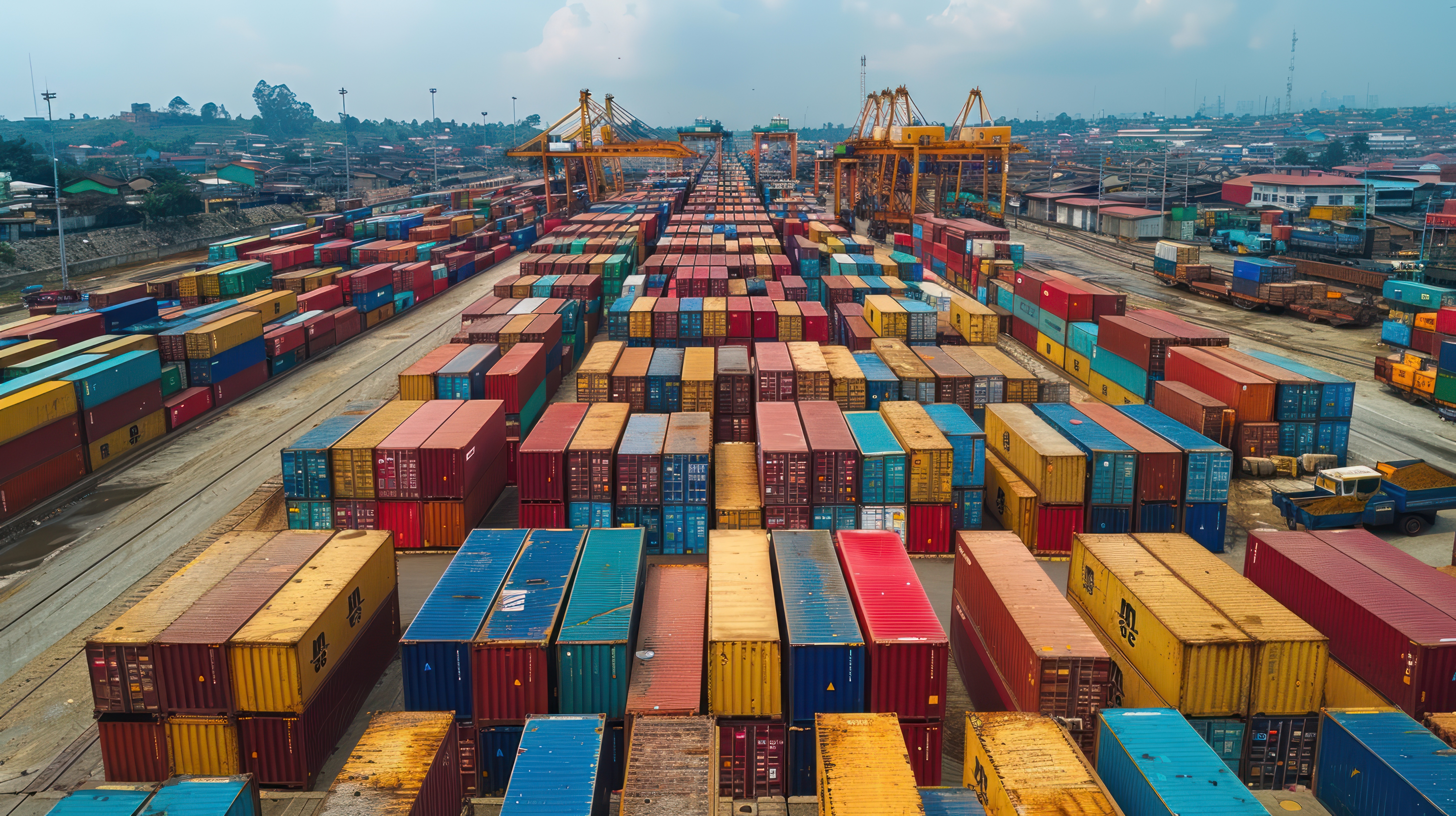
Container gate operations at Shanghai and Ningbo-Zhoushan restarted between 10 and 11 August, after Typhoon Dolphin came ashore on the Zhejiang coast near Yuhuan on the afternoon of 9 August. Linerlytica puts more than 2.4 million TEU of containership capacity waiting across North Asia and expects the queue to take weeks to clear.
A reopening notice covers one thing, which is whether the terminal is accepting trucks. The values that decide whether a container makes its sailing sit at booking level, and each of them moved during the closure without reference to the port’s operating status.
What Reopened, and When
| Port area | Laden gate-in and gate-out | Empty containers | Berth wait, as of 11 Aug |
|---|---|---|---|
| Shanghai, Yangshan (Shengdong, Guandong, Shangdong) | 08:00, 11 Aug | 10:00, 11 Aug | 5 to 8 days |
| Shanghai, Waigaoqiao and domestic areas (Pudong, Zhendong, Hudong, Mingdong, Yidong, Luodong) | 02:00, 11 Aug | 08:00, 11 Aug | 5 to 8 days |
| Ningbo-Zhoushan (Beilun, Meishan, Daxie, Yongzhou) | 16:00, 10 Aug | Progressive, by terminal yard condition | 3 to 5 days |
| Wenzhou and Jiaxing (Zhuangyuanao, Jinyang) | Phased, following municipal clearance | Phased | Not stated |
The Queue Behind the Gate
More than 800 commercial vessels anchored off Ningbo during the storm and are now re-entering pilotage channels. Yard density across the Shanghai terminals sits between 75% and 90% as queued import and export boxes move through the gates, and access roads around Waigaoqiao and Yangshan are carrying heavy truck queues.
Individual berths are running well past the port-level average. UK forwarder Beckchoice reported that its local agent was seeing waiting times at some Yangshan berths reach up to 12 days, with gate-in appointment availability limited. That is a single-agent reading against SEKO’s 5 to 8 day port-level expectation, so treat it as the tail rather than the median.
Linerlytica reports the congestion has spread down the eastern seaboard as far as the Guangdong ports, which had already absorbed the impact of Typhoon Noul.
The Backlog Did Not Start With Dolphin
Dolphin is the third and strongest tropical storm to hit China in five weeks, after Bavi and Noul. Following Bavi’s landfall on 11 July, Linerlytica estimated roughly 2 million TEU of containership capacity delayed across North Asian waters, a figure we covered in our 31 July read on ports still clearing July backlogs.
The comparable readings show that North Asian congestion remained elevated after Bavi and has surged again following Dolphin. The important point for recovery planning is that Dolphin arrived before the earlier schedule disruption had fully washed through the network. A recovery plan built on how long a single typhoon backlog takes to clear will run short, because the starting point was already elevated.
The counterweight is throughput. Xeneta points out that Shanghai has handled more than 200,000 container moves in a single day, and the port complex set a record of 203,881 TEU on 1 August. Chinese gateways absorb volume faster than the anchorage count alone suggests.
ETB-7 Turns a Berth Delay Into a Gate Rejection
The mechanism that converts a berth queue into a landside cost is the ETB-7 gate rule, currently active at the Shenzhen terminals. Gate-in is limited to export laden containers arriving within seven days of the vessel’s estimated time of berthing. When the ETB slips, the eligible window slides with it, and a container trucked to the original plan arrives outside the window and is refused at the gate.
The costs land off-dock. SEKO reports drop-off fees, chassis detention and truck waiting surcharges escalating as queued trucks re-enter terminal access roads. Shekou is also capping export intake at 120% of the carrier’s maximum single-voyage load recorded over the previous three months, and Yantian is running a daily appointment quota of roughly 9,000 TEU.
This matters most to shippers doing the obvious thing. Diverting East China volume to Shenzhen gateways puts that cargo into ETB-7 controls, with Shekou also operating an intake cap and Yantian a daily appointment quota, while the ports are already absorbing additional diverted volume.
If your team is re-validating gate appointments and vessel ETBs terminal by terminal this week, walk through how ops teams get milestone and exception alerts across carriers in one view.

Six Fields to Re-Check Before Dispatch
- Vessel ETB and ETD. A port being operational does not confirm that an individual sailing operates as originally scheduled. Berth windows are being re-sequenced as the anchorage clears.
- Gate appointment validity. Appointments issued before the closure may no longer be live. SEKO’s instruction is to revalidate trucking appointments, container dispatches and gate windows prior to dispatch.
- Empty return depot. Temporary depot shifts are active during post-storm container rebalancing, so the return location on the original booking may have moved.
- CY cut-off. CH Robinson advised customers to expect changes to cargo cut-offs and container return windows alongside a pause in depot operations.
- Port rotation. Beckchoice warned that lines may omit Shanghai depending on operational conditions and individual carrier arrangements, and flagged rising risk of rolled cargo and containers bumped from scheduled sailings. SEKO raised the same possibility of vessel blanking and port omissions at Ningbo.
- Onward connection. Feeder, barge and transshipment legs are re-sequencing behind the mother vessels, so a booking that clears the load port can still lose time downstream.
Where the Delay Moves Next
Yangtze River feeder connections are carrying 2 to 4 days of lingering transit delay as mother vessels re-sequence at the main ports. On SEKO’s 10 August reading, before the gates reopened, Yangtze and Pearl River Delta feeder connections were running 3 to 7 days behind on mother-vessel omissions and navigation controls.
The spillover reaches the regional transshipment hubs. As of 10 August, Busan BNCT yard density was around 98% with waiting times of 1.5 to 2 days and PNIT reaching up to 80 hours, Singapore was averaging 1 to 2 days with up to 60 hours on selected long-haul services, and Manila feeder delays averaged 2 to 3 days. Qingdao is running 2 to 3 days; SEKO’s 10 August update also cited scheduled dredging at QQCTU as restricting berth availability.
The practical consequence is that watching the load port status page understates the exposure. A box that gates in on time at Ningbo can still miss its connection at Busan.
What the Rate Indices Are Telling You
Transpacific pricing moved sharply on 11 August. The Freightos Baltic Index put Asia to US West Coast up 11% to $6,826 per FEU, and Asia to US East Coast up 1% to $9,144 per FEU, a new high for the year. Freightos chief analyst Judah Levine described East Coast rates running to a new high of $9,400 per FEU so far that week, with the West Coast at about $7,400. The Loadstar, the same day, had Shanghai to US East Coast past $10,000 per 40ft and Shanghai to US West Coast holding above $7,000.
Three East Coast figures roughly $900 apart in a single day is a reminder about what an index measures. Assessments differ by lane definition, load port and publication cadence, and none of them describes the sailing your container is booked on.
Europe is moving the other way. Linerlytica has North Europe spot at $4,300 to $4,900 per FEU with a downward bias and reports softening cargo demand that dashed hopes of a mid-August increase. Xeneta shows a similar North European level with Mediterranean cargo around $5,800 per FEU, and both trades expected to flatten into late August. Peter Sand of Xeneta is also sceptical that the Suez reroutings are connected to the Asian congestion at all, noting it would not be a quick fix and that he would hesitate to link the two events.
For a planner with cargo in the queue, the index is the lagging read. The berth window, the gate appointment and the port rotation are the live ones.
Further Reading
- Tropical storms bring congestion and cargo backlogs at Asian ports (The Loadstar, 11 August 2026)
- Asian port congestion forcing container lines back to the Red Sea (Seatrade Maritime News, 11 August 2026)
- Asia Supply Chain Weather Center, Typhoon Dolphin terminal reopening and phased recovery update (SEKO Logistics, updated 11 August 2026)
- Asia-US East Coast box rate hits new high of $9,400 (FreightWaves, 11 August 2026)
- Typhoon Dolphin hits eastern China, more than one million evacuated (Al Jazeera, 9 August 2026)
- China’s main ports suspending operations as super typhoon approaches (The Maritime Executive, 8 August 2026)
Gate resumption times, berth waiting ranges, yard density and regional spillover figures are as compiled by SEKO Logistics from SIPG terminal notices and Ningbo-Zhoushan port bulletins, with current-status values as of 11 August 2026 and spillover values as of 10 August 2026. The more than 2.4 million TEU waiting-capacity estimate across North Asia and the North Europe spot range are Linerlytica figures published 11 August 2026. Freightos Baltic Index values and the Freightos analyst commentary are as reported by FreightWaves on 11 August 2026; The Loadstar’s Shanghai lane figures are from the same date and use different lane definitions. The 12-day Yangshan berth reading is a single forwarder agent report. Conditions in a post-storm recovery change daily, so confirm terminal status, gate windows and vessel schedules against your carrier and terminal before dispatching.
Need help interpreting this disruption or your shipment?
For a quick question, chat with Tradlinx on WhatsApp. For a deeper discussion, book a time below.
Prefer email? Contact us directly at min.so@tradlinx.com (Americas), sondre.lyndon@tradlinx.com (Europe), or henry.jo@tradlinx.com (EMEA/Asia).



Leave a Reply