
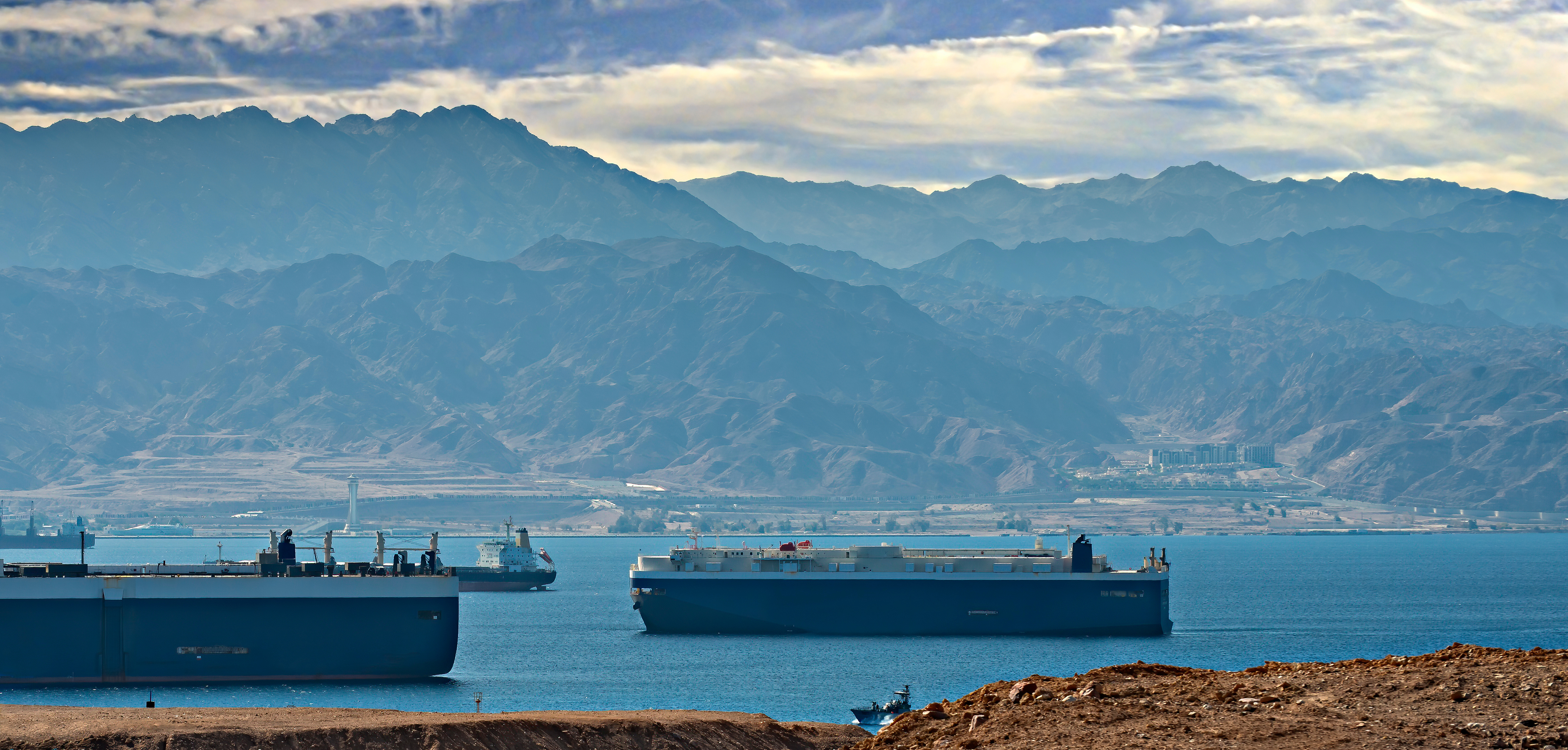
DP World’s flagship container complex handled 374,000 TEU in the second quarter of 2026, against roughly 3.8 million TEU in the same quarter a year earlier. The displacement of Gulf cargo has been visible since February. What changed this week is that DP World put measured numbers on the impact at Jebel Ali while showing how the rest of its network has performed around it.
For anyone quoting, budgeting or tendering Gulf cargo, the operational point is not simply that Jebel Ali volume fell 90.1%. It is that the terminal itself remains operational while access conditions continue to reshape the route a container may actually take.
What DP World Reported
| Measure | H1 or Q2 2026 | Change year on year |
|---|---|---|
| Jebel Ali, Q2 container throughput | 374,000 TEU | Down 90.1% |
| Jebel Ali, Q1 container throughput | 2.77m TEU | Down 30.5% |
| Group gross container throughput, H1 | 42.8m TEU | Down 5.7% |
| Group gross throughput excluding Jebel Ali, H1 | 39.7m TEU | Up 5.4% |
| Revenue, H1 | US$12.7bn | Up 13.1% |
| Adjusted EBITDA, H1 | US$2.86bn | Down 5.6% |
| Profit, H1 | US$585m | Down 39.1% |
Group CEO Yuvraj Narayan put the wider network effect directly: excluding Jebel Ali, container volumes rose 6.5% on a like-for-like basis and adjusted EBITDA rose 9.7%, with growth across Africa, the Americas, Asia Pacific and Europe.
That does not mean every TEU lost at Jebel Ali simply appeared somewhere else. Middle East trade itself has also contracted. But carriers have rerouted substantial Gulf flows through alternative ports and inland networks, while DP World’s wider portfolio continued to grow.
Jebel Ali Is Fully Operational
This is the part that gets misread. DP World states that Jebel Ali remains fully operational and has suffered no physical infrastructure damage. A debris-related fire in March caused a brief precautionary suspension before operations resumed. Cranes, yard capacity and gate operations are not the underlying reason volumes have collapsed.
Vessel access is the constraint. Traffic through the Strait of Hormuz has remained at a fraction of pre-war levels since the conflict began on 28 February, and Jebel Ali sits inside the strait. A port status check can therefore show a functioning terminal while the vessel network needed to reach it remains heavily disrupted.
That distinction changes the recovery condition. A terminal problem resolves when the terminal is repaired. An access problem depends on the security and navigation conditions in the waterway outside the terminal operator’s control.
Where the Volume Is Being Handled
Lines have been connecting into the UAE through Fujairah, Khor Fakkan and Omani ports with overland connections onward into the Arabian Gulf, while Saudi Red Sea ports have also taken a larger role in regional routing. Maersk described the same pattern in its Q2 results: Logistics & Services growth was led by landside operations, supported by landbridge solutions connecting ports across the Gulf region.
The carrier-by-carrier routing rules behind those chains are set out in our earlier breakdown of where Gulf containers actually discharge now, including the Maersk rule that reroutes Jeddah-booked cargo via Khor Fakkan when the consignee sits outside Saudi Arabia. Those rules have not been superseded by this week’s results.
What the results add is scale. With Jebel Ali handling only 374,000 TEU during the quarter, alternative routing chains are operationally significant rather than edge cases. The number does not tell us what share of cargo followed any one alternative route, but it makes the visibility problem clear: a box may move through a transshipment call, a land bridge across a national border and another regional handoff before reaching its destination.
If your Gulf bookings now clear through Fujairah, Salalah or Khor Fakkan before an overland leg, walk through how ops teams hold container-level milestones together across transshipment and inland handoffs.

The Red Sea Recovery Runs Through a Different Strait
Maersk used its Q2 reporting to confirm it is moving toward a fuller return of container services through the Bab el-Mandeb and Suez Canal. Four services were operating through the corridor by mid-August, accounting for roughly a third of the traffic Maersk would ordinarily route that way. An advisory on 10 August moved the AE19 service back to the trans-Suez routing with immediate effect, starting with Berlin Maersk voyages 628W and 637E.
None of that restores normal access to Jebel Ali. The Bab el-Mandeb and the Strait of Hormuz are separate waterways with separate security situations, and a service restored to Suez does not restore normal access to the Arabian Gulf.
| Waterway | Transits, 10 August | Transits, 11 August |
|---|---|---|
| Strait of Hormuz | 17 | 16 |
| Bab el-Mandeb | 40 | 36 |
On both days the Bab el-Mandeb carried more than twice the traffic recorded through Hormuz. The AE19 connects Asia, the Mediterranean, Saudi Arabia and Europe, which makes its restoration primarily a Red Sea and Suez network development. Treating a Suez announcement as evidence that Upper Gulf routing has normalised risks confusing two different chokepoints.
Fujairah Adds a Multi-Year Alternative Gateway
In July, DP World reached an agreement in principle with the Fujairah Ports Authority for two terminals on the UAE’s east coast under a 50-year concession: the Al Rugaylat container and multi-purpose terminal, designed for 2.5 million TEU a year, and the Dibba General Cargo terminal. Once operating, the development would lift DP World’s UAE container capacity from 19.4 million TEU to almost 22 million TEU and connect the east-coast gateway with Jebel Ali through DP World’s inland logistics network.
The construction timeline matters for capacity planning. DP World says development will be delivered in phases, with construction expected to take approximately 24 to 30 months from commencement. A commencement date has not been announced, so there is currently no firm opening date to put into a routing plan.
What that timeline does not tell us is how long the present Hormuz disruption will last. DP World describes Fujairah as additional capacity supporting long-term trade growth, customer choice and supply-chain resilience. The 50-year concession and multi-year build are infrastructure decisions, not a forecast that the current restrictions at Hormuz will persist for years.
The planning implication is narrower but still useful: alternative UAE gateway capacity will expand over a multi-year horizon, while the timing of any return to normal direct Gulf routing remains a separate security question.
What to Re-Check While Rerouting Remains the Baseline
The near-term operational checks on Gulf bookings have not changed. But once alternative routing survives long enough to enter another tender, budget or contract cycle, several temporary workarounds need to be treated as recurring planning assumptions.
- Tender and contract validity against routing assumptions. Rates tendered on a pre-February routing may rely on a transport path that no longer matches current operations. Confirm whether your contract prices the chain your cargo actually moves on.
- Budget treatment of reroute costs. Rerouting charges, land bridge legs and intermediate handling have persisted through much of 2026. If they continue into the next planning cycle, carrying them only as exceptional variance can understate expected logistics spend.
- Free time at intermediate hubs, negotiated rather than disputed. Storage and Demurrage & Detention exposure can arise at transshipment or land bridge stops that were not part of the original routing. Settle applicable terms at contract level where possible instead of relying on invoice-by-invoice disputes.
- Discharge port of record on new bookings. Confirm which port appears on the B/L versus which port physically handles the box, and which contractual milestone or location governs the applicable free-time clock.
- Equipment repositioning across borders. Empties returning through a different country than the import gateway can change turn times and depot terms. Confirm the return location per booking.
- Your own reversal trigger. Decide in advance what would signal a genuine change: sustained recovery in Hormuz transit counts and carriers publishing restored direct Gulf calls. A Suez or Red Sea headline by itself is not that signal.
Further Reading
- DP World revenue rises 13.1% to $12.7 billion as global portfolio navigates trade disruption, DP World
- DP World to expand UAE gateway network with new Fujairah terminals, DP World
- Jebel Ali volumes plummet 90.1% in second quarter, Seatrade Maritime News
- DP World H1 profit, throughput hit by Hormuz impact at Jebel Ali, WorldCargo News
- Maersk delivers strong Q2 and raises full-year guidance, Maersk
- Structural changes to AE19 Gemini service, Maersk
- Hormuz transits fall to 16 ships on Aug. 11, Hellenic Shipping News
Jebel Ali quarterly throughput, group gross throughput, revenue, adjusted EBITDA and profit figures are from DP World’s H1 2026 results published on 13 August 2026. DP World reported Jebel Ali throughput of 2.770 million TEU in Q1 and 374,000 TEU in Q2, for 3.145 million TEU in H1. Group gross throughput was 42.826 million TEU, down 5.7% as reported, while gross throughput excluding Jebel Ali was 39.681 million TEU, up 5.4% as reported and 6.5% like-for-like. Fujairah concession terms and the 24 to 30 month construction estimate are from DP World’s July 2026 announcement; no commencement or opening date has been published. Transit counts are single-day figures for all vessel types from an S&P Global Commodities at Sea report dated 12 August 2026 and are indicative rather than a trend. Carrier routing rules and surcharge levels in this region have changed on short notice throughout 2026. Confirm against your own carrier advisory and contract before booking.
Need help interpreting this disruption or your shipment?
For a quick question, chat with Tradlinx on WhatsApp. For a deeper discussion, book a time below.
Prefer email? Contact us directly at min.so@tradlinx.com (Americas), sondre.lyndon@tradlinx.com (Europe), or henry.jo@tradlinx.com (EMEA/Asia).
“`


Leave a Reply