
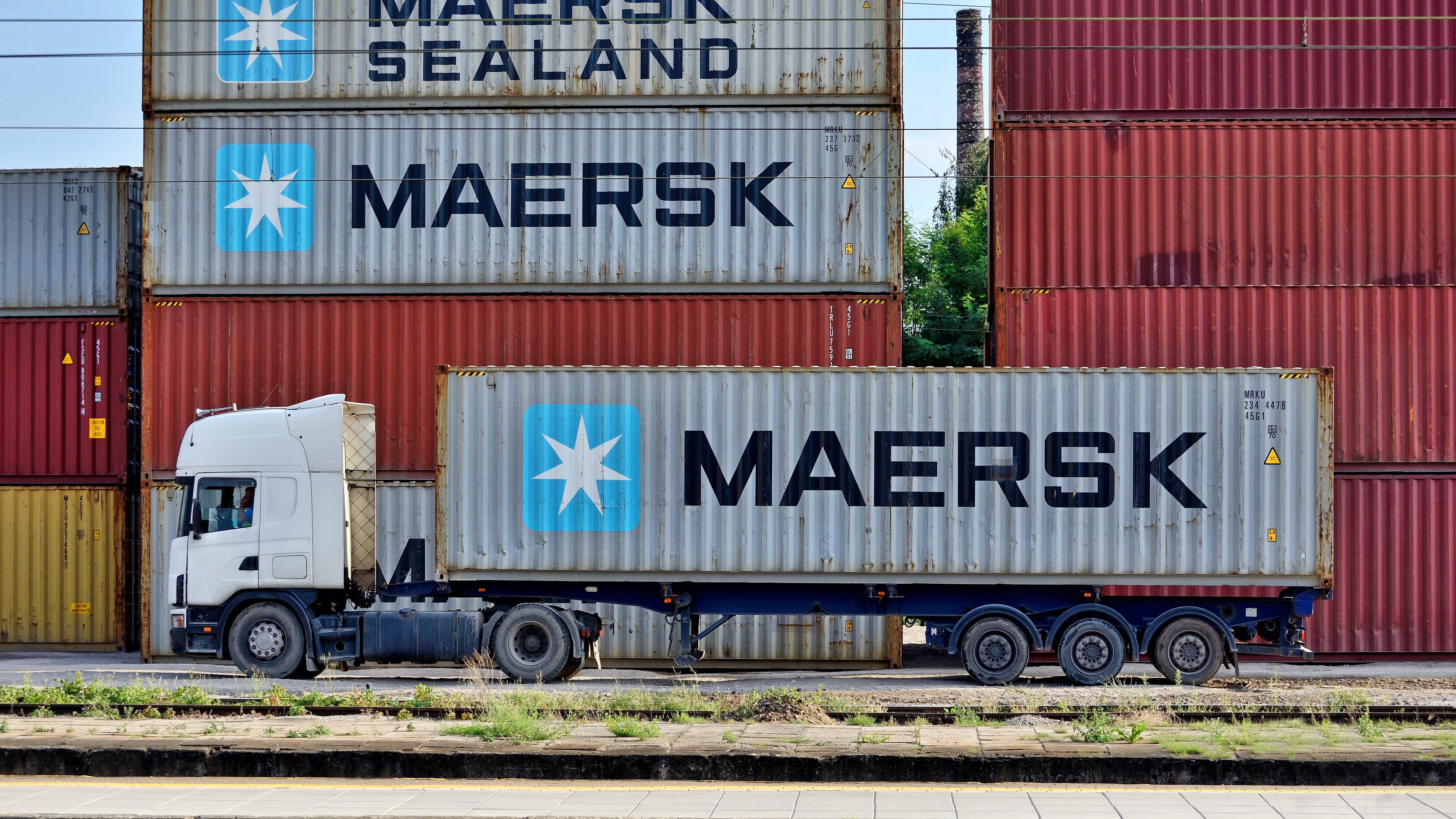
If you have containers heading through Durban, the vessel ETA on your booking is a weak basis for fixing truck and warehouse slots. Kuehne+Nagel’s 2 November update put average anchorage waiting time for container vessels at 7.46 days over the previous seven days, with 17 vessels and almost 85,000 TEU of capacity waiting. It does not expect meaningful improvement until towards the end of Q1 2027.
Maersk has offered some relief, adding one day of import detention free time at all Durban terminals through 31 December. But planning around that allowance takes more than arranging collection. Maersk’s South Africa terms include combined import detention calculated from full-container discharge until empty gate-in. Teams need to follow when each container comes off the vessel, when it becomes collectable and whether delivery, unloading and empty return can fit within the applicable free period.
Durban’s Delay Depends on Who Is Counting
| Measure | Reading | Scope | Source |
|---|---|---|---|
| Average wait at anchorage | 7.46 days | Container vessels, seven days to 2 November | Kuehne+Nagel |
| Average arrival delay | 6.02 days | Container vessels, last 30 days | Kuehne+Nagel |
| Average departure delay | 5.59 days | Container vessels, last 30 days | Kuehne+Nagel |
| Vessels waiting | 6 in anchorage areas, 11 further offshore | 2 November; almost 85,000 TEU of capacity combined | Kuehne+Nagel |
| Average wait at anchorage | About 12 days | Given in remarks on Durban Gateway Terminal, published 1 November | SAAFF, via Daily Maverick |
| Average port call | 8 days 8 hours | 12 to 18 October, from anchorage arrival to berth departure | Crickmay, via Freight News |
No single figure here describes your container. The 85,000 TEU represents the waiting vessels’ nominal capacity, not the number of TEU due to be discharged in Durban. Anchorage waiting, schedule delay and total port-call duration also measure different parts of the disruption.
The port-wide average also blends terminals with different problems. In its October update, Kuehne+Nagel reported berth delays at Pier 2, now Durban Gateway Terminal (DGT), ranging from roughly three days to more than a month depending on the service. Pier 1 was recording waits of around one to more than two weeks, with two cranes unavailable for a prolonged period. Separately, Freight News reported on 29 October that Transport Minister Barbara Creecy had counted 39 ships at anchorage on arriving in KwaZulu-Natal. Transnet told her only eight were waiting for DGT. That report does not break the 39 down by ship type.
One vessel shows how this reaches a booking. In its 2 November update, Kuehne+Nagel said the 9,326-TEU APL Charleston had been waiting off Durban since 21 October, with a predicted arrival of 4 November, about two weeks after joining the queue. The cost can land well inland. Zoeller Waste Trucks stopped production while it waited for six containers on two vessels that spent more than a month at anchorage, according to its managing director, quoted by Freight News on 28 October.
If your team is still working out South Africa delivery dates from the ETA on the booking, walk through how ops teams follow anchorage delays, discharge and availability per container.

Recovery Estimates Cover Different Milestones
| Date or timescale | Who says so | What it covers | Condition |
|---|---|---|---|
| Around 17 November | SAAFF model | Hypothetical clearance of the existing queue at about 3,381 moves per day | Assumes no more vessels join. SAAFF says that will not be the case. |
| December 2026 to February 2027 | Minister Creecy | DGT returning to its former performance | New equipment is expected to arrive in December. |
| Towards the end of Q1 2027 | Kuehne+Nagel | Meaningful improvement at Durban | Conditions may fluctuate from week to week. |
| About 12 to 18 months | Arend du Preez, South African Freight and Logistics Association | Major changes, expected when new equipment starts arriving on this timescale | Industry assessment given to Daily Maverick. |
The 17 November date is the easiest to misread. Jacob van Rensburg of the South African Association of Freight Forwarders (SAAFF) describes it as a static-workload result, assuming no further arrivals. With new work arriving at about 3,246 moves per day, SAAFF estimates that clearing the backlog within 30 days would require sustained output of about 5,000 moves per day. DGT’s target is 3,400.
Some conditions have improved. Van Rensburg describes yard conditions as manageable, and DGT’s waterside throughput rose about 9% to 31,149 TEU between 19 and 25 October. He describes this as stabilisation from a depressed base, with no material reduction yet in the vessel backlog. Those results point to continuing waterside pressure even as conditions inside the terminal stabilise.
Seasonal demand may offer limited relief. Kuehne+Nagel notes that demand usually eases from late October through November, but it expects supply constraints to keep conditions elevated this year. Its Q1 outlook is a planning forecast, and individual shipments still need current carrier and terminal estimates.
Calls and Rotations Are Changing Too
- COSCO split calls. Kuehne+Nagel’s October update described COSCO dividing some operations between separate visits, discharging first and loading on a later call. Some vessels were being directed to Durban’s multipurpose terminal, while other calls were discharge-only.
- ONE Resilience on Maersk’s SAECS service. In a 20 October advisory reported by Freight News, Maersk cited Pier 1 delays when changing voyages 638S/642N to Coega, Cape Town, Durban, London. The advisory said imports would be delivered into Cape Town during weeks 43 and 44, with a provisional one-day export stack. Cape Town exports could move to the following vessel if time ran short. This is a dated example of a rotation change; current bookings need the latest carrier schedule and loading confirmation.
- Possible diversion. Freight News reported on 28 October that Zoeller’s second vessel might discharge at Port Elizabeth instead, although that was unconfirmed. Aven Naidu of the PFS Container Division said diverted cargo would then need to be trucked more than 1,000 km to Gauteng, at extra cost and time.
Each of these can change something a planner assumed was fixed: the terminal, the port, the export sailing or the sequence of events on a single vessel. Check ETA updates alongside the carrier’s routing instructions and the actual loading or discharge events for each container.
Free Time Has Different Start and End Points
Days at anchorage do not use up free time on a charge that starts at discharge. As we noted in our breakdown of Durban’s charges, exposure to post-discharge charges depends on what happens after the container comes off the vessel. Terminal collection and empty return are separate deadlines to plan around.
| Charge or arrangement | Published free period | Scope and clock | Validity |
|---|---|---|---|
| Maersk combined import detention | Announced increase from 4 to 5 days | November advisory covers import containers discharged at all Durban terminals. South Africa terms calculate detention from full-container discharge to empty gate-in. | Immediate effect from 2 November through 31 December 2026; advisory states a return to 4 days from 1 January 2027. |
| Maersk import demurrage at DGT | 5 calendar days, up from 3 | GP dry and NOR containers. The import demurrage period ends at full-container gate-out. | Effective 1 October 2026 until further notice. |
| DGT terminal storage | 5 days, from 00:01 on the day after discharge | General-purpose containers on vessels berthing from 1 October 2026; the period runs until terminal gate-out. | DGT plans reductions to 4, then 3 days when operationally practical. The notice gives no implementation dates. |
Where Maersk calculates combined import detention from discharge, collecting the full container does not stop the calculation. The empty must be returned to the agreed location. Confirm the applicable last free day and empty-return instructions before arranging delivery, including the receiving site’s unloading capacity and the depot’s acceptance requirements. Maersk’s general tariff contains longer entitlements and different start triggers for some equipment and destinations, so obtain the shipment-specific terms.
Getting out of the terminal can still consume valuable free time. Aven Naidu said DGT’s landside dashboard for the first half of October showed about one in four trucks waiting more than two hours to enter the yard. Transporters also reported limited truck slots and long depot waits.
Late-December bookings need particular attention. Confirm which free-time period applies if a vessel discharges in January, and how Maersk will handle containers discharged in December but returned empty after year-end. If charges are later disputed, retain the container-level event record described in our guide to the discharge-to-availability gap, together with the applicable terms and evidence of collection or return constraints.
What to Recheck on South Africa Bookings
- ETA movement. For each container on a Durban-bound vessel, compare the current ETA with the one you planned on. Check whether the vessel is at anchorage or further offshore, and obtain the latest expected berth and discharge timing.
- Discharge terminal. Confirm Pier 1, DGT or the multipurpose terminal. Delays differ by terminal and by service, so a port-wide average is a weak basis for a delivery date.
- Discharge port. Ask your carrier or forwarder whether discharge could move to another South African port, and price the inland leg before it is decided for you.
- Export sailings. On split calls and short export stacks, confirm the current stack window and whether your container has actually loaded on the intended vessel.
- Customer dates. Re-base commitments on the latest discharge and cargo-availability estimates, allowing for customs and carrier release, truck access and inland delivery. Kuehne+Nagel advises adding lead-time buffer while congestion persists.
- Year-end free time. Ask Maersk how the 31 December end date applies when discharge or empty return crosses into January. Obtain the applicable last free dates for each charge. Confirm other carriers’ arrangements separately.
- Empty return. Confirm the designated depot, acceptance arrangements and return deadline. For Maersk’s combined import detention, include delivery and unloading time in the plan through empty gate-in.
- Truck and receiving capacity. Reserve capacity provisionally, then firm up collection against confirmed discharge, release and availability. Kuehne+Nagel expects terminals and depots to remain active for receivals through the December holidays, so check staffing, unloading and transport cover now.
Frequently Asked Questions
How long are vessels waiting at Durban?
Published figures differ by source and scope. Kuehne+Nagel reported an average of 7.46 days at anchorage for container vessels in the seven days to 2 November 2026. SAAFF cited about 12 days in remarks on Durban Gateway Terminal, published 1 November. Neither figure establishes the waiting time for a particular vessel.
When will Durban congestion clear?
Published estimates address different milestones. Minister Barbara Creecy expects DGT to return to its former performance between December 2026 and February 2027. Kuehne+Nagel does not expect meaningful improvement at Durban until towards the end of Q1 2027. For individual shipments, obtain current carrier and terminal estimates.
Does time at anchorage use up free time?
Time at anchorage does not consume free time for a charge triggered by container discharge. Where Maersk’s South Africa terms calculate combined import detention from full-container discharge, the period continues until empty gate-in. Collection alone does not stop that clock. Check the applicable start event, last free day and end event for each charge and booking.
Further Reading
- Durban congestion remains severe as vessel queues build offshore (Kuehne+Nagel, 2 November update)
- Durban Port congestion forces carriers to adjust vessel operations (Kuehne+Nagel, October update)
- Transnet and foreign operator face scrutiny over backlog at Durban Gateway Terminal (Daily Maverick, 1 Nov 2026)
- DGT transition timing ‘not good’: Creecy (Freight News, 29 Oct 2026)
- Port bottlenecks deal blow to manufacturers (Freight News, 28 Oct 2026)
- Durban delays force vessel rotation change (Freight News, 20 Oct 2026)
- Temporary Increase in Import Detention Free Time: Durban, All Discharge Terminals (Maersk, 2 Nov 2026)
- Durban Gateway Terminal: Increase in Demurrage Free Days (Maersk, 1 Oct 2026)
- South Africa Demurrage and Detention Terms (Maersk, October 2026 PDF)
- Import Demurrage and Detention Revision: South Africa (Maersk, 13 Mar 2026)
- Update to Standard Storage Periods: OOG, IMDG and General-Purpose Containers (DGT, notice dated 28 Sep 2026)
Waiting, delay and queue figures, the APL Charleston example and the Q1 2027 outlook are from Kuehne+Nagel’s 2 November update; terminal-specific delays and COSCO call changes are from its October update. The SAAFF model, throughput and du Preez’s timing are reported by Daily Maverick, 1 November. Creecy’s remarks are from Freight News, 29 October; the Zoeller and truck-wait accounts are from its 28 October report. The ONE Resilience change and Crickmay port-call average are from Freight News, 20 October. Free-time details are from Maersk’s 2 November and 1 October advisories, its South Africa D&D terms, and DGT’s notice dated 28 September. Forecasts and individual accounts are attributed to their sources. Figures can change quickly. Confirm free time, billing, terminal and vessel status against your carrier’s current notices and shipment-specific terms. Information current as of 2 November 2026.
Need help interpreting this disruption or your shipment?
For a quick question, chat with Tradlinx on WhatsApp. For a deeper discussion, book a time below.
Prefer email? Contact us directly at min.so@tradlinx.com (Americas), sondre.lyndon@tradlinx.com (Europe), or henry.jo@tradlinx.com (EMEA/Asia).



Leave a Reply