

On 25 August, Hapag-Lloyd suspended new bookings to Aden and said it is currently unable to provide a reliable onward connection for cargo destined for the Yemeni port because feeder services have been suspended. In the same week, MSC announced five initial Suez-routed sailings across four East–West services, while two large Maersk containerships transited the canal on 22 August.
Those developments describe different layers of the same network. Mainline carriers are selectively restoring more Suez capacity. At Aden, the feeder connection that takes cargo from a mainline hub to its final port has stopped again. A shipper watching corridor recovery can therefore see more vessels moving through Suez while an individual container remains stranded after discharge because its onward leg no longer operates.
What Hapag-Lloyd filed on 25 August
The advisory is short and its operative line is unambiguous: “New bookings to Aden, Yemen, are suspended until further notice.” For cargo already booked or already moving, the carrier offers three exits, each with a cost or feasibility condition attached.
| Option | What the advisory states | Attached condition |
|---|---|---|
| Redirect | Cargo may be redirected to an alternative Upper Gulf destination | “subject to operational feasibility and applicable charges” |
| Terminate at Jeddah | Cargo already at the Saudi hub may be terminated and cleared there | “subject to applicable customs and regulatory requirements” |
| Return to origin | Cargo may be returned to its origin | “subject to operational feasibility and applicable costs” |
Note what the second option changes. Cargo that was supposed to move onward to Aden may instead terminate in Saudi Arabia and be cleared there, putting it into a different documentary and cost position from the one the original booking assumed. Hapag-Lloyd explicitly makes that option subject to Saudi customs and regulatory requirements. For additional context on the changing clearance position at Jeddah, our Jeddah transit update covers the separate rules affecting Upper Gulf transit cargo. Our Yemen port list covers Aden alongside Hodeidah, Mukalla and Salif.
Why the Gulf of Aden risk picture moved this month
On 24 August, IMO Secretary-General Arsenio Dominguez said that “More than 90 innocent seafarers are now being held captive, their lives subject to constant uncertainty and threat.” The statement followed the hijacking of Seamull on 20 August, which brought the number of vessels then being held by pirates and armed robbers to six.
The six seizures have accumulated over several months. Honour 25 was hijacked on 21 April, Sward on 26 April, Eureka on 2 May and Asana on 17 July. Lutuf was seized on 17 August, followed three days later by Seamull. In the Seamull incident, six armed persons boarded the product tanker about 136 nautical miles east of Al Mukalla and redirected it toward Somalia after a distress call was reported to UKMTO.
None of those six is a mainline container ship, so the transmission into container shipping is not a direct one. It affects the security environment in which smaller operators, crews, insurers and other service providers decide whether a regional leg remains workable.
Hapag-Lloyd does not say piracy specifically caused the Aden feeder suspension. Its advisory attributes the stoppage to the “ongoing regional situation.” The piracy resurgence therefore belongs in the risk picture around the suspension, but it should not be read as a carrier-confirmed explanation for why a particular feeder operator stopped calling Aden.
Aden reopened in March. It has now closed again.
The history matters because the 25 August notice is not simply a continuation of the booking stop imposed in March. Hapag-Lloyd suspended Yemen with a wider group of Middle East destinations on 4 March, then explicitly lifted the Yemen booking stop effective 20 March. The latest advisory therefore represents a renewed Aden suspension after bookings had reopened.
| Date | Hapag-Lloyd filing | What it means for Yemen |
|---|---|---|
| 4 Mar 2026 | Bookings to and from the affected Upper Gulf region were suspended, including Yemen, amid operational and security constraints | Yemen suspended |
| 20 Mar 2026 | Hapag-Lloyd updated the notice to state that the booking stop for shipments to and from Yemen had been lifted | Yemen reopened |
| 21 Apr 2026 (effective 10 May) | JD2 and JD3 suspended until further notice; JD1 and SE4 continued Jeddah coverage, with Aqaba served by feeder connection | Regional network disruption continued, but the notice did not impose a new Yemen booking stop |
| As of 28 Jul 2026 | Upper Gulf bookings available through hinterland options and third-party feeder services for Kuwait, Saudi Arabia, Iraq, Qatar, Bahrain and the UAE | The notice concerned Upper Gulf connectivity; Yemen’s absence from this list is not evidence of a Yemen booking suspension |
| 25 Aug 2026 | New bookings to Aden suspended until further notice because feeder services to Aden are suspended and no reliable onward connection is available | Aden suspended again |
The Upper Gulf reopening also shows how much of the regional recovery depends on intermediate transport rather than a simple return to the old network. Hapag-Lloyd’s July notice says its third-party feeder rotations do not operate on a fixed weekly schedule and remain subject to transit safety conditions. Those arrangements do not describe the Aden feeder specifically, but they illustrate the operating reality underneath a headline such as “bookings reopened”: the mainline, landbridge and feeder components can recover or fail separately.
Mainline Suez restoration does not mean the whole network is restored
Against the Aden suspension, the Suez news points in the other direction. On 24 August, MSC announced a partial restoration of Suez Canal transits on a limited number of East–West services. It identified five initial sailings across four services: Jade eastbound, Albatros eastbound, Himalaya westbound, and Tiger in both directions. The listed departures run from 20 to 31 August, with the transition being implemented service by service.
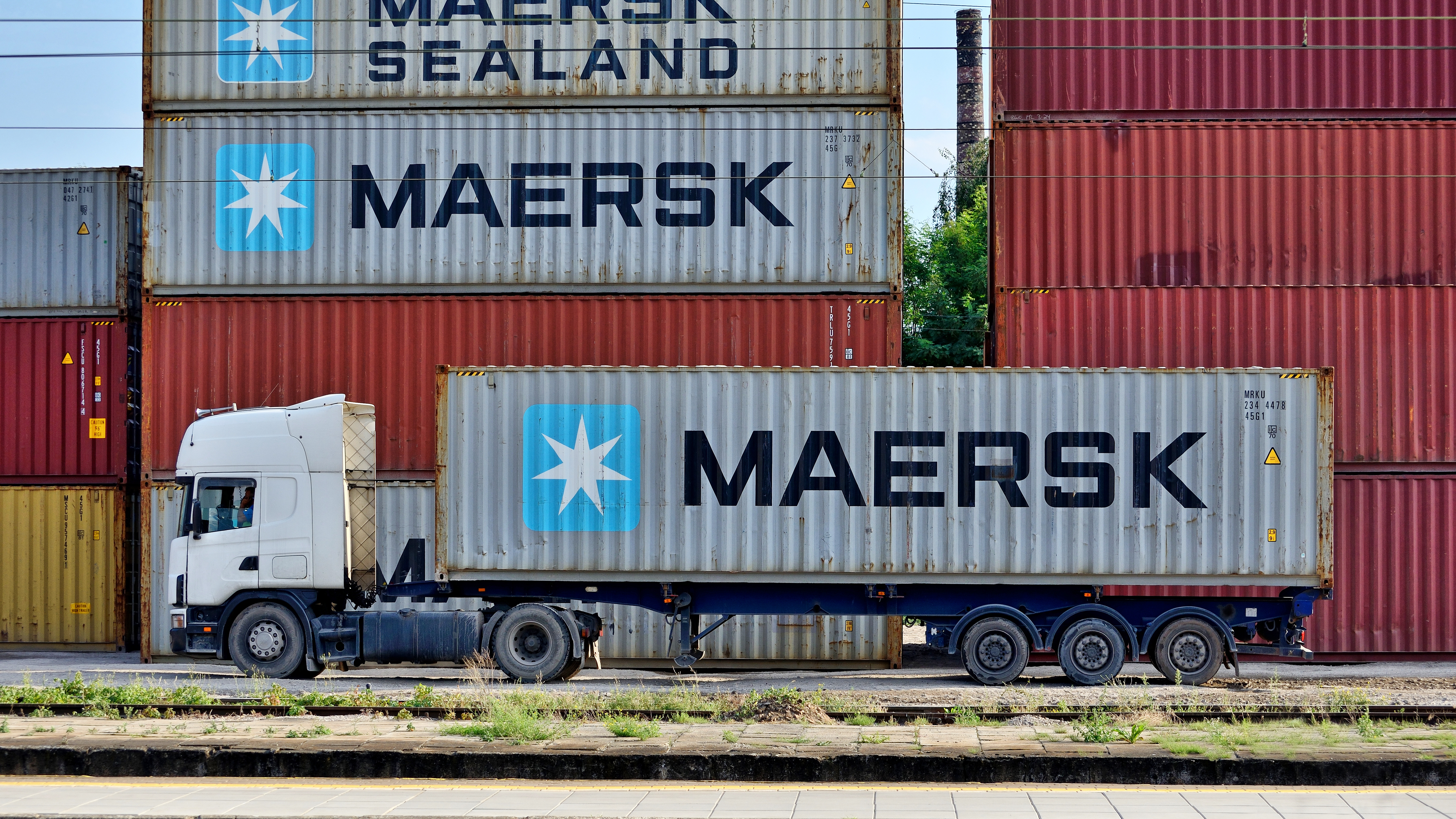
Maersk is also sending more capacity through the corridor. The Suez Canal Authority confirmed that Mathilde Maersk and Bangkok Maersk both transited the canal on 22 August. Bangkok Maersk was making its first Suez transit, sailing from Italy toward Singapore as part of the AE7 service.
Neither carrier describes this as an unconditional return to normal. MSC says protection of seafarers, vessels and cargo remains its “overriding priority,” continues to monitor regional developments, and retains contingency arrangements that allow individual voyages to be adjusted. Maersk has similarly described its changes as steps toward a gradual return and said additional trans-Suez sailings may be considered if security thresholds continue to be met, without representing a full return of the East–West network.
The reversibility of these announcements is a pattern this corridor has already produced. When AE15 went back to Suez the day after a Red Sea attack in July, the operational lesson was that routing has to be confirmed per sailing rather than read off a service-level announcement.
The Aden advisory adds another failure mode that a mainline routing check does not catch. Your vessel can transit Suez as announced and discharge at the planned hub, while the container still stops there because the feeder leg that was supposed to carry it onward is no longer operating.
Once that happens, the relevant clock is no longer just vessel transit time. It is the elapsed time between mainline discharge and a workable onward plan. Storage, demurrage, detention and other charges depend on the terminal, carrier and contract involved, so the applicable free time and charging rules need to be checked against the individual shipment rather than assumed from the suspension notice.
If your cargo is sitting at a transshipment hub waiting on a feeder leg that may not run, identify the missing connection before the delay becomes visible only through charges or a missed delivery commitment. Walk through how ops teams track transshipment-leg events across carriers.

What to re-check this week
- Identify Aden-destined containers already on water or already discharged. The relevant question is where each container sits now and whether an onward connection still exists. A mainline booking can remain intact while the final feeder leg does not.
- For anything already at Jeddah, price the available exits and check the charging rules immediately. Clearing in Saudi Arabia, redirecting and returning to origin have different documentary and cost implications. Confirm applicable free time, storage and carrier charges for the individual shipment rather than assuming when the clock starts.
- If redirecting, confirm current acceptance for the alternative destination. Hapag-Lloyd’s 25 August advisory permits redirection to an alternative Upper Gulf destination subject to feasibility and charges. Do not rely on an older reopening list without confirming the specific route currently available.
- Read the Suez restorations as mainline signals. MSC is implementing its transition service by service and retains contingency arrangements. Maersk likewise describes its return as gradual rather than a full East–West network restoration.
- Re-check downstream commitments that assumed an Aden delivery. Delivery dates, letter of credit deadlines and onward inland arrangements may still be tied to a routing whose final ocean leg is no longer available.
Further Reading
- Yemen: Here’s an update on feeder services and booking acceptance (Hapag-Lloyd)
- Updated: Suspension of bookings to and from the Upper Gulf (Hapag-Lloyd)
- Reopening of Bookings to Upper Gulf Locations (Hapag-Lloyd)
- Temporary Suspension of our JD2 & JD3 services (Hapag-Lloyd)
- IMO calls for urgent action as piracy resumes in the Gulf of Aden (IMO)
- Operational Announcement – Resumption of Selected East–West Services in the Red Sea Region (MSC)
- Bangkok Maersk and Mathilde Maersk transit the Suez Canal on 22 August (Suez Canal Authority)
- IMEA Market Update: August 2026 (Maersk)
Sourcing: Aden booking suspension and the three cargo options are from Hapag-Lloyd’s customer advisory dated 25 August 2026. Hapag-Lloyd’s updated March notice confirms that Yemen was included in the 4 March booking stop and that the stop for shipments to and from Yemen was lifted effective 20 March. JD2 and JD3 suspension details are from Hapag-Lloyd’s April 2026 notice, effective 10 May. The Upper Gulf alternative-routing arrangements reflect Hapag-Lloyd’s reopening notice as last updated 28 July. The captive-seafarer figure and sixth-vessel statement are from IMO Secretary-General Arsenio Dominguez’s statement dated 24 August 2026. Earlier vessel seizures are supported by IMO and EU NAVFOR reporting; the Lutuf and Seamull incidents were reported by maritime security authorities and subsequent reporting. MSC’s service list and sailing dates are from its 24 August customer advisory. The 22 August Maersk transits are confirmed by the Suez Canal Authority. Carrier advisories change without notice. Confirm current booking acceptance, routing, free time and charges against your own carrier filing and contract before acting.
Need help interpreting this disruption or your shipment?
For a quick question, chat with Tradlinx on WhatsApp. For a deeper discussion, book a time below.
Prefer email? Contact us directly at min.so@tradlinx.com (Americas), sondre.lyndon@tradlinx.com (Europe), or henry.jo@tradlinx.com (EMEA/Asia).


Leave a Reply