
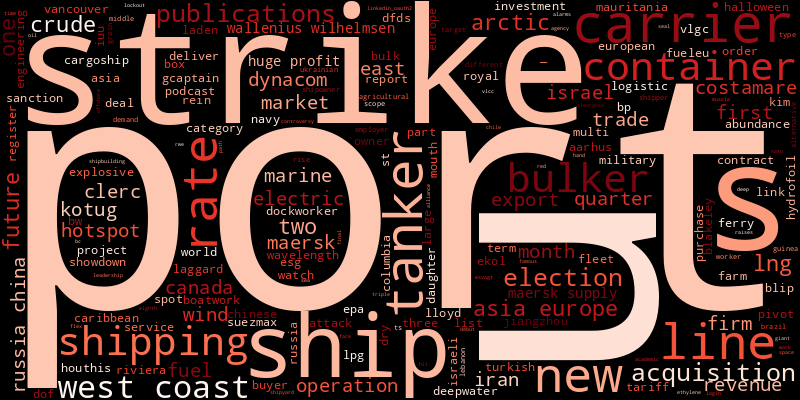
Welcome to this week’s edition of Maritime Monday, where we analyze emerging trends, market developments, and operational challenges in the maritime logistics landscape. As we approach the year-end, shifting political dynamics, supply chain pressures, and seasonal demand are creating a complex environment for logistics providers, forwarders, and shippers.
Maritime Sentiment Snapshot
- 🔵 Neutral Sentiment: 80.80%
- 🔴 Negative Sentiment: 11.90%
- 🟢 Positive Sentiment: 7.30%
Overall Mood (Compound Score): -0.9908 (scale from -1 to +1)
Mood Interpretation: Negative
This week’s sentiment shows industry-wide caution, influenced by rising commodity demand, impending tariff changes, and labor disruptions impacting North American supply chains.
Top 3 Insights This Week
1. Commodity Bull Run Expected to Drive Shipping Demand
What’s Happening: Post-election market stability in the U.S. is setting the stage for a multi-year commodity bull run, according to industry analysts at Watson Farley & Williams (WFW). This trend is expected to bring robust demand for dry bulk and tanker shipping as investment flows into sectors like mining, energy, and agribusiness.
Why It Matters: With anticipated deregulation and investment in U.S. energy production, major players are positioning to capitalize on surging commodity prices. Demand is expected to be strong for metals, rare earths, and even coal, with a possible increase in U.S. export volumes as production accelerates.
Impact on Logistics Providers: For forwarders and LSPs, staying attuned to rising commodity movements will be crucial, as this trend could lead to capacity constraints and increased rates on bulk shipping routes.
Takeaway: Consider securing capacity for commodity shipments early, especially in sectors impacted by seasonal fluctuations and potential route congestion.
2. Tariff Uncertainty and Frontloading Surge Ahead of Chinese New Year
What’s Happening: With Chinese New Year approaching and the potential for renewed tariffs on China under the incoming administration, U.S. shippers are accelerating imports to avoid anticipated cost increases. Analysts note that “frontloading” is already affecting major trade lanes, adding strain on available capacity and raising freight rates.
Why It Matters: Trump’s proposed tariffs of up to 60% on Chinese imports have led U.S. companies to re-evaluate sourcing strategies and expedite shipments before potential policy shifts. The combination of seasonal demand, tariff uncertainty, and port capacity issues could result in significant price hikes and limited availability, especially for Far East-to-U.S. routes.
Impact on Logistics Providers: For LSPs, this “not-normal” Lunar New Year could mean increased demand for warehousing and expedited services as clients adjust inventories ahead of potential disruptions.
Takeaway: Encourage clients to finalize shipments early and consider strategic inventory planning to mitigate potential cost spikes.
3. Labor Disruptions Across North America Tighten Route Options
What’s Happening: Ongoing labor disputes at Canadian ports, including Vancouver and Montreal, continue to impact North American supply chains. Meanwhile, U.S. East and Gulf Coast dockworkers are preparing for potential strikes in January 2025, further complicating logistics planning for the new year.
Why It Matters: The Canadian port strikes have already led to rerouted cargo and extended transit times, and renewed U.S. strikes would leave few alternative options for shippers. If labor unrest continues, both Canadian and U.S. routes could see prolonged congestion, impacting service reliability and increasing shipping costs.
Impact on Logistics Providers: Forwarders and shippers should prioritize contingency planning, especially as capacity may be constrained across key North American ports. Consider diversifying routes to minimize risks associated with labor disruptions.
Takeaway: Work closely with clients to develop alternative routing plans, focusing on early bookings and securing backup options in case of further disruptions.
Looking Forward: Key Takeaways for Logistics Providers
- Monitor Commodity Demand and Shipping Rates: With a potential commodity bull run, capacity for dry bulk and tanker routes may tighten. Proactive booking and price monitoring will be essential to manage client expectations.
- Prepare for Uncertain Tariffs and Accelerate Shipments: As the tariff landscape shifts, frontloading for Chinese imports will continue to strain capacity. Encourage clients to plan strategically for Chinese New Year, which may intensify demand on certain routes.
- Diversify Routes to Mitigate Labor Disruption Risks: Labor strikes are creating bottlenecks across North American ports. Early planning and diversifying route options can help maintain operational stability in the face of ongoing and potential labor disruptions.

The only constant in the maritime industry is change. TRADLINX Ocean Visibility empowers you to stay agile with real-time insights and adaptive routing capabilities. Ready to enhance your logistics efficiency? Start your free trial today and navigate future challenges with ease.



Leave a Reply