
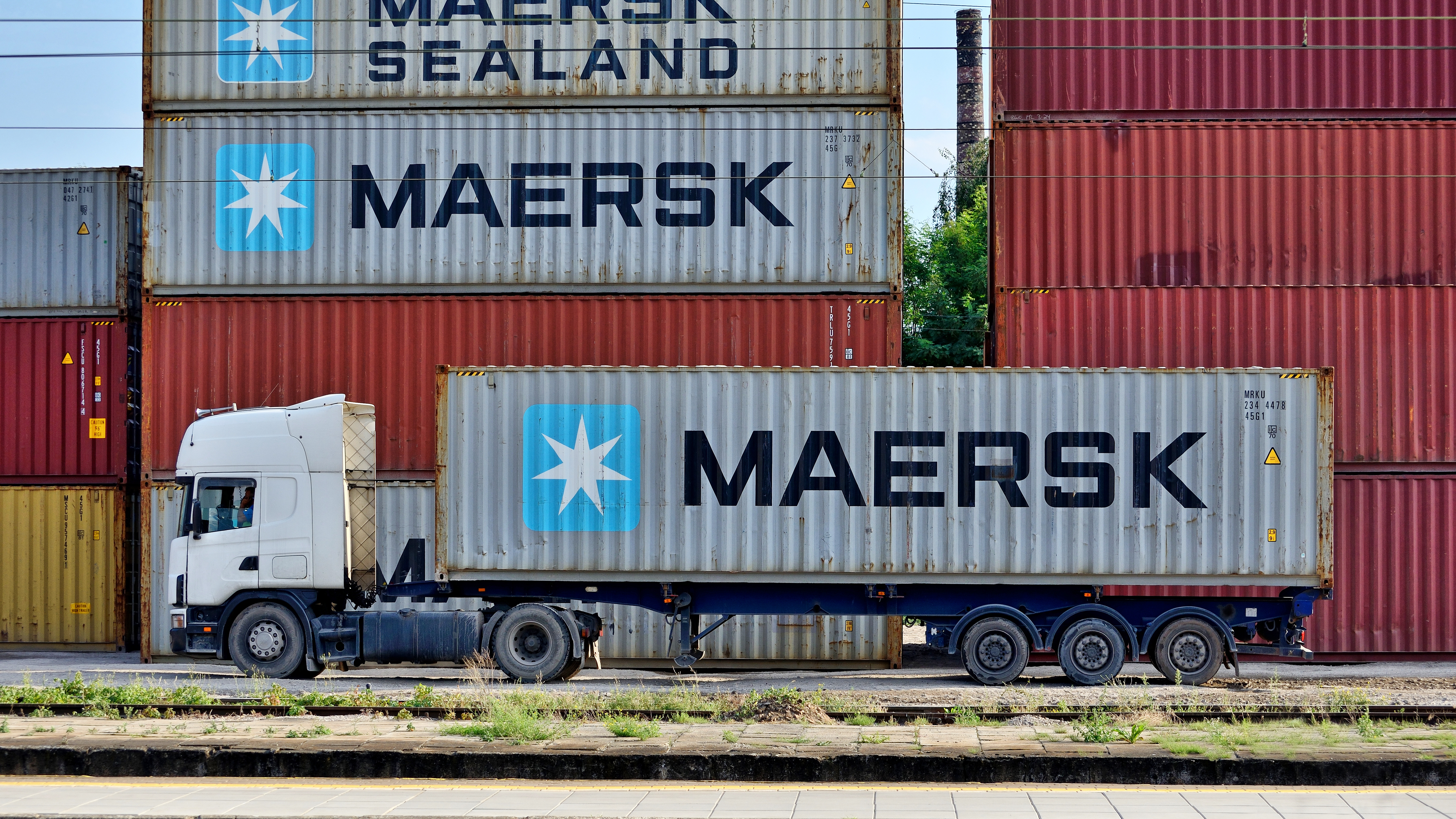
From 1 November 2026, Maersk’s revised Brazil terminal handling table sets markedly different rates by port, while a new Asia to Oceania peak season surcharge splits destinations into two pricing tiers.
That makes location selection material to a quote. On Maersk’s new Brazil table, destination handling at Navegantes costs BRL 265 more per container than at Itajaí, on the other side of the same river mouth. A separate risk sits in the table itself: Maersk published it twice, and the second version no longer lists Suape.
What does Maersk charge for terminal handling in Brazil from 1 November 2026?
Maersk’s revised origin and destination terminal handling charges (OHC/DHC) apply to all containers to and from Brazil from 1 November 2026 until further notice. Each port has its own rate in BRL, set separately for dry, reefer, special and dangerous cargo. In the current version of the advisory, dry handling runs from BRL 740 at Itaguaí (Sepetiba) to BRL 1,652 at Vitória.
The dry rate is one figure per box. Maersk files 20ft dry, 40ft dry, 40ft high cube, 45ft high cube and non-operating reefers under the same dry column, so a 20ft and a 40ft handled at the same listed location carry the same charge.
| Port | Dry | Reefer | Special (open top, flat rack, tank) | Dangerous cargo, dry | Dangerous cargo, reefer |
|---|---|---|---|---|---|
| Itaguaí (Sepetiba) | 740 | 950 | 950 | 950 | 950 |
| Rio de Janeiro | 755 | 935 | 895 | 895 | 950 |
| Itajaí | 811 | 931 | 1,125 | 1,125 | 1,250 |
| Itapoá | 840 | 1,025 | 1,100 | 1,100 | 1,350 |
| Manaus | 997 | 1,254 | 1,256 | 1,256 | 1,256 |
| Vila do Conde | 1,008 | 1,243 | 1,670 | 1,670 | 1,880 |
| Navegantes | 1,076 | 1,210 | 1,300 | 1,300 | 1,475 |
| Pecém | 1,140 | 1,388 | 1,520 | 1,520 | 1,520 |
| Rio Grande | 1,248 | 1,323 | 1,600 | 1,600 | 1,650 |
| Paranaguá | 1,310 | 1,440 | 1,905 | 1,905 | 1,905 |
| Salvador | 1,427 | 1,695 | 2,300 | 2,300 | 2,430 |
| Santos | 1,498 | 1,549 | 1,498 | 1,610 | 1,610 |
| Imbituba | 1,550 | 1,840 | 1,550 | 2,247 | 2,247 |
| Vitória | 1,652 | 1,950 | 1,880 | 1,880 | 1,950 |
The advisory does not state the rates these replace. Maersk gives higher port-related and operational costs as the reason for the revision. To size the change on a live quote, compare against the Brazil handling line on a recent Maersk invoice. Maersk’s Tariff Lookup lists its coverage as FMC and EEA regulated trades, which leaves out Asia to Brazil cargo.
Non-spot bookings are rated on the Price Calculation Date (PCD). Spot bookings are rated on the booking confirmation date or the first vessel ETD at confirmation.
Maersk published the Brazil table twice
Maersk’s Brazil handling advisory is online in two versions. The version dated 1 October lists 15 ports. The version dated 2 October lists 14, with Suape removed and every other port’s rates unchanged. The later version also adds an equipment legend and labels the reefer rates at Manaus and Vila do Conde by box type.
The 1 October version gave Suape a dry rate of BRL 2,188, higher than any port in the current table. Maersk has not explained the removal. The current 2 October advisory contains no Suape rate, so if Suape appears in a November quote, confirm the applicable charge with Maersk rather than relying on the earlier table.
If your Brazil range came from the 1 October page or a summary of it, check the top of the range. On the current table it is Vitória at BRL 1,652.
Why the Brazil port matters to the handling charge
Itajaí and Navegantes face each other across the mouth of the Itajaí-Açu river in Santa Catarina. On Maersk’s 1 November table, dry handling is BRL 811 at Itajaí and BRL 1,076 at Navegantes. Across the state’s four listed ports, the dry rate runs from BRL 811 to BRL 1,550 at Imbituba.
Those ports are also where December’s Asia to East Coast South America network changes land. As our breakdown of the December service changes sets out, Maersk’s ASAS2 loop, one of the services calling Itajaí, ends with voyage 650W departing Shanghai on 8 December. Maersk says customers can keep booking through its ASAS service but has not said how the Itajaí call will be covered.
The handling advisory prices by location and is silent on what happens when that location changes operationally after booking. If a box booked to Itajaí is discharged at Navegantes, ask Maersk which location it will use for the DHC. Check the invoiced handling line against the booking and get the applicable rate confirmed rather than assuming the physical discharge port automatically determines the charge.
If confirming the actual discharge port means opening each container on a carrier site, walk through how ops teams track discharge events for every container across carriers.

How much is Maersk’s Asia to Oceania peak season surcharge from 1 November 2026?
Maersk is introducing a peak season surcharge (PSS) on dry containers from 17 Asian origin markets to Oceania, with a PCD of 1 November 2026. It applies to non-spot bookings only. Australia, Papua New Guinea and the Solomon Islands pay US$500 per 20ft and US$1,000 per 40ft. New Zealand and ten Pacific island destinations pay US$300 and US$600.
| Destination | 20ft dry | 40ft dry |
|---|---|---|
| Australia, Papua New Guinea, Solomon Islands | US$500 | US$1,000 |
| New Zealand, Fiji, American Samoa, Cook Islands, Kiribati, Marshall Islands, New Caledonia, Tonga, Vanuatu, Wallis and Futuna, Samoa | US$300 | US$600 |
Maersk’s advisory describes the equipment scope as 20ft dry, 40ft dry and 40ft high cube, but heads its third rate column “45ft dry.” The amount in that column equals the 40ft dry rate in both tiers. If you ship 45ft high cubes to Oceania, confirm with Maersk whether they are in scope.
Both tiers draw on the same 17 origins, so the split falls entirely on the destination. A rate sheet that applies one flat PSS across all Asia-to-Oceania destinations will misprice one of the two groups from 1 November, by US$200 per 20ft or US$400 per 40ft.
The advisory names destination countries and says nothing about routing. Where cargo for a lower-tier destination moves via a hub port in the higher tier, confirm with Maersk which tier the booking is rated at.
Asia to Oceania falls outside FMC regulation, so Maersk sets the PCD as the scheduled departure date of the first water leg at the time of booking confirmation. Where the first water leg is a feeder, the feeder’s scheduled departure sets the date. The same PCD rules run through Maersk’s October terminal handling changes.
What to re-check before 1 November
- Brazil quotes. Use the handling line for the location named on the booking rather than a single Brazil-wide figure. The listed dry rate applies per box, whatever its size.
- Suape. The 2 October advisory carries no Suape rate. Get the applicable charge confirmed in writing by Maersk before quoting.
- December Santa Catarina bookings. Confirm the discharge port against the new Asia to East Coast South America rotations, and ask which location’s DHC applies if the discharge port changes.
- Brazil to US exports. These are FMC trades, so non-spot origin handling is priced on the last container gate-in date.
- Oceania rate sheets. Split the PSS into the two destination tiers, and keep spot bookings out of the PSS line.
- Hub routings. For lower-tier Pacific destinations routed via a higher-tier hub, confirm the applied tier with Maersk.
- 45ft to Oceania. Confirm whether 45ft high cubes are covered by the PSS.
Further Reading
- Terminal Handling Service Revision, OHC/DHC World to/from Brazil (Maersk, 2 October 2026)
- Terminal Handling Service Revision, OHC/DHC World to/from Brazil, earlier version listing Suape (Maersk, 1 October 2026)
- Peak Season Surcharge (PSS) Asia to Oceania (Maersk, 1 October 2026)
- Maersk updates PSS across three major trades (Container News, 5 October 2026)
Brazil terminal handling rates are from Maersk’s OHC/DHC revision for Brazil dated 2 October 2026, effective 1 November 2026 until further notice. The Suape rate is from the 1 October 2026 version of the same advisory, which the 2 October version omits. Asia to Oceania PSS amounts, origins and destinations are from Maersk’s advisory dated 1 October 2026, effective PCD 1 November 2026. All amounts are per container and exclude other applicable surcharges and local charges. Confirm against your own Maersk contract, quote or tariff before acting.
Need help interpreting this disruption or your shipment?
For a quick question, chat with Tradlinx on WhatsApp. For a deeper discussion, book a time below.
Prefer email? Contact us directly at min.so@tradlinx.com (Americas), sondre.lyndon@tradlinx.com (Europe), or henry.jo@tradlinx.com (EMEA/Asia).


Leave a Reply