
The 24-hour warning strike at six German seaports has ended. The harder question for freight teams is what happens to the cargo that now needs to move inland.
Workers at Hamburg, Bremerhaven, Bremen, Wilhelmshaven, Emden and Brake took part in a warning strike running from the evening of 17 August through 18 August. Hapag-Lloyd warned customers that operations at the affected ports could be disrupted during the action.
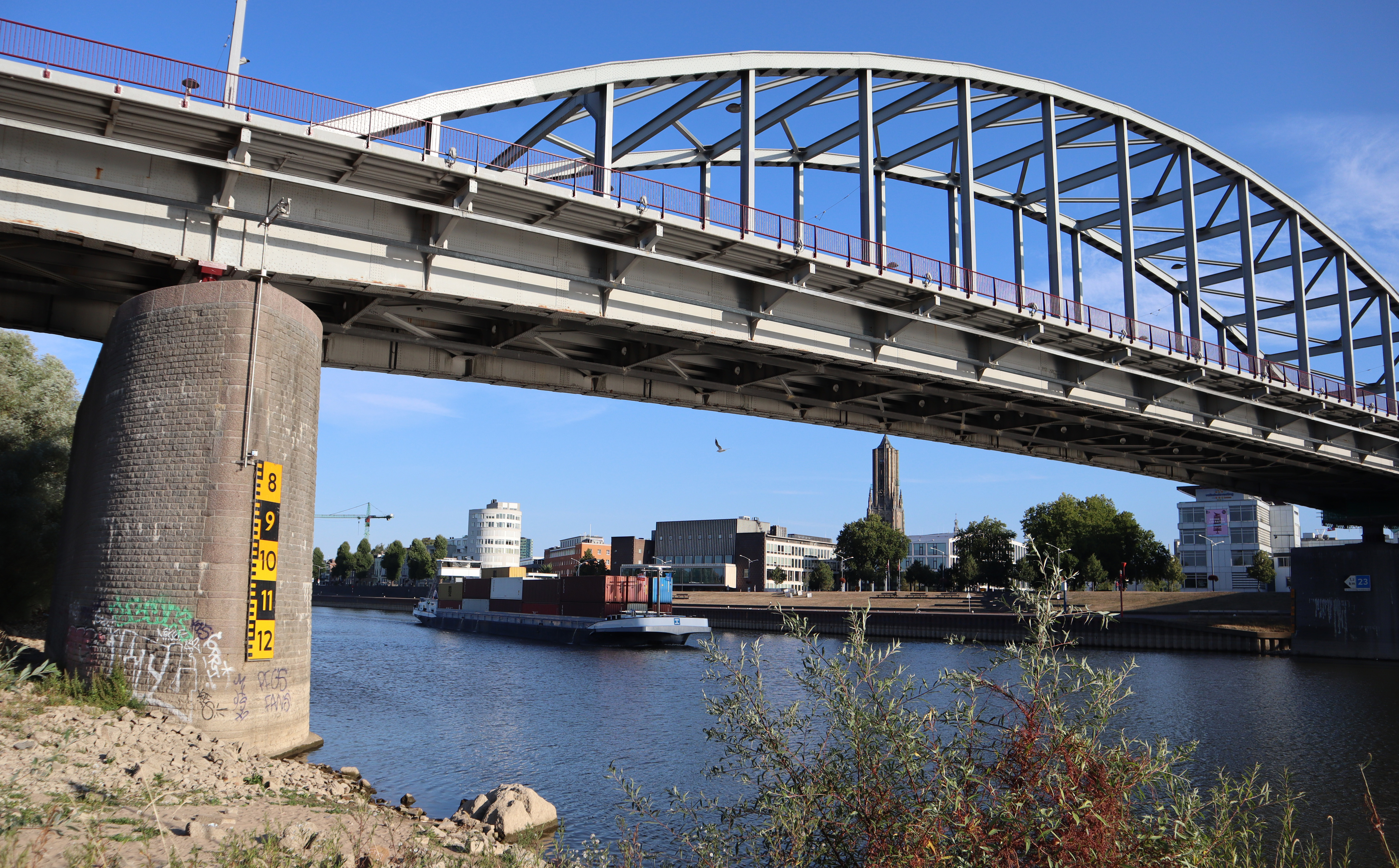
At the same time, Rhine water levels have fallen far enough for Contargo to warn that extensive operational measures may be required at short notice. If forecasts force regular barge services to parts of the Upper Rhine, Middle Rhine and Rhine-Main network to be suspended, affected containers would have to move primarily by rail or truck.
That makes the post-strike recovery worth watching. The German seaports are not all directly dependent on the Rhine, but trimodal freight networks serving the Rhine corridor and Germany’s North Sea gateways use many of the same rail and road alternatives. A short terminal disruption can therefore leave cargo re-entering an inland network with less flexibility than usual.
The Strike Ended. The Recovery Did Not
The port action lasted 24 hours. Containers that missed a handling, gate or onward connection window during that period still have to be worked back into the network.
How quickly that happens depends on more than the terminals reopening. A container may still need a new pickup slot, rail departure, barge connection or truck movement before the original transport plan is restored.
That distinction matters because the Rhine constraint is continuing after the strike. Freight teams cannot assume that every inland option available before the stoppage remains equally usable during the recovery.
Rhine Operators Are Preparing for Further Restrictions
Germany’s federal waterway data show exceptionally low readings along parts of the Rhine, including at Kaub, one of the river’s most important commercial reference gauges. Gauge readings should not be confused with navigable water depth, but they are used by operators when assessing how much cargo vessels can safely carry.
Contargo says all of the Rhine gauges it monitors are currently at critical levels and that rapidly falling readings at Kaub, Cologne and Duisburg could require extensive operational measures at short notice.
Its current customer guidance says that regular barge services to the Upper Rhine, Middle Rhine and Rhine-Main regions may have to be temporarily suspended if forecast levels materialize. Under that scenario, vessels would be able to use only a limited share of their normal carrying capacity and affected containers would need to move mainly by rail or truck.
That shift is not yet a reason to assume a general rail or trucking shortage. It is a reason to verify whether the inland leg attached to an individual booking still has confirmed capacity.
Where the Two Disruptions Can Meet
Hamburg, Bremerhaven and Wilhelmshaven sit outside the Rhine barge corridor itself. The connection is in the wider inland network.
Operators such as Contargo combine barge, rail and truck services across Rhine terminals and the North Sea ports. When one part of that system loses barge capacity, more cargo may need the same land-based modes that seaport cargo uses to clear terminals and move inland.
That does not mean the German port strike and Rhine low water have already created a measurable capacity crunch. It means the fallback options for one disruption can become less flexible while the network is recovering from another.
We covered the same Rhine constraint earlier this month in the context of low water ahead of Dutch port strikes. The difference now is timing: the German strike is over, so the operational question has moved from preparing for the stoppage to verifying how deferred cargo actually leaves the port.
Four Things to Recheck After the Ports Reopen
- Confirmed inland mode. A booking originally planned by barge may require a different departure, rail movement or truck alternative if Rhine restrictions worsen.
- Pickup and terminal timing. Cargo deferred during the strike may no longer move against the gate or collection window shown in the original plan.
- Actual inland departure. Vessel arrival and container discharge confirm that the ocean leg has progressed. They do not confirm that the rail, barge or truck leg has departed.
- Cost exposure. Low-water conditions can change routing and generate additional transport, storage, demurrage or detention costs. Check the applicable operator rules before approving an alternative movement.
If your European shipments are moving between ocean terminals and changing inland modes, walk through how operations teams track container milestones and exceptions across ocean and inland handoffs in one view.

The Booking Can Stay the Same While the Executable Route Changes
The immediate German port stoppage is over. That alone does not tell a shipper whether the container’s next movement is still executable as booked.
The bookings most worth rechecking are those with an inland leg that has not yet been reconfirmed, especially where barge transport or an alternative rail or truck movement sits downstream of the port call.
For those shipments, reopening is only the first milestone. The useful signal is the next confirmed movement.
Further Reading
- Germany: 24-Hour Warning Strike at German Seaports May Affect Operations — Hapag-Lloyd
- Low Water: Current Rhine Conditions and Operational Measures — Contargo
- Contargo Trimodal Transport Network — Contargo
- Official German Waterway Gauge Data — Wasserstraßen- und Schifffahrtsverwaltung des Bundes
Strike scope and timing are based on Hapag-Lloyd and Contargo updates covering the 17 to 18 August 2026 warning strike. Rhine conditions and possible operational measures are based on Contargo’s current low-water guidance and Germany’s official federal waterway gauge data. Gauge readings are not equivalent to navigable water depth. Water levels, barge capacity, terminal conditions and inland routing can change quickly, so confirm the applicable transport mode and current booking status before dispatch. Status checked 19 August 2026.
Need help interpreting this disruption or your shipment?
For a quick question, chat with Tradlinx on WhatsApp. For a deeper discussion, book a time below.
Prefer email? Contact us directly at min.so@tradlinx.com (Americas), sondre.lyndon@tradlinx.com (Europe), or henry.jo@tradlinx.com (EMEA/Asia).


Leave a Reply